
Why Knowing How to Repair Architectural Shingles Can Save You Thousands
How to repair architectural shingles is something every homeowner with a dimensional shingle roof should understand — even if you end up hiring a pro.
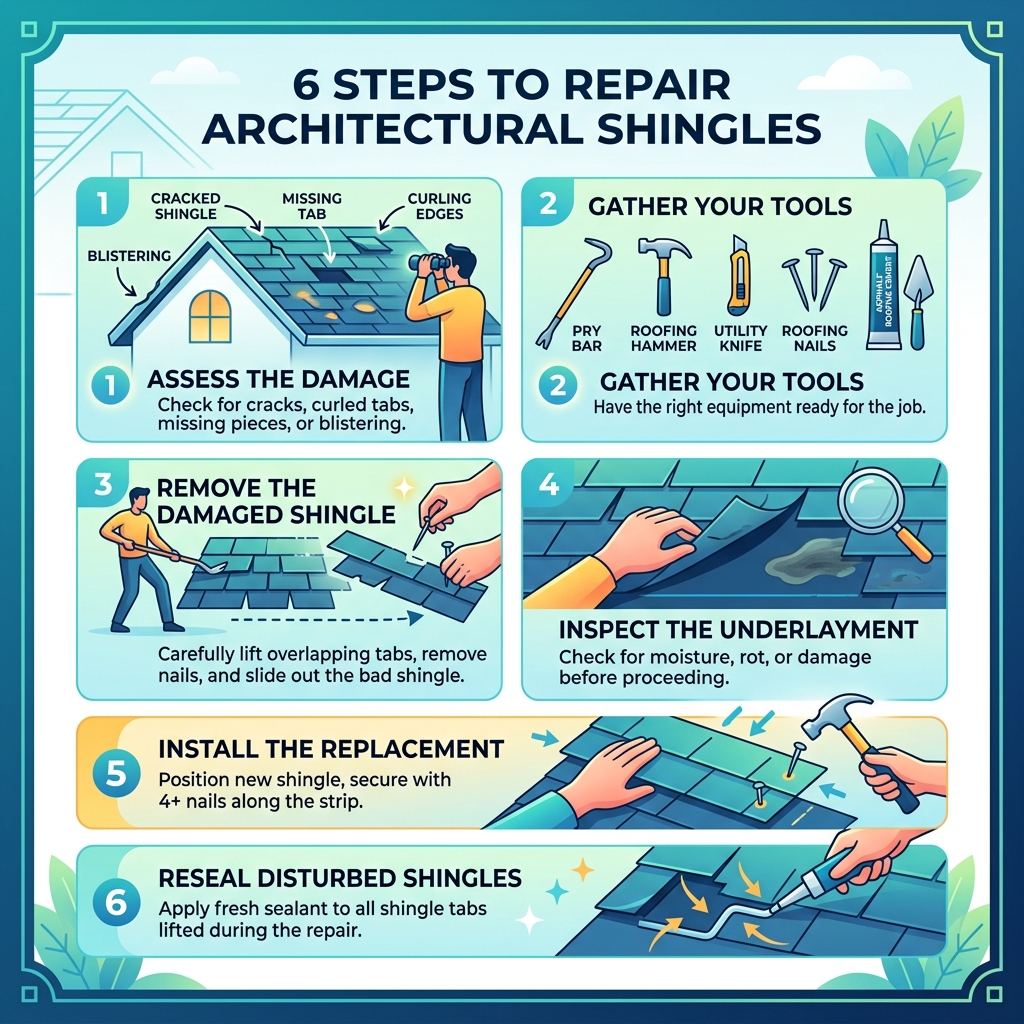
Here’s a quick overview of the core repair steps:
- Assess the damage — look for cracked, curled, missing, or blistering shingles
- Gather your tools — pry bar, roofing hammer, utility knife, roofing nails, and asphalt roofing cement
- Remove the damaged shingle — lift overlapping tabs, pull the nails, and slide it out
- Inspect the underlayment — check for moisture damage or rot before installing the new shingle
- Install the replacement — slide it into position, nail it with a minimum of four nails, and seal the edges with roofing cement
- Reseal disturbed shingles — apply fresh sealant to any tabs you lifted during the repair
Architectural shingles are thicker and heavier than standard 3-tab shingles. That makes them more durable — but also more complex to repair. Getting the process wrong can lead to leaks, lifted shingles, or voided warranties.
A damaged shingle might seem like a small problem. But left alone, water finds its way under the surface, soaks into the decking, and turns a minor fix into a costly repair or full replacement. Acting quickly is the smartest move you can make for your home.
At Adept Construction, Inc., we’ve seen how a single overlooked shingle can lead to thousands of dollars in interior water damage — especially here in Illinois, where freeze-thaw cycles and spring storms put roofs under serious stress year after year.
I’m Gerald Michaels, founder of Adept Construction, Inc., a family-owned roofing company based in Naperville, Illinois — and with nearly 30 years of hands-on experience, I’ve repaired and replaced more architectural shingle roofs than I can count. In this guide, I’ll walk you through exactly how to repair architectural shingles the right way, so you can make a confident decision whether to tackle it yourself or call in a professional.
Architectural Shingles vs. 3-Tab Shingles
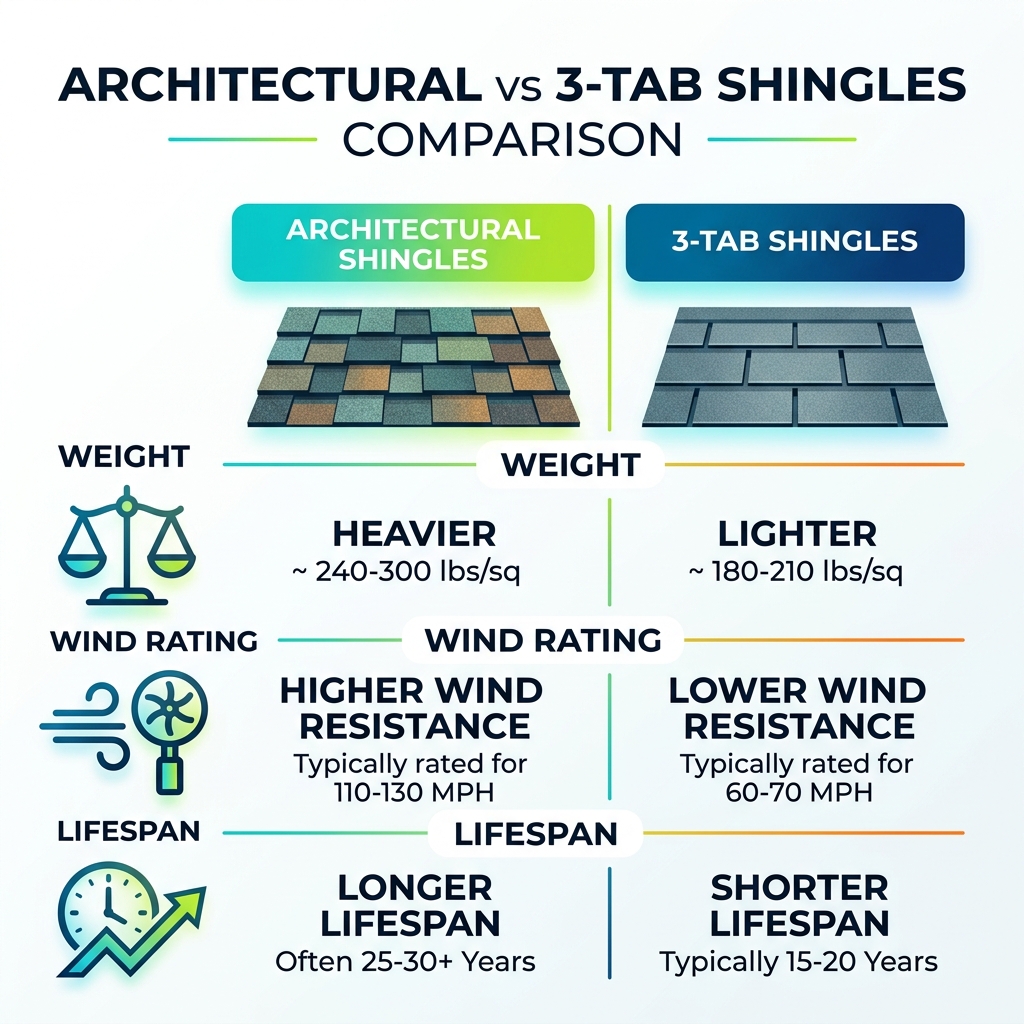
To understand how to repair architectural shingles, we first need to look at how they differ from traditional 3-tab shingles. Architectural shingles (also known as dimensional or laminated shingles) are constructed with two or more layers of asphalt that are laminated together. This creates a textured, multi-dimensional appearance that mimics the look of wood shakes or slate.
In contrast, 3-tab shingles consist of a single layer with cutouts (tabs) that create a flat, uniform look. Because architectural shingles are roughly 50% heavier than 3-tab versions, they offer superior wind resistance—often rated for 110 to 130 mph—whereas 3-tab shingles usually max out at 60 to 70 mph.
The lifespan reflects this quality difference. While 3-tab shingles typically last 15 to 20 years, architectural shingles often last 25 to 30 years or more. However, their thickness means they require specific nailing techniques and longer nails to penetrate the multiple layers effectively. Before you begin any work, it is vital to recognize the asphalt shingle damage signs unique to these heavy-duty materials, such as delamination or deep bruising from hail.
How to Repair Architectural Shingles: Tools and Preparation
Before you set foot on a ladder, you must have the right gear. Because architectural shingles are thicker, a standard household hammer and a kitchen knife won’t cut it. You need tools designed to handle heavy asphalt and multiple laminated layers.
Essential Tools and Materials:
- Flat Pry Bar (Cat’s Paw): Essential for breaking the sealant bond between shingles without tearing the asphalt.
- Roofing Hammer: Features a magnetized face to hold nails and a claw designed for prying.
- Utility Knife: Used for trimming replacement shingles to fit specific gaps.
- 1-1/4 Inch Roofing Nails: These must be galvanized to prevent rust.
- Asphalt Roofing Cement & Caulking Gun: For resealing tabs and waterproofing nail heads.
- Safety Harness and Rope: Non-negotiable for any roof with a significant pitch.
- Ladder Stabilizers: To prevent the ladder from sliding or damaging your siding.
Preparation is key to a watertight finish. We recommend performing repairs on a warm, clear day. If it’s too cold, the shingles become brittle and crack when you lift them; if it’s too hot, the asphalt becomes “gummy” and easy to scuff. Understanding the specific Roofing Shingles you are working with will help you match the thickness and color for a seamless repair.
Step-by-Step: How to Repair Architectural Shingles Correctly
Repairing an architectural shingle is a surgical process. Unlike 3-tab shingles, where you can easily see the tabs, architectural shingles overlap in a staggered, random pattern. This means the nails for the damaged shingle are actually hidden under two layers of shingles above it.
The first step is a thorough damage assessment. Look for shingles that are missing, cracked, or showing significant granule loss. Granules protect the asphalt from UV rays; once they are gone, the shingle will brittle and leak within months. If you find a shingle has completely detached, follow our guide for Missing Shingle Repair to ensure the underlayment hasn’t been compromised.
Removing Damaged Architectural Shingles
Removing the old shingle is the most delicate part of the job. You must break the “thermal seal”—the strip of adhesive that bonds shingles together—without damaging the healthy shingles surrounding the repair area.
- Break the Seal: Gently slide your flat pry bar under the shingle directly above the damaged one. Move it side-to-side to break the adhesive bond.
- Locate the Nails: Lift the shingle above to find the nails holding the damaged piece. In architectural roofing, there are usually four to six nails per shingle located along the “nailing zone.”
- Extract the Nails: Slide the pry bar under the damaged shingle and lift it slightly to pop the nail head up. Then, use the bar to pull the nail out completely. Note: You must also remove the nails from the shingle two rows above, as these often pass through the top edge of the damaged shingle.
- Slide Out the Damage: Once all nails are removed, the damaged shingle should slide out freely. For more detailed visual guidance, This Old House offers excellent insights into managing these multi-layered systems.
Installing Replacement Architectural Shingles
Once the old shingle is out, inspect the black felt paper or synthetic underlayment. If it’s torn, apply a small patch of roofing cement before proceeding.
- Align the Shingle: Slide the new architectural shingle into the gap. Ensure the bottom edge aligns perfectly with the shingles to the left and right to maintain the “drip line.”
- The Nailing Pattern: Nail the shingle into the manufacturer’s designated nail strip. For architectural shingles in high-wind areas like Downers Grove or Naperville, we use a six-nail pattern.
- Seal the Tabs: Apply a one-inch dab of roofing cement under each corner of the new shingle and the shingles you lifted above it. Press down firmly to re-establish the bond.
- Final Check: Ensure no nail heads are exposed. If a nail is visible, cover it with a dab of sealant. For a deeper dive into these techniques, see our Repairing Roof Shingles: A Step-by-Step Guide.
Fixing Cracks, Curls, and Blisters Without Replacement
Not every shingle issue requires a full replacement. If an architectural shingle is simply cracked or curling at the corner, you can often perform a “spot repair” that extends its life significantly.
- Cracked Shingles: Apply a bead of roofing sealant underneath the crack, press the shingle down, and then apply a second bead over the top of the crack. To make the repair invisible, gather some loose granules from your gutters and sprinkle them over the wet sealant.
- Curled Edges: This usually happens due to age or poor attic ventilation. Clean any dust from under the curl, apply roofing cement, and weigh the shingle down with a brick for 24 hours to reset the bond.
- Blistering: Blisters are caused by moisture trapped in the shingle during manufacturing or poor ventilation. While you can’t “fix” a blister, you can prevent it from popping by ensuring your attic stays cool. To prevent ice dams and heat buildup, check that your soffit vents aren’t blocked by insulation.
If you are dealing with a persistent leak but the shingles look okay, you may need to Repair Leaking Shingle Roof components like flashing or valley tins instead.
When to Call a Professional for Roof Repair in Downers Grove
While a handy homeowner can replace a few shingles, certain situations demand professional expertise. Roofing is one of the most dangerous home improvement tasks; falls from heights are a leading cause of residential injury.
We recommend calling a professional if:
- The Pitch is Steep: Any roof with a 6/12 pitch or higher (meaning it rises 6 inches for every 12 inches of horizontal run) requires specialized staging and safety harnesses.
- Structural Sagging: If the roof feels “spongy” or looks dipped, you likely have rotted decking that shingles alone won’t fix.
- Extensive Storm Damage: If more than 15-20% of your roof is damaged, a repair is often a “band-aid” on a terminal problem.
- Insurance Claims: If your damage was caused by hail or high winds, you need a contractor who can document the damage for your adjuster.
For homeowners in our local area, seeking a roof repair Downers Grove IL specialist ensures your repair meets local building codes and can withstand the specific climate challenges of the Chicago suburbs. If a recent storm has left your yard littered with shingles, our storm damage services can provide an emergency tarp and a full damage assessment.
Frequently Asked Questions about Shingle Repair
Can you mix new architectural shingles with old ones?
Technically, yes, but they rarely match perfectly. Asphalt shingles fade due to UV exposure (sun bleaching) and can develop dark streaks from algae (Gloeocapsa magma). To get the best match, we often “steal” a few shingles from a less visible area of the house (like the back of a garage) to use for repairs on the front, then put the brand-new shingles in the hidden spot. Read more about the Real Cost of Replacing a Handful of Shingles to see if this strategy fits your budget.
How much does it cost to repair architectural shingles?
DIY repairs typically cost between $50 and $150 for a bundle of shingles, nails, and sealant. However, professional repairs in 2025 generally range from $350 to $1,200 depending on the height and complexity of the roof. While the upfront cost is higher, a professional repair usually comes with a workmanship warranty that protects your investment. For a detailed breakdown, check Roof Shingle Repair Costs: What to Expect in 2025.
What causes architectural shingles to blow off?
The most common cause is “high nailing.” If a roofer places the nails too high on the shingle, they miss the reinforced nailing strip and fail to catch the shingle underneath. This significantly reduces wind resistance. Other causes include cold-weather installation where the adhesive strip never properly bonded, or “nail pops” where the decking expands and pushes the nail upward. In these cases, a simple Asphalt Shingle Replacement of the affected area is necessary to restore the roof’s integrity.
Conclusion
Understanding how to repair architectural shingles is an essential skill for protecting your home’s value. Whether you decide to climb the ladder yourself or hire a trusted expert, the goal remains the same: keeping your home dry and secure against the unpredictable Illinois weather.
At Adept Construction, Inc., we take pride in being a family-owned business that treats every roof like it’s our own. We’ve built our reputation in Naperville and Downers Grove through high-quality workmanship and honest advice. Sometimes, a simple repair is all you need to get another five years out of your roof; other times, a replacement is the only way to protect your family.
If you’re unsure about the state of your shingles or if you’ve spotted signs of a leak, don’t wait for the next big storm. We offer free, no-obligation estimates to help you understand exactly what your roof needs.
Contact us today for your free estimate and experience the peace of mind that comes with our premier residential roofing services. Whether it’s a minor shingle fix or a complete system overhaul, we are here to help your home stand strong.