
Why Storm Damage Roof Repair in Naperville Demands Immediate Attention
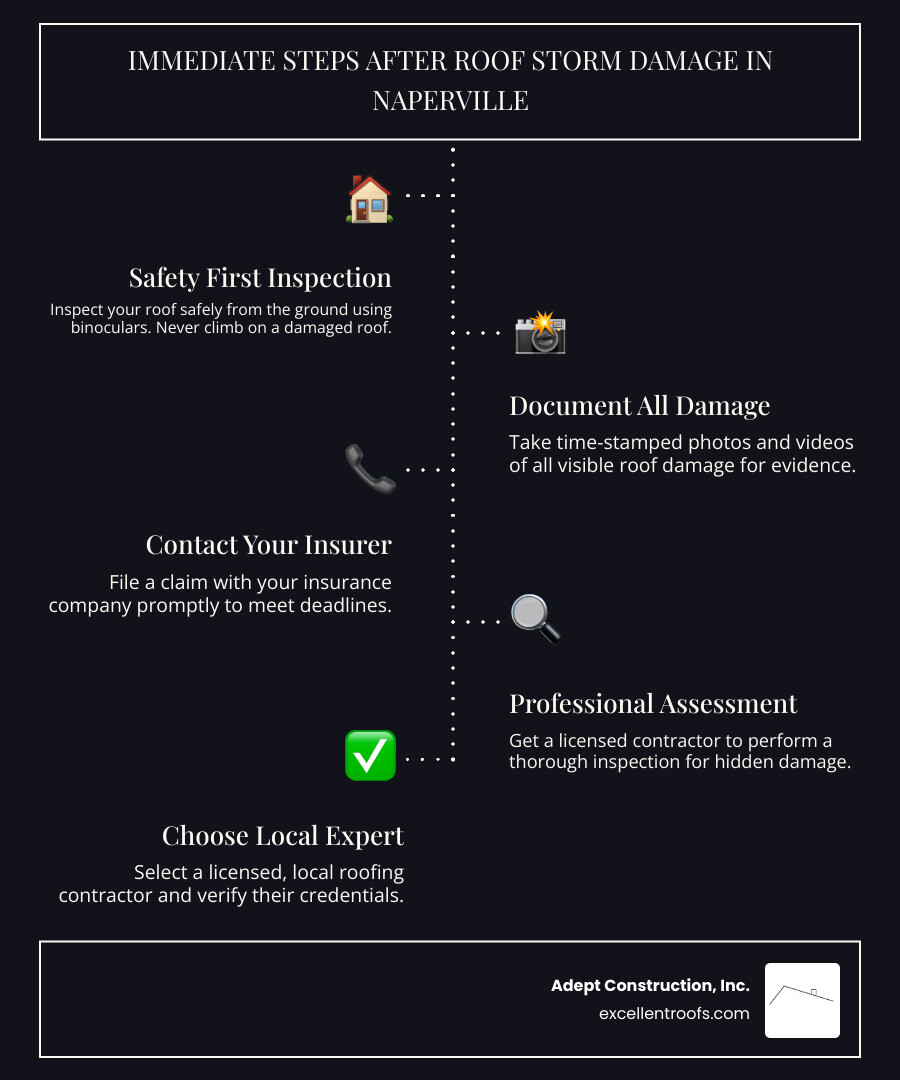
Storm damage roof repair in naperville requires swift action to protect your home from costly secondary damage. Here’s what you need to do immediately:
- Inspect safely from the ground – Never climb on your roof after a storm
- Document all visible damage – Take time-stamped photos and videos
- Contact your insurance company – File a claim within their deadline
- Get a professional inspection – Hidden damage often lurks beneath the surface
- Choose a licensed local contractor – Verify credentials through IDFPR’s database
Naperville homeowners know this reality all too well. Between 2010 and 2015 alone, the area reported more than 70 hailstorms. When you add severe wind events, heavy rainfall, and the occasional tornado, it’s clear that your roof faces significant threats year-round.
The problem isn’t just the initial impact. Storm damage creates entry points for water infiltration, which can lead to mold growth, structural deterioration, and compromised insulation within weeks. What starts as a few missing shingles can quickly escalate into thousands of dollars in additional repairs if left unaddressed.
Many homeowners feel overwhelmed by the process. The insurance paperwork alone can be confusing, and distinguishing between trustworthy contractors and opportunistic “storm chasers” adds another layer of stress. You need clear, actionable guidance—not sales pressure or vague promises.
This guide walks you through every critical step, from that first post-storm inspection to choosing between repair and replacement. We’ll show you how to document damage properly, steer insurance claims, spot contractor red flags, and make decisions that protect both your home and your budget.
As a professional roofing company with deep roots in the Naperville area, we’ve helped countless homeowners recover from storm damage. I’m Gerald Michaels, founder and president of Adept Construction, Inc., and I’ve spent nearly three decades guiding families through storm damage roof repair in naperville with transparent communication and superior workmanship. Whether you’re dealing with hail dents, wind-lifted shingles, or water intrusion, understanding your options is the first step toward a fully restored, weather-tight roof.
First Steps After the Storm: Identifying Roof Damage in Naperville
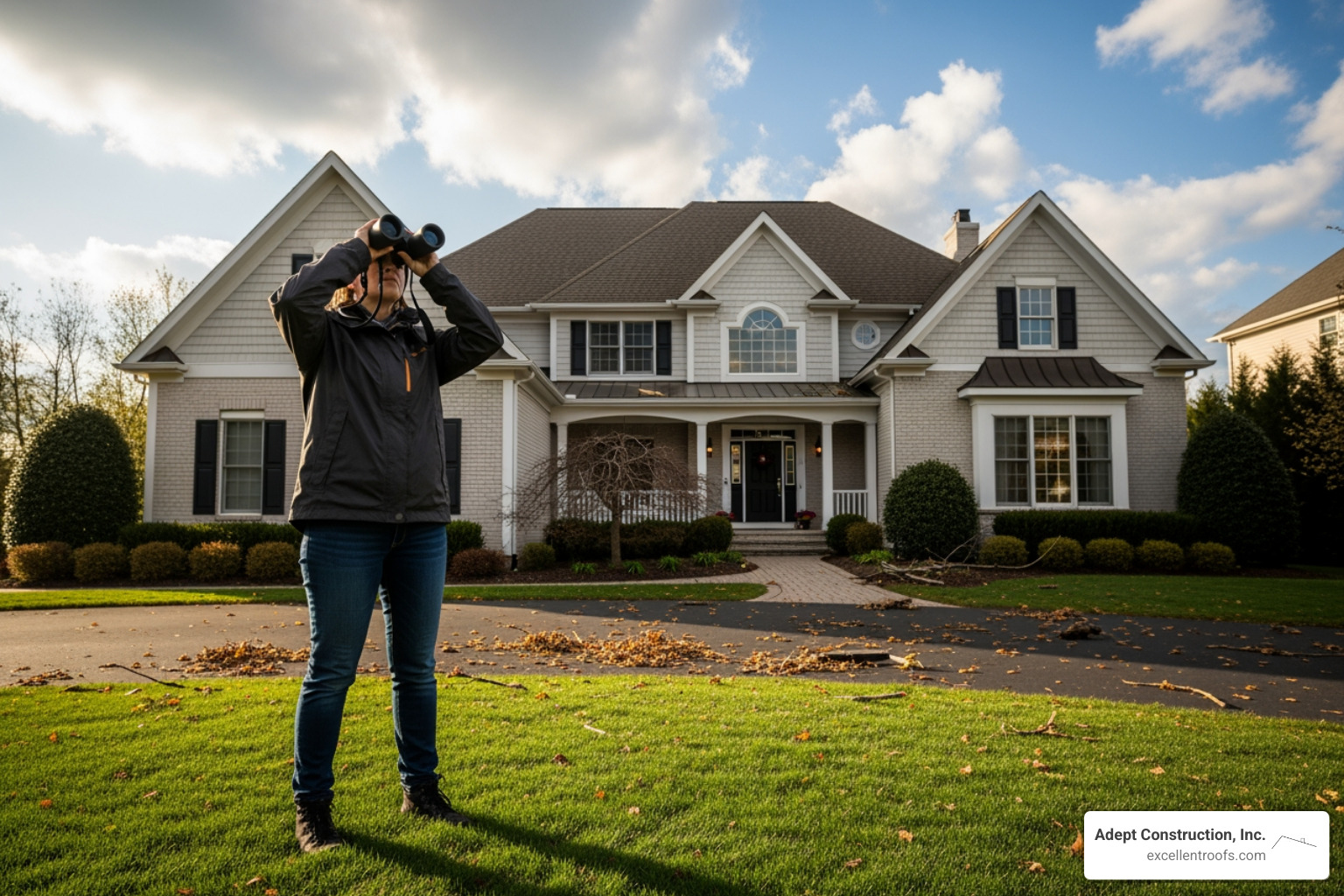
The storm has passed, the sun is out, and your first thought is likely, “Is my home okay?” When it comes to your roof, safety is paramount. Never climb onto your roof, especially after a storm, as surfaces can be slippery, damaged, or unstable. Instead, grab a pair of binoculars and conduct a thorough ground-level inspection. Walk around your entire property, taking your time to scan every section of your roof. What you’re looking for might not always be obvious, but a careful eye can catch the initial signs of trouble.
Documenting everything you see is crucial. Snap photos and take videos from multiple angles, ensuring they are time-stamped if possible. This visual evidence will be invaluable later when you file an insurance claim or consult with a roofing professional. Even minor damage can lead to significant problems down the line, so don’t dismiss anything that looks out of place.
Common Signs of Storm Damage
After a storm, your roof might look perfectly fine from a distance, but subtle clues often reveal hidden issues. Here’s a checklist of common signs of storm damage you should look for:
- Missing or Displaced Shingles: These are often the most obvious indicators of strong winds. You might find shingles scattered in your yard or notice bare spots on your roof.
- Cracked or Bruised Shingles: Hail can cause cracks or “bruises” (soft spots) on asphalt shingles. These might not be immediately visible but weaken the shingle over time.
- Curled or Lifted Shingle Edges: High winds can lift shingles, breaking their seals and allowing water to penetrate underneath.
- Granules in Downspouts or Gutters: Asphalt shingles lose their protective granules due to hail impact or aging. An unusual accumulation of granules in your gutters or downspouts is a strong sign of damage.
- Dented Gutters, Flashing, or Vents: Hailstones can leave dents on metal components like gutters, downspouts, roof vents, and flashing. This is often easier to spot than roof damage itself.
- Dents on Other Exterior Features: Check your siding, window frames, and even your air conditioning unit for dents. If these are present, it’s highly likely your roof also sustained hail damage.
- Water Stains on Ceilings or Walls: If water has already penetrated your roof, you might see discoloration, peeling paint, or damp spots inside your home.
- Leaks in the Attic: Head up to your attic with a flashlight (carefully!) and look for active drips, water trails, or damp insulation, especially around vents, chimneys, and skylights.
A Closer Look: Hail vs. Wind Damage
While both hail and wind are common culprits in Naperville storms, they affect roofs differently. Understanding these distinctions can help you identify the type of damage your home has sustained.
Hail Damage Characteristics:
Hail damage often appears as random, scattered impacts across the roof surface.
- Bruises on Shingles: Hail can create soft spots or small depressions on asphalt shingles. These “bruises” weaken the shingle, making it more vulnerable to future weather.
- Granule Loss: Hailstones strip the protective granules from shingles, exposing the asphalt layer to harmful UV rays.
- Dents on Metal Components: Dents on gutters, downspouts, roof vents, and flashing are tell-tale signs of hail.
- Random Damage Patterns: Hail typically falls unevenly, so you’ll likely see damage spread across various sections of the roof, not concentrated in one area.
Wind Damage Characteristics:
Wind damage, on the other hand, usually shows more directional patterns.
- Lifted Shingle Seals: Strong winds can break the adhesive seals that hold shingles flat, causing them to lift, flap, and eventually tear off.
- Creased or Torn Shingles: When shingles are violently bent by wind, they can crease or even rip.
- Missing Shingles: High winds can remove entire shingles or sections of shingles, often leaving bare patches where the underlayment is exposed. This damage tends to be more uniform or concentrated on one side of the roof, depending on the wind’s direction.
Naperville, unfortunately, is no stranger to hail. The area reported more than 70 hailstorms between 2010 and 2015 alone, highlighting the frequent risk to local roofs. Regardless of the type of storm, the important thing is to act quickly. For more in-depth information on how different weather events affect your roof, visit our page on storm damage services.
The Critical Next Step: Why Prompt Action is Non-Negotiable
Finding storm damage to your roof can be unsettling, but the most critical thing you can do is to act promptly. The urgency of repairs cannot be overstated. Delaying action, even for a few days, can lead to a cascade of problems that are far more costly and complex to fix.
The primary concern is preventing secondary damage. A compromised roof is an open invitation for water infiltration. What might start as a small crack or a few missing granules can quickly allow rainwater to seep into your home. This water can saturate your attic insulation, drip through ceilings, and run down interior walls. Once water enters, the risks multiply:
- Mold Growth: Damp environments are perfect breeding grounds for mold and mildew, which can pose serious health risks to your family and cause extensive damage to your home’s structure and air quality.
- Structural Compromise: Prolonged water exposure can weaken your roof decking, rafters, and other structural components, potentially leading to sagging roofs or even collapses.
- Increased Energy Bills: Wet insulation loses its effectiveness, meaning your HVAC system has to work harder to maintain indoor temperatures, driving up your utility costs.
- Reduced Property Value: Undetected or neglected water damage can significantly decrease your home’s market value.
Beyond the physical damage, there’s the critical aspect of insurance. Most homeowner’s insurance policies have deadlines for filing claims after a storm. Delaying your inspection and claim can jeopardize your coverage, leaving you to bear the full cost of repairs yourself. As one expert insight highlights, “Letting hail damage worsen increases potential future repair costs and reduces the likelihood of insurance coverage.” Don’t let a small issue become a monumental headache.

Temporary Fixes and Professional Assessment
If you’ve identified significant damage, such as large holes or extensive missing shingles, don’t wait for the permanent repair. Emergency tarping is a crucial temporary fix that can prevent further water intrusion while you coordinate with your insurance and a roofing contractor. Many reputable local roofing companies, including us, offer emergency tarping services to secure your home immediately after severe weather.
While temporary fixes are important, they are no substitute for a professional assessment. Hidden damage often lurks beneath the surface, invisible to the untrained eye. A professional roofing contractor can conduct a comprehensive inspection, identifying not only the obvious issues but also subtle impacts that could lead to leaks down the road. They can spot weak points, assess the integrity of your entire roofing system, and provide a detailed report that will be essential for your insurance claim.
Navigating the Insurance Maze for Your Storm Damage Roof Repair in Naperville
The thought of dealing with insurance claims after storm damage can be daunting. It often feels like a maze of paperwork, phone calls, and negotiations. However, with the right approach and a knowledgeable partner, it doesn’t have to be a pain. Our role, as your trusted Naperville roofing contractor, is to help guide you through this process, ensuring you receive the coverage you deserve for your storm damage roof repair in naperville.
Documenting Damage and Filing Your Claim
Your first step after ensuring safety and performing a ground-level inspection is meticulous documentation.
- Photo and Video Evidence: Take clear, well-lit photos and videos of all visible damage, both inside and outside your home. Capture wide shots of the affected areas and close-ups of specific damage (e.g., missing granules, dents, cracks).
- Time-stamping: Use a camera or phone app that time-stamps your photos to prove the damage occurred after the storm.
- Receipts for Temporary Repairs: If you had to perform any emergency tarping or minor temporary fixes, keep all receipts. Your insurance policy may cover these costs.
Once you have your documentation, contact your insurance agent immediately to report the damage and initiate the claims process. Be prepared to provide the date of the storm and a general description of the damage. They will provide you with a claim number, which you’ll need for all future communications. It’s also wise to review your specific policy to understand your deductible and what types of storm damage are covered. Most homeowners insurance policies cover damage from sudden events like hail and wind, but it’s important to confirm your specific coverage.
Working with the Adjuster
The next crucial step is the insurance adjuster’s visit. This is where having a professional roofing contractor by your side can make a significant difference.
- Schedule the Meeting: Coordinate with your insurance company to schedule a date and time for the adjuster to inspect your roof.
- Contractor Presence: We highly recommend having your roofing contractor present during the adjuster’s inspection. Our experienced professionals can point out all the damage we’ve documented, including hidden issues that an adjuster might overlook. We act as a subject matter expert, ensuring all damage is properly identified and assessed.
- Reviewing the Report: Once the adjuster completes their assessment, they will provide a report and an estimate for repairs. Review this carefully with your contractor.
- Supplements: It’s not uncommon for initial estimates to miss certain items or not fully account for local building codes. If your contractor identifies necessary repairs or materials not included in the adjuster’s estimate, they can submit a “supplement” to your insurance company. This ensures that all repairs are covered and your roof is restored to its pre-storm condition, or even better.
Our team at Adept Construction, Inc. has extensive experience working with insurance companies. We understand their processes and can help facilitate a smoother claim, ensuring nothing is missed and your home gets the full storm damage roof repair in naperville it needs.
Choosing a Trustworthy Naperville Roofing Contractor
After the chaos of a storm, your neighborhood might suddenly be swarming with roofing companies. This post-storm environment can be confusing, making it challenging to identify reputable contractors from less scrupulous operators. Choosing the right partner for your storm damage roof repair in naperville is crucial for a successful outcome and your peace of mind. We pride ourselves on being a dependable, family-owned business deeply committed to our community. Learn more about our services in Naperville, IL and how we can help.
What to Look for in a Reputable Roofer
When vetting potential roofing contractors, consider these key factors:
- Local Presence: Choose a local company with an established reputation in Naperville. They’ll be familiar with local building codes, weather patterns, and will be around to honor warranties.
- Illinois Roofing License: This is non-negotiable. Illinois law requires all roofers to be state-licensed. You can (and should!) verify a contractor’s Illinois roofing license directly through the IDFPR’s online database. Ensure the license is active and the business name matches.
- Proof of Insurance: Request current certificates of liability insurance and worker’s compensation. This protects you from financial responsibility if there’s an accident or damage to your property during the project.
- Positive Online Reviews and Referrals: While star ratings can be manipulated, look for consistent themes in recent, organic reviews. Ask for local references you can contact.
- Experience with Insurance Claims: A good contractor will have a track record of successfully navigating insurance claims, working collaboratively with adjusters, and advocating for homeowners.
- Detailed Written Estimates: Insist on a comprehensive, itemized estimate that clearly outlines all materials, labor costs, and project scope. Avoid vague or “all-inclusive” quotes.
- Workmanship and Material Warranties: Understand what warranties are offered on both the materials (manufacturer’s warranty) and the installation (contractor’s workmanship warranty). This offers long-term protection for your investment.
Spotting Red Flags and Avoiding Roofing Scams
Unfortunately, storms often bring out “storm chasers”—out-of-town contractors who swoop into affected areas, make quick repairs, and then disappear. Here are some red flags to watch out for:
- High-Pressure Sales Tactics: Be wary of contractors who demand an immediate decision, pressure you to sign a contract on the spot, or claim they have limited-time offers.
- Vague Contracts: A reputable contractor will provide a clear, detailed contract. Avoid anything that is handwritten, incomplete, or lacks specific terms.
- Large Upfront Cash Payments: While a reasonable deposit is normal, be suspicious of contractors demanding a large percentage of the total cost upfront, especially in cash.
- Offers to Waive Your Deductible: This is a major red flag and often illegal. Waiving deductibles is a problematic practice that violates both insurance policies and FTC regulations. As the FTC advises, understand why paying for reviews is an illegal practice that violates FTC regulations, and the same principle applies to deductible waivers – it’s insurance fraud.
- No Local References or Physical Address: Be cautious if a company doesn’t have a verifiable local presence or can’t provide references from recent Naperville projects.
- Unsolicited Door-to-Door Sales: While not all door-to-door sales are scams, be extra vigilant. Always verify credentials independently.
By doing your homework and choosing a reputable, licensed, and insured local contractor like Adept Construction, Inc., you can ensure your storm damage roof repair in naperville is handled with professionalism and integrity.
The Solution: Deciding Between Roof Repair and Full Replacement
After a storm, one of the biggest questions facing Naperville homeowners is whether their roof needs a simple repair or a complete replacement. This decision is critical, impacting both your immediate costs and the long-term protection of your home. We’ll provide a professional recommendation based on our thorough inspection, but understanding the factors involved can help you make an informed choice.
| Factor | Roof Repair | Roof Replacement |
|---|---|---|
| Roof Age | Typically under 15-20 years old | Often 20+ years old or nearing end of lifespan |
| Extent of Damage | Localized, isolated issues (e.g., a few missing shingles) | Widespread, structural, or significant granule loss |
| Cost | Lower initial cost | Higher initial cost, but long-term savings |
| Future-Proofing | Addresses immediate problem, but underlying issues may remain | Comprehensive solution, improved durability |
Factors That Determine the Best Course of Action
Several key factors play into the repair vs. replacement decision:
- Roof’s Age: If your roof is relatively new (under 10-15 years old) and the damage is localized, a repair is often the most sensible and cost-effective option. However, if your roof is nearing the end of its typical lifespan (20+ years for asphalt shingles), even minor storm damage might push it towards a full replacement. As one industry expert notes, “The decision between roof repair and replacement after hail damage should consider the roof’s age, expected lifespan, and the estimated cost of repairs for long-term cost-effectiveness.”
- Widespread Damage vs. Isolated Issues: If only a few shingles are missing or damaged in one small area, a targeted repair can suffice. But if hail has caused widespread granule loss across multiple slopes, or if wind has lifted seals and damaged shingles over a large portion of the roof, a full replacement often provides better long-term value and protection.
- Number of Existing Shingle Layers: If your roof already has multiple layers of shingles, a repair might not be feasible or up to code. A full tear-off and replacement would be necessary.
- Cost-Effectiveness of Repairs: Sometimes, the cost of extensive repairs can approach or even exceed the cost of a full replacement. In such cases, replacement offers a new warranty and a fresh start.
- Future Storm Resilience: A full replacement allows you to upgrade to more durable, impact-resistant materials that can better withstand future Naperville storms, potentially offering better insurance rates and peace of mind.
For those considering a full overhaul, we invite you to explore options for residential roof replacement to understand the benefits and choices available.
Understanding Your Options for storm damage roof repair in naperville
Once the decision is made, it’s important to understand the scope of work involved.
- Minor Shingle Replacement: For localized wind or hail damage, individual shingles can often be replaced, matching the existing roof as closely as possible.
- Patching Leaks: If a leak has developed, specialized patching techniques can seal the compromised area, often involving new underlayment and flashing.
- Flashing Repair: Damaged flashing around chimneys, vents, and skylights is a common source of leaks and can often be repaired or replaced without a full roof job.
- Full Roof Replacement: This involves tearing off the old roof down to the decking, inspecting the decking, and installing a completely new roofing system, including underlayment, flashing, and new shingles or other roofing materials. This provides the most comprehensive and long-lasting solution.
- Upgrading Materials: A replacement is an excellent opportunity to upgrade to more robust materials like architectural shingles or even metal roofing, which can offer superior protection against future storms.
Whether it’s a small fix or a complete change, we are committed to providing top-quality solutions for storm damage roof repair in naperville. You can get more details on our professional roof repair services and how we ensure your home remains safe and secure.
Frequently Asked Questions about Naperville Storm Damage
We understand that after a storm, you’ll have many questions. Here are answers to some of the most common inquiries we receive from Naperville homeowners:
How long does a roof repair or replacement take after a storm?
The timeline for storm damage roof repair in naperville or replacement can vary significantly depending on several factors: the extent of the damage, the type of materials required, the current weather conditions, and the contractor’s schedule. Minor repairs, such as replacing a few shingles or patching a small leak, might take just a few hours. A full roof replacement for most residential homes, however, typically takes between one to three days, assuming good weather. Larger or more complex roofs, or those requiring structural repairs, could extend this timeline. We will always provide an estimated timeline with your detailed quote, keeping you informed every step of the way.
Does my homeowners insurance cover all types of storm damage?
Most homeowners insurance policies are designed to cover sudden and accidental damage caused by natural occurrences, such as hail, wind, and severe storms. This means that your storm damage roof repair in naperville from these events is typically covered. However, it’s crucial to understand that policies usually do not cover damage resulting from long-term neglect, lack of maintenance, or general wear and tear over time. For instance, while a leak caused by a sudden storm might be covered, a leak due to an old, deteriorating roof that was not maintained might not be. We always recommend reviewing your specific policy documents or contacting your insurance provider directly to understand the exact scope of your coverage and your deductible.
Do I need a permit for storm damage roof repair in naperville?
Permit requirements for roofing work vary depending on the municipality and the scope of the project. In Naperville, according to the City of Naperville’s building code, a permit is generally not required for a standard asphalt shingle replacement if the existing sheathing remains intact and no structural modifications are being made. However, if your repair involves replacing the sheathing, structural repairs, or if you are changing to a different roofing material (such as metal, wood, slate, or a sealed membrane), then a permit will be required. A reputable roofing contractor like Adept Construction, Inc. will be knowledgeable about all local permitting requirements and will handle securing any necessary permits on your behalf, ensuring your project complies with all city regulations.
Conclusion: Protecting Your Naperville Home for the Future
Navigating storm damage roof repair in naperville can feel overwhelming, but by following a clear process, you can protect your home and your investment. We’ve covered the crucial steps: inspecting your roof safely, carefully documenting all damage, acting promptly to prevent secondary issues, and carefully navigating the insurance claims process.
The success of your storm damage roof repair in naperville hinges on choosing a trusted, local professional. As a family-owned business, Adept Construction, Inc. is built on a foundation of superior customer service, knowledgeable staff, and high-quality workmanship. We understand the unique challenges Naperville homes face and are dedicated to restoring your peace of mind with a durable, weather-tight roof. We provide free, no-obligation estimates to help you make an informed decision, because your home deserves nothing less than excellence.
Contact us for a free estimate on your Naperville roof repair project and let us help you weather any storm with confidence.