
Why Timely Modified Bitumen Roof Repair Can Save You Thousands
Modified bitumen roof repair is one of the most common maintenance tasks for flat and low-slope roofs on homes and commercial buildings across Illinois. Left unaddressed, even small issues — a cracked seam, a blister, a patch of pooling water — can turn into costly interior damage fast.
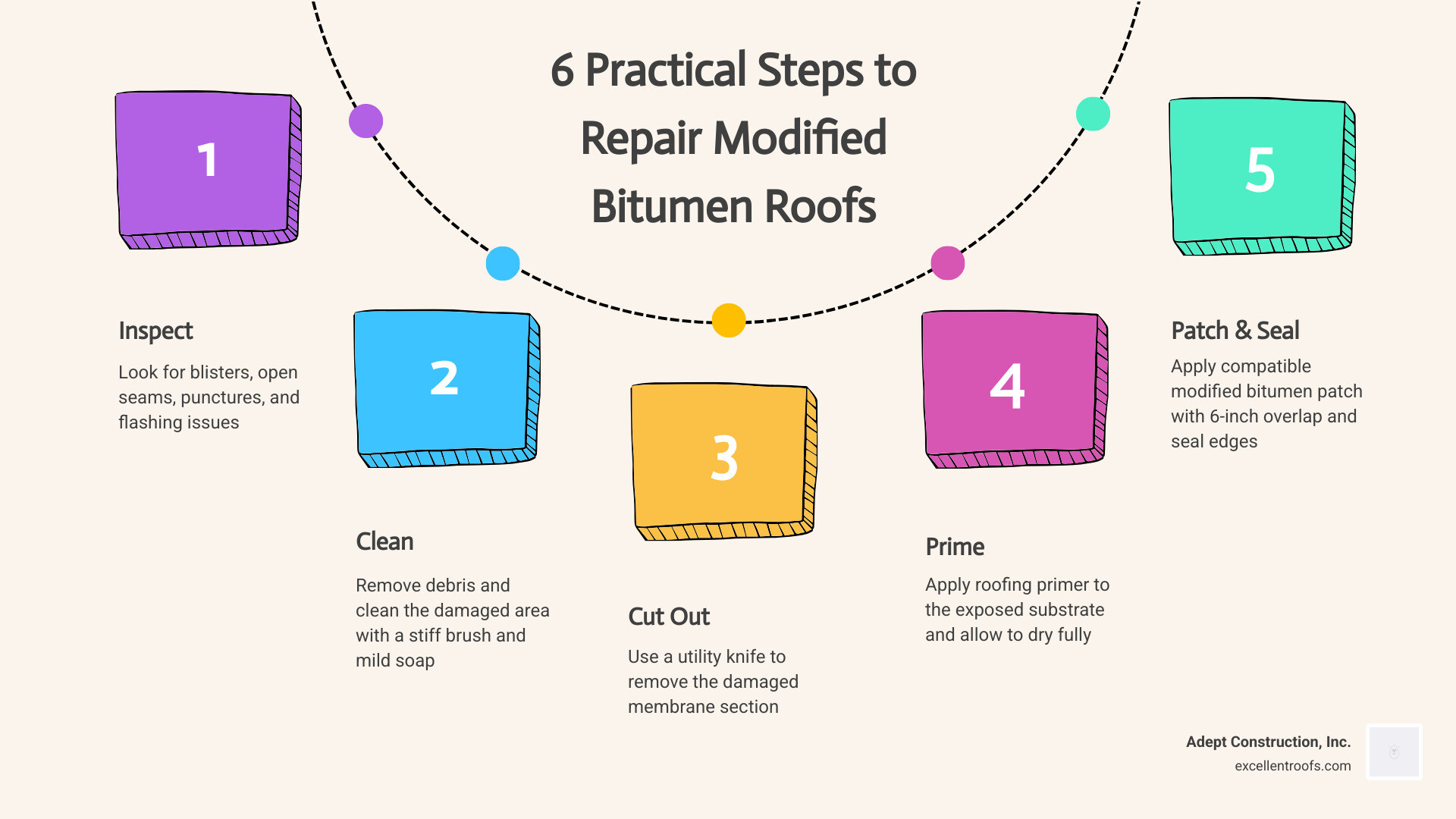
Here’s a quick overview of how to repair a modified bitumen roof:
- Inspect the roof for blisters, open seams, punctures, and flashing issues
- Clean the damaged area with a stiff brush and mild soap
- Cut out the damaged membrane with a utility knife
- Prime the exposed substrate and allow it to dry fully
- Patch with a compatible modified bitumen membrane, extending at least 6 inches beyond the damage
- Seal all patch edges with a bitumen-friendly roofing sealant
Modified bitumen roofs typically last 15 to 20 years — but without regular maintenance, that can drop to as few as 10 years. The good news: most common repairs are straightforward when caught early. If you need expert flat roofing help, Adept Construction offers free estimates.
I’m Gerald Michaels, founder of Adept Construction, Inc., a family-owned roofing company based in Naperville, Illinois — and after nearly 30 years in the industry, I’ve seen how a well-timed modified bitumen roof repair can add years of life to a roof and prevent thousands of dollars in avoidable damage. In this guide, I’ll walk you through exactly what to look for and how to fix it.
Modified bitumen roof repair vocab to learn:
Understanding Modified Bitumen Roofing Systems
To perform a successful modified bitumen roof repair, you first need to understand what you’re working with. Modified bitumen (often called “mod-bit”) is essentially a modern evolution of the old-school Built-Up Roofing (BUR) systems. While BUR uses multiple layers of tar and gravel, mod-bit uses factory-manufactured rolls of asphalt that have been “modified” with plastic or rubber polymers.
These modifiers give the roof its strength and flexibility. The membrane is typically reinforced with a core of fiberglass or polyester. Most systems in our area are installed as two-ply systems, meaning you have a base sheet and a cap sheet working together to keep the water out. This multi-layer protection is a major advantage over single-ply systems like TPO, as it provides a redundant barrier against punctures.
APP vs. SBS: Performance in Illinois Climates
In May 2026, as we look at the roofs across Naperville and Downers Grove, we see two main types of mod-bit: APP and SBS. Choosing the right one for your modified bitumen roof repair is critical for compatibility.
- APP (Atactic Polypropylene): This is essentially “plastic-modified” asphalt. It has a higher melting point and is often applied using a torch (torch-down). It offers excellent UV resistance, which is great for those high-sun summer days in Illinois.
- SBS (Styrene-Butadiene-Styrene): This is “rubber-modified” asphalt. It is much more flexible and has a “memory” that allows it to expand and contract. This is particularly valuable in our local climate, where thermal shock from rapid temperature swings can cause stiffer roofs to crack.
| Feature | APP (Plastic Modified) | SBS (Rubber Modified) |
|---|---|---|
| Application | Usually Torch-applied | Hot mop, Cold adhesive, or Heat weld |
| Flexibility | Moderate | High (Excellent for IL winters) |
| UV Resistance | Excellent | Good (Best with granules/coating) |
| Best For | Heat resistance | Thermal expansion/contraction |
If you aren’t sure which system you have, a quick flat roofing inspection by a professional can identify the material and ensure the repair products used will actually bond to the surface.
Identifying Common Damage and Leak Sources
Finding the leak on a flat roof is often harder than fixing it. Because water can travel laterally between layers, a drip in your warehouse might be coming from a puncture ten feet away.
Common culprits include:
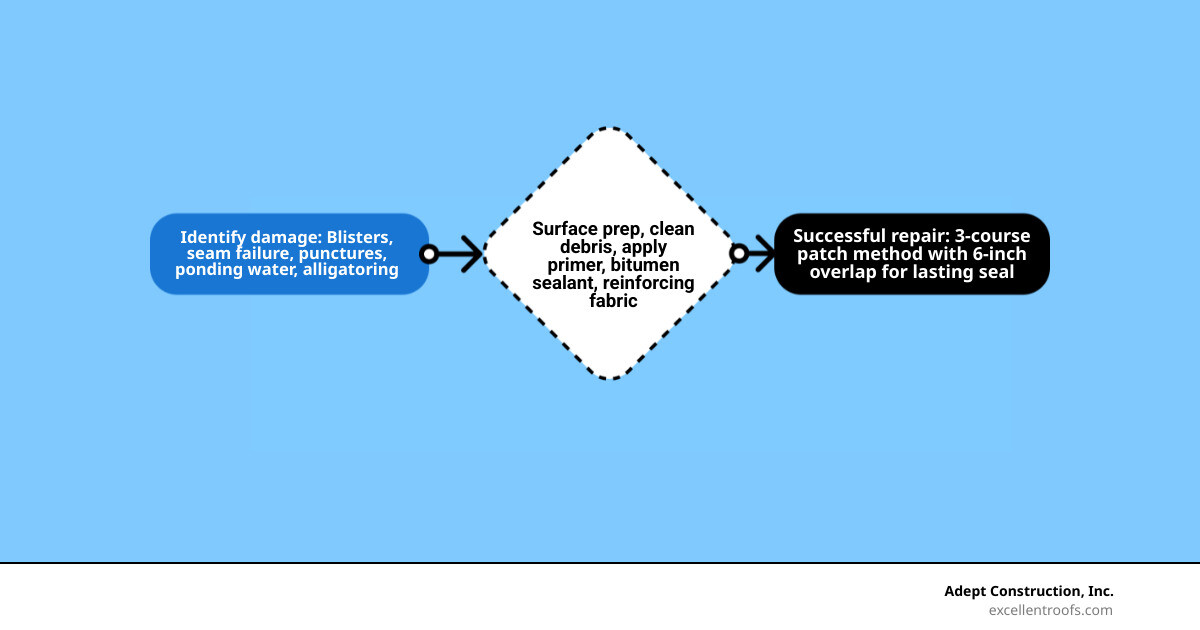
- Seam Failure: This is the #1 cause of leaks. Over time, the adhesives or heat-welded bonds at the overlaps can dry out or pull apart.
- Blisters: These look like bubbles on the surface. They occur when air or moisture is trapped between layers. When the sun heats the roof, the pocket expands, stretching the membrane.
- Ponding Water: If water stands for more than 48 hours after a rain, it’s considered ponding. The weight of an inch of water across 5,000 square feet can add nearly 130 tons of stress to your structure.
- Punctures: Often caused by heavy foot traffic, dropped tools during HVAC maintenance, or falling debris.
- Alligatoring: This is a pattern of small cracks that look like reptile skin, indicating the asphalt has dried out from UV exposure.
For technical guidance on identifying these issues, the Canadian Roofing Reference Manual provides excellent troubleshooting standards for membrane roofing.
Signs of Advanced Membrane Deterioration
When we perform a commercial roof inspection, we look for “granule loss.” If you see bald spots on your cap sheet where the black asphalt is exposed, your roof is losing its primary defense against the sun. Once the membrane becomes brittle, surface cracking and moisture entrapment are inevitable. If more than 30% of your roof shows alligatoring or significant granule loss, it may be time to discuss a replacement rather than a simple patch.
The Step-by-Step Guide to Professional-Grade Repairs
If you’ve identified a specific problem area, follow these steps to ensure a water-tight fix.
Step 1: Surface Preparation
You cannot bond new material to dirt. Clear all debris, loose granules, and dust from the area. We recommend using a stiff-bristle brush and, if necessary, a mild detergent. The area must be bone-dry before you proceed.
Step 2: Clearing the Damage
For punctures or small tears, use a utility knife to trim away any loose or jagged edges of the membrane. If you are dealing with a blister, use an “X” cut to open it up. Peel back the flaps and let the interior dry completely. If the insulation underneath is wet (saturated), it must be replaced; otherwise, you’re just trapping a rot-bomb under your new patch.
Step 3: Priming
Apply a high-quality asphalt primer to the cleaned area. This is a step many DIYers skip, but it’s vital. The primer penetrates the old, weathered surface to create a “bridge” for the new adhesive to grab onto. According to industry repair guides, failure to prime is the leading reason patches peel up within a year.
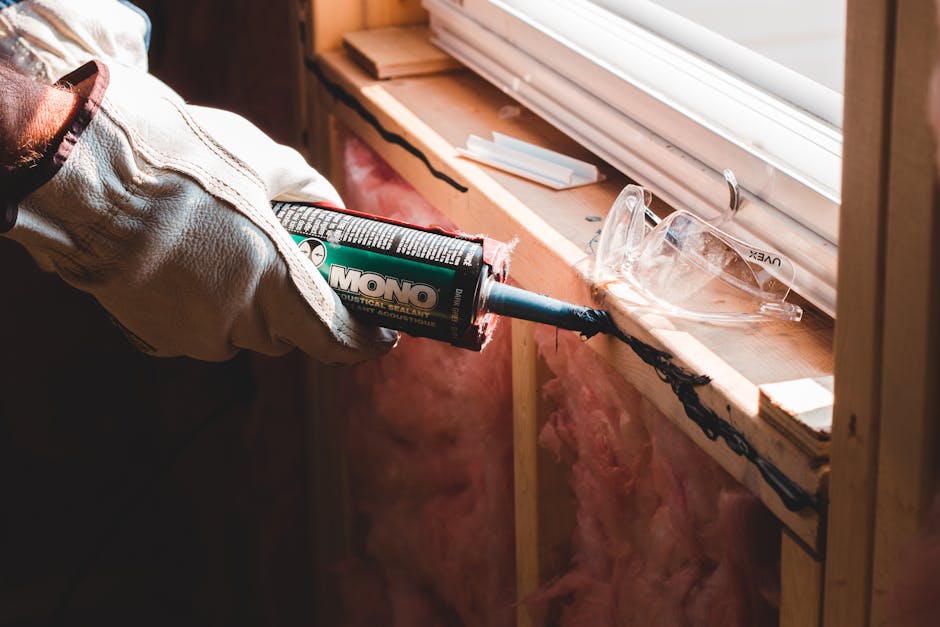
Step 4: Applying the Modified Bitumen Roof Repair Patch
The “Three-Course Method” is the gold standard for sealing a patch. Here is how we do it:
- Mastic: Apply a layer of bitumen-friendly flashing cement (mastic) over the repair area using a trowel.
- Reinforcing Fabric: Embed a layer of polyester or fiberglass mesh into the wet mastic. This provides the “bones” of the repair.
- Mastic Again: Apply a second layer of mastic over the fabric, completely encapsulating it.
For larger holes, you should install a physical piece of mod-bit membrane (a patch). Cut the patch so it extends at least 6 inches beyond the damaged area in all directions. Pro Tip: Round the corners of your patch. Square corners are much more likely to catch on a snow shovel or wind and peel up over time.
If you are in the western suburbs, you can find more specific advice on roof repair in Downers Grove regarding local weather considerations and material availability.
Repair vs. Replacement: Costs and Longevity
Every building owner asks the same question: “Can I get one more year out of this, or am I throwing good money after bad?”
Generally, a well-executed modified bitumen roof repair can last 10 to 15 years. However, if your roof is already 20 years old, the rest of the membrane is likely reaching the end of its natural life. At Adept Construction, we suggest the “30% Rule”: if the cost of necessary repairs exceeds 30% of the cost of a full replacement, it’s usually more financially sound to replace the roof.
Cost Analysis of Modified Bitumen Roof Repair vs. Replacement
In the Naperville and Downers Grove area, costs can vary based on roof height and the number of penetrations (like vents and HVAC units).
- Small Patch Repairs: Typically range from $300 to $600 for a professional service call.
- Major Repairs: Can run between $1,500 and $3,000 depending on the linear footage of seams being re-sealed.
- Full Replacement: Modified bitumen installation generally costs between $5 and $12 per square foot. For a standard residential flat roof, this often lands between $5,000 and $14,000.
Investing in a reflective roof coating can extend the life of your mod-bit system by 5 to 10 years for a fraction of the cost of a tear-off. You can find a detailed breakdown of these expenses in our commercial re-roofing cost guide. If you’re specifically looking for roof repair in Naperville IL, we can provide a localized estimate that accounts for current material rates in the Chicago suburbs.
When to Hire a Professional for Modified Bitumen Roof Repair
While a small puncture can be a DIY project, there are times when you absolutely need a pro:
- Torch Application: APP membranes often require an open-flame torch. This is incredibly dangerous for someone without professional training and proper insurance. Many building fires are started by DIY torch-down attempts.
- Structural Ponding: If your roof has a “low spot” caused by a sagging deck, simply patching the membrane won’t help. We may need to install tapered insulation to create a slope and move the water toward the drains.
- Warranty Protection: If your roof is under a manufacturer’s warranty, attempting a DIY repair will likely void it.
- Insurance Claims: After a storm, insurance adjusters require professional documentation. We specialize in helping owners with commercial roofing in Naperville navigate the claims process to ensure they get the coverage they deserve.
Frequently Asked Questions about Mod-Bit Repair
How long does a modified bitumen roof repair typically last?
A professional repair using the three-course method or a heat-welded patch can last 10 to 15 years. Temporary “mastic-only” patches may only last 1 to 3 years.
Can you walk on a modified bitumen flat roof without causing damage?
Yes, mod-bit is much more durable than many other flat roof types. However, excessive foot traffic—especially in the heat of a summer afternoon when the asphalt is soft—can cause scuffing and granule displacement. Always tread lightly.
Is it possible to install a new modified bitumen layer over an old one?
Yes, this is called a “recover.” Most local building codes in Illinois allow for two layers of roofing. However, we never recommend an overlay if the bottom layer is wet or the roof deck is damaged.
Conclusion
The key to a long-lasting flat roof is simple: don’t let small problems grow. A modified bitumen roof repair caught in May is much cheaper than a full roof replacement in November. By performing bi-annual inspections—ideally in the spring and fall—you can catch seam separations and blisters before they allow water to reach your building’s interior.
At Adept Construction, Inc., we pride ourselves on high-quality workmanship and superior customer service. Whether you have a small leak on your garage or a massive commercial project, our knowledgeable staff is here to help. We offer free estimates to all residents and business owners in Naperville, Downers Grove, and the surrounding Chicago suburbs.
Don’t ignore the signs of wear. Contact us for expert roof repairs today and let’s make sure your roof is ready for whatever the Illinois weather throws at it!