
Why Your Roof Is the Unsung Hero of Your Home
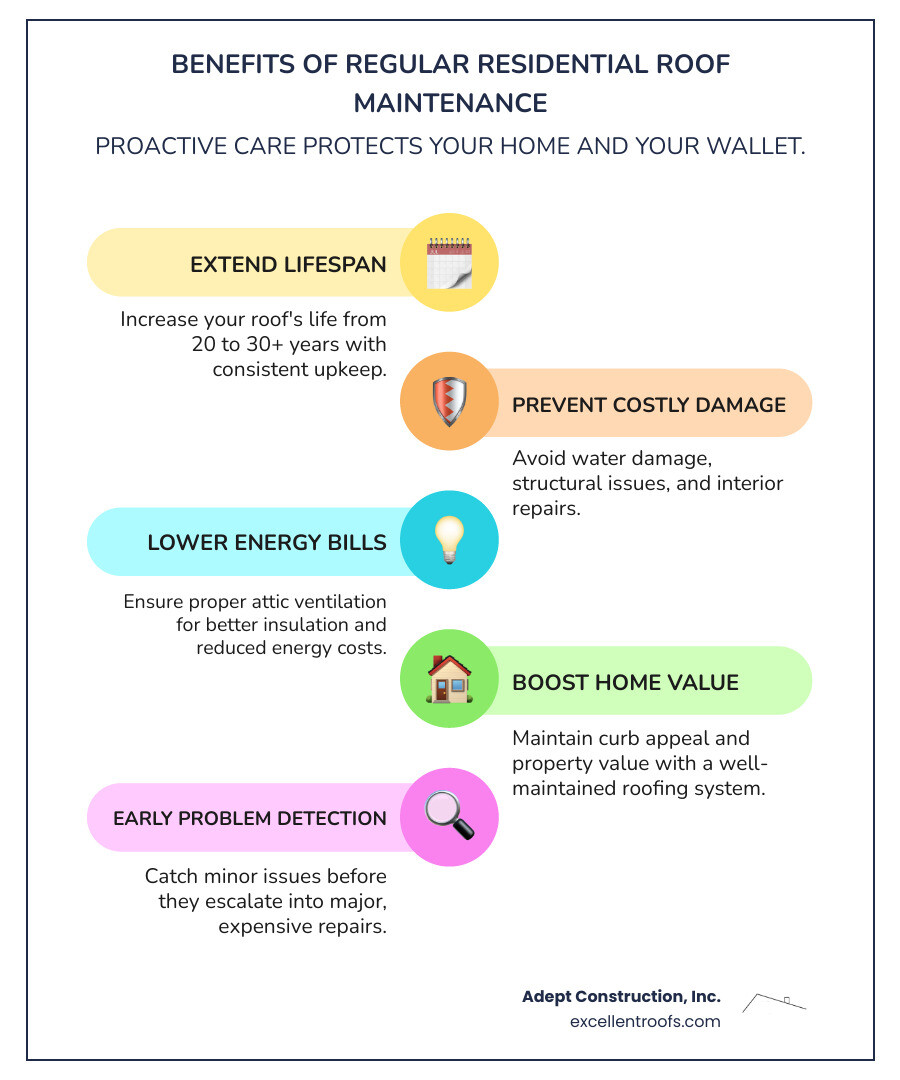
Residential roof maintenance is the systematic inspection, cleaning, and repair of your home’s roofing system to prevent damage and extend its lifespan. Here’s what every homeowner needs to know:
Essential Residential Roof Maintenance Tasks:
- Inspect twice yearly (spring and fall) and after major storms
- Clean gutters and downspouts to prevent water backup
- Remove debris like leaves, branches, and moss from the roof surface
- Check for damaged shingles – look for curling, cracking, or missing pieces
- Inspect flashing around chimneys, vents, and skylights for gaps or rust
- Monitor attic ventilation to prevent moisture buildup and ice dams
- Address small issues immediately before they become expensive repairs
Your roof is your home’s primary shield against rain, snow, wind, and UV radiation. Yet most homeowners only think about their roof when something goes wrong. According to industry research, 31% of all home inspection problems are roof-related, and the average complete residential asphalt shingle roof replacement costs $18,923. The good news? Proactive maintenance can prevent most major issues and extend your roof’s lifespan by years.
When roof maintenance is neglected, small problems like a loose shingle or minor leak quickly escalate into structural damage, mold growth, and interior water damage that affects your ceilings, walls, and insulation. The consequences go beyond repair costs – they impact your home’s value, energy efficiency, and your family’s safety and comfort. For homeowners seeking reliable protection, professional roofing services provide peace of mind and long-term savings.
I’m Gerald Michaels, founder and president of Adept Construction, Inc., and I’ve spent nearly three decades helping homeowners protect their most valuable asset through expert residential roof maintenance and repair. Since establishing our family-owned business in 1997, I’ve seen how consistent maintenance prevents costly emergencies and keeps homes safe for generations.
Residential roof maintenance glossary:
The Importance of Regular Roof Inspections
Routine roof inspections are the most effective way to prevent expensive repairs and maximize roof longevity. Early detection of minor issues can prevent major damage. Notably, 31% of home inspection problems are roof-related . The average professional roof inspection costs $230, a small investment compared to potential repair bills. We recommend annual professional roof inspections, and certainly after any major storm, to keep your roof in top condition.
Signs of Roof Damage You Can Spot
Even without climbing onto your roof, there are many indicators that can signal potential problems. Knowing what to look for can help us catch issues early, saving us from more extensive and costly repairs down the line.
From the Ground:
From the safety of the ground, we can often spot tell-tale signs of roof damage. We should regularly walk around our home and observe the roof.
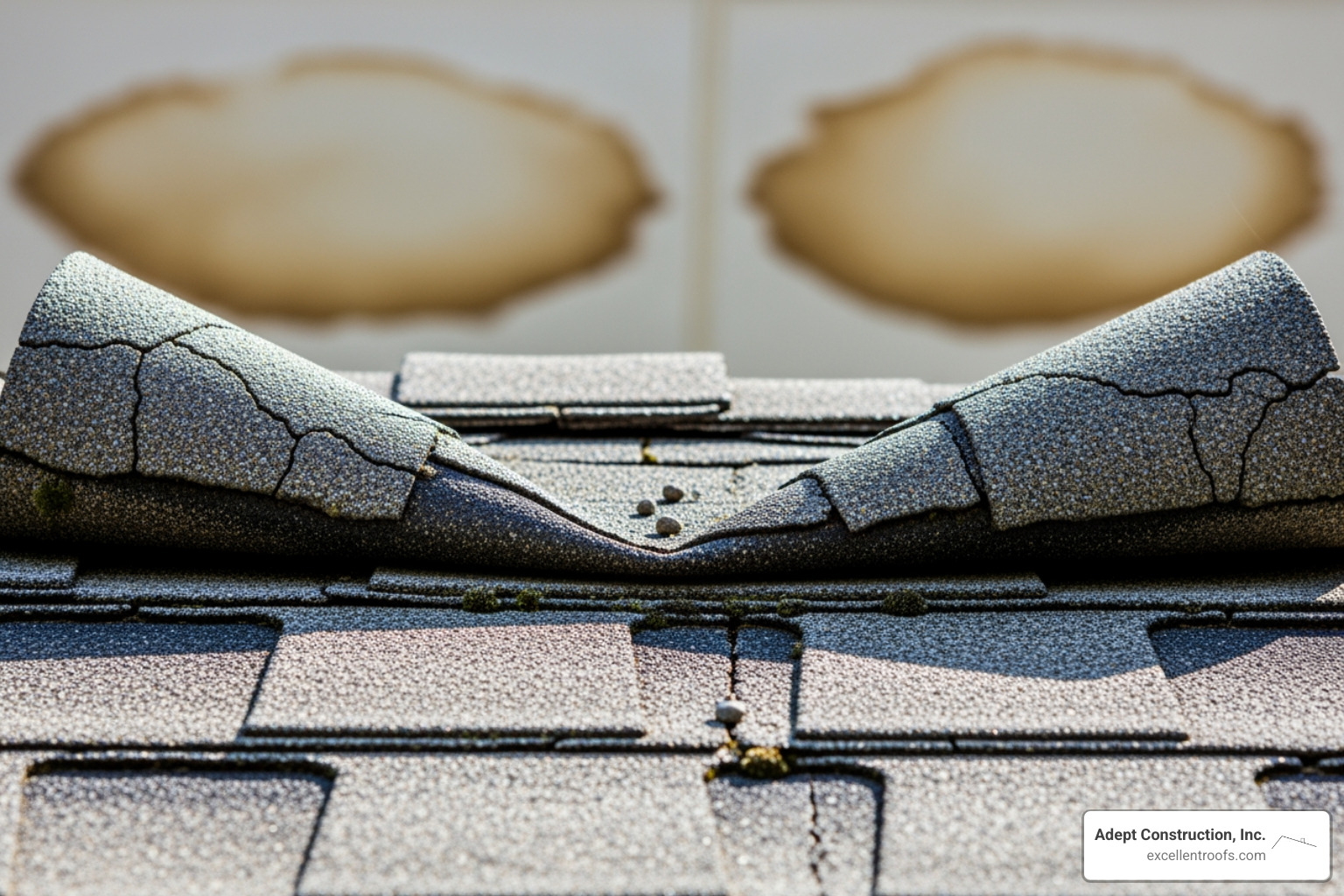
- Missing, cracked, or curling shingles: Shingles should lay flat and have a uniform appearance. If we see shingles that are out of place, cracked, or starting to curl at the edges, it’s a sign of wear and potential vulnerability.
- Shingle granules collecting in gutters: Asphalt shingles are coated with granules that protect them from UV rays. If we find an excessive amount of these granules in our gutters, it means our shingles are deteriorating and losing their protective layer. This is a strong indicator that the roof is nearing the end of its lifespan.
- Damaged or rusted flashing: Flashing is the metal material installed around chimneys, skylights, vents, and other roof penetrations to create a watertight seal. If we notice flashing that is bent, rusted, missing, or has deteriorating sealant, water can easily seep into our home.
- Sagging roofline or deck: A noticeable dip or sag in the roofline is a serious structural concern and requires immediate professional attention. This could indicate compromised decking or framing beneath the surface.
- Water stains on siding: If we see water stains or streaks on the exterior walls of our home, especially below the roofline, it might indicate that our gutters are overflowing or damaged, causing water to cascade down the walls instead of draining away.
From Inside:
Sometimes, the first signs of roof damage appear inside our home. These interior indicators are critical and should never be ignored.
- Water stains on ceilings or walls: These are perhaps the most obvious signs of a leak. Water stains, especially brown or yellow discoloration, indicate that water has penetrated the roof and is making its way through our home’s interior structure.
- Peeling paint or bubbling plaster: Moisture can cause paint to peel or plaster to bubble on ceilings and upper walls, particularly near the roofline. This is another clear sign of water intrusion.
- Musty odors or visible mold in the attic: A persistent musty smell in the attic, or worse, visible mold growth, points to a moisture problem. This could be due to a roof leak or inadequate attic ventilation.
- Unexplained increases in energy bills: A compromised roof or poor attic ventilation can lead to significant heat loss in winter and heat gain in summer, causing our HVAC system to work harder and our energy bills to rise.
- Daylight visible through attic boards: If we can see light peeking through the roof boards in our attic, it means there are openings or gaps in our roof system. These openings are direct pathways for water, pests, and air drafts.
Your Year-Round Residential Roof Maintenance Checklist
Consistent, seasonal maintenance is the key to a long-lasting roof. Following a structured schedule helps address weather-specific challenges and prevents small issues from escalating. For a detailed annual guide, see Owens Corning’s Roof Maintenance Tips.
Spring Maintenance: Recovering from Winter
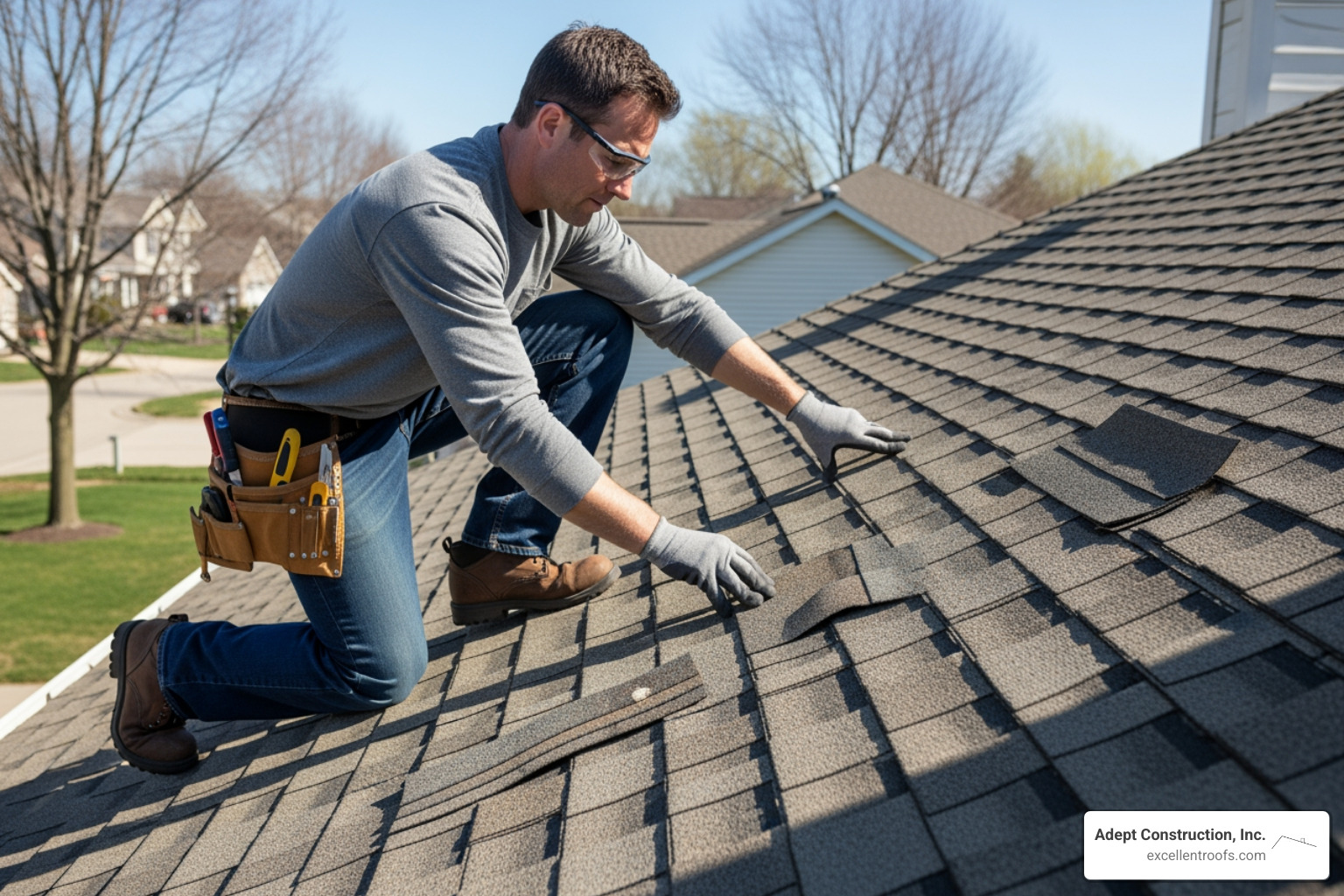
After the harsh Illinois winter, spring is the perfect time to assess our roof for any damage caused by snow, ice, and freezing temperatures.
- Remove debris from the roof surface: Winter storms can leave behind branches, leaves, and other debris. We should gently remove these to prevent moisture retention, which can lead to mold and algae growth.
- Inspect for winter damage (ice dams, hail, wind): Look for signs of ice dam formation, which can force water under shingles. Check for missing or broken shingles from wind, and any impact damage from hail.
- Check for loose or missing shingles: High winds during winter can lift or dislodge shingles. Repairing these promptly prevents further damage and leaks.
- Examine flashing and seals for wear: Freezing and thawing cycles can cause flashing to warp or seals around vents and chimneys to crack. We need to ensure these critical areas are watertight.
- Assess attic for moisture or mold: Head into the attic to check for any signs of water intrusion or mold growth that might have occurred during the winter months.
Summer Maintenance: Sun and Storm Readiness
As temperatures rise, our roof faces new challenges from intense sun and potential summer storms.
- Inspect for sun/UV damage (curling, cracking): Prolonged exposure to UV rays can cause shingles to curl, crack, or blister. This accelerates their deterioration and reduces their effectiveness.
- Check seals around vents, chimneys, and skylights: The summer heat can dry out and crack sealants. We must ensure that all penetrations remain securely sealed to prevent leaks during summer downpours.
- Prepare for summer storms by securing loose materials: High winds and heavy rains are common in summer. We should ensure any loose shingles or flashing are re-secured to withstand these conditions.
- Ensure attic ventilation is unobstructed: Proper attic ventilation is crucial in summer to prevent heat buildup, which can prematurely age shingles. We need to check that soffit and ridge vents are clear.
- Schedule a professional inspection if needed: Summer is often an ideal time for professional inspections and repairs, as the weather is typically dry and stable.
Fall Maintenance: Prepping for Cold Weather
Fall is a critical season for residential roof maintenance, as it prepares our home for the upcoming winter.
- Remove fallen leaves and debris from the roof: Accumulating leaves can trap moisture and accelerate shingle deterioration. We should clear them off regularly.
- Trim overhanging tree branches: Branches rubbing against the roof can damage shingles, and heavy snow or ice can cause them to break and fall, causing significant impact damage. Trimming them back protects our roof.
- Inspect attic ventilation for proper airflow: Good airflow in the attic is essential to prevent ice dams in winter. We need to ensure soffit vents are not blocked by insulation.
- Check for signs of animal intrusion: As animals seek shelter from colder weather, they might try to enter our attic through roof gaps. We should look for any entry points and seal them.
- Schedule repairs before winter sets in: Addressing any finded issues in the fall prevents them from worsening during winter and potentially leading to leaks.
Winter Maintenance: Ice and Snow Defense
Winter brings unique challenges, especially in Downers Grove and Naperville, with heavy snow and freezing temperatures.
- Monitor for heavy snow accumulation and safely remove if needed: While roofs are designed to handle snow loads, excessive accumulation can be problematic. If removal is necessary, it should be done carefully and safely, ideally by professionals.
- Watch for ice dams at the eaves: Ice dams form when melted snow refreezes at the colder eaves, preventing proper drainage. This can force water under shingles and into our home.
- Ensure attic insulation does not block soffit vents: Proper attic ventilation prevents warm air from melting snow on the roof deck, which contributes to ice dam formation. Make sure insulation isn’t blocking the vents.
- Inspect for leaks after freeze/thaw cycles: These cycles can exacerbate existing damage, so we should be vigilant for any new leaks or water stains inside our home.
- Review How to Prepare Your Roof for Winter Weather: This guide offers more in-depth advice on winter roof preparation.
Common Roof Problems and How to Address Them
Identifying and addressing common roofing issues is crucial for preventing long-term damage. Routine maintenance is proven to extend roof life .
Tackling Moss, Algae, and Debris
Moisture-retaining debris accelerates roof deterioration. Moss and algae growth can be identified by green or black streaks. These organisms thrive in damp, shaded environments, particularly on north-facing roofs. Moss absorbs water, which can damage shingles by lifting their edges and exposing the undersides to moisture. Algae causes unsightly dark streaks.
We should remove debris like leaves, twigs, and pine needles regularly, as they trap moisture against the shingles. For moss and algae, gently remove existing growth with a soft brush or leaf blower from a safe vantage point. Avoid pressure washing, as it can strip granules from asphalt shingles and force water underneath. To prevent regrowth, we can have zinc or copper strips installed at the roof ridge; as rainwater flows over them, it releases microscopic particles that inhibit moss and algae.
The Critical Role of Attic Ventilation
Proper attic ventilation regulates temperature and moisture, preventing ice dams in winter and reducing shingle wear in summer. Without adequate ventilation, trapped heat in the summer can cause shingles to bake, reducing their lifespan. In winter, a warm attic can melt snow on the roof deck, leading to ice dam formation at the eaves. These ice dams prevent melted water from draining, forcing it back up under shingles and into our home.
Effective ventilation involves a balanced system where cool air enters through soffit vents (located under the eaves) and warm, moist air exits through ridge vents (along the roof’s peak) or other roof vents. This continuous airflow keeps the attic temperature closer to the outside temperature, protecting the roof structure and shingles. Learn more about how attic ventilation works. We always check that soffit vents are clear of insulation or obstructions during our inspections.
Flashing, Vents, and Skylights: Vulnerable Points
These areas are where the roof plane is interrupted, making them highly susceptible to leaks if not properly maintained.
- Flashing: This metal material is installed around chimneys, vent pipes, skylights, and in valleys where two roof planes meet. We should inspect flashing for rust, cracks, bends, or gaps in the sealant. Rusted or dented flashing, or rotting sealant, indicates a need for professional attention.
- Vents: Roof vents and plumbing vent pipes penetrate the roof deck. The rubber boots around plumbing vent pipes can dry out, crack, or fall apart over time, creating a direct path for water intrusion. We always check these for deterioration.
- Skylights: Skylights are essentially windows in our roof and, like any window, their seals can fail. We must inspect the seals and flashing around skylights for cracks, gaps, or signs of water leakage inside.
Watertight seals in these vulnerable areas are essential to prevent leaks. If we spot any issues, it’s crucial to address them promptly to avoid significant water damage inside our home.
Repair vs. Replace: Making the Right Decision
Deciding whether to repair or replace our roof is a common dilemma for homeowners. It often comes down to the extent of the damage, the age of the roof, and our long-term plans for the home.
When to Repair:
Roof repair is usually the best option when the damage is localized and minor, such as a few missing shingles after a wind storm, a small leak around a vent, or isolated flashing issues. If our roof is still relatively young—say, under 10 years old for an asphalt shingle roof—repairing specific problem areas can be a cost-effective way to extend its lifespan. For instance, if our asphalt shingle roof is under 10 years old and experiences a leak, a repair is often the appropriate solution in 90% of cases. Even for roofs 10 to 15 years old, about 60% of these mid-life roofs will benefit from repairs rather than a full replacement. Roof repair costs typically range from $650 for simple fixes to $4,826 for more complex problems.
When to Replace:
However, there comes a point when replacement becomes the more practical and economical choice. If more than 25-30% of our roof is compromised, or if our roof is nearing the end of its typical 20 to 25-year lifespan (for asphalt shingles), replacement is often more cost-effective than attempting multiple, extensive repairs. Widespread granule loss, curling or cupping shingles across large sections, or significant structural issues are all signs that a full replacement is due. The average complete residential asphalt shingle roof replacement costs $18,923. While this is a larger upfront investment, it provides long-term peace of mind, improved energy efficiency, and boosts our home’s curb appeal and market value.
For expert advice on roof repair in Downers Grove, IL or roof replacement in Naperville, IL, consult a trusted professional. Our team can assess the condition of your roof and provide an honest recommendation, helping you make the right choice for your home.
DIY vs. Professional Residential Roof Maintenance
While some basic residential roof maintenance tasks can be performed by homeowners, it’s crucial to understand the risks involved and when to call in the experts. Roofing jobs have the fifth highest fatality rate in construction (). Safety should always be our top priority.
Safe DIY Tasks for Homeowners
For homeowners who are comfortable and have the right safety gear, here are a few tasks that can often be handled without professional intervention:
- Visual inspections from the ground: Using binoculars, we can safely check for missing or damaged shingles, debris accumulation, or issues with flashing from ground level.
- Removing minor debris: With a sturdy ladder and proper safety precautions, we can carefully remove small amounts of leaves, twigs, or other light debris from accessible areas of the roof or gutters.
- Trimming small, reachable branches: If we have small branches directly overhanging the roof that can be reached safely from the ground or a ladder, we can trim them to prevent rubbing or falling debris.
- Checking attic for signs of leaks or mold: Periodically inspecting our attic for water stains, musty odors, or visible mold can help us detect interior signs of a roof problem early.
When to Call a Professional for Residential Roof Maintenance
For anything beyond these basic tasks, or if we ever feel unsure or unsafe, it’s always best to call a professional. Not only do professionals have the right equipment and training, but they also offer warranties on their work, providing peace of mind.
| Task | DIY Risk | Pro Benefit |
|---|---|---|
| Shingle Repair | Improper sealing, leaks | Warranty-backed work |
| Leak Detection | Missed hidden issues | Comprehensive assessment |
| Flashing Repair | Incomplete seal | Long-term protection |
| Structural Issues | Safety hazards | Expert solutions |
For any work involving climbing on the roof, leak repairs, flashing replacement, or structural concerns, always trust professional residential roofing services. Our team at Adept Construction, Inc. has the expertise and experience to handle all your roofing needs safely and effectively, ensuring the longevity and integrity of your roof.
Frequently Asked Questions about Roof Maintenance
We often hear similar questions from homeowners regarding their roof maintenance. Here are some of the most common ones:
How often should a residential roof be inspected?
A residential roof should be professionally inspected at least once per year, typically in the spring or fall, and after any major weather event such as a severe windstorm or hail. Homeowners should also perform visual checks from the ground each season to catch any obvious issues early. Regular inspections, like the ones we provide, help identify small problems before they escalate into costly repairs.
What are the biggest consequences of neglecting roof maintenance?
Neglecting residential roof maintenance can lead to a cascade of severe and expensive problems. The biggest consequences include:
- Water leaks: Small leaks can quickly turn into major water intrusion, damaging ceilings, walls, insulation, and personal belongings.
- Structural rot: Persistent moisture can lead to rot in the roof deck, rafters, and other wooden structural components, compromising the integrity of our home.
- Mold growth: Damp environments are perfect breeding grounds for mold, which can spread rapidly in attics and living spaces, posing health risks.
- Reduced lifespan: A neglected roof will deteriorate much faster than a well-maintained one, requiring premature and costly replacement.
- Higher energy bills: Damage or poor ventilation can lead to energy loss, increasing our heating and cooling costs.
- Compromised home value: A visibly damaged or poorly maintained roof negatively impacts our home’s curb appeal and resale value.
These issues result in costly repairs that far exceed the price of routine maintenance. For instance, while roof repairs can range from $650 to $4,826, a full asphalt shingle roof replacement averages $18,923.
Can regular maintenance really extend my roof’s lifespan?
Yes, absolutely! Consistent residential roof maintenance is one of the most effective ways to significantly extend the lifespan of our roofing system. Just like regular oil changes for our car, maintenance for our roof addresses minor issues before they escalate into major problems. By keeping the roof clean, ensuring proper drainage, repairing small damages promptly, and maintaining good ventilation, we can help our roof reach or even exceed its expected lifespan of 20 to 25 years for asphalt shingles. Proactive care truly pays off in the long run.
Conclusion: Protect Your Investment with Proactive Care
Our home’s roof is much more than just a cover; it’s a complex system designed to protect our most valuable asset. Regular residential roof maintenance delivers longevity, cost savings, and peace of mind. By understanding the common causes of roof damage, knowing what signs to look for, and following a consistent seasonal maintenance schedule, we can proactively safeguard our home against the elements.
While some minor tasks can be handled safely by homeowners, crucial inspections and repairs are best left to experienced professionals. Neglecting roof maintenance can lead to costly repairs, structural damage, and a significantly reduced lifespan for our roof.
Adept Construction, Inc. is the trusted partner for homeowners in Downers Grove and Naperville. Our family-owned business is committed to providing superior customer service, knowledgeable staff, and high-quality workmanship for all your residential roofing needs. Don’t wait for minor issues to become major headaches—contact us today for a free estimate on your residential roofing needs.