

Flat Roof Repair, Replacement and Installation — EPDM, TPO and Modified Bitumen
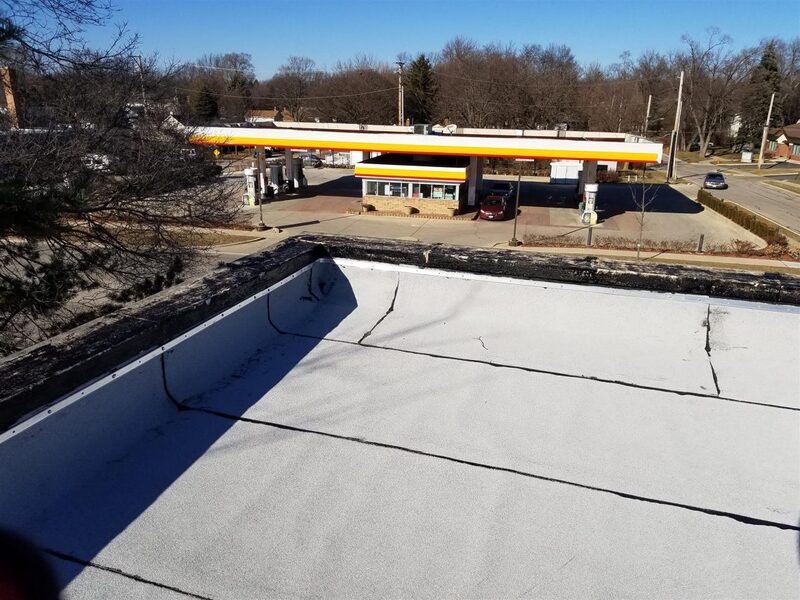
Flat Roofing Specialists for Naperville, Downers Grove and DuPage County
Adept Construction, Inc. repairs, replaces and installs flat and low-slope roofs — EPDM rubber, TPO and modified bitumen — across DuPage County from offices in Naperville and Downers Grove. Most of our flat-roof work is on commercial buildings; the rest is the flat-roofed additions, garages, porches and mid-century homes in the older parts of Naperville, Downers Grove, Villa Park and Oak Park. Illinois roofing license No. 104.011123, Owens Corning Preferred Contractor, since 1997. For an active leak, call Downers Grove (630) 964-8708 or Naperville (630) 360-2730; otherwise request an estimate.
Flat Roof Repair
Yes, Adept Construction repairs flat roofs in DuPage County — and repair is most of what a flat roof needs over its life. The common failures and what we do about each:
Seam failures
EPDM seams let go when the adhesive ages; TPO seams fail when they were under-welded. We probe every seam, re-adhere or re-weld the open ones, and cover-strip the worst.
Ponding water
Water standing more than 48 hours after rain means a low spot or a blocked drain. We clear drains and scuppers first; if the low spot is structural, we add tapered insulation or a cricket on the next replacement.
Punctures and splits
Dropped tools, HVAC service, hail and foot traffic puncture membranes. Small punctures get a patch of the same membrane; splits along a seam or flashing get a cover strip.
Flashing and curb leaks
Most flat-roof leaks are at the edges — parapet walls, HVAC curbs, pipe boots, skylight curbs — not in the field. We re-flash with the membrane’s own flashing system, not caulk.
Blistering and alligatoring
Blisters on modified bitumen and built-up roofs are trapped moisture; alligatoring is the surface drying out. Both are repairable early and a re-cover or replacement late.
Flat-roof leaks rarely show up directly under the entry point — our roof leak detection guide covers how we trace them. City pages with local response times: Naperville roof repair, Downers Grove roof repair.
Flat Roofing Systems We Install
EPDM rubber
Single-ply synthetic rubber, black, 45 or 60 mil, fully adhered or mechanically fastened. The most established flat-roof system in the Chicago area: handles freeze-thaw well, is the easiest membrane to repair, and lasts 20 to 30 years maintained. Our first recommendation for warehouses, garages and roofs with many penetrations.
TPO
Single-ply thermoplastic, white, heat-welded seams. Reflects summer heat, which lowers cooling cost on occupied buildings; seams welded correctly are stronger than the sheet. Lasts 20 to 30 years maintained. Our recommendation for offices, retail and any cooled space.
Modified bitumen
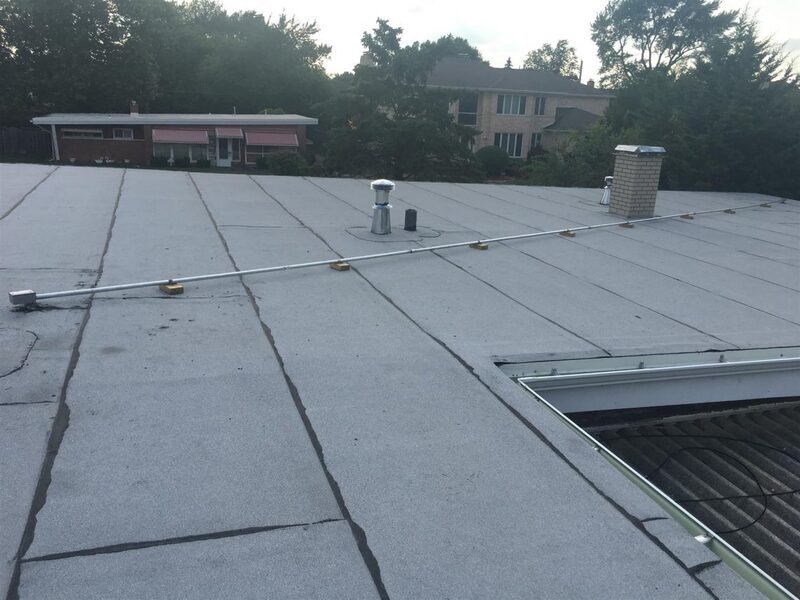
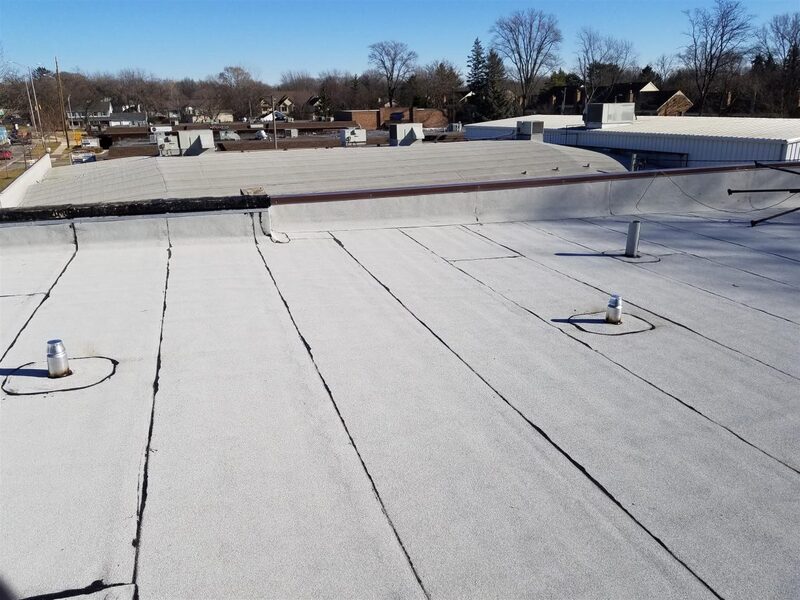
Asphalt modified with APP (plastic) or SBS (rubber) polymers, reinforced with polyester or fiberglass, installed in two or three plies, torch-applied or self-adhered. Tougher underfoot than single-ply, so the right system where HVAC crews walk the roof; lasts 20 to 25 years. Repairs are covered in our modified bitumen repair guide.
Roof coatings
Silicone or acrylic coating over a sound, dry membrane adds 10 to 15 years at a fraction of replacement cost. Not the right call over wet insulation, which is why we run a moisture survey first.
Which one? EPDM for roofs with many penetrations or that get walked on rarely; TPO for occupied, cooled buildings; modified bitumen where the roof gets foot traffic. We say which and why on the written estimate.
Get a Written Flat Roof Estimate — Repair, Recover or Replace
Products We Install
Modified bitumen: CertainTeed SBS and APP membranes with polyester or fiberglass reinforcement. Single-ply: manufacturer-warranted EPDM and TPO membranes from the major commercial lines, specified to the building. Coatings: silicone and acrylic systems matched to the membrane underneath. We install to the manufacturer’s specification so the membrane warranty holds, and we hand you the warranty registration at completion.
Flat Roofs Since 1997
EPDM · TPO · MODIFIED BITUMEN
More on Modified Bitumen
Modified bitumen is asphalt with polymer added — APP (atactic polypropylene) for a plastic-like membrane that is torch-applied, or SBS (styrene-butadiene-styrene) for a rubber-like one that is self-adhered or mopped. Both keep their flexibility in a Chicago January. Systems are one to three plies over a base sheet; a granulated cap sheet on top takes the sun and the foot traffic. It is the system we recommend when HVAC technicians will be on the roof regularly. Repairs — blisters, splits, open laps — are in our modified bitumen repair guide.
Flat Roofing FAQs
A flat roof repair is priced by the failure: a seam re-weld, a patch or a flashing repair is a single visit; a re-flash of a whole parapet or a section recover costs more. Widespread seam failure or wet insulation usually means a recover or replacement rather than a repair. Adept Construction quotes in writing after inspecting; typical ranges are in our roof repair cost guide.
Maintained, an EPDM or TPO roof lasts 20 to 30 years and a modified bitumen roof 20 to 25; a sound membrane that is coated gains another 10 to 15. The most common early failure on DuPage County flat roofs is ponding at a clogged drain, which is why Adept Construction clears drains on every visit.
EPDM (black rubber) handles freeze-thaw well, is the easiest membrane to repair and suits roofs with many penetrations or little foot traffic. TPO (white) reflects heat, lowering cooling cost on occupied buildings, and has heat-welded seams. Adept Construction installs both and recommends by building on the written estimate.
Sometimes. The International Building Code, which Illinois follows, allows a recover over one existing layer when the deck is sound and the insulation is dry. Adept Construction takes a core cut and runs a moisture survey first; wet insulation means tear-off.
Both. Adept Construction repairs and replaces flat roofs on additions, attached garages, porches and mid-century homes across Naperville, Downers Grove, Villa Park and Oak Park, as well as on commercial buildings.
Flat-roof leaks usually come from seams, flashings and curbs rather than the field of the roof, and water can travel a long way along the deck before it shows inside. Ponding after light rain is also a sign of a blocked drain. Adept Construction traces the leak to its source before repairing.
If the membrane is sound and the insulation is dry, yes — a silicone or acrylic coating adds 10 to 15 years. If the insulation is wet, a coating traps the moisture and the roof fails anyway, which is why Adept Construction runs a moisture survey before recommending one.
Yes. Every municipality in the county requires a building permit for a flat roof replacement, and Naperville requires one for any membrane roof work. Adept Construction pulls the permit.