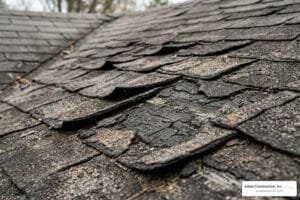

Why Replacing a Shingle Asphalt Roof Shingle Matters for Your Home
Replacing a shingle asphalt roof shingle is often the first line of defense when you spot damage on your roof. A missing or cracked shingle might seem like a small problem, but it can quickly lead to leaks, water damage, and costly repairs if left unaddressed. Understanding when to repair individual shingles versus when to replace your entire roof can save you thousands of dollars and protect your home’s structural integrity.
Quick answer: When should you replace individual shingles vs. your entire roof?
- Repair individual shingles if damage is localized (1-2 missing shingles), your roof is under 15 years old, and there’s no underlying deck damage
- Replace your entire roof if more than 25% of shingles are damaged, your roof is over 20-25 years old, you have multiple leaks, or you see widespread curling, cracking, or granule loss
- Get a professional inspection when you’re unsure—hidden damage to the roof deck or underlayment often requires expert assessment
The key decision factors:
- Age of roof – Under 10 years: usually repair; over 20 years: likely replace
- Extent of damage – Small, localized areas can be repaired; widespread damage needs replacement
- Frequency of repairs – Multiple repairs over time often cost more than a full replacement
- Roof deck condition – Rotted or damaged decking requires replacement, not just patching
For expert guidance on residential roofing services and comprehensive assessments, professional contractors can help you make the right choice. Visit our homepage for trusted roof replacement and repair solutions custom to your needs.
Most asphalt shingle roofs last 20-25 years when properly maintained. Architectural shingles can extend that lifespan to 30-50 years, while premium luxury shingles may last 40 years or more. Regular inspections and prompt repairs are essential—as one industry expert noted, “A $300 patch can prevent a $3,000 surprise.”
The decision to repair or replace isn’t always straightforward. A roof is a complete system that includes shingles, underlayment, flashing, ventilation, and the deck itself. Sometimes what appears to be a simple shingle problem masks deeper issues like inadequate ventilation, damaged flashing, or rotted decking. That’s why a thorough inspection by a qualified professional is often the smartest first step.
I’m Gerald Michaels, founder and president of Adept Construction, Inc., and I’ve been helping homeowners in the Chicago western suburbs, including Downers Grove and Naperville, make informed decisions about their roofs since 1997. Over nearly three decades, I’ve seen how properly replacing a shingle asphalt roof shingle—or knowing when a full replacement is necessary—can protect a home’s value and give families peace of mind. This guide will walk you through everything you need to know to make the best decision for your specific situation.
We offer free estimates and honest assessments because we believe in building long-term relationships with our clients, not just completing one-time projects. Contact us today to schedule your free inspection and get expert advice on whether your roof needs a simple repair or a complete replacement.
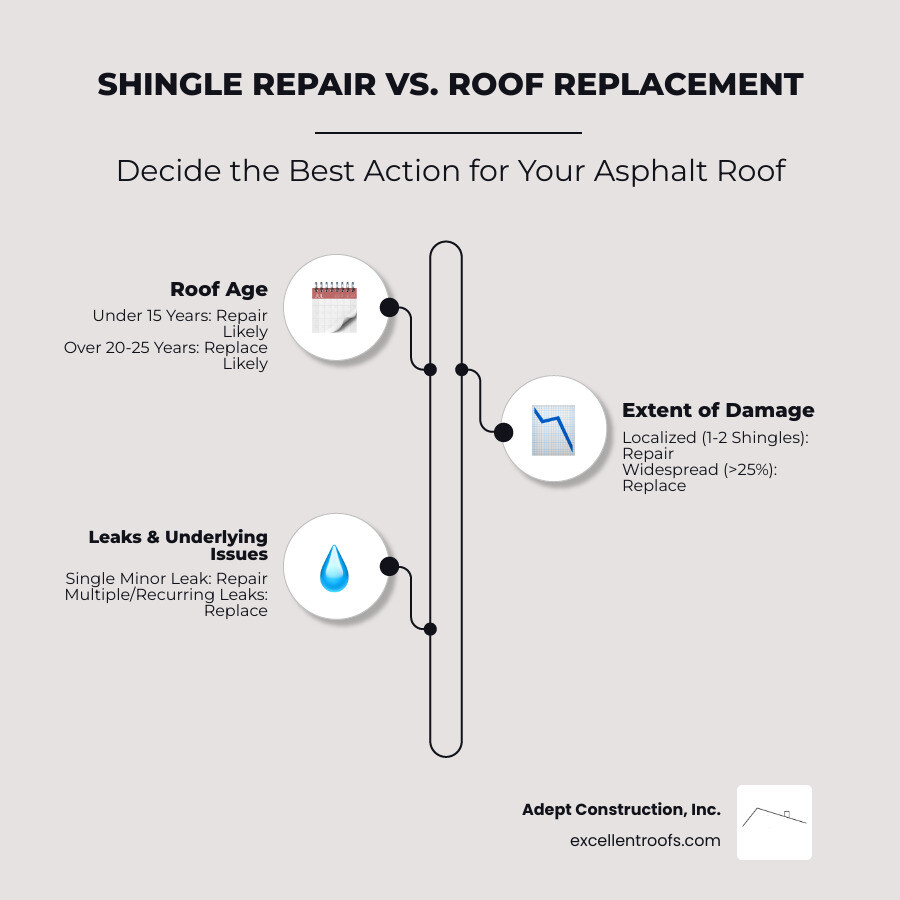
When to Repair vs. When to Replace Your Asphalt Shingles
Recognizing the signs of damage, understanding roof age, and evaluating the extent of issues are critical in determining the right course of action. A roof is a complex system, and the condition of the underlying roof deck is a decisive factor in whether a repair will suffice or if a full replacement is needed.
Signs You Need a Repair
Localized damage, such as one or two missing shingles after a storm, minor granule loss, or a single, small leak, often indicates that a repair is sufficient. If your roof is under 15 years old and otherwise in good condition, targeted repairs can be a cost-effective solution. For instance, if a falling branch dislodges just a few shingles, replacing a shingle asphalt roof shingle or two might be all that’s necessary.
We always recommend addressing minor issues quickly. Even a small weakness can become a major problem if left exposed to the elements. Early action can prevent further damage that might lead to a more expensive fix down the line. If you notice minor issues in Downers Grove, a focused roof repair in Downers Grove, IL can extend your roof’s lifespan and protect your home.
Signs You Need a Full Replacement
Widespread shingle issues—such as extensive curling, cracking, or bald patches where granules are missing—are strong indicators that your roof is nearing the end of its life. If you observe roof sagging, multiple or recurring leaks, or if your asphalt shingle roof is over 20-25 years old, it’s likely time for a full replacement.
Consider this: if more than 25% of your roofing shingles are missing or cracked, or if there’s significant water damage in your attic, a complete replacement is often the more practical and cost-effective solution in the long run. We often find that continuing to repair a deteriorating roof becomes more expensive over time than simply investing in a new one. If the cost of current repairs and future anticipated repairs exceeds 50-60% of the price of a new roof, replacement is almost always the smarter financial decision. If your home in Downers Grove requires such extensive work, a complete roof replacement in Downers Grove will provide lasting protection and peace of mind.
A Step-by-Step Guide for Replacing a Shingle Asphalt Roof Shingle
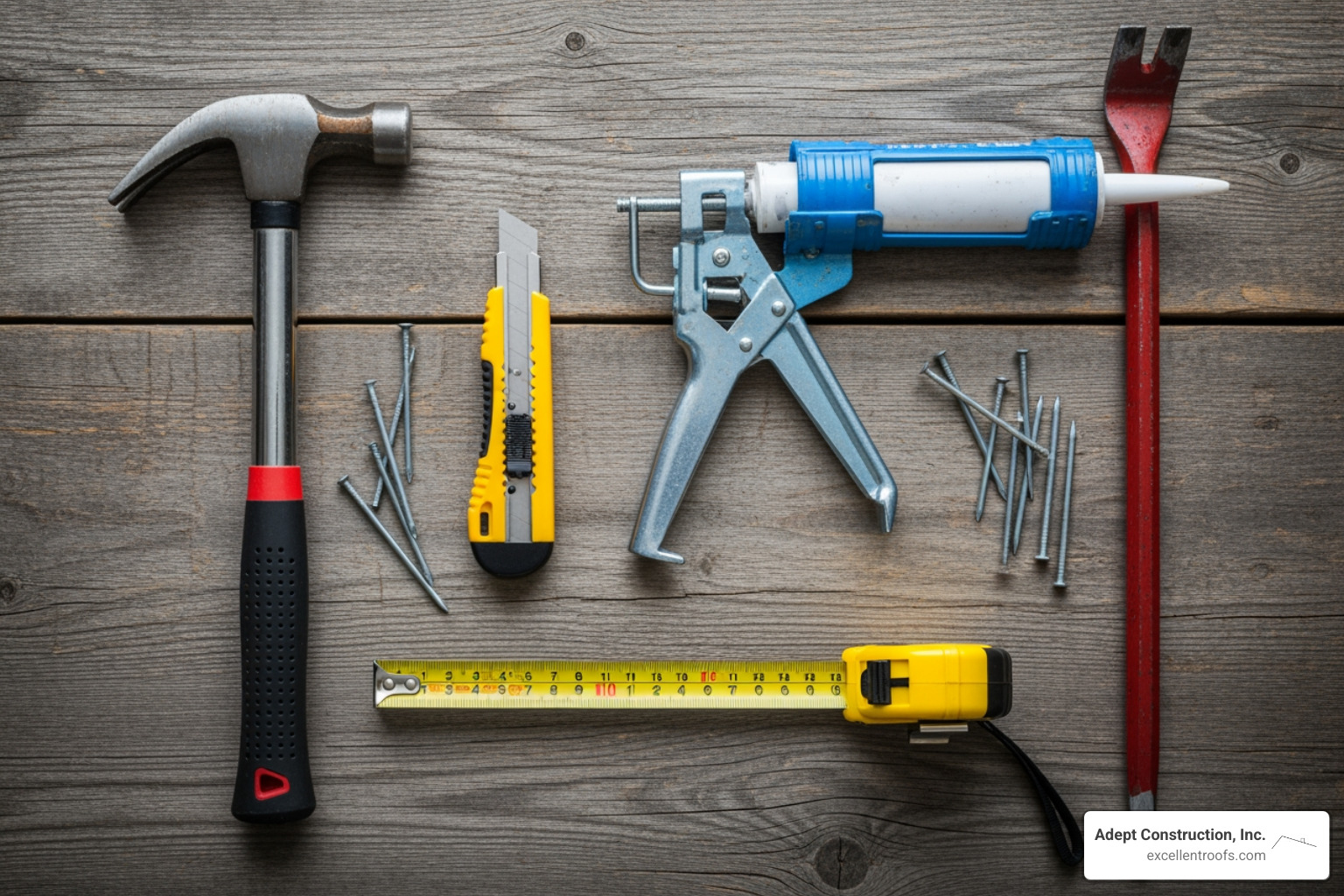
Safety is paramount when working on a roof—always use fall protection gear, such as a safety harness and rope, and work on a cool, dry day. The ideal temperature for shingle work is between 40-85°F. Matching the new shingle to your existing ones is crucial for both function and appearance.
Tools and Materials Needed
Before you begin replacing a shingle asphalt roof shingle, gather your supplies. Having everything on hand will make the process smoother and safer.
- Pry bar: Flat pry bar for breaking sealant bonds and lifting shingles.
- Hammer: For removing old nails and securing new ones.
- Utility knife: With a sharp blade for trimming shingles if needed.
- Galvanized roofing nails: 1 ¼-inch to 1 ½-inch, as these resist rust.
- Matching asphalt shingle: Crucial for a seamless repair. If you don’t have spares, you might need to carefully remove one from an inconspicuous area (like under a vent) to match, or purchase a bundle.
- Roofing cement/sealant: Asphalt plastic roof cement for resealing.
- Safety harness and rope: Non-negotiable for roof work.
- Work gloves: To protect your hands.
- Sturdy ladder: Properly secured.
The Process for Replacing a Shingle Asphalt Roof Shingle
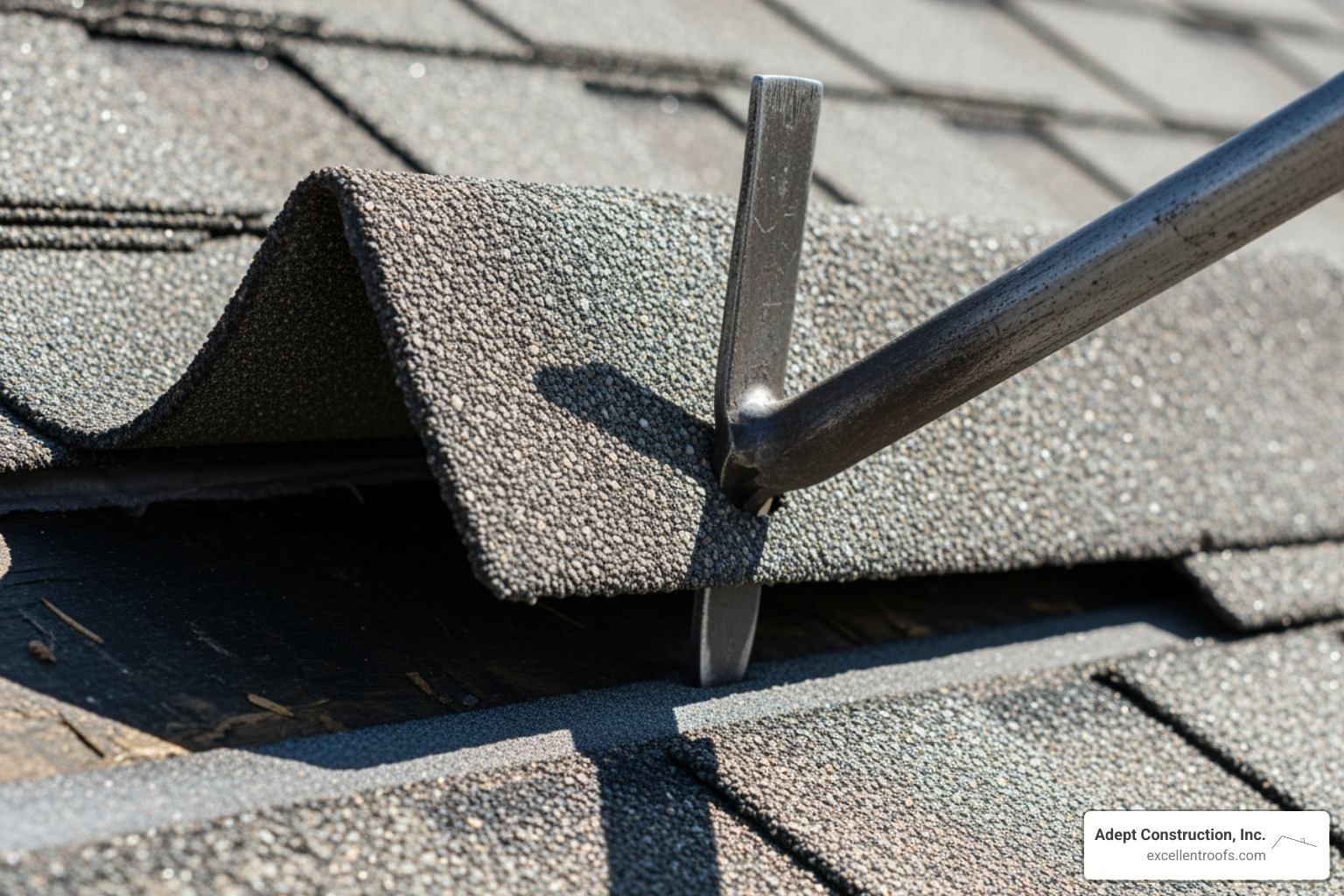
When it comes to replacing a shingle asphalt roof shingle, patience and precision are key. Working in cooler weather makes it easier to separate shingles without damage, as the sealant is less gooey.
Step 1: Break the sealant bond on the shingles above the damaged one. Gently slide a flat pry bar under the tabs of the shingles directly above the damaged one. Apply upward pressure to break the sealant bond. Do this for the two or three shingles immediately above the one you’re replacing. If you’re replacing a shingle in the middle of a course, you’ll also need to break the sealant on the adjacent shingles to the left and right.
Step 2: Carefully remove the nails from the damaged shingle. Once the overlying shingles are lifted, you’ll expose the nails holding the damaged shingle in place. Use the pry bar to lift the shingle and nail simultaneously, carefully pulling out all nails. Be gentle to avoid tearing the surrounding shingles. Each shingle is typically held by four to six nails.
Step 3: Slide the old shingle out. With the nails removed and the sealant bonds broken, the damaged shingle should now slide out easily. Discard it properly.
Step 4: Slide the new shingle into place, aligning it with the surrounding shingles. Take your new, matching shingle and slide it into the empty space. Ensure it’s perfectly aligned with the bottom edge and side edges of the adjacent shingles. It should sit flat and snug.
Step 5: Secure the new shingle with four to six nails in the correct locations. Lift the tabs of the overlying shingles slightly and carefully nail the new shingle into place. Drive the galvanized nails straight and flush, just above the adhesive strip on the shingle, ensuring they are covered by the shingle above it. Improper nailing is a leading cause of roof failures, so pay close attention to manufacturer instructions and avoid over-driving or under-driving nails.
Step 6: Apply dabs of roofing cement under the tabs of the overlying shingles to reseal them. Once the new shingle is secured, gently lower the overlying shingles back into place. Apply three small spots of asphalt plastic roof cement under each tab of the new shingle and any other shingles whose sealant bond you broke. Press them firmly into place to ensure a watertight seal. This manual resealing is important because the factory-applied sealant needs warmth to activate, and you want immediate wind resistance. Inspect the area every few years to ensure the sealant is holding.
Understanding Asphalt Shingle Types, Costs, and Lifespan
Not all asphalt shingles are created equal. The type of shingle you choose impacts cost, durability, and curb appeal. A complete roofing system includes underlayment, flashing, and ventilation—all critical components for your roof’s longevity and performance.
Comparing Common Asphalt Shingles
Asphalt shingles are the most common roofing material in America, used on over 75% of U.S. homes due to their balance of price, durability, and appearance. They come in several varieties, each with distinct characteristics:
| Type | Average Cost per Sq. Ft. Installed | Typical Lifespan | Key Features |
|---|---|---|---|
| 3-Tab Shingles | $2-$7 | 20-25 years | Basic, economical, single-layer, flat appearance. |
| Architectural (Dimensional) Shingles | $4-$15 | 30-50 years | Popular, durable, multilayer, dimensional look, better wind resistance. |
| Luxury (Designer) Shingles | $8-$25+ | 40+ years | Premium, heavy, multilayer, mimics slate or cedar shake, often with Class 4 impact resistance. |
Three-tab shingles are the most basic and offer a flat appearance. While they are the cheapest option, they have limited wind resistance (around 70 mph). Architectural shingles are the “sweet spot” for many homeowners in our area, offering a more aesthetically pleasing, dimensional look and significantly better wind ratings (110–130 mph). Luxury shingles provide the highest performance and aesthetic appeal, often mimicking natural slate or wood shakes, and can boost your home’s resale value.
Factors That Influence the Cost of a New Roof
Replacing a shingle asphalt roof shingle is one thing, but a full roof replacement involves a much larger investment. The cost can vary dramatically based on several factors:
- Roof Size and Complexity: Larger roofs naturally cost more. Complex rooflines with multiple valleys, hips, dormers, or skylights require more labor and specialized flashing, increasing costs.
- Roof Pitch or Steepness: Steeper roofs are more challenging and dangerous to work on, requiring additional safety measures and labor, which drives up the price.
- Shingle Type: As seen above, the choice between 3-tab, architectural, and luxury shingles significantly impacts material costs. For example, architectural shingles can weigh up to 50% more than 3-tab shingles.
- Local Labor Rates: Labor accounts for 25%-35% of roof replacement costs. Rates can vary depending on your location, but we pride ourselves on fair pricing for our skilled crews.
- Condition of the Roof Deck: During a full tear-off, we inspect the roof deck. If we find rotted, warped, or damaged wood, it must be replaced to ensure a stable foundation for the new roof. This additional work will add to the overall cost.
- Full Tear-Off vs. Overlay: A full tear-off involves removing all existing layers of roofing down to the bare deck. An overlay (or re-roof) installs new shingles directly over one existing layer. While an overlay is cheaper, a tear-off allows for thorough deck inspection and repair, ensuring better long-term performance.
- Additional Components and Upgrades: Costs can also include new underlayment, ice and water shield (crucial in Illinois winters!), flashing, ventilation system upgrades, and disposal fees for old materials.
- Material Cost Fluctuations: The roofing industry has seen rapid price increases. Shingle roofing prices can go up by 6-10% every quarter.
On average, a full roof replacement can cost about $10,000, with most homeowners paying between $5,855 and $13,116. However, for complex projects or premium materials, costs can exceed $30,000. For homeowners in Naperville, we provide precise quotes for a roof replacement in Naperville, IL after a thorough inspection.
DIY vs. Hiring a Professional for Shingle Replacement
The choice between DIY and professional installation depends heavily on the project’s scope and your skill level. While replacing a shingle asphalt roof shingle might seem like a manageable DIY task for an experienced homeowner, a full roof replacement is a complex and potentially dangerous project best left to professionals.
The Risks of DIY Roof Repair
We’ve seen too many well-intentioned DIY attempts lead to bigger problems. Here’s why we caution against extensive DIY roof work:
- Safety Hazards: Falls are a leading cause of injury during roof work. Without proper safety gear and training, even a slight misstep can have severe consequences.
- Voiding Warranties: Many shingle manufacturers’ warranties can be voided if repairs or installations are not performed by a certified professional. This means you could be out of luck if a material defect arises later.
- Insurance Issues: Attempting your own roof repairs could impact your homeowners’ insurance coverage, especially if future damage is linked to improper DIY work.
- Worsened Damage: An inexperienced hand can inadvertently cause more damage, such as tearing adjacent shingles, improperly nailing, or failing to identify underlying issues.
- Mismatched Appearance: While replacing a shingle asphalt roof shingle requires a good match, it’s easy to get it wrong. Mismatched or improperly installed shingles can look unsightly and affect your home’s curb appeal.
- Hidden Problems: What looks like a simple shingle issue from the outside might be a symptom of a larger problem with the roof deck, underlayment, or ventilation that a DIYer might miss.
The Benefits of a Professional Roof Installation
Hiring a professional roofing contractor offers invaluable peace of mind and ensures the job is done right the first time.
- Expertise and Experience: Our team brings decades of experience, ensuring precise installation techniques and adherence to best practices. We understand the nuances of roof systems and how they perform in the Illinois climate.
- Proper Safety Equipment: We are equipped with all necessary safety gear and follow strict OSHA fall-protection rules, protecting our crew and your property.
- High-Quality Materials: Professional roofers have access to and expertise in installing high-quality materials from trusted manufacturers. We ensure compatibility and optimal performance.
- Comprehensive Warranties: A professional installation comes with both a manufacturer’s warranty on materials and our own workmanship guarantee, typically lasting 10 years or more. This means your investment is protected.
- Addressing Hidden Issues: During a full tear-off, we thoroughly inspect the roof deck and can identify and address any hidden damage, inadequate ventilation, or flashing issues that a DIYer might overlook.
- Code Compliance: We ensure all work meets local building codes and regulations in Downers Grove, Naperville, and surrounding areas, avoiding potential headaches down the road.
Frequently Asked Questions about Replacing Asphalt Shingles
Can you install a new layer of shingles over an old one?
Yes, this is called a re-roof or overlay, and it’s sometimes an option. However, there are important caveats. Most local building codes, and the Asphalt Roofing Manufacturers Association (ARMA), limit the number of roof coverings on a building to two. So, if your roof already has two layers, a full tear-off is mandatory.
Even if only one layer exists, we generally recommend a full tear-off. Why? A tear-off allows us to thoroughly inspect and repair the roof deck, which is crucial for the longevity of your new roof. It also ensures the new shingles lie perfectly flat and that your manufacturer’s warranty remains fully intact. Overlaying can mask underlying damage, add excessive weight to your roof structure, and potentially lead to premature failure of the new shingles. While an overlay might be cheaper upfront, it can cost you more in the long run.
How long does a typical asphalt shingle roof last?
The lifespan of an asphalt shingle roof depends on several factors, including the type of shingle, the quality of installation, local climate conditions, and proper attic ventilation.
- 3-tab asphalt shingles generally last 20-25 years.
- Architectural asphalt shingles typically last 30-50 years.
- Luxury asphalt shingles can last 40 years or more, often coming with lifetime warranties.
In climates like ours in Illinois, proper attic ventilation is absolutely essential. Good ventilation prevents heat and moisture buildup in the attic, which can prematurely age shingles from the underside and even void warranties. We’ve seen well-maintained architectural shingles lasting 35-40 years, while neglected roofs fail years early.
What should I look for in a roofing contractor and their warranty?
Choosing the right roofing contractor is as important as choosing the right materials. Here’s what we advise our clients to look for:
- Licensing and Insurance: Ensure they are a licensed Illinois Roofing Contractor (our license numbers are 104.019924 / 105.010799) and fully insured with liability and worker’s compensation.
- Local Presence: A local company like Adept Construction, Inc. is more likely to be accountable and available for follow-up. We’re part of your community.
- Certifications: Look for certifications from major manufacturers, like Owens Corning Preferred Contractor status, which indicates a commitment to quality and training.
- Strong Reputation and Reviews: Check online reviews (Google, BBB, etc.) and ask for local references. We are proud of our A+ rating with the BBB and positive feedback from our customers.
- Detailed Written Estimates: A reputable contractor will provide a comprehensive, itemized estimate that clearly outlines all costs, materials, and the scope of work. No surprise charges!
- Comprehensive Warranties: A good roofing company offers two types of warranties:
- Manufacturer’s Warranty: Covers material defects. For asphalt shingles, these can range from 20 years to a “lifetime” (often 50 years).
- Workmanship Warranty: Covers the installation itself. We offer a 10-year workmanship guarantee that’s fully transferable.
For a more in-depth understanding of what to expect, this comprehensive guide to roof replacement offers valuable insights into the entire process.
Your Next Steps for a Secure and Reliable Roof
Whether you’re replacing a shingle asphalt roof shingle yourself or considering a full roof overhaul, understanding the process is key to protecting your home. For minor, localized damage on a relatively young roof, a careful DIY repair may suffice. However, for widespread issues, an aging roof, or if you’re simply unsure about the extent of the damage, professional help is the safest and most effective solution.
Adept Construction, Inc. proudly serves the Downers Grove, IL and Naperville, IL communities with honest assessments and quality workmanship. We believe in educating our clients so they can make the smartest decision for their specific situation. From initial inspection to final cleanup, we aim to provide a “no-stress” experience.
For a free estimate and peace of mind, contact us today to discuss your roof replacement project. We’re here to help you protect your most valuable asset.