
When You Need Roof Insurance Claim Help: What to Do First
Roof insurance claim help is something thousands of Illinois homeowners search for every year — usually right after a storm has torn up their shingles and left them staring at a soggy ceiling.
Here is a quick overview of what to do:
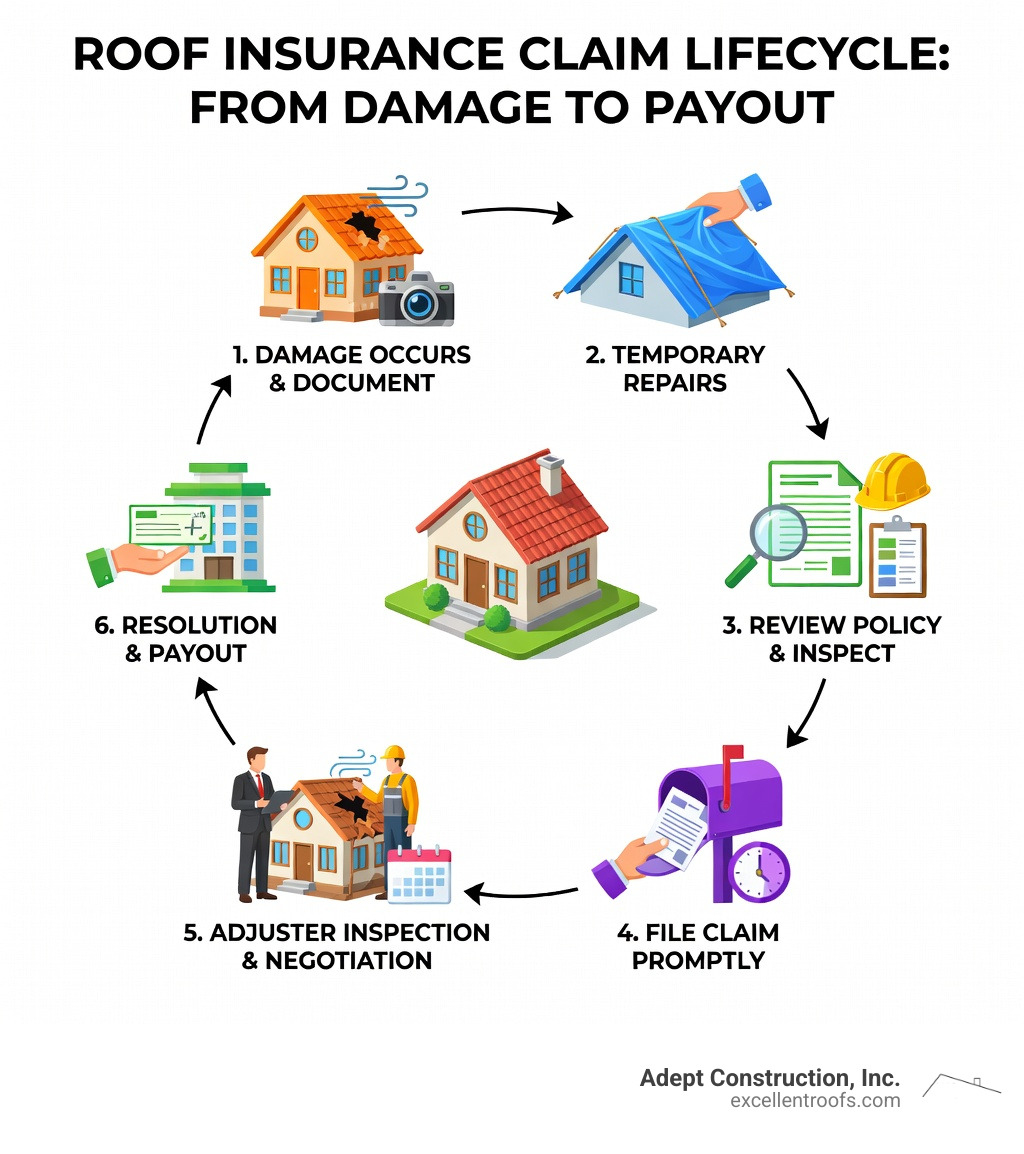
- Document damage immediately – Take photos and videos of all exterior and interior damage before touching anything.
- Make temporary repairs – Use tarps to stop further water intrusion. Keep all receipts.
- Review your policy – Check your coverage type (ACV vs. RCV), deductible, and exclusions.
- Get a professional roof inspection – Have a trusted contractor assess the damage before you call your insurer.
- File your claim promptly – Most insurers require claims within 6-12 months of the event.
- Prepare for the adjuster – Have your contractor present during the inspection to align on damage scope.
- Know your appeal rights – If denied or underpaid, you can request a second adjuster or hire a public adjuster.
The truth is, filing a roof insurance claim is not just paperwork. It is a negotiation — and most homeowners go into it without knowing the rules. Your insurer will send an adjuster who works for them, not for you. Policies are full of terms like “actual cash value,” “named perils,” and “cosmetic exclusion” that can quietly shrink your payout or kill your claim entirely.
If you are a homeowner in the Chicago suburbs dealing with storm damage, understanding how this process works — step by step — can be the difference between a full roof replacement and an unexpected five-figure bill. For expert roofing services in Illinois, having a knowledgeable contractor on your side from day one matters enormously.
I’m Gerald Michaels, founder of Adept Construction, Inc., a family-owned roofing company serving Naperville, Downers Grove, and the surrounding suburbs since 1997 — and over nearly three decades, I’ve helped countless homeowners navigate the roof insurance claim process and get the fair settlements they deserve. In this guide, I’ll walk you through exactly what to do, what to avoid, and how to protect yourself at every stage.
Roof insurance claim help terminology:
- residential roofing repair contractors
- residential roofing replacement services
- residential roof replacement cost
Does Homeowners Insurance Cover Roof Damage?
Standard homeowners insurance policies are designed to protect you from sudden and accidental losses. In roofing, this means your policy generally covers damage caused by specific “perils.”
Covered Perils
Most policies in Illinois cover the following events:
- Fire and Lightning: Sudden fire damage is almost always covered.
- Wind: High-velocity winds that tear off shingles or cause structural shifts.
- Hail: Large hailstones that bruise shingles, crack tiles, or cause significant granule loss.
- Falling Objects: If a heavy tree limb crashes onto your roof during a storm, the resulting structural and surface damage is typically covered.
- Weight of Ice and Snow: A major concern in the Chicago suburbs, where heavy accumulation can lead to roof collapse.
It is important to note that different materials react differently to these perils. For instance, scientific research on roof vulnerability to wildfires shows that even “fire-resistant” materials like terracotta can be vulnerable if embers penetrate the gaps.
Common Exclusions
Insurance is not a maintenance plan. You will likely face a denial if the damage stems from:
- Wear and Tear: Roof shingles have a natural lifespan (usually 20–25 years for asphalt). Insurance will not pay to replace a roof simply because it is old.
- Maintenance Neglect: If you have failed to clean gutters or repair minor leaks for years, and that neglect leads to major rot, the insurer may deny the claim.
- Flood and Earthquakes: These are almost always excluded from standard policies and require separate endorsements or policies. You can learn more about water damage and flood protection to understand these specific gaps.
Actual Cash Value (ACV) vs. Replacement Cost Value (RCV)
The type of coverage you have determines how much money actually ends up in your pocket.
| Feature | Actual Cash Value (ACV) | Replacement Cost Value (RCV) |
|---|---|---|
| Payout Basis | Depreciated value based on age | Current cost to replace with new materials |
| Out-of-Pocket | High (you pay the difference for a new roof) | Low (you only pay your deductible) |
| Typical Payout | 20–25% less than RCV (often more for old roofs) | Full market price for a new roof |
Step-by-Step Roof Insurance Claim Help
When disaster strikes, your first instinct might be to call your agent. However, the order of operations matters. If you file a claim for damage that is below your deductible, it still counts as a “claim” on your record, which can lead to premium hikes.
1. Documentation is King
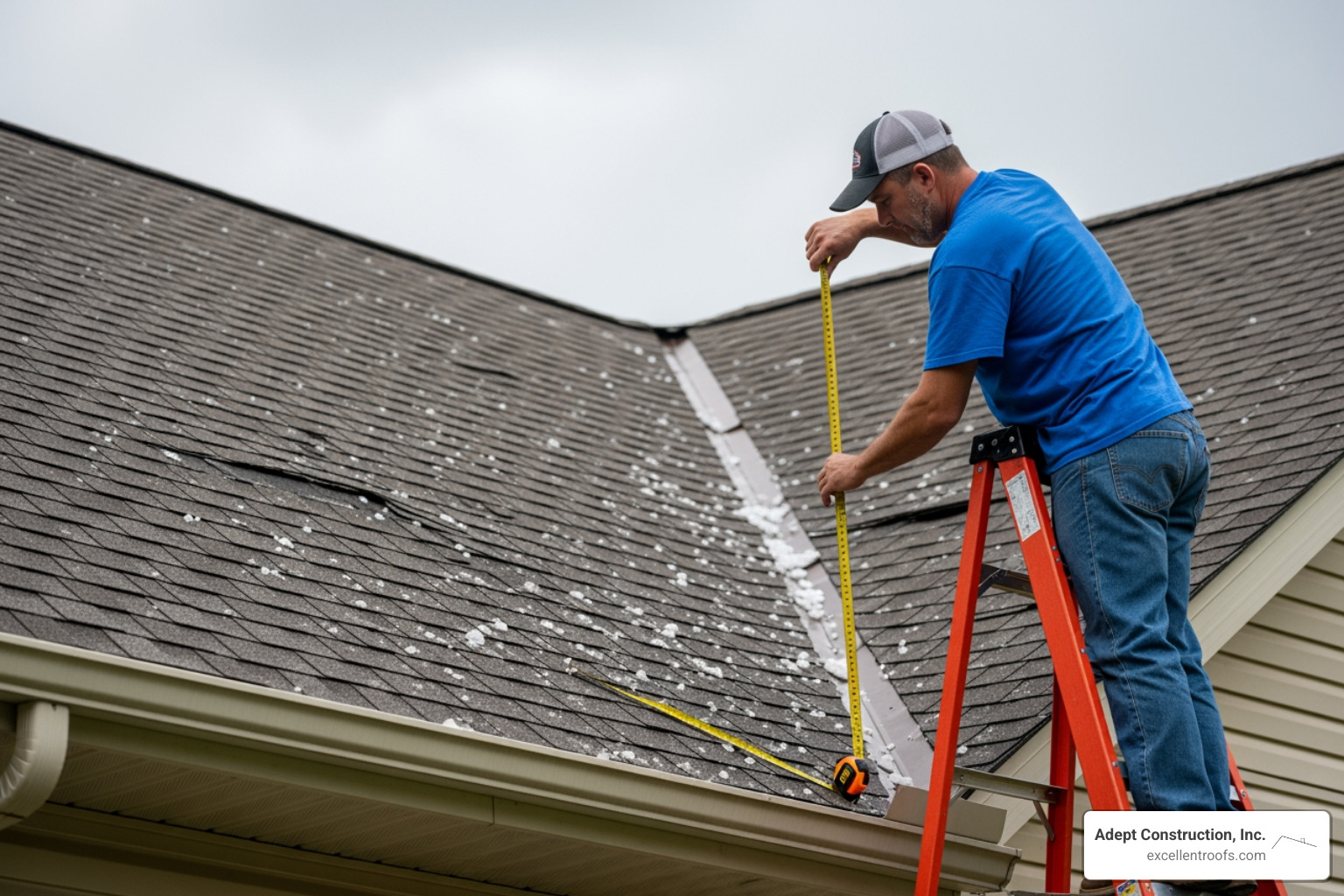
Before you clean up a single branch, document everything. Use your smartphone to take high-resolution photos and videos of:
- The roof surface (if safe to do so from a ladder).
- Hailstones next to a measuring tape or coin for scale.
- Interior water entry, such as ceiling stains, bubbling paint, or damp insulation in the attic.
- The date and time of the loss.
2. Temporary Repairs and Mitigation
You have a “duty to mitigate” further damage. This means if there is a hole in your roof, you must cover it.
- Tarping: Hire a professional to safely tarp the damaged area.
- Save Receipts: Keep every receipt for plywood, tarps, and labor. These costs are typically reimbursable as part of the claim.
- Avoid Major Repairs: Do not perform permanent repairs until the adjuster has seen the damage.
For more information on the full scope of recovery, visit our guide on storm damage restoration.
When to Seek Professional Roof Insurance Claim Help
We strongly advise homeowners to seek roof insurance claim help from a qualified contractor before officially filing. Why? Because an experienced roofer can tell you if the damage is “functional” (covered) or “cosmetic” (often excluded).
In many cases, having a contractor present during the adjuster’s inspection ensures that no damage is overlooked. Adjusters are human; they can miss subtle hail bruises or wind-lifted shingles that haven’t fully blown off yet. We provide roof repair in Downers Grove and often meet adjusters on-site to advocate for our customers. This collaboration helps both parties agree on the “Scope of Work” immediately, reducing the need for supplements later.
Common Pitfalls Where Homeowners Need Roof Insurance Claim Help
The most common reason for a “shorted” claim is the age of the roof. Many modern policies include a “roof surface endorsement” that automatically converts RCV coverage to ACV once the roof hits the 15 or 20-year mark. If your roof is over 20 years old, your insurance may provide very limited coverage, if any.
Another pitfall is the deductible. In Illinois, deductibles are often a fixed dollar amount (e.g., $1,000). However, some newer policies use a percentage deductible for wind and hail, often ranging from 1% to 5% of your home’s total insured value. If your home is insured for $400,000, a 2% deductible means you pay $8,000 out of pocket before the insurance kicks in. Always check your “Declarations Page” for these specific terms. If the cost of repair is close to your deductible, it may be wiser to pay for the roof replacement in Naperville out of pocket to keep your insurance record clean.
Navigating the Adjuster Inspection and Approval Timeline
Once you file the claim, the insurer will assign an adjuster. This person will visit your property to create an estimate of the damage.
The Approval Window
Typically, you can expect an approval or denial within 7 to 10 days after the adjuster inspects the property. During this visit, they will look at the shingles, flashing, gutters, and attic.
The Payout Timeline
If approved, the first check (the ACV portion) usually arrives within 30 to 60 days. If you have an RCV policy, the “recoverable depreciation” (the remaining funds) is released only after the work is completed and an invoice is submitted to the insurer.
Be aware that if you have a mortgage, the check will likely be made out to both you and your lender. You will need to send the check to your mortgage company for endorsement, which can add 1-2 weeks to your timeline. For a deeper dive into these mechanics, read our article on roof-damage-insurance-claims.
What to Do if Your Roof Claim is Denied or Underpaid
A denial letter is not the end of the road. Claims are frequently denied for “lack of storm-related damage” or “pre-existing wear and tear.” If you believe the adjuster made a mistake, you have several options for roof insurance claim help.
- Request a Second Inspection: Ask the insurer for a different adjuster to visit. Sometimes a fresh set of eyes sees what the first person missed.
- Hire a Public Adjuster: Unlike the insurance company’s adjuster, a public adjuster works for you. They charge a fee (usually a percentage of the settlement) but are experts at maximizing claims.
- Invoke the Appraisal Clause: If you and the insurer agree there is damage but disagree on the cost, you can enter the appraisal process, where independent appraisers settle the dispute.
- Matching Laws: Some states have “matching laws” that require the insurer to replace the entire roof if the new shingles won’t reasonably match the old ones in color or texture. While Illinois doesn’t have a strict statutory matching law like some other states, many policies have language that supports a uniform appearance.
Frequently Asked Questions about Roof Insurance
Does insurance cover roof leaks?
Insurance covers roof leaks only if they are caused by a “covered peril.” If a hailstorm punctures your roof and causes a leak, the interior damage and the roof repair are typically covered. However, if the leak is caused by old shingles that have curled and cracked over time, the insurance company will likely deny the claim, citing a lack of maintenance. For more on this, see our post on hail-damage-roof-repair.
How does roof age affect my claim?
Age is the biggest factor in claim approval today. Many carriers are tightening underwriting and will not even issue a policy on a roof older than 20 years without a professional inspection. If you have an ACV policy, a 20-year-old roof might only be “worth” 10% of its replacement cost in the eyes of the insurer. To learn how to identify age-related issues versus storm damage, check out how-to-spot-wind-damage-on-your-roof.
Will filing a claim raise my premiums?
In many cases, yes. While most states prohibit insurers from canceling your policy for a single “Act of God” claim (like a hailstorm), they can still remove your “claim-free discount” or apply a surcharge to your premium that lasts 3 to 5 years. Insurers use “CLUE reports” (Comprehensive Loss Underwriting Exchange) to track your claim history across different companies for up to seven years. You should weigh the cost of the surcharge against the payout before filing. Read more about is-roof-repair-covered-by-insurance to help make that decision.
Conclusion
Navigating a roof insurance claim can feel like a full-time job, but you don’t have to do it alone. At Adept Construction, Inc., we’ve built our reputation in Downers Grove and Naperville by providing more than just shingles and nails. We provide the expertise and roof insurance claim help you need to ensure your home is protected and your insurer treats you fairly.
Whether you’re dealing with a minor leak or a major storm disaster, our family-owned team is here to help with superior workmanship and knowledgeable staff. We offer free estimates to help you determine if a claim is even necessary.
Don’t leave your roof replacement to chance. Contact us today for a free estimate and let us help you win the insurance game.