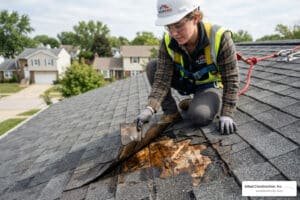

Why Knowing How to Fix a Slate Roof Can Save You Thousands
Fix slate roof damage early, and you can protect one of the most durable roofing materials ever used — without breaking the bank. Here’s a quick answer if you’re in a hurry:
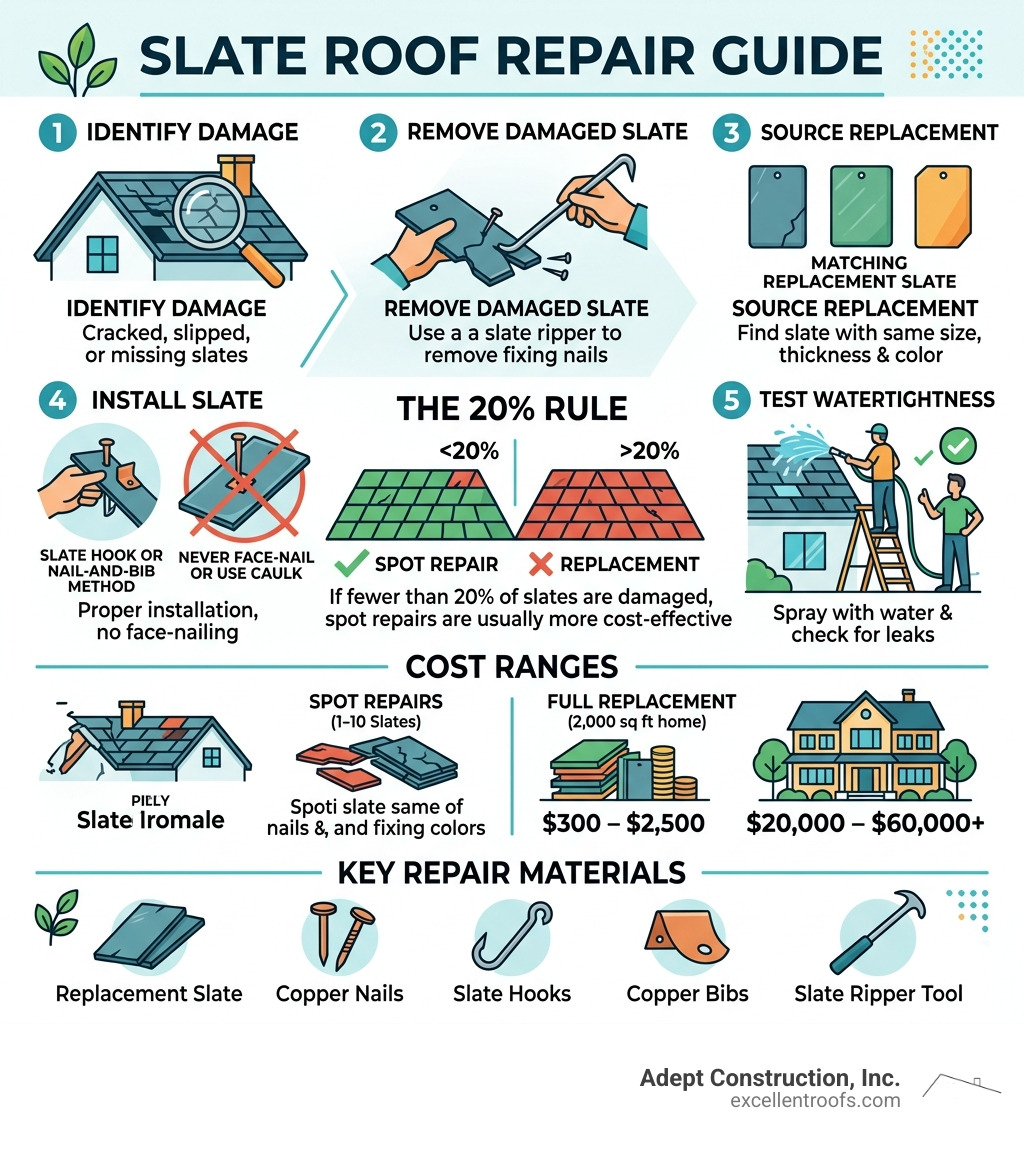
How to fix a slate roof (quick overview):
- Identify the damage — cracked, slipped, or missing slates
- Use a slate ripper to remove the broken slate by pulling out the fixing nails
- Source a matching replacement slate — same size, thickness, and color
- Install using the slate hook or nail-and-bib method — never face-nail or use caulk
- Test for watertightness — spray with water and check for leaks
The 20% rule: If fewer than 20% of your slates are damaged, spot repairs are almost always more cost-effective than a full replacement. Spot repairs for 1–10 slates typically cost $300–$2,500, compared to $20,000–$60,000+ for a full natural slate replacement on a 2,000 sq ft home.
Slate roofs are built to last. Hard slate varieties can survive 100 to 200 years, and soft slate 50 to 125 years — but only when damage is caught early and repaired correctly. The problem? Many general contractors don’t specialize in slate. They either push unnecessary full replacements or use shortcuts like roofing cement and galvanized nails that make things worse over time.
Whether you own a historic home in the Chicago suburbs or a classic property anywhere in Illinois, understanding the right repair process can mean the difference between a $500 fix and a $50,000 roof replacement. For professional roofing services in Illinois that treat your home with the care it deserves, it pays to work with specialists who know slate.
I’m Gerald Michaels, founder of Adept Construction, Inc., with nearly three decades of roofing experience — including diagnosing and helping homeowners fix slate roof problems across Chicago’s Northwest, Near West, and West Suburbs. In this guide, I’ll walk you through everything you need to make smart, budget-conscious decisions about your slate roof.
Identifying When to Fix Slate Roof Damage vs. Replace
One of the most common mistakes we see in Downers Grove and Naperville is homeowners being told they need a $70,000 roof replacement when all they really need is a $1,500 repair. Because slate is a natural stone, it doesn’t “fail” all at once like an asphalt shingle roof. Instead, individual pieces might crack due to a fallen branch, or a few nails might rust through (a condition often called “nail sickness”).
To determine if you should fix slate roof sections or start over, we use the 20-30% rule. If more than 20-30% of the slates are broken, delaminating, or missing, the labor cost of individual repairs starts to outweigh the cost of a full replacement. However, if the damage is localized, spot repairs are the way to go.
Signs Your Slate is at the End of Its Life
While a slate roof can last over a century, the stone eventually reaches its biological limit. Look for these “end-of-life” indicators:
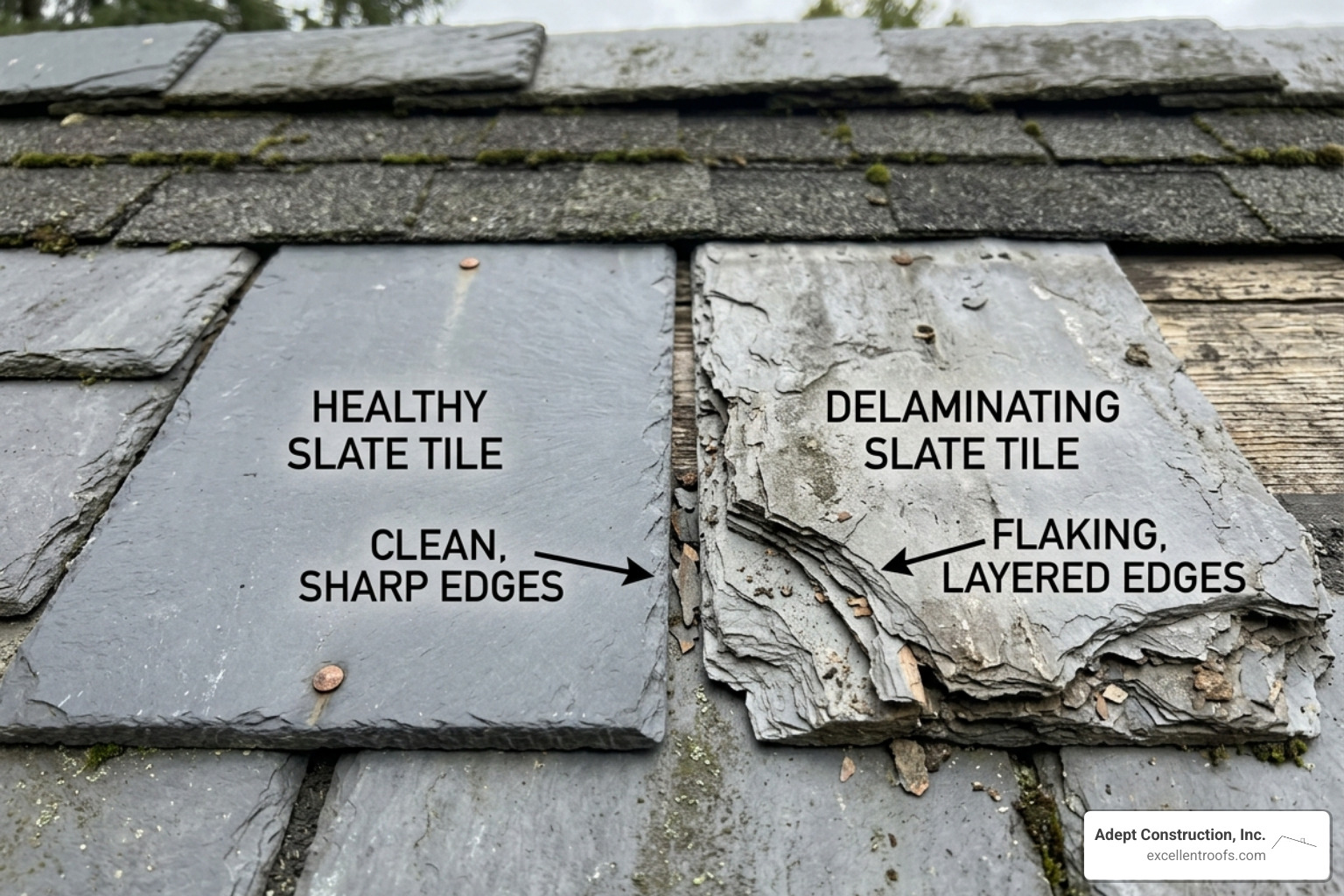
- Delamination: The slate begins to split into thin layers, looking like a deck of cards being fanned out.
- Powdering: If you touch the slate and it turns into a chalky residue on your fingers, the stone is chemically breaking down.
- The Tap Test: A healthy slate will produce a crisp, metallic “ring” when tapped with a knuckle or hammer. A slate that is “dead” or porous will produce a dull thud.
For a deeper dive into these diagnostics, check out our Residential Slate Roof Repair Ultimate Guide.
| Factor | Spot Repair | Full Replacement |
|---|---|---|
| Cost (Typical) | $300 – $2,500 | $20,000 – $60,000+ |
| Lifespan Added | 10 – 50+ years | 75 – 150 years |
| Material Match | Critical for aesthetics | Uniform appearance |
| Best For | Storm damage, foot traffic | Widespread delamination |
According to the National Slate Association, maintaining proper headlap (the overlap of three layers of slate) is the most critical technical requirement during any repair to ensure the roof remains watertight.
Sourcing Materials to Fix Slate Roof Sections
Matching the existing slate is an art form. You cannot simply grab a “gray stone” and hope for the best. You must match four key criteria:
- Color: Slates are categorized as “Unfading” (maintain color) or “Weathering” (change to buff or brown over time).
- Size: You must match the length and width exactly to maintain the “offset” (the vertical joints should never align).
- Thickness: Standard slate is 3/16″, but many historic Illinois homes use “graduated” roofs with 1/2″ or even 3/4″ thick slates at the eaves.
- Type/Region: Vermont, Pennsylvania, and Virginia slates all have different textures and hardness ratings.
Pro Tip: To find a perfect color match, remove one broken piece and check the underside. This shows the original historical color before decades of environmental exposure. Many budget-conscious repairs utilize reclaimed slate from old barns or similar historic buildings to ensure an authentic look.
Essential Tools and Materials for Authentic Repairs
You cannot fix slate roof issues with a standard hammer and a pry bar. Using the wrong tools is the fastest way to crack three good slates while trying to fix one bad one. If you’re attempting a DIY fix or vetting a contractor, ensure these specialized tools are on-site:
- Slate Ripper: A long, flat tool with a hooked end. It slides under the slate to hook and cut the nails without disturbing the surrounding pieces.
- Slater’s Hammer: Features a pointed end for punching nail holes in the stone and a claw for pulling nails.
- Copper Nails: Never use galvanized steel. Slate lasts 100 years; galvanized nails rust in 20. Copper or stainless steel are the only acceptable fasteners.
- Slate Hooks: These are small “S” shaped copper hooks that hold a replacement slate in place without needing to drive a nail through the stone.
- Chicken Ladders: Also known as crawl boards, these hook over the ridge and distribute your weight so you don’t crack the slates you’re walking on.
For a technical breakdown of these tools, InspectAPedia provides a detailed guide to slate roof repair procedures.
How to Fix Slate Roof Shingles Using the Hook Method
The “Hook Method” is the gold standard for budget-friendly, effective repairs. It avoids the need to slide flashing (bibs) under the slate above, which can be difficult on older, tighter roofs.
- Remove the old slate with your ripper.
- Slide a copper slate hook into the vertical joint between the two slates below the vacancy.
- Hammer the hook into the roof sheathing or batten.
- Slide the new slate up until it hits the head of the hook, then let it drop into the “cradle” of the hook.
This method is fast, secure, and allows the slate to “breathe” and move with temperature changes, preventing future cracks.
Step-by-Step Guide: How to Fix Slate Roof Leaks Safely
Safety is paramount. Slate is incredibly slippery when wet or dusty, and most slate roofs have a steep pitch (8/12 or higher). If you aren’t comfortable with heights or don’t have a fall arrest system, this is the time to call for roof repair in Downers Grove, IL.
Step 1: Safe Access
Use a roof ladder or “chicken ladder” to reach the damaged area. Never walk directly on the slates; your weight can easily cause “stress cracks” that won’t show up as leaks for another year.
Step 2: Removing the Damaged Slate
Insert the slate ripper under the broken slate. Feel for the two nails holding it in place. Hook the ripper around a nail and give the handle a sharp blow with your hammer to cut the nail shank. Repeat for the second nail. The broken pieces should slide right out.
Step 3: Clearing the Area
Use the ripper to clear out any remaining nail stubs or debris. If the underlayment is torn, you may need to slide a small piece of copper flashing (a “bib”) under the slates above to ensure water sheds correctly.
Step 4: Installing the Replacement
Slide your matching slate into position. If you aren’t using a hook, you’ll use the “Nail and Bib” method. Drive a single copper nail in the vertical joint between the slates above. Then, slide a “bib” (a small square of copper or lead-coated copper) under the slate and over the nail head to prevent water from entering the nail hole.
Avoiding Critical Mistakes in Slate Restoration
In our years of providing residential roofing services, we’ve seen some truly “creative” (and disastrous) attempts to fix slate roof damage. Here are the “mortal enemies” of a slate roof:
- Face-Nailing: Never drive a nail through the exposed part of the slate. This creates a permanent hole for water.
- Roofing Cement/Caulk: This is the most common “budget” mistake. Caulk breaks down under UV rays within 2-3 years. It also traps moisture against the wood deck, leading to rot. If you see a “black blob” on a slate roof, it’s a sign of a bad repair.
- Galvanized Fasteners: Mixing metals (like galvanized nails with copper flashing) causes galvanic corrosion. The nails will disappear, and your slates will start sliding off like a deck of cards.
- Walking on the Roof: Unless you are wearing foam-soled shoes and know exactly where to place your feet (on the “lap” where the slate is triple-thick), stay off the roof.
Cost Analysis and Long-Term Maintenance Strategies
Maintaining a slate roof is like maintaining a classic car; a little bit of tuning goes a long way. We recommend a biennial (every two years) inspection to catch slipped slates before they lead to interior ceiling damage.
Estimated Costs for 2026:
- Minor Spot Repair (1-5 slates): $300 – $800.
- Major Spot Repair (15-30 slates): $1,500 – $3,500.
- Flashing Repair (Chimneys/Valleys): $500 – $2,500.
To keep costs down, stay on top of your gutters. Clogged gutters lead to ice dams in our Illinois winters, which can push water up under the slates and crack the bottom courses. Also, keep tree branches trimmed at least 10 feet away from the roofline to prevent impact damage.
If you’re noticing leaks after a big storm, you might need an expert to look at roof repair in Naperville, IL to ensure your insurance claim covers the specialized labor slate requires.
Frequently Asked Questions about Slate Roof Repair
How long does a properly fixed slate roof last?
A properly repaired slate roof can last over 100 years. The stone itself is essentially permanent; the “lifespan” of the roof is usually determined by the fasteners and the flashings. By using copper nails and high-quality matching stone, a repair will last as long as the rest of the roof.
Can I use roofing cement to fix a cracked slate?
No. Roofing cement (tar) is a temporary patch that will eventually crack and leak. More importantly, it makes a mess that a professional roofer will have to scrape off later, increasing the cost of a proper repair. Always use a mechanical fix like a slate hook or a copper bib.
What is the 20% rule for slate roofs?
The 20% rule is a guideline for deciding between repair and replacement. If less than 20% of the slates are damaged or missing, spot repairs are the most cost-effective path. If damage exceeds 20-30%, or if the slates are “powdering” due to age, a full roof installation is likely more economical in the long run.
Conclusion
At Adept Construction, Inc., we believe that a slate roof is a treasure. These roofs provide a level of character and protection that modern materials struggle to match. Whether you need a few tiles replaced or a comprehensive inspection of your roofing systems, our family-owned team is here to help.
Don’t let a minor leak turn into a major headache. We offer expert craftsmanship and a commitment to historic preservation for homeowners in Naperville, Downers Grove, and the surrounding areas.
Ready to protect your investment? Contact us today for a free estimate and let our knowledgeable staff show you how easy it is to fix slate roof issues the right way. Whether it’s a simple repair or a full shingle roofing project, we treat every home like our own.