
Commercial Flat Roofs Naperville: Selecting the Right System
Choosing the right membrane for commercial flat roofs Naperville facilities require is a strategic financial decision. For business owners seeking trusted local roofing experts, the “best” roof is the system that balances installation cost, service life, energy performance, and long-term maintenance. In Naperville, where commercial properties along Route 59 and the I-88 corridor represent major capital investments, a high-performance flat roof helps protect building value and reduce operational risk.
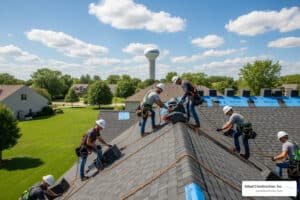
Modern flat roofing has evolved far beyond older built-up assemblies. Today, business owners can choose from highly engineered synthetic membranes that offer strong UV resistance, reliable seam performance, and improved thermal efficiency. The structural nature of a flat roof also creates practical space for HVAC equipment, solar arrays, and limited-access rooftop features. When evaluating these options, it is wise to work with a contractor experienced in specialized flat roofing systems so the roof assembly, insulation package, and attachment method are matched to the building’s needs.
Energy-Efficient TPO and PVC for Commercial Flat Roofs in Naperville
TPO and PVC are popular choices for buildings that need energy efficiency and dependable waterproofing. Their white or light-colored surfaces reflect a large portion of solar radiation, which can help lower rooftop temperatures and reduce cooling demand during humid Illinois summers.
- TPO (Thermoplastic Polyolefin): TPO is a leading option for cost-conscious commercial projects because it delivers solid performance at a competitive price point. It uses heat-welded seams that create a consistent watertight bond, and it is commonly available in 45, 60, and 80-mil thicknesses. Thicker membranes generally provide better puncture resistance on roofs with service traffic.
- PVC (Polyvinyl Chloride): PVC is often selected for demanding environments because it offers excellent durability and strong resistance to chemicals, grease, and moisture. That makes it especially well-suited for restaurants, food-service buildings, and certain manufacturing facilities. PVC also retains flexibility well over time, which helps on buildings subject to structural movement.
Both systems are regularly specified for cool-roof performance and can support compliance with modern energy-code requirements when paired with the right insulation design.
Durable EPDM and Modified Bitumen for Commercial Flat Roofs in Naperville
While reflective membranes perform well in summer, Naperville roofs also need to withstand harsh winters, freeze-thaw cycles, and snow loading. EPDM and modified bitumen remain proven options for these conditions.
- EPDM (Ethylene Propylene Diene Terpolymer): EPDM is a synthetic rubber membrane known for flexibility and durability in cold-weather climates. Its key strength is resistance to thermal shock, allowing it to expand and contract through wide seasonal temperature swings without becoming brittle. When professionally installed and maintained, EPDM systems can deliver decades of service.
- Modified Bitumen: Modified bitumen systems are asphalt-based membranes reinforced with polyester or fiberglass. Their multi-layer construction provides strong redundancy against leaks, and they perform well on roofs that see regular maintenance traffic. Depending on project requirements, these systems may be installed using several approved application methods, with each selected based on building conditions, code requirements, and manufacturer specifications.
For Naperville business owners, the right material choice depends on building use, exposure conditions, maintenance expectations, and budget. A roof that is properly designed for local climate demands will usually outperform a lower-cost system that is not matched to the property.
Climate Resilience and Local Building Codes in DuPage County
Naperville’s inland position means our buildings face more extreme temperature swings than those closer to Lake Michigan. This “thermal cycling” is the number one enemy of commercial flat roofs Naperville owners must manage. When water gets into a tiny crack and freezes, it expands, turning a minor blemish into a major leak by spring. This cycle can occur dozens of times in a single Chicago winter, rapidly accelerating the degradation of inferior materials.
Local building codes in Naperville are strict for a reason. The City of Naperville Building Department requires roofs to be engineered for a minimum snow load of 30 pounds per square foot (psf). During a heavy blizzard, a flat roof can end up supporting thousands of pounds of snow and ice. Without proper structural integrity and professional installation, the risk of deck deflection or collapse increases. Furthermore, the city adheres to the 2021 International Building Code (IBC), which mandates specific R-values for roof insulation to ensure energy efficiency and prevent heat loss.
Drainage is also paramount. In Naperville, we often deal with “ponding water”—water that sits on the roof for more than 48 hours. We address this by regrading surfaces with tapered insulation and ensuring that internal gutters and scuppers are clear of debris. Because Naperville spans both DuPage and Will counties, we navigate overlapping jurisdictional requirements to ensure every project is fully permitted and code-compliant. Proper wind uplift engineering is also critical, as the open plains of the Midwest can generate significant pressure on large, flat surfaces.

Identifying Damage and Maintenance Needs for Business Owners
Proactive maintenance is the difference between a roof that lasts 30 years and one that fails in 10. We recommend semi-annual professional inspections—once in the spring to clear winter debris and once in the fall to seal seams before the first freeze. Neglecting these inspections often leads to the voiding of manufacturer warranties, leaving business owners responsible for the full cost of repairs.
If you are noticing leaks, don’t wait. Minor issues like a punctured membrane or a failing flashing around an HVAC unit can lead to mold growth and structural rot. For complex issues, we utilize advanced diagnostic tools to provide expert roof repair in Naperville IL:
- Infrared Moisture Detection: We use thermal imaging to find “hot spots” where water is trapped beneath the membrane. Wet insulation retains heat differently than dry insulation, allowing us to pinpoint leaks that are invisible to the naked eye. This allows for precision patching rather than total replacement.
- Core Sampling: By taking a physical cross-section of the roof, we can determine the condition of the substrate and insulation. This helps us understand if the underlying wood or metal deck has been compromised by moisture.
- Drone Inspections: Drones allow us to safely inspect large-scale facilities and identify drainage blockages or seam separations that aren’t visible from the ground. This technology provides high-resolution documentation for insurance purposes.
If you suspect your facility has sustained weather-related damage, our team specializes in storm damage assessment to help you document the issues for your records or potential claims. Early detection of hail bruises or wind-lifted edges can save thousands in long-term structural repairs.
Cost Analysis: Repair vs. Replacement for Naperville Facilities
One of the most common questions we hear from Naperville business owners is: “Can I just patch it, or do I need a whole new roof?” The answer depends on the age of the system, the condition of the insulation and deck, and the extent of moisture infiltration.
A common industry rule of thumb is the 25% threshold. If more than 25% of the roof membrane is significantly deteriorated or if widespread moisture saturation is present, a full commercial roof replacement in Naperville is often more cost-effective than repeated repairs.
- Standard Repairs: Typically cost between $4 and $12 per square foot, depending on the roofing material, accessibility, and repair complexity. These are usually best for isolated punctures, flashing failures, or limited seam issues.
- Roof Restoration/Coatings: If the structural deck and insulation remain in serviceable condition, a silicone or elastomeric coating may cost $3 to $6 per square foot. Restoration can extend roof life by 10 to 15 years in the right circumstances, and silicone is especially valued for resistance to ponding water.
- Full Replacement: Generally ranges from $8 to $15 per square foot depending on tear-off scope, insulation upgrades, membrane type, and attachment method. While the upfront investment is higher, replacement can improve energy performance, reduce emergency repair costs, and strengthen long-term property value.
For businesses with properties in multiple western suburbs, we also provide comprehensive roof replacement in Downers Grove to help maintain consistency across a regional portfolio. In many cases, commercial owners should also review current tax treatment of roofing improvements with their accountant, since available deductions can materially affect the net project cost. We provide robust manufacturer-backed warranty options, including No-Dollar-Limit (NDL) coverage on qualifying systems, so owners gain long-term protection along with a new roof assembly.
Frequently Asked Questions about Naperville Commercial Roofing
How long do commercial flat roofs last in Naperville?
Standard commercial flat roofs like TPO, EPDM, and PVC typically last between 20 and 30 years. However, in the Naperville area, neglect is the leading cause of early failure. Without regular drain cleaning and seam inspections, the extreme freeze-thaw cycles of Illinois can cut that lifespan in half. High-quality installations by certified contractors often reach the upper end of this range.
What are the signs that a flat roof needs immediate repair?
You should call for professional assistance if you see:
- Ponding Water: Standing water that remains 48 hours after a rainstorm, which can lead to structural deck deflection.
- Membrane Blisters: Bubbles in the roof surface indicating trapped moisture or air, which can pop and create open leaks.
- Interior Stains: Water spots on ceiling tiles or walls, often indicating a leak that has already bypassed the insulation.
- Gaps in Flashing: Separation where the roof meets walls, chimneys, or HVAC curbs.
Does insurance cover commercial flat roof replacement?
Standard commercial insurance policies typically cover “sudden and accidental” damage, such as that caused by a severe hailstorm or high-wind event. They generally do not cover replacement for a roof that has simply reached the end of its natural life due to age and wear. We recommend having a professional inspection after any major storm to document damage immediately for potential claims.
What is a “Cool Roof” rating?
A Cool Roof rating refers to the solar reflectance and thermal emittance of a roofing material. In Naperville, using materials with high Cool Roof Rating Council (CRRC) scores can significantly lower the “urban heat island” effect and reduce the load on your building’s HVAC system during the summer months.
Conclusion
At Adept Construction, Inc., we understand that your roof is the first line of defense for your Naperville business. As a family-owned company based in Downers Grove, IL, we pride ourselves on superior customer service and high-quality workmanship that stands up to the Illinois climate. Our team is deeply familiar with the specific architectural and environmental challenges faced by commercial properties in the western suburbs.
Don’t wait for a small leak to become a major structural headache. We offer free estimates for all commercial projects in our Naperville, IL service area. Whether you need a routine inspection, a minor repair, or a complete system overhaul, our knowledgeable staff is ready to assist. Contact us today to schedule your professional roof assessment and ensure your business stays protected for decades to come.