
Why Identifying Damaged Roofs Early Protects Your Home and Wallet
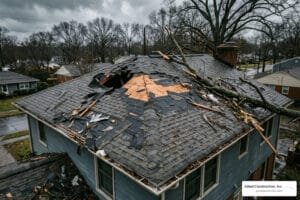
Damaged roofs are one of the most stressful home repair issues property owners face—and for good reason. Your roof is your home’s first line of defense against weather, and even minor damage can quickly escalate into costly interior problems like mold, structural decay, and water damage.
Common signs of damaged roofs include:
- Missing, cracked, or curling shingles from wind or age
- Granule loss visible in gutters or downspouts
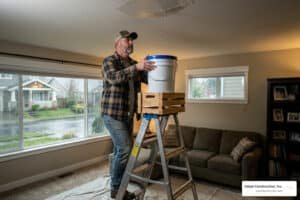
- Water stains on ceilings or walls inside your home
- Sagging roof areas indicating structural compromise
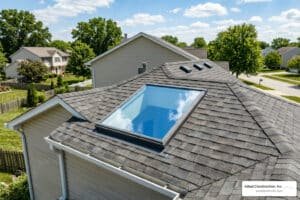
- Damaged flashing around chimneys, vents, or skylights
- Dark spots or discoloration from algae, moss, or moisture
- Ice dams in cold climates causing water backup
- Visible daylight through roof boards in the attic
The challenge? Many homeowners don’t realize their roof is damaged until leaks appear inside—by then, repair costs have often multiplied. Storm damage from hail, high winds, or fallen branches can be particularly deceptive, leaving subtle signs that worsen over time.
According to industry data, asphalt shingles typically last 20-25 years, but severe weather can compromise even newer roofs. Insurance companies often require claims within 6 to 24 months of storm events, making timely identification critical. Homeowners who catch damage early can file claims while coverage is still valid and prevent minor issues from becoming major structural failures.
For trusted roof repair and replacement solutions, visit our roofing experts at Adept Construction, Inc. for a free estimate.
I’m Gerald Michaels, founder and president of Adept Construction, Inc., and I’ve been helping Illinois homeowners identify and repair damaged roofs since 1997. Over nearly three decades, I’ve seen how early detection saves thousands of dollars and prevents the stress of emergency repairs.
Related content about damaged roofs:
Common Signs of Damaged Roofs
Identifying damaged roofs requires a keen eye for both obvious and subtle indicators. One of the most prevalent signs is granule shedding. Asphalt shingles are coated with mineral granules to protect the underlying bitumen from UV rays and provide fire resistance. When you see piles of sand-like material in your gutters or at the base of your downspouts, your shingles are losing their protective layer and becoming brittle.
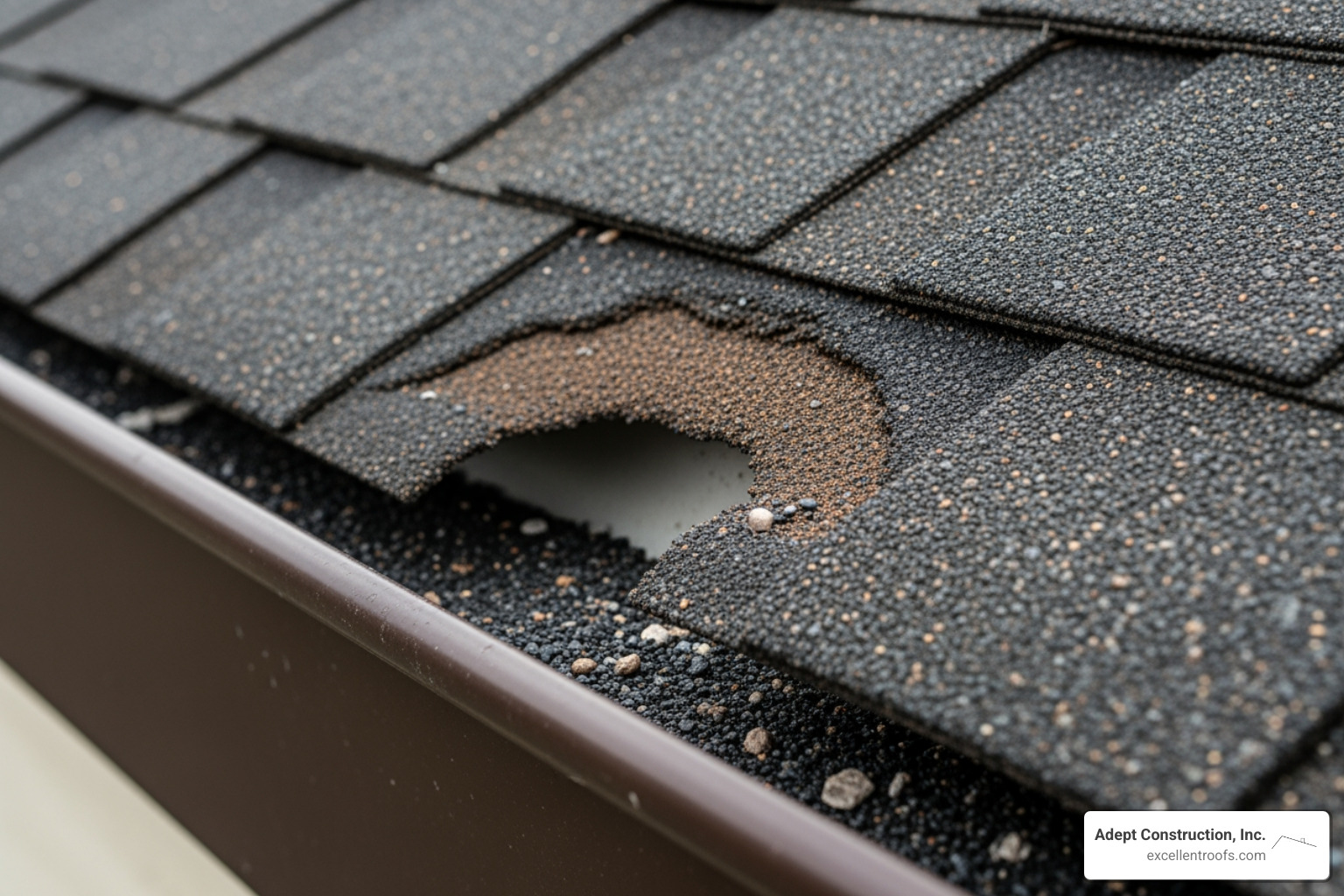
Another red flag is the physical deformation of the shingles. Curling, cupping, or buckling shingles often indicate that the material is reaching the end of its functional life or that the attic has inadequate ventilation, trapping heat and moisture. In our experience serving the Downers Grove and Naperville areas, we often find that identifying hail damage is the most difficult task for homeowners because the marks can look like simple dark spots rather than structural failures.
Inside the home, the signs are often more urgent. Water stains on the ceiling or walls, mold growth in the attic, or even seeing “daylight” through the roof boards are definitive proofs of failure. In Northern Illinois, ice damming prevention is a major concern. Ice dams form when snow melts on the upper part of the roof and refreezes at the eaves, forcing water under the shingles and into your home’s soffits and fascia.
| Symptom | Minor Wear | Structural Failure |
|---|---|---|
| Shingle Condition | Slight fading, few loose granules | Curling, missing pieces, bald spots |
| Attic Interior | Dusty but dry | Water stains, mold, visible daylight |
| Roof Line | Straight and even | Sagging, dipping, or “waves” |
| Granules | Minimal in gutters | Clogged gutters and downspouts |
Identifying Storm-Related Damaged Roofs
Storms are the primary cause of sudden roof failure. High winds create “wind uplift,” a phenomenon where the air pressure inside the home becomes higher than the pressure outside, literally peeling shingles away from the decking. Even if shingles aren’t missing, wind can lift them enough to break the sealant strip, allowing wind-driven rain to infiltrate the underlayment.
Hail damage presents differently. It typically leaves “bruises” or circular indentations on shingles. On metal components like roof vents, flashing, or gutters, hail leaves clear dents. If you notice dents on your air conditioning unit or mailbox after a storm, there is a high probability your roof has sustained similar impacts. At Adept Construction, Inc., we specialize in storm damage restoration and recommend a professional inspection after any significant weather event to ensure your roof maintains its high wind resistance standards.
Age-Related Wear and Damaged Roofs
Even without a major storm, time eventually wins. Asphalt shingles typically have a 20-25 year lifespan. As they age, they undergo thermal expansion and contraction, which eventually leads to cracking and brittleness. UV degradation from the sun further breaks down the chemical bonds in the asphalt, leading to significant shingle granule loss.
In humid or shaded areas, you might notice moss or algae growth. While algae (the black streaks) is mostly an aesthetic issue, moss is a serious threat. Moss acts like a sponge, retaining moisture against the shingle surface and potentially leading to rot in the wooden decking beneath. If your roof is approaching the two-decade mark, it’s wise to look into roof repair in Naperville or a full assessment to determine if the materials have become too brittle to withstand another Illinois winter.
Navigating Insurance Claims for Roof Damage
Understanding your homeowners insurance policy is critical when dealing with damaged roofs. There are two primary ways insurance companies calculate payouts: Actual Cash Value (ACV) and Replacement Cost Value (RCV).
- Actual Cash Value (ACV): The insurance company pays the value of the roof at its current age, meaning they subtract depreciation. If a 20-year-old roof is damaged, you may only receive a fraction of the cost of a new one.
- Replacement Cost Value (RCV): This is the gold standard. The insurance company pays the full cost to replace the roof with a new one of similar quality, regardless of the old roof’s age. Usually, they pay the ACV amount first and then release the “recoverable depreciation” once the work is completed.
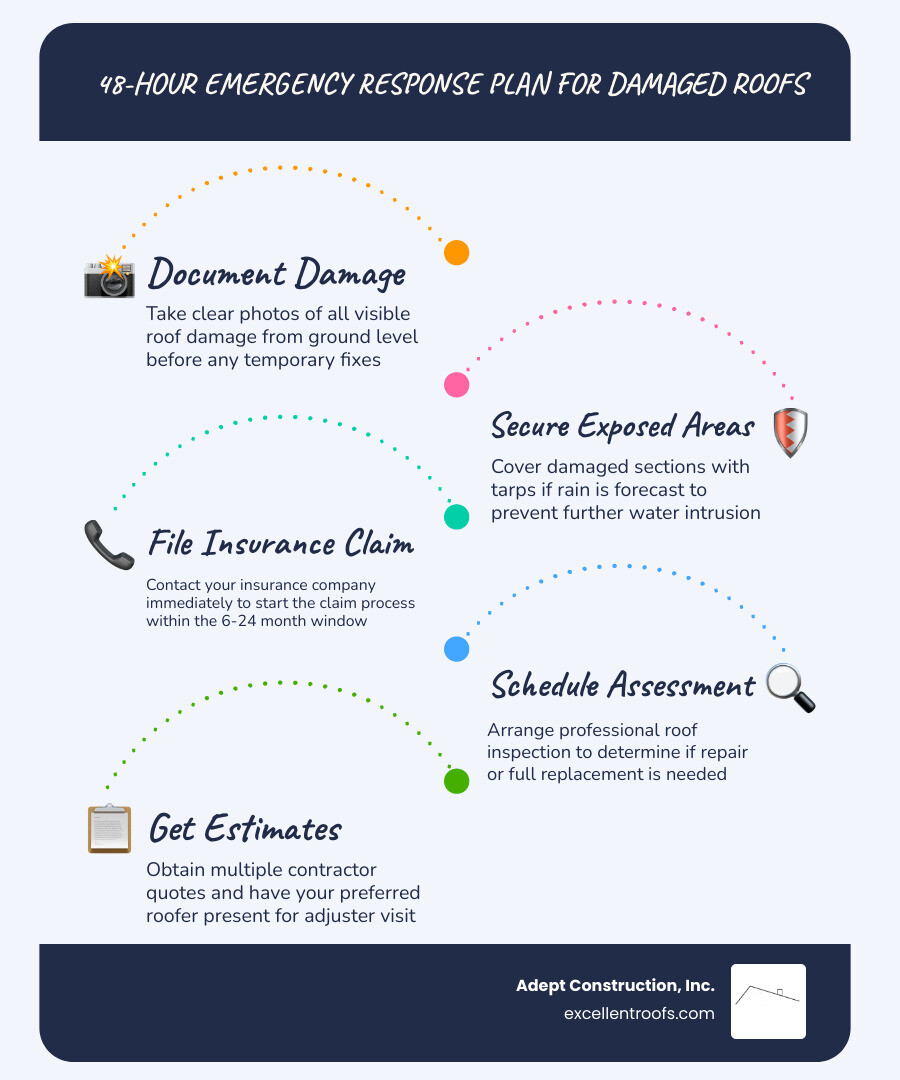
When filing roof damage claims, timing is everything. Most Illinois policies require you to file within 6 to 24 months of the hail or wind event. We always recommend that homeowners have their contractor present during the adjuster meeting to ensure all damage is documented. For more details on what is typically covered, you can read our guide on whether roof repair is covered by insurance.
Repair vs. Replacement: Making the Right Choice
Deciding whether to patch a leak or invest in a full replacement is a significant financial decision. A general industry rule of thumb is the “8 spots per 100 square feet” rule. If a professional finds more than eight damaged areas within a 100-square-foot section, the integrity of the entire system is likely compromised, and a replacement is more cost-effective in the long run.
Structural sagging is an immediate sign that a replacement—and likely some structural repair—is necessary. Sagging often indicates that water has been leaking undetected for a long time, rotting the rafters or the roof decking. While a repair might stop the immediate leak, it won’t fix the underlying structural weakness.
Choosing a full roof replacement in Downers Grove offers several benefits beyond just stopping leaks. Modern roofing systems, including high-quality shingles and composite materials, offer much better energy efficiency and can even increase your home’s value by up to 6%. For a deep dive into your options, check out our ultimate storm damage guide.
How to Avoid Scams and Find Reputable Contractors
After a major storm in Naperville or Downers Grove, “storm chasers” often flood the neighborhood. These are out-of-state contractors who follow weather patterns to solicit business. They often use high-pressure door-to-door tactics and offer to “waive your deductible”—which is actually insurance fraud in many jurisdictions.
To protect yourself, always look for:
- Local Presence: Choose a company with a physical office in your area and a long-term reputation.
- Verified Reviews: Check Google reviews for a high volume of positive feedback from real local customers.
- Manufacturer Certification: Look for contractors who follow GAF contractor terms or other major manufacturer standards, as this often comes with better warranties.
- Proper Paperwork: Ensure the contractor pulls all necessary city permits and carries valid insurance.
We take pride in our Downers Grove roofing services and our deep roots in the community. Never sign an “Assignment of Benefits” (AOB) form, which gives the contractor total control over your insurance claim. You should always remain the primary contact for your insurance company.
Frequently Asked Questions about Damaged Roofs
Will filing a roof damage claim increase my insurance premiums?
Generally, a single claim for a “catastrophe” (like a massive hailstorm or tornado that hits an entire region) will not cause your individual premiums to skyrocket. Insurance companies view these as “acts of God” rather than negligence. However, if your area is frequently hit by storms, the insurance company may adjust rates for the entire zip code to manage the risk pool. It is always best to consult your agent regarding policy renewals and rate adjustments.
How can I safely inspect my roof for damage?
Safety is paramount. You do not need to climb a ladder to perform an initial assessment. Use a pair of binoculars from the street to look for missing shingles, damaged flashing, or sagging. You can also perform an interior check in your attic with a flashlight, looking for water stains or damp insulation. For a truly safe roof assessment, many modern contractors use drone photography to capture high-resolution images of every angle without ever stepping on the shingles.
Is a “free roof” offer from a cold-caller legitimate?
If a roofer knocks on your door and promises a “free roof,” be extremely cautious. While insurance may cover the cost of a replacement minus your deductible, no roof is truly free. Predatory contractors may encourage you to file a fraudulent claim or perform shoddy work that fails within a few years. Legitimate contractors will provide a detailed estimate and work transparently with you and your insurance company.
Conclusion
At Adept Construction, Inc., we understand that your home is your most significant investment. Dealing with damaged roofs doesn’t have to be a nightmare when you have a knowledgeable partner by your side. We provide superior customer service and high-quality workmanship to every client in Naperville and Downers Grove.
Whether you need a minor repair or a complete storm damage restoration, our team is ready to help. Don’t wait for a small leak to become a major disaster. Contact us today for a free, no-obligation estimate on your roofing needs and let us restore the integrity of your home’s defense.