
Why Missing Shingle Repair Matters for Your Home
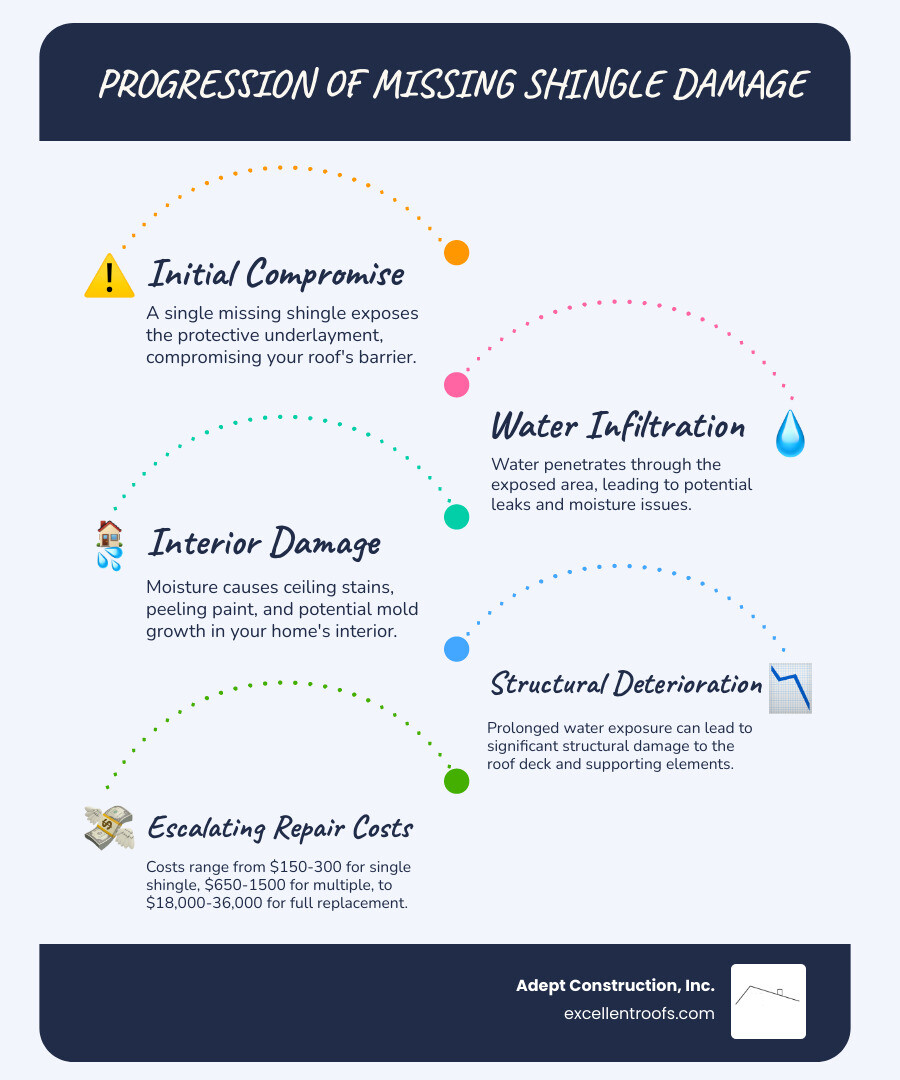
Missing shingle repair is a critical home maintenance task that protects your Chicago area home’s roof from water damage, preserves energy efficiency, and prevents costly structural problems. When even a single shingle goes missing, your roof’s protective barrier is compromised, allowing moisture to seep into the underlayment and potentially damage the roof deck, insulation, and interior of your home.
Quick Answer: How to Repair Missing Shingles
- Inspect your roof from the ground for visible gaps or dark spots
- Gather materials: replacement shingles, roofing nails, hammer, pry bar, roofing cement
- Remove damaged shingle by loosening surrounding shingles and prying out old nails
- Install new shingle by sliding it into place and securing with 4-6 roofing nails
- Seal edges with roofing cement to prevent water infiltration
The most common causes of missing shingles include high winds, severe storms, aging adhesive strips, and improper installation. Homeowners should address this issue promptly—especially during wet seasons—to avoid interior water damage, mold growth, and increased energy bills from compromised insulation.
As one homeowner finded after returning from a winter trip: “We pulled into our driveway after more than two weeks away and immediately noticed a torn piece of asphalt shingle on the lawn.” This scenario is all too common, particularly in areas with severe weather patterns.
With nearly three decades of experience helping homeowners in Chicago’s western suburbs protect their homes, our team at Excellent Roofs has guided countless property owners through missing shingle repair decisions, from simple DIY fixes to comprehensive roof replacement solutions in Naperville, always prioritizing transparent communication and long-term value. This guide will walk you through everything you need to know to assess, repair, or replace missing shingles—and when it’s time to call in professional help for a free estimate.
Similar topics to missing shingle repair:
Identifying the Problem: Signs and Causes of Missing Shingles
A missing shingle might seem like a small detail, but it’s a glaring red flag for your home’s protection. Recognizing the signs early and understanding why shingles go missing are the first steps in effective missing shingle repair. We recommend checking your roof at least twice a year—once in the spring and once in the fall—to catch minor issues before they become major headaches.
Telltale Signs of Missing or Damaged Shingles
How can you tell if your roof is missing shingles or showing other signs of damage? The answer is often right in front of you, or sometimes, subtly hidden.
Here are the key indicators:
- Visible gaps on the roof: This is the most obvious sign. Scan your roof from the ground for any areas where shingles are clearly absent, leaving the underlayment exposed. These often appear as darker spots where the shingle used to be.
- Shingle pieces on the ground: After a storm, check your yard, driveway, and landscaping for shingle fragments. Finding these pieces is a clear indication that your roof has suffered damage.
- Dark spots on the roof: Beyond obvious gaps, look for discolored areas. These can signify where a shingle once was, or where granules have worn away, exposing the asphalt beneath.
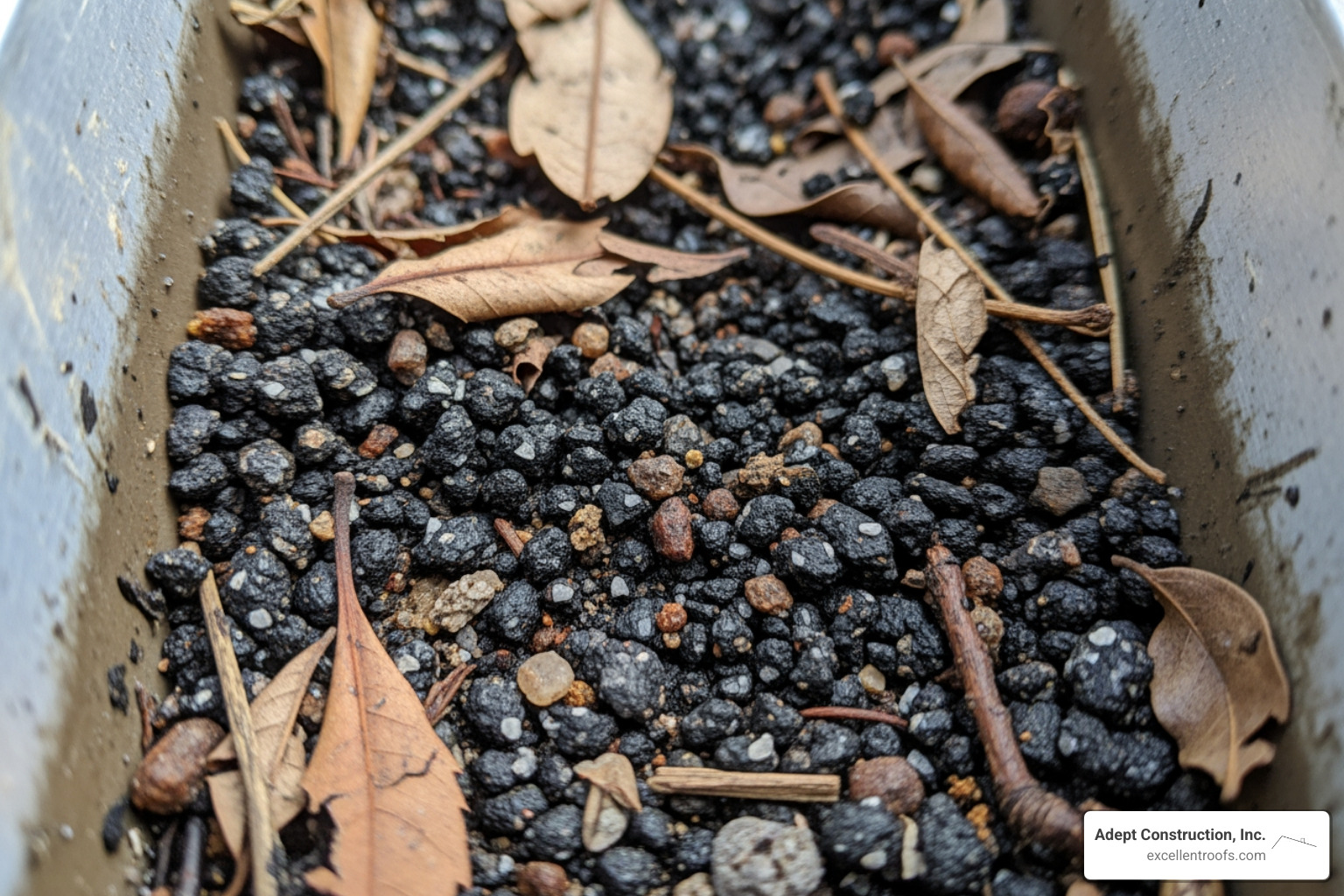
- Granules in downspouts and gutters: Shingles are coated with granules that protect them from UV rays and weathering. If you find an accumulation of these small, sand-like particles in your gutters or downspouts, it’s a strong sign that your shingles are deteriorating and losing their protective layer.
- Water stains on ceilings and walls: If you notice discoloration, damp spots, or peeling paint on your interior ceilings or walls, especially after heavy rain or snowmelt, it’s a strong indicator of a roof leak. This often means water is penetrating through a compromised area, possibly due to missing shingles.
- Peeling interior or exterior paint: Moisture trapped within your home due to poor attic ventilation or roof leaks can cause paint to blister and peel, both inside and out.
- Musty odors in the attic: A musty smell in your attic points to moisture intrusion, which can lead to mold and mildew growth. This is a serious health concern and a sign that your roof’s integrity is compromised.
- Curling or cracked shingles: Even if shingles aren’t completely missing, those that are curling at the edges, blistering, or showing extensive cracks are weakened and prone to blowing off in the next strong wind. These are precursors to missing shingles and should be addressed.
- Increased energy bills: Compromised roof insulation from missing or damaged shingles can lead to significant heat loss in winter and heat gain in summer, driving up your energy costs.
Common Culprits Behind Missing Shingles
Why do shingles decide to take flight? While a roof is designed to be tough, several factors can contribute to shingles going missing. Understanding these causes helps us prevent future problems.
- High winds: This is perhaps the most common cause. Strong winds can lift and tear shingles, especially those with weakened adhesive bonds. If you live in an area prone to severe weather, like Downers Grove or Naperville, high winds are a constant threat to your roof’s integrity.
- Hail impact: Hailstones can bruise, crack, or even dislodge shingles upon impact, particularly during severe hailstorms. The damage might not always be immediately visible from the ground.
- Heavy rain: While not directly dislodging shingles, heavy rain, especially when combined with high winds, can exploit existing weaknesses and saturate the roof deck if shingles are missing, exacerbating damage.
- Falling tree limbs: Branches falling onto your roof, whether from a storm or just weak limbs, can physically damage or dislodge shingles. We always recommend trimming overhanging branches.
- Animal activity: Believe it or not, critters like squirrels, raccoons, and birds can cause damage to shingles, tearing them or loosening them in their search for shelter or food.
- Improper nailing during roof installation: If shingles weren’t properly nailed down during their initial installation, they are far more susceptible to wind uplift and detachment. For standard 3-tab shingles, 6 nails are recommended per shingle, with two nails per tab.
- Age-related adhesive failure: Shingles have a lifespan, often around 20-30 years. Over the course of 10-15 years, the adhesive strips on the back of your shingles begin to decay. This natural aging process weakens their bond, making them vulnerable to wind and other elements.
- Poor attic ventilation: Inadequate attic ventilation can lead to excessive heat buildup in the summer, which can “cook” shingles from below, causing them to crack, curl, and become brittle. In winter, poor ventilation can contribute to moisture issues and ice dams, which can also degrade shingles.
Your DIY Guide to Missing Shingle Repair
For a single missing shingle or a very small, localized issue, a DIY missing shingle repair can be a temporary fix. However, we always emphasize safety and proper technique. If you’re uncomfortable with heights, the roof is steep, or the damage is extensive, please call a professional.
Gearing Up: Essential Tools and Materials
Before you ascend to your roof, ensure you have everything you need. A quick trip to the hardware store for the right gear can make all the difference.
Here’s our checklist for essential tools and materials:
- Replacement shingles (color-matched): This is crucial. Try to match the existing shingles as closely as possible in color, style, and brand for a seamless repair. If you have extra shingles from the original installation, even better!
- Galvanized roofing nails (1 ¼ inch to 2 inches long): These nails are designed for roofing, offering superior grip and corrosion resistance.
- Hammer: A standard claw hammer will work, but a roofing hammer with a magnetic nail starter can be a handy tool.
- Flat pry bar or shingle ripper: A flat pry bar can help lift shingles and remove nails. A dedicated shingle ripper, while an extra expense, is a specialized tool that makes removing old shingles much easier and is “money well spent” for repairs, as one expert noted.
- Utility knife: Essential for cutting new shingles to size or scoring old ones.
- Roofing cement/sealant: Also known as asphalt plastic roof cement or roofing tar. This is used to create a watertight seal under new shingles and to re-seal any loosened surrounding shingles.
- Caulk gun: For easy and precise application of roofing cement.
- Sturdy ladder: Ensure it’s tall enough to safely reach your roof.
- Safety harness and rope: Non-negotiable for working at heights. Tie the rope to a sturdy object on the opposite side of the house and route it over the roof peak.
- Heavy-duty gloves: To protect your hands from sharp edges and rough surfaces.
- Non-slip, soft-soled shoes: For maximum grip and to minimize damage to existing shingles.
- Paint thinner and a rag: Handy for cleaning up any excess roofing tar.
Safety First: Critical Precautions for Working on a Roof
Your safety is paramount. Working on a roof carries inherent risks, and a fall can lead to serious injury. Please take these precautions seriously.
- Ladder safety: Always place your ladder on firm, level ground. Ensure it extends at least 3 feet above the roof edge. Have a buddy hold the ladder for added stability.
- Work on a dry, calm day: Never attempt roof repairs in windy, rainy, or icy conditions. A dry roof surface is crucial for traction, and strong winds can make working at heights extremely dangerous. Cool weather is ideal as shingle adhesive is easier to shear.
- Wear a safety harness: This is not optional. A climbing harness attached to a sturdy rope secured to a strong anchor point (like a chimney or a vent pipe on the opposite side of the roof) can literally be a lifesaver.
- Use a spotter: Always have someone on the ground to assist, hold the ladder, and monitor your safety.
- Wear proper non-slip shoes: Shoes with good grip are essential to prevent slips and falls on the sloped surface of your roof. Soft-soled shoes are also less likely to damage existing shingles.
- Never work on a wet or icy roof: This increases the risk of slipping dramatically. Postpone repairs until conditions are dry and safe.
- Clear the work area: Remove any debris, leaves, or loose materials from around the repair site to prevent tripping hazards.
- Protect your eyes and hands: Wear protective eyewear and heavy-duty gloves to guard against debris, sharp edges, and roofing cement.
For more detailed information on roof safety, you can refer to resources like How to work safely on a roof.
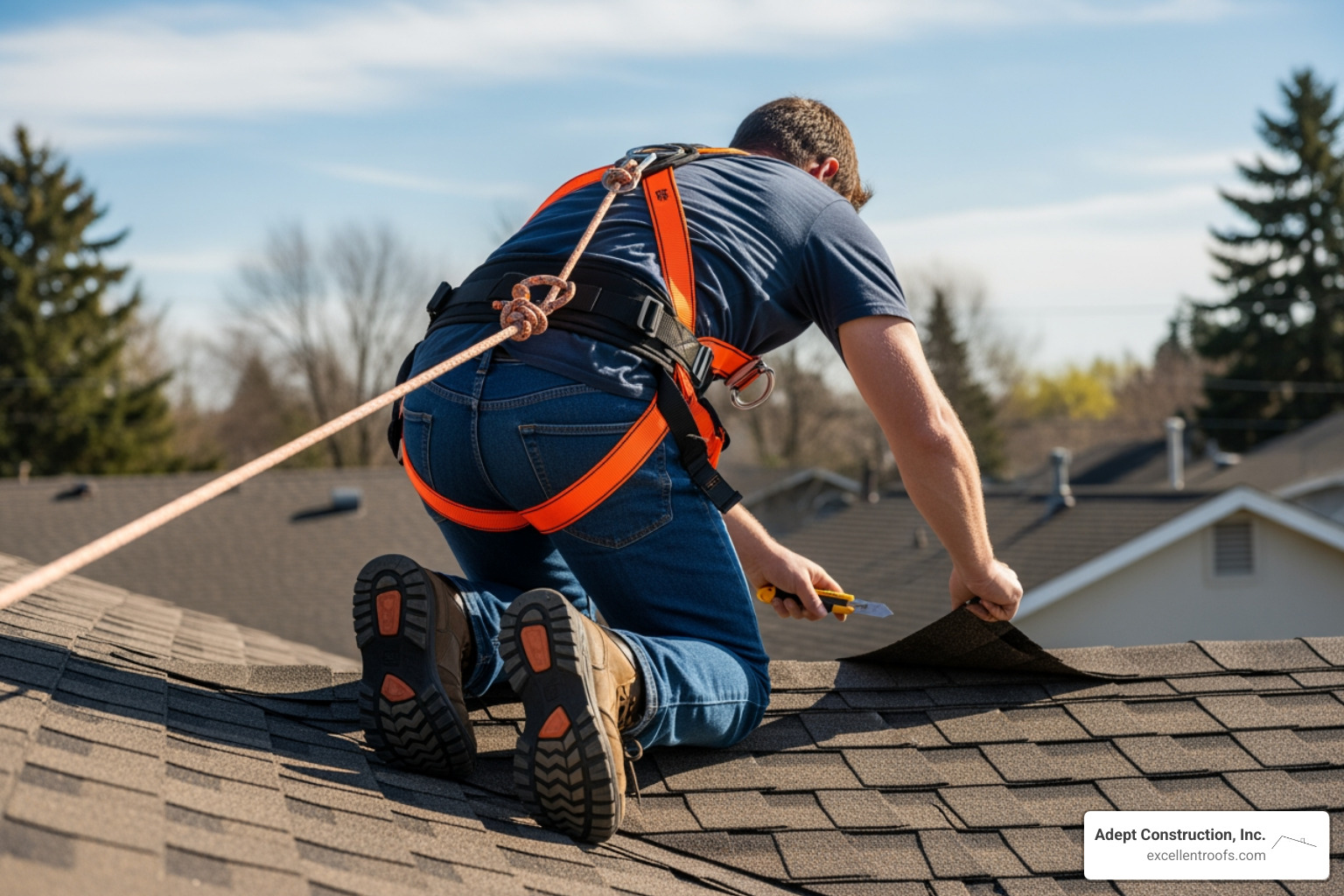
Step-by-Step Instructions for a Flawless Missing Shingle Repair
Once you’ve geared up and prioritized safety, it’s time to tackle the actual missing shingle repair. We’ll walk you through the process, ensuring your new shingle is securely in place.
- Locate and assess the damage: Identify the exact spot where the shingle is missing. Check surrounding shingles for any signs of loosening, cracking, or other damage that might need attention.
- Break the sealant on overlying shingles: Gently lift the edges of the shingles directly above and to the sides of the missing shingle. Use a flat pry bar or the claw of your hammer to carefully break the adhesive seal. Do this slowly to avoid damaging the good shingles. In cooler weather, this is easier as the sealant is less tenacious.
- Remove any old nails and debris: If remnants of the old shingle or exposed nails are present, use your pry bar or shingle ripper to remove them. Ensure the area is clean and free of any old material. This creates a smooth surface for the new shingle.
- Prepare the new shingle: If your replacement shingle is a full 3-tab shingle and you’re replacing a single tab, you might need to trim it. For a standard 3-tab shingle, you’ll be sliding it into place. Ensure it matches the existing shingles in size and style.
- Slide the new shingle into place: Carefully slide the replacement shingle underneath the overlying shingle, ensuring it’s aligned with the surrounding shingles and that its bottom edge is flush.
- Secure with roofing nails: Once the new shingle is perfectly positioned, nail it down along the nail strip. For 3-tab shingles, use 4 to 6 galvanized roofing nails. Place the nails where they will be covered by the overlapping shingle above, about 1 inch above the cutouts and 1 inch from each end.
- Apply roofing cement under tabs: With your caulk gun, apply a small, nickel-sized dab of roofing cement under the tabs of the new shingle. Also, apply some cement under any surrounding shingles that you lifted, to reseal their bond. This helps prevent wind uplift and creates a watertight seal. Apply it far enough back to prevent gushing out.
- Press down firmly to seal: Press down on the newly installed shingle and any resealed surrounding shingles to ensure the roofing cement adheres properly. If possible, place a brick or heavy object on the new shingle for a few hours to help it bond, especially if working in warmer weather.
- Inspect and clean up: Do a final visual inspection of your work. Ensure there are no gaps, loose edges, or exposed nails. Clean up any excess roofing cement with paint thinner and a rag.
Repair vs. Replacement: Making the Right Call
Deciding between a simple missing shingle repair and a full roof replacement is a common dilemma for homeowners. It’s not just about the immediate fix; it’s about the long-term health and value of your home. As roofing experts, we understand this decision can be complex, involving factors like your roof’s age, the extent of the damage, and your budget.
When a Simple Shingle Repair is Enough
A quick missing shingle repair is often the most cost-effective and appropriate solution in specific circumstances.
You should consider a simple repair when:
- Damage is localized to a small area: If only a few shingles are missing or damaged in one isolated spot, a repair is usually sufficient. This could be a single leak near a flashing point or a small cluster of shingles blown off in a localized gust of wind.
- Roof is less than 15 years old: For roofs that are relatively young and still have plenty of life left, repairing a small section makes sense. Most asphalt shingle roofs are designed to last 20-30 years, so if yours is under 15, a repair can extend its useful life.
- Shingles are otherwise in good condition: If the majority of your shingles are still pliable, flat, and retaining their granules, a repair integrates well with the existing healthy roof structure.
- No signs of underlying deck rot: Before repairing, ensure there’s no soft or spongy decking beneath the missing shingle. If the underlying structure is sound, a repair is viable. These targeted fixes are ideal for our handyman roof repair services.
- A quick fix is needed after minor storm damage: After a minor storm, a few missing shingles can be quickly replaced to prevent further water intrusion, allowing you to buy time or avoid a larger investment if the rest of the roof is sound.
Red Flags: When to Call a Professional for a Roof Replacement
While DIY missing shingle repair has its place, there are clear indicators that your roof needs the comprehensive assessment and expertise of a professional roofing company like Excellent Roofs. Ignoring these red flags can lead to more extensive and costly damage down the line.
It’s time to consider a full roof replacement if:
- Widespread missing or damaged shingles: If more than 25-30% of your roof has missing, cracked, or severely damaged shingles across multiple sections, a full replacement often becomes more practical and cost-effective than numerous repairs.
- Roof is over 20 years old: Asphalt shingle roofs typically have a lifespan of 20 to 25 years. If your roof is approaching or has exceeded this age, it’s likely nearing the end of its functional life. Frequent repairs on an old roof can be like putting a band-aid on a much larger problem.
- Recurring leaks and frequent repairs: If you find yourself constantly patching leaks or repairing shingles, it’s a sign that your roof system is failing. The cumulative cost and effort of these repairs can quickly outweigh the investment in a new roof.
- Shingles are extensively curled, cracked, or bald: Widespread curling, cracking, blistering, or significant granule loss (leading to “bald spots”) indicates that the shingles have lost their protective properties and are deteriorating from age and exposure. This means they can no longer effectively protect your home.
- You notice sagging or soft spots on the roof deck: This is a critical sign of structural damage, often caused by prolonged moisture intrusion. A sagging roof deck cannot be fixed with shingle repair; it requires a full replacement and repair of the underlying structure.
- Extensive water damage inside your home: If you’re seeing multiple stains on ceilings, peeling paint, or musty odors in various rooms, it points to widespread water intrusion that a few shingle repairs won’t solve.
- Your roof has poor curb appeal and impacts home value: An old, visibly damaged, or extensively patched roof can deter potential buyers and reduce your home’s market value. A new roof, on the other hand, is a significant selling point.
For a comprehensive assessment, professional inspection is key. Our team at Excellent Roofs can provide an honest evaluation and recommend the best course of action. We help homeowners decide between a targeted roof repair in Downers Grove, IL and a full roof replacement in Downers Grove, IL. Similarly, we offer expert roof repair in Naperville, IL and complete roof replacement in Naperville, IL to address any level of damage.
The Financials and Future: Insurance, Warranties, and Prevention
Understanding the financial aspects of missing shingle repair and replacement, along with implementing preventative measures, is crucial for long-term roof health and your peace of mind. We’ll explore how insurance and warranties factor in, and what you can do to protect your investment.
Will Insurance or Warranty Cover Your Missing Shingle Repair?
Navigating insurance claims and warranties can be tricky, but knowing your rights and coverage can save you significant money on missing shingle repair.
- Homeowner’s insurance coverage: Homeowner’s insurance typically covers roof damage caused by sudden, unforeseen events, such as windstorms, hail, or falling objects. This means if your shingles went missing due to a recent storm, your policy might cover the repair or replacement costs. However, it’s crucial to understand that insurance rarely covers damage due to normal wear and tear, age-related deterioration, or lack of maintenance.
- Storm damage vs. wear and tear: This distinction is vital. For insurance to cover the damage, it generally needs to be sudden and accidental. For example, shingles blown off during high winds or hail hits denting the shingles are usually covered. Wear and tear from age, however, will not count.
- Documenting damage with photos: If you suspect storm damage, take clear, dated photos of the missing shingles, any debris, and any interior water damage. This documentation is invaluable when filing a claim.
- Understanding your policy deductible: Be aware of your deductible, as you’ll be responsible for that portion of the repair cost. For minor repairs, it might be less than your deductible, making a claim less financially beneficial.
- Manufacturer’s material warranty: Most shingles come with a manufacturer’s warranty (e.g., 20-30 years for asphalt shingles) that covers defects in the material itself. If your shingles are failing prematurely due to a manufacturing defect, this warranty could apply.
- Contractor’s workmanship warranty: A reputable roofing contractor, like Excellent Roofs, will provide a workmanship warranty on their installation. If shingles go missing due to improper installation or nailing, this warranty would cover the repair. Always inquire about both material and workmanship warranties before any work begins.
That insurance companies often factor in depreciation when deciding payouts for older roofs. Newer roofs are more likely to get approved for full replacement if damaged by a covered peril.
Proactive Measures to Prevent Future Missing Shingles
An ounce of prevention is worth a pound of cure, especially when it comes to your roof. By taking proactive steps, you can significantly extend the life of your shingles and minimize the chances of future missing shingle repair.
- Schedule biannual professional roof inspections: The National Roofing Contractors Association (NRCA) recommends professional-level roof inspections twice a year—once in the spring and once in the fall. These inspections can identify minor issues like loose or curling shingles before they become missing shingles, as well as spot potential underlying problems.
- Trim overhanging tree branches: Branches that hang over your roof can rub against shingles, causing wear and granule loss. During storms, these branches can break off and fall, causing significant damage. Regularly trimming them back is a simple yet effective preventative measure.
- Keep gutters clean and free of debris: Clogged gutters can cause water to back up and sit on your roof edges, leading to water damage, fascia rot, and even ice dams in colder climates. Ensure your gutters are clear to allow for proper drainage.
- Ensure proper attic ventilation to prevent moisture buildup and ice dams: Good attic ventilation helps regulate temperature and humidity in your attic. This prevents heat buildup that can prematurely age shingles and reduces moisture that can lead to mold, mildew, and ice dams. Ice dams form when melting snow refreezes at the colder roof edges, backing up water under shingles and causing leaks.
- Address minor damage promptly: Don’t let a small crack or a slightly loose shingle fester. Addressing these minor issues quickly can prevent them from escalating into a full-blown missing shingle scenario.
- Invest in high-quality roofing materials and reputable contractors: The initial quality of your shingles and the professionalism of their installation play a huge role in their longevity and resistance to damage. Choosing durable materials and experienced installers like Excellent Roofs from the start is a long-term investment in your home’s protection.
Conclusion
A missing shingle is a call to action, but it doesn’t have to be a cause for panic. By following these steps, you can confidently handle minor repairs and protect your home. However, safety should always be your top priority. If the damage is extensive, your roof is steep, or you’re uncomfortable with heights, it’s always best to call a professional. For homeowners in the Downers Grove and Naperville areas, Excellent Roofs offers expert inspections and high-quality repairs. Contact us today for a free, no-obligation estimate and ensure your home’s roof is in top condition.