
Why Timely Shingle Repair Protects Your Home
Fix roof shingles as soon as you notice damage to prevent costly water damage and structural problems. Most minor shingle repairs are manageable for homeowners who have the right tools, follow safety protocols, and understand the basic repair process.
Quick Answer for Fixing Roof Shingles:
- Inspect the damage – Look for cracked, curled, missing, or blistered shingles
- Gather your materials – Safety gear, pry bar, hammer, replacement shingles, roofing nails, and roofing cement
- Remove the damaged shingle – Lift surrounding shingles, remove nails, slide out old shingle
- Install the replacement – Slide new shingle into place, secure with nails, apply roofing cement
- Reseal surrounding shingles – Apply cement under lifted tabs and press down firmly
A damaged shingle is more than an eyesore—it’s a direct threat to your home’s protective barrier. When shingles crack, curl, or go missing, water can seep through to the underlayment and eventually into your attic, walls, and ceilings. This can lead to mold growth, insulation damage, and even structural rot. According to industry data, roof repairs can cost anywhere from $150 to $8,000 depending on the extent of damage, making early intervention crucial for homeowners looking to avoid major expenses. As a family-owned business, we at Adept Construction, Inc. understand the value of your home and the importance of working with a professional roofing contractor.
For Illinois homeowners, understanding how to address minor shingle issues is particularly important given our region’s harsh weather cycles—from heavy winter snows to summer storms. Whether you’re dealing with storm damage or age-related wear, knowing when you can handle a repair yourself versus when to call for professional residential roofing services will save you time, money, and stress.
As Gerald Michaels, founder and president of Adept Construction, Inc., I’ve spent nearly three decades helping homeowners across Chicago’s western suburbs understand when they can safely fix roof shingles themselves and when professional intervention is necessary. My team and I have seen how a small repair done right can extend a roof’s life by years, while a delayed fix can lead to thousands in unnecessary damage.
Before You Begin: Inspection, Safety, and Supplies
This initial phase is critical for a successful and safe repair. It involves correctly identifying the problem, gathering all necessary equipment, and understanding the safety protocols for working at heights.
Signs Your Shingles Need Attention
Before you can fix roof shingles, you need to know what to look for. Regular roof inspections, ideally twice a year in spring and fall, are your first line of defense. Here are the common indicators that your shingles are calling for help:
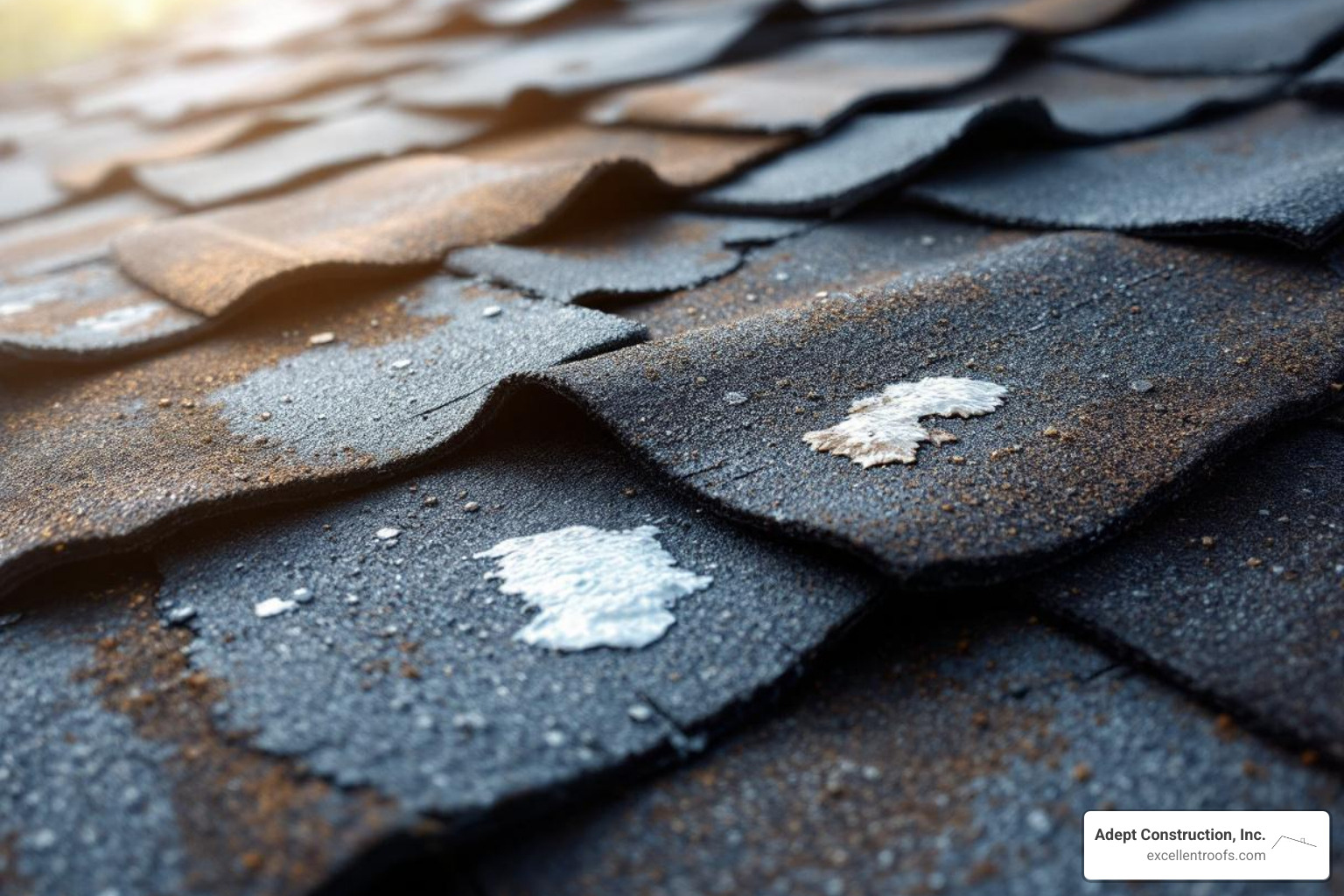
- Curled or Cupped Shingle Edges: This often happens due to aging, moisture absorption, or poor ventilation. Shingles may curl upwards (cupping) or downwards (clawing), reducing their effectiveness against water.
- Cracks and Splits: Exposure to UV rays, extreme temperature fluctuations, and aging can cause shingles to crack or split. These openings are direct pathways for water to penetrate your roof’s protective layers.
- Missing Shingles After a Storm: High winds are a primary culprit here. A significant gust can lift and tear away shingles, leaving your roof deck exposed. This is one of the most urgent issues to address.
- Blistering or Bubbling on the Shingle Surface: Small, raised areas on the shingle surface can indicate trapped moisture or poor ventilation in the attic. These blisters can eventually pop, exposing the shingle’s inner layers to the elements.
- Excessive Granule Loss Found in Gutters: Asphalt shingles are coated with mineral granules that protect them from UV radiation and weathering. If you find a lot of these granules in your gutters or downspouts, it means your shingles are deteriorating and losing their protective layer. This is a common sign of an aging roof.
- Interior Signs Like Water Stains on Ceilings or Musty Odors in the Attic: These are unmistakable red flags that water has already breached your roof. Water stains might appear as brown, yellow, or dark rings, and a musty smell indicates mold or mildew growth due to dampness. Don’t ignore these internal warnings!
Essential Tools and Materials
Having the right tools and materials ready before you climb onto the roof will make the job safer and more efficient. Here’s what we recommend for most DIY shingle repairs:
- Safety Gear:
- Safety Harness: Absolutely non-negotiable, especially for steeper roofs. Always attach it to a secure anchor point.
- Non-Slip Roofing Shoes: Rubber-soled shoes provide excellent traction and can prevent dangerous slips.
- Heavy-Duty Gloves: Protect your hands from rough shingle edges and nails.
- Safety Glasses: Essential for protecting your eyes from debris, dust, or flying granules.
- Tools:
- Hammer: For securing new shingles with nails.
- Flat Pry Bar (or Cat’s Paw Pry Bar): Crucial for gently lifting shingles and removing old nails without damaging surrounding materials.
- Utility Knife: For cutting new shingles to size or trimming damaged sections.
- Caulking Gun: For applying roofing cement or sealant.
- Tape Measure and Straight Edge: For precise cuts.
- Materials:
- Matching Replacement Shingles: This is key! To ensure a perfect match, take a piece of a damaged shingle to your local supplier. Weathering can cause color changes, so matching by eye might be tricky. If you can’t find an exact match, consider using a shingle from a less visible part of your roof (like under a vent) and installing the new, slightly mismatched shingle there.
- 1 1/4-inch Galvanized Roofing Nails: Galvanized nails resist rust and corrosion, ensuring a lasting hold.
- Roofing Cement/Sealant (Asphalt Plastic Roof Cement): This is used for sealing, re-attaching, and waterproofing.
Safety First: Working on Your Roof
Working on a roof presents inherent risks, and your safety is our top priority. Please take these precautions seriously:
- Ladder Safety is Non-Negotiable: Ensure your ladder is placed on stable, level ground. Extend it at least three feet above the edge of the roof. Maintain a 4:1 ratio (for every four feet of height, the base should be one foot away from the wall). Have a helper steady the ladder for you.
- Always Wear a Safety Harness: As mentioned, this is critical. Attach it securely to a rope that’s anchored to a sturdy object on the opposite side of your roof.
- Work on a Dry, Calm Day: Avoid working on the roof during rain, strong winds, or if the roof is wet from dew or frost. Slips are a major cause of roofing accidents. A calm day also prevents new shingles from being blown away or sealant from curing improperly.
- Be Aware of How Temperature Affects Shingles:
- Cold Weather: Below 40°F (4°C), asphalt shingles become brittle and are prone to cracking or breaking when bent or walked on. This makes them difficult to work with and increases the risk of further damage.
- Extreme Heat: On very hot days, shingles can become soft and pliable. Walking on them can cause granules to rub off, reducing their lifespan. The adhesive (sealant strip) can also become overly sticky, making it hard to lift shingles without tearing. Mild temperatures are generally best for shingle repair, as they allow for flexibility without brittleness or excessive stickiness.
How to Fix Roof Shingles: Step-by-Step Instructions
With your preparation complete, you can proceed with the repair. The following steps detail how to handle the most common types of shingle damage, from full replacement to minor fixes.
How to Replace a Damaged or Missing Shingle
Replacing a single damaged or missing shingle is one of the most common repairs we see. This process applies to asphalt shingles, which are prevalent in homes across Downers Grove and Naperville.
Step 1: Loosen the Shingles Above
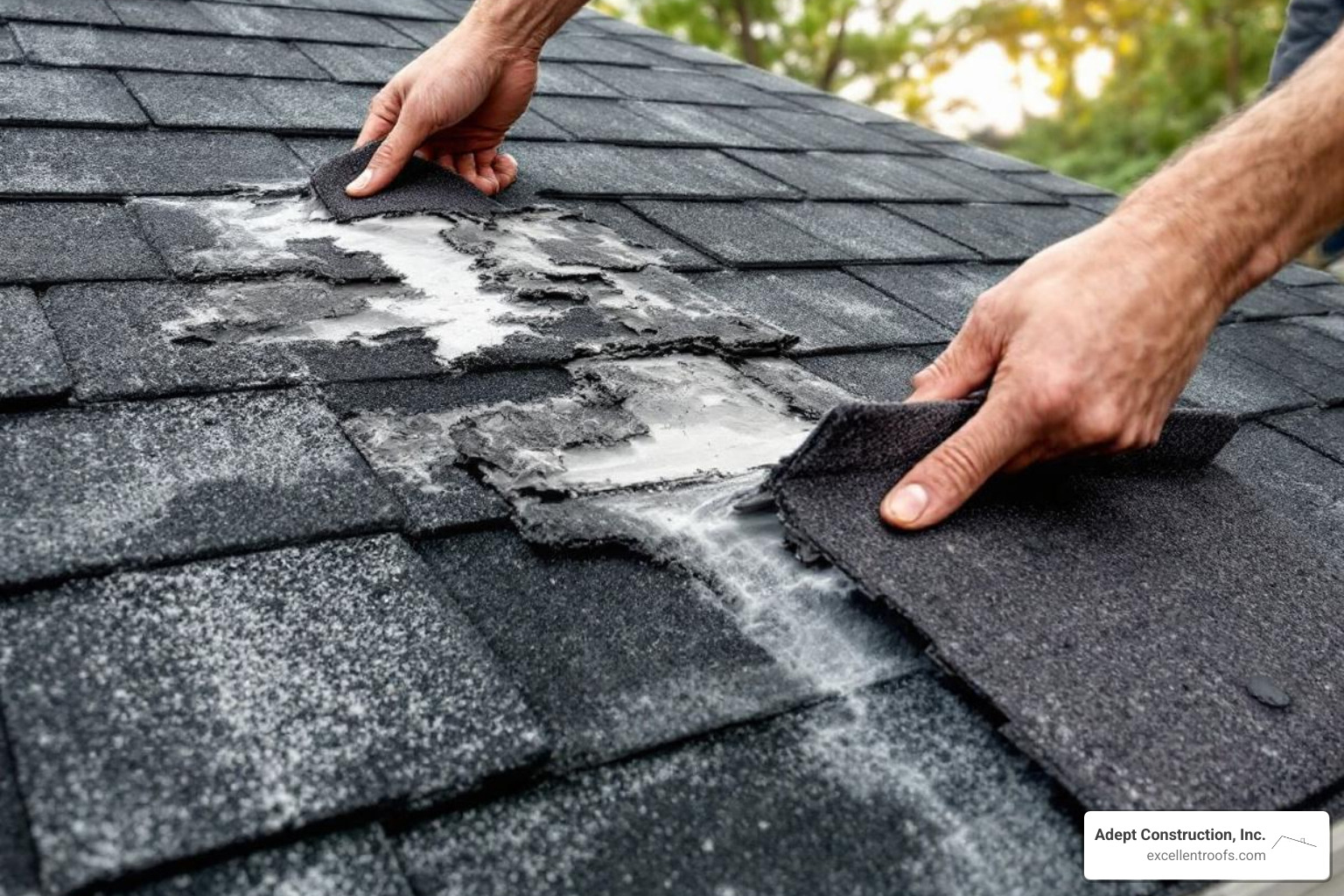
Gently lift the tabs of the shingles in the course directly above the damaged one. Use a flat pry bar to carefully break the sealant bond between the overlying shingle and the one below it. Do this slowly and carefully, especially in cooler weather, as shingles can be brittle. You’re aiming to lift them just enough to access the nails of the damaged shingle.
Step 2: Remove the Nails
Once the overlying shingles are lifted, you’ll see the nails holding the damaged shingle in place. Slide your pry bar underneath the head of each nail and gently pry upwards to remove them. Be careful not to damage the underlying felt or roof deck. Remove all nails securing the damaged shingle, and also any nails from the overlying shingles that might be preventing its removal.
Step 3: Slide Out the Old Shingle
With all nails removed and surrounding shingles gently lifted, carefully slide the old, damaged shingle out from under the course above it. Dispose of it properly.
Step 4: Slide the New Shingle into Position
Take your new, matching shingle and slide it up into the empty slot. Ensure it aligns perfectly with the surrounding shingles on either side and sits flush with the course below it. The bottom edge should align with the bottom edge of the adjacent shingles.
Step 5: Secure the New Shingle
Lift the tabs of the overlying shingle again. Using your hammer, drive four to six galvanized roofing nails through the new shingle, just below the sealant strip. The nails should penetrate the roof deck. Crucially, ensure these nails are placed in a position where they will be covered by the overlapping shingle above, preventing water penetration and maintaining a clean appearance. This double-nailing system is key to a roof’s wind resistance.
Step 6: Reseal the Shingles
Apply a few small dabs of roofing cement (asphalt plastic roof cement) under the tabs of the newly lifted shingles (both the new shingle and any surrounding shingles you lifted). Press the tabs down firmly to re-establish the seal. This helps secure the shingles against wind uplift and prevents water from seeping underneath. For optimal adhesion, place a heavy object on the repaired area for a few hours.
How to fix roof shingles that are curled
Curled shingles don’t always require full replacement if the shingle material itself is still sound. This repair is effective for shingles that are lifting but are otherwise in good condition, and it’s a great way to help prevent future leaks.
- Choose a Warm Day: The best time to fix curled shingles is on a warm, sunny day. The heat makes the asphalt more pliable, reducing the risk of cracking when you try to flatten it. If it’s cold, you might need to carefully use a propane torch with a flame-spreader nozzle to gently warm the shingle, but exercise extreme caution to avoid overheating or burning it.
- Clean the Area: Gently lift the curled edge and clean out any debris, dirt, or old sealant that might be preventing it from lying flat.
- Apply Roofing Cement: Using your caulking gun, apply a thick bead of roofing cement underneath the curled portion of the shingle. Make sure it extends far enough to cover the area that needs to re-adhere.
- Press and Weight: Press the shingle down firmly, ensuring good contact with the roofing cement. To create a strong, lasting bond, place a heavy, flat object (like a brick wrapped in cloth to prevent damage) on top of the repaired shingle for at least 24 hours. This will hold the shingle flat while the cement cures.
Repairing Cracked or Torn Shingles
For a single crack or small tear, a simple application of roofing sealant can provide a durable temporary fix, or even a long-term solution if done correctly.
- Clean and Dry: Ensure the shingle is clean and completely dry before you start. Any moisture will prevent the sealant from adhering properly.
- Apply Sealant Underneath: Carefully lift the edges of the crack or tear. Apply a bead of roofing sealant into the crack and generously underneath the shingle where the damage is.
- Press Flat: Press the shingle down firmly to close the crack and ensure the sealant makes good contact.
- Apply Sealant On Top: Apply a second, thin layer of sealant over the top of the crack. Use a putty knife or a gloved finger to smooth the sealant evenly, creating a waterproof barrier.
- Camouflage (Optional): For better camouflage, especially on visible areas of your roof, you can sprinkle loose granules collected from your gutters onto the wet sealant. Gently press them into the sealant to help them adhere. This helps the repair blend in with the surrounding shingle texture and protects the sealant from UV rays.
DIY Repair vs. Calling a Professional Roofer
Knowing your limits is key to any home improvement project. While some shingle repairs are straightforward, others require an expert eye and hand to prevent further damage. We often tell our clients in Downers Grove and Naperville that a small, confident DIY repair is great, but an uncertain one can lead to bigger headaches.
When a DIY Fix is Appropriate
A DIY approach can be a cost-effective solution for minor issues, saving you from a professional service call for every single loose shingle.
| Factor | DIY Repair | Professional Repair |
|---|---|---|
| Cost | Low (materials only) | Higher (labor + materials) |
| Time | Can be done immediately | Requires scheduling |
| Skill Level | Basic DIY skills, attention to detail | Expert knowledge, specialized training |
| Warranty | None (for DIY work) | Often includes workmanship and material warranties |
| Safety Risk | Moderate to High | Low (for homeowner) |
| Longevity | Good for minor issues if done correctly | Excellent, long-term solutions |
You can likely handle the repair yourself if:
- Isolated Damage: The problem involves only a few shingles in one small, contained area.
- Low Slope and Accessible: Your roof has a relatively low slope and the damaged area is easily and safely accessible without extensive climbing.
- Proper Safety Equipment and Confidence: You own all the necessary safety equipment (harness, non-slip shoes, ladder) and feel completely comfortable and confident working at heights.
- Tight Budget for Minor Repair: You’re on a tight budget and the repair is genuinely minor, making the cost of materials significantly less than a professional service call.
When to Call a Professional
There are many scenarios where attempting a DIY repair could be dangerous, ineffective, or even cause more damage. This is when our team at Adept Construction, Inc. steps in.
- Widespread Damage: If you notice damage across multiple sections of your roof, or more than 25-30% of the roof is compromised, it’s a clear sign for professional help. This often indicates a systemic issue or significant storm impact.
- Sagging Roof Deck: A sagging roof deck is a serious structural problem, not just a shingle issue. This indicates underlying water damage or structural weakness that requires immediate professional assessment.
- Persistent Leaks: If you’ve tried DIY fixes for a leak, and it keeps returning, it’s time to call in the experts. Persistent leaks often have complex origins, like damaged flashing or underlayment, which are difficult for a homeowner to diagnose and repair effectively.
- Steep or High Roofs: If your roof is steep, multi-storied, or you are simply not comfortable with heights, it’s always best to call a professional for expert roof repair in Downers Grove or Naperville. The risk of injury far outweighs any potential savings.
- Major Issues After a Storm: After a severe storm, especially if you suspect extensive damage, hail impact, or multiple missing shingles, you may need to consider a full roof replacement in Naperville or Downers Grove. Our team specializes in storm damage assessment and can guide you through the process, including insurance claims.
- Unsure of the Source: If you can’t pinpoint the exact source of a leak or the cause of shingle damage, a professional can conduct a thorough inspection.
Beyond the Fix: Maintenance and Leak Detection
Fixing the shingle is only part of the solution. Understanding how to prevent future damage and handle related issues like leaks and insurance claims will protect your home long-term.
Finding the Source of a Roof Leak
One of the trickiest parts of dealing with a roof leak is finding its origin. Water can travel along roof beams and rafters before becoming visible inside your home, so the leak inside may not be directly under the roof damage.
- Start Indoors: Begin your search in the attic. Grab a powerful flashlight and look for water stains, mold, mildew, or visible daylight coming through the roof. Pay close attention to areas around vents, chimneys, skylights, and pipe penetrations – these are common leak points.
- The Garden Hose Test (with a Helper): If the source isn’t obvious from inside, and it’s safe to go on the roof, enlist a helper. Have your helper watch inside with a bucket while you carefully use a garden hose on the roof. Start spraying water on the lowest suspected area (e.g., near a vent or flashing) and work your way up slowly. Wait several minutes at each section. When your helper spots the leak inside, you’ve found your general area. This methodical approach can save a lot of guesswork.
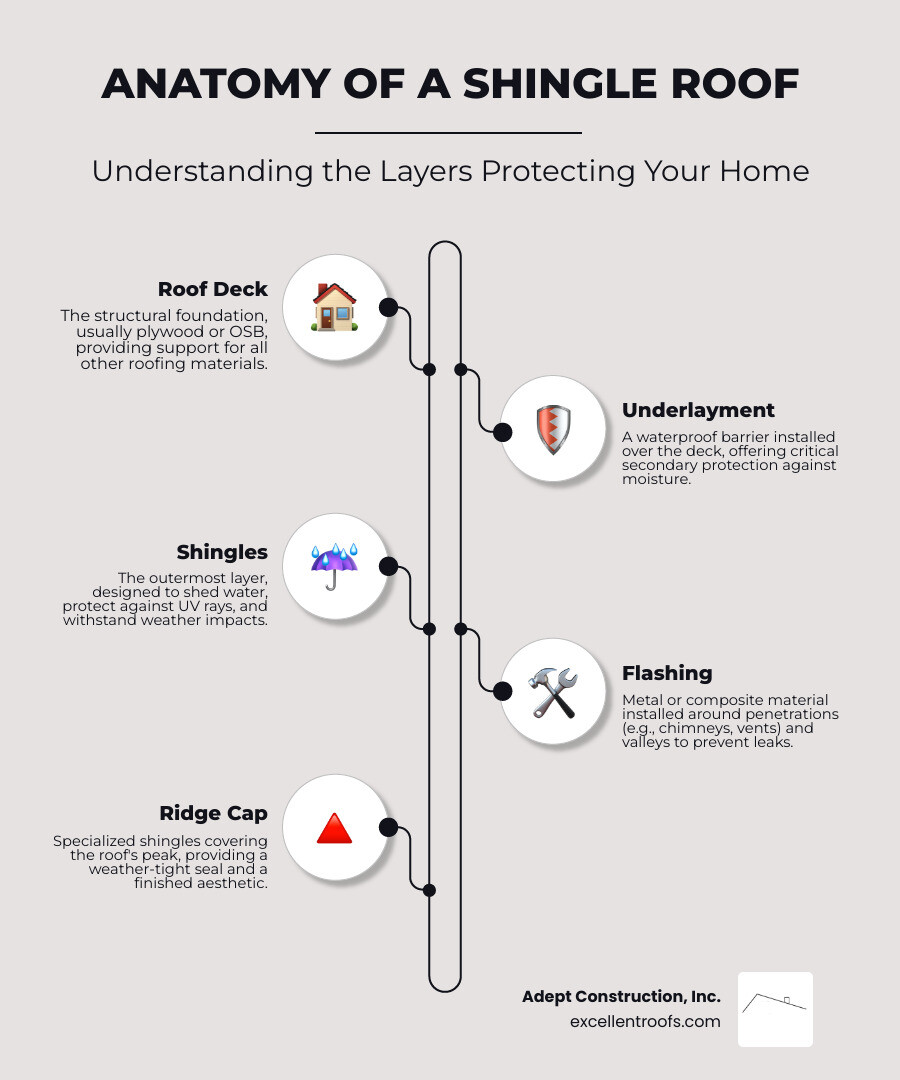
- Inspect Flashing: Flashing—the metal strips around chimneys, vents, and valleys—is a common culprit for leaks. Check for any cracks, gaps, or signs of corrosion. Patching flashing with tar or caulk is often a temporary band-aid solution, not a permanent fix.
Preventative Maintenance to Extend Roof Life
An ounce of prevention is worth a pound of cure, especially when it comes to your roof. Regular maintenance can significantly extend the lifespan of your shingles and prevent costly repairs.
- Perform Visual Inspections: We recommend performing visual inspections from the ground twice a year, ideally in the spring and fall. Look for any of the signs of damage we discussed earlier: curled, cracked, or missing shingles, excessive granules in gutters, and signs of wear.
- Keep Gutters and Downspouts Clean: Clogged gutters can cause water to back up and pool on your roof, leading to rot, fascia damage, and even damaging ice dams in winter. Ensure they are clear of leaves and debris, especially before winter.
- Trim Overhanging Tree Branches: Tree branches rubbing against your roof can wear away shingle granules over time. Falling limbs can cause significant damage, especially during storms. Trimming them back prevents both abrasive wear and impact damage.
- Consider a Professional Inspection: Even with diligent DIY checks, we recommend a professional inspection every 3-5 years. Our trained eyes can spot subtle issues, like compromised underlayment or flashing problems, that an untrained eye might miss. A professional can also provide seasonal maintenance tips specific to our Illinois climate, such as checking for heat damage in summer or excessive snow accumulation in winter.
Documenting Damage for Insurance Claims
If your roof damage is significant, particularly after a storm, you might need to file an insurance claim. Understanding what your policy covers and how to document the damage is crucial.
- Understand Your Policy: Homeowner’s insurance typically covers damage from sudden, unforeseen events like wind, hail, fire, or a tree falling on your house. It usually does not cover damage due to general wear and tear, age, or lack of maintenance. Many roofs over 15 years old are not covered for wear and tear, even if a surprise leak occurs.
- Take Extensive Photos and Videos: Document everything! Take clear, well-lit photos and videos of any damage, both inside and outside your home. Include close-ups of specific shingle damage, wide-angle shots of affected rooms, and photos of any damaged floors, furniture, or attic components.
- Document the Event: If the damage is storm-related, try to get a snapshot of the weather report from the day the damage occurred.
- Keep Receipts for Temporary Repairs: If you make any temporary repairs, such as buying a tarp, keep all receipts. Your insurance company may reimburse you for these expenses.
- Consult a Professional: Navigating insurance claims can be complex. If you’ve experienced a major weather event, our team at Adept Construction, Inc. can help you steer the storm damage claim process. We work with insurance companies regularly to ensure our clients receive fair assessments and comprehensive repairs.
Frequently Asked Questions about Shingle Repair
How long does it take to replace a few shingles?
For a small and easily accessible area, a homeowner with the right tools and a little experience can typically replace a few shingles in one to two hours. The process involves carefully removing the old shingle and securing the new one without damaging surrounding materials. However, if you encounter unexpected issues like rotten decking or widespread damage, the time can increase significantly.
Can I fix my roof shingles in cold or hot weather?
Mild weather is ideal for shingle repair. In cold temperatures (below 40°F or 4°C), asphalt shingles become brittle and can easily crack or break when bent. This makes removal and installation difficult and risks damaging new shingles. In extreme heat, the sealant can become overly sticky, and walking on the shingles can cause granules to rub off, shortening their lifespan. The asphalt can also soften, making them more prone to tearing. Aim for a dry day with temperatures between 50°F and 80°F (10°C and 27°C) for best results.
What if I can’t find an exact match for my shingles?
If your shingles have been discontinued, or your roof has weathered significantly, finding a perfect match can be difficult. One solution is to take a shingle from a less visible part of your roof (e.g., under a solar panel, behind a chimney, or from a shed if it has the same roofing) to use for the repair. Then, place the new, slightly mismatched shingle in that hidden spot. If no exact match is available, picking the closest color and style and replacing a slightly larger section can help the new shingles blend in better, especially if the repair is in a prominent location.
Conclusion: Protect Your Investment with Proper Roof Care
Fixing a damaged roof shingle promptly is one of the most important maintenance tasks a homeowner can perform. It prevents small issues from escalating into costly structural damage and protects your home’s value. While many minor repairs are manageable DIY projects, always prioritize safety and recognize when a problem requires professional expertise.
We at Adept Construction, Inc. are dedicated to providing honest assessments and high-quality workmanship. As a family-owned roofing company serving Downers Grove, Naperville, and the surrounding western Chicago suburbs, we pride ourselves on superior customer service, knowledgeable staff, and earning strong local referrals. If you’re in the Downers Grove or Naperville areas and are unsure about a repair, or if the damage seems extensive, contact us for a free, no-obligation estimate. We’ll provide an expert opinion and a clear plan of action. For roofs with widespread issues or those nearing the end of their lifespan, learn more about our complete roof replacement services. We’re here to ensure your roof remains a strong, reliable shield for your home.