
Why Slate Roofs Demand Specialized Care and Expertise
Residential slate roof repair is a specialized service that preserves one of the most durable and neat roofing materials available. As a leading roofing company in the Chicago suburbs, we know that when a slate roof shows signs of damage, understanding your repair options is essential to protecting your home and maintaining the roof’s century-long lifespan.
Key Facts About Slate Roof Repair:
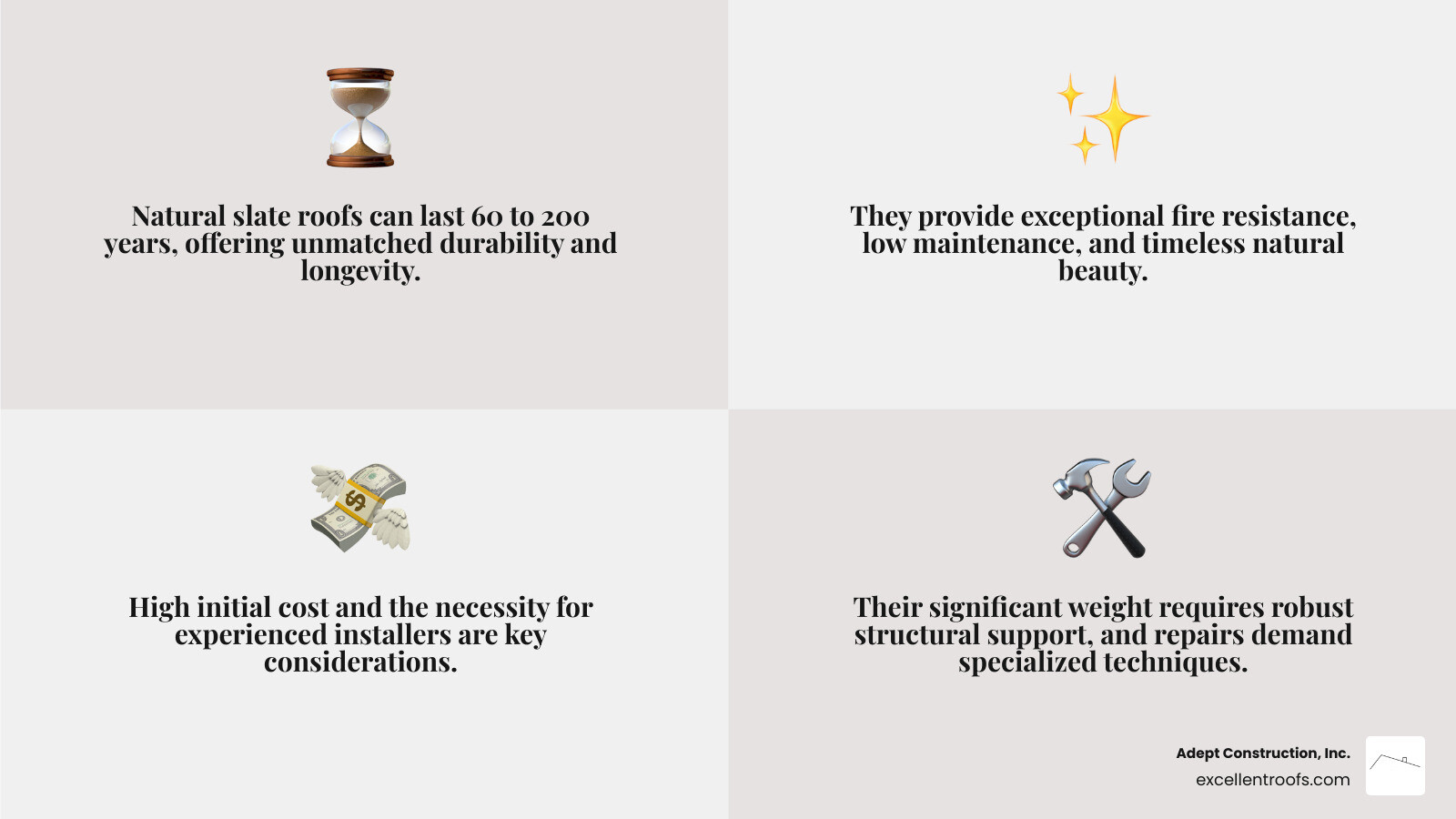
- Average repair cost: $784 to $3,248 nationally, depending on damage extent
- Individual tile replacement: $50 to $200 per slate
- Repair vs. replacement threshold: If less than 20% of slates are damaged, repair is typically more cost-effective
- Lifespan: Natural slate roofs last 60 to 150 years when properly maintained
- Essential requirement: Repairs must be performed by experienced slate roofing specialists
Slate has roofed buildings for millennia due to its best durability, fire resistance, and natural beauty. A well-maintained slate roof can outlast generations, but its longevity depends on skilled craftsmanship. Improper techniques can cause more harm than good, making expert repair a crucial investment in your home’s long-term value.
Since 1997, Adept Construction has specialized in residential roofing, including expert residential slate roof repair throughout Chicago’s western suburbs. Our team understands that your slate roof is an architectural treasure worth preserving with the highest level of care.
Spotting the Signs: When Does Your Slate Roof Need Repair?
Even the most durable slate roof isn’t impervious to damage. Recognizing early warning signs can prevent minor issues from becoming costly structural problems. As experts in residential slate roof repair, we know prompt action is key.
Common causes of slate roof damage include:
- Storms & Falling Debris: High winds can lift slates, while hail and falling tree limbs can crack or break tiles. This is a frequent issue in tree-lined communities like Downers Grove and Naperville. Learn more about how to spot hail damage on your roof.
- Foot Traffic: Untrained individuals walking on a slate roof can easily crack the brittle tiles.
- Nail Fatigue: The nails holding slates in place, especially older non-copper nails, can rust and fail, causing slates to slip.
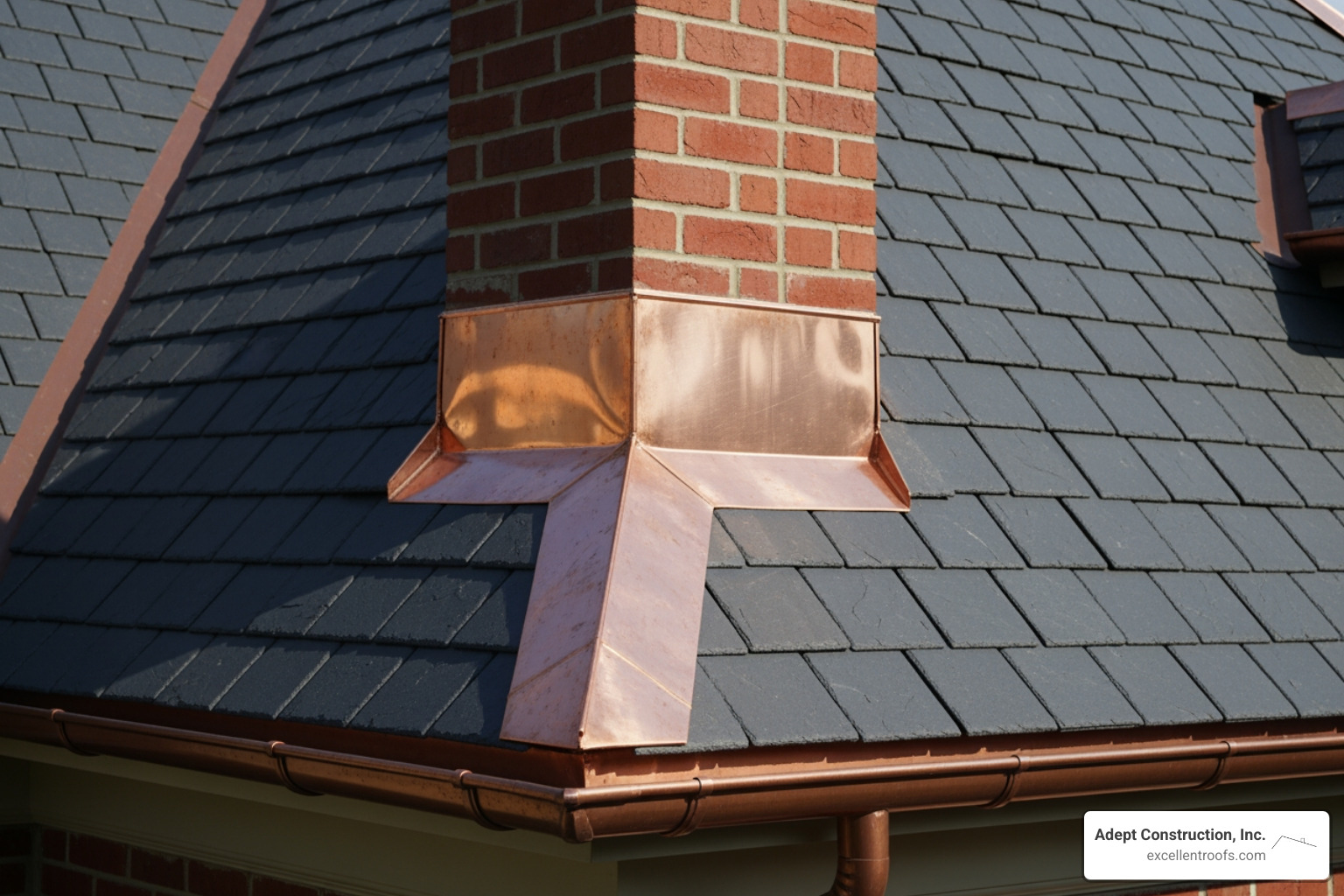
- Flashing Failures: Metal components around chimneys and vents are often the first to fail, leading to leaks.
- Inferior Slate Quality: Softer slate varieties can deteriorate more quickly than harder, more durable types.
Telltale signs your slate roof needs attention:
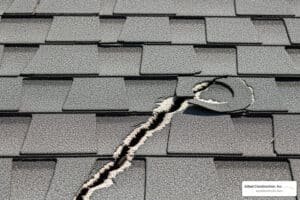
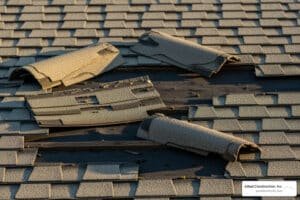
- Slipped, Missing, or Cracked Slates: Gaps on your roof or tiles on the ground are the most obvious signs.
- Evidence of Leaks: Water stains in the attic or on ceilings, daylight visible through roof boards, or a musty smell of mold all point to water intrusion.
- Corroding Metal: Rusty flashing or discoloration indicates that metal components are failing.
- Powdery Deposits (Efflorescence): White deposits on the underside of slates can indicate water penetration.
Distinguishing minor damage from an end-of-life roof is crucial. A few missing or cracked tiles are repairable. However, widespread issues like delamination (peeling layers), powdering surfaces, or a dull thud when tapped suggest the slate is becoming soft and may need replacement. If less than 20% of your slates are damaged, repair is usually the most cost-effective option.
Understanding the Role of Underlayment and Flashing
While slate tiles are the primary barrier, the underlayment and flashing are critical for a watertight system.
The underlayment serves as a secondary water barrier. Traditional roofs used asphalt-saturated felt, while modern installations often use self-adhering membranes for superior protection. Understanding the role of underlayment in roof integrity is vital.
Flashing creates watertight seals around chimneys, vents, and in valleys. These are common failure points. Using non-corrosive metals like copper or stainless steel is essential, as they last as long as the slate itself. Cheaper galvanized steel can rust, leading to leaks and stains.
How Age and Slate Type Affect Repair Needs
The longevity of your slate roof depends on its age and type.
- Soft Slate: Varieties like some Pennsylvania gray slates have a service life of 50-75 years.
- Hard Slate: Varieties from Vermont or Buckingham, Virginia are exceptionally hard and can last 100-200 years.
A simple “sound test” can help assess slate condition: a healthy slate makes a crisp ring when tapped, while a dull thud indicates it’s becoming soft and brittle. For more details on slate types, the NSA Mobile Field Guide is an excellent resource.
The Expert Process for Residential Slate Roof Repair
Repairing a slate roof is a specialized skill, not a job for a general roofer. True residential slate roof repair is an art form that requires an understanding of the material’s unique properties.
Matching replacement slates is crucial for aesthetic integrity. We match by color (including weathering characteristics), size (to ensure proper overlap), and texture. We source slates from reclaimed materials for historic homes or from reputable quarries for the closest possible match.
Essential Tools, Materials, and Safety Precautions
Performing residential slate roof repair safely requires specialized equipment.
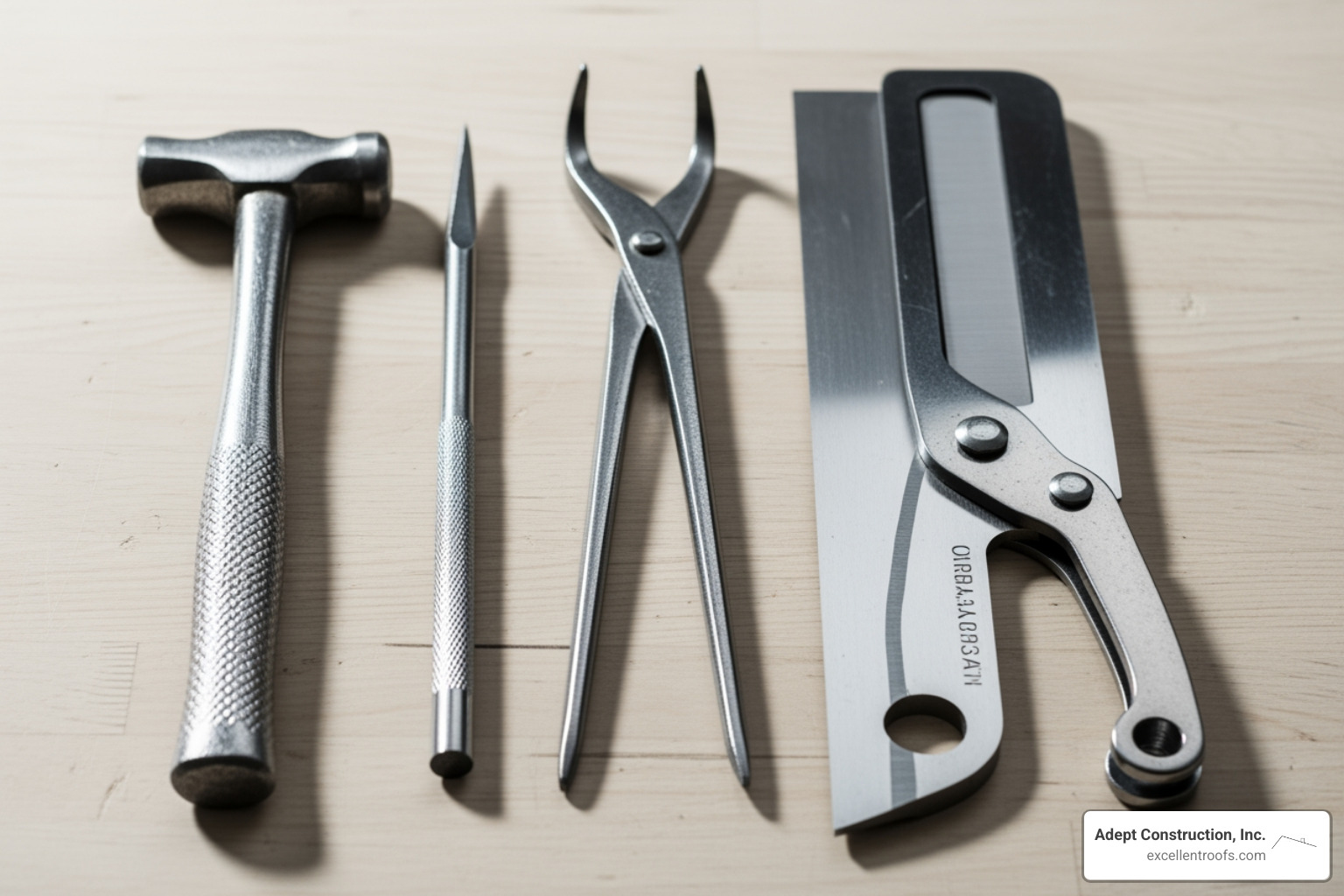
- Essential Tools: A slate ripper (to remove nails), a slate hammer (to punch holes), and a slate cutter (to trim tiles).
- Essential Materials: Replacement slates, non-corrosive copper nails, and copper bibs or stainless steel slate hooks for fastening.
Safety is paramount. Our team adheres to strict protocols, including OSHA fall protection guidelines with harnesses, ladder stabilizers, and soft-soled shoes. We never work on wet or icy slate, as it is dangerously slippery.
Step-by-Step: Replacing a Damaged Slate Tile
The process of replacing a slate tile is meticulous and precise.
Step 1: Safe Removal of the Broken Slate
Using a slate ripper, we carefully hook and cut the nails holding the broken slate, allowing it to be removed without disturbing adjacent tiles.
Step 2: Preparing the Area and Replacement Slate
We inspect the underlayment for damage. The replacement slate, matched for size and color, is prepared by punching new nail holes with a slate hammer.
Step 3: Proper Installation Techniques
This step is critical. We use one of two professional methods:
- Nail-and-Bib Method: The new slate is secured with a copper nail. A small copper sheet (the “bib”) is then slid under the slate above it to cover the exposed nail head, creating a watertight seal.
- Slate Hook Method: A stainless steel or copper hook is secured to the roof deck, and the replacement slate is slid into place and held by the hook.
Important: Never face-nail or use caulk on a slate roof. Face-nailing creates a leak point, and adhesives are a temporary fix that will fail and complicate future repairs. As one veteran slater says, “If a roofer advises face-nailing slates, tell him to leave immediately.” For a visual guide, see this Basic Slate Roof Repair Video.
Step 4: Testing the Repair
We conduct a final visual inspection to ensure the new slate is flush and secure. A water test may be performed to confirm the repair is completely watertight.
Repair vs. Replacement: A Critical Decision for Homeowners
Deciding whether to repair a damaged slate roof or opt for a full replacement is one of the most important decisions a homeowner faces. While slate roofs are exceptionally long-lasting, there comes a point when extensive repairs become less cost-effective than a complete overhaul.
The widely accepted “20% rule of thumb” serves as a useful guideline:
- If less than 20% of your slates are damaged, repair is almost always the more cost-effective and practical solution. Spot repairs and minor section replacements can extend the life of an otherwise healthy roof for many more decades.
- If damage exceeds 20%, or especially if it reaches 20-30% or more, a full replacement may be the better long-term investment.
When replacement is the better option:
- Widespread Damage (20-30%+): If a significant portion of your roof has deteriorated slates, delamination, or widespread cracks, the cost and effort of individual repairs can quickly approach or exceed the cost of a new roof.
- Failing Underlayment: If the underlayment beneath your slates has reached the end of its life (typically 50-75 years for felt), even perfect slates won’t protect your home from leaks. Replacing the entire roof allows for new, modern underlayment installation.
- End of Slate’s Serviceable Life: Even hard slates eventually wear out. If your slates are becoming soft, porous, or delaminating across large sections, they can no longer effectively shed water.
- Persistent Leaks and Structural Issues: If you’re experiencing frequent leaks in multiple areas, or if there’s evidence of widespread sheathing rot or compromised roof timbers, a full replacement is often necessary to address the underlying structural problems. Look for these signs it is time to replace your roof.
We conduct a thorough cost-benefit analysis for our clients in Downers Grove and Naperville. If the projected cost of repairs exceeds 50% of the cost of a new slate roof, replacement might be the more financially sound choice. While a new slate roof is a significant investment (averaging $10-$30 per square foot for installation), its exceptional longevity means the cost is amortized over a century or more, making it a wise long-term investment.
There are also significant environmental considerations. Repairing a slate roof, when feasible, is a highly sustainable choice. It preserves the “embodied energy” used in the original quarrying, manufacturing, and transportation of the slate. Slate is a natural, long-lasting material, and extending its life through skilled repair reduces waste and the demand for new materials.
Breaking Down the Costs of Slate Roof Repairs
Understanding the financial aspect of residential slate roof repair is crucial. While slate is a premium product, repair costs vary based on several factors. The national average cost is $2,003, typically ranging from $784 to $3,248.
Here’s a breakdown of average costs:
| Type of Repair | Average Cost Range (National) |
|---|---|
| Individual Tile Replacement | $50 – $200 per tile |
| Spot Repair (1-10 slates) | $300 – $2,500 |
| Partial Repair (10-20% of roof) | $3,000 – $10,000 |
| Flashing/Fastening Replacement | $600 – $20,000 |
| Underlayment Repair | $800 – $16,000 |
| Full Replacement (Natural Slate) | $20,000 – $60,000+ |
Note: These are average costs and can vary based on location, material availability, and complexity.
Labor costs for slate repair are higher than for other materials, ranging from $4 to $17 per square foot, due to the specialized skills required.
Several factors influence the final cost:
- Extent of Damage: A single tile is cheaper to fix than a large damaged section or compromised underlayment.
- Roof Accessibility: Steep pitches, complex rooflines, and difficult access increase labor costs. A Mansard roof, for example, can cost 20-50% more to repair.
- Slate Type: Natural slate is more expensive to source and repair ($5-$15 per sq. ft.) than synthetic slate ($5-$13 per sq. ft.).
- Geographic Location: Labor rates and material costs vary by region, including the Chicagoland area.
- Matching Existing Slate: Sourcing reclaimed or custom slate to match an older roof can affect material costs.
For a comprehensive look at roofing expenses, consult a complete guide to roof repair costs.
Why DIY is Risky: Finding a Qualified Slate Roofing Contractor
While DIY videos may be tempting, attempting residential slate roof repair is risky and not recommended.
The risks of DIY slate repair include:
- Personal Injury: Falls from roofs are a leading cause of construction injuries. Slate is particularly brittle and slippery.
- Causing More Damage: You can easily crack more slates or damage the underlayment without proper training.
- Improper Repairs and Leaks: Using incorrect methods like face-nailing or caulk will lead to leaks and more expensive problems.
- Voiding Warranties: Home insurance policies and material warranties may be voided by non-professional work.
As we often say, why DIY roofing is a bad idea is a lesson best learned from others’ mistakes.
How to find a qualified slate roofing contractor:
- Verify Slate Experience: General roofing skills are not enough. Ask for a portfolio of slate projects.
- Check Insurance and Licensing: Ensure the contractor has full liability and workers’ compensation insurance.
- Read Reviews: Look for testimonials that specifically mention slate roof repair.
- Get Multiple, Detailed Quotes: Be wary of unusually low bids, as they may indicate inexperience.
- Ask About Methods: A true professional can explain their process and why they use specific materials like copper fasteners.
At Adept Construction, we pride ourselves on our expertise in residential slate roof repair. Our knowledgeable staff provides superior customer service and has earned strong referrals throughout Downers Grove and Naperville. We specialize in providing comprehensive residential roofing services that protect your home for decades. Whether you’re in Downers Grove, IL and need roof repair Downers Grove IL, or in Naperville, IL and require roof repair Naperville IL, our team is ready to help.
Frequently Asked Questions about Residential Slate Roof Repair
How long does a natural slate roof last?
A properly installed and maintained natural slate roof can last from 60 to 150 years, with high-quality hard slate varieties potentially lasting up to 200 years. The lifespan depends on the slate’s quality, installation craftsmanship, and local climate. For example, some soft slate varieties might last 50-75 years, while hard slates can easily exceed a century.
Is it more expensive to repair natural or synthetic slate?
Repairing natural slate is typically more expensive than synthetic slate. Natural slate tiles cost more per piece (ranging from $50 to $200 per tile), require a higher level of skill, and specialized labor due to their weight and brittleness. Synthetic slate, while still requiring skilled installation, is generally less costly for materials and labor.
How often should I have my slate roof inspected?
It is recommended to have your slate roof professionally inspected every 2 to 5 years and after any major storm event. Regular inspections by a qualified roof inspection company can catch minor issues like slipped slates or failing flashing before they escalate into costly problems, helping to significantly extend your roof’s lifespan.
Protect Your Investment with Professional Slate Roof Repair
Your slate roof is a testament to timeless craftsmanship and enduring quality, offering unparalleled durability and aesthetic appeal to your home in Downers Grove or Naperville. As we’ve explored, its remarkable longevity hinges on expert care and timely, proper residential slate roof repair.
Don’t let minor damage compromise your home’s protection or diminish your roof’s impressive lifespan. The key to preserving your slate roof’s integrity and value lies in entrusting its care to experienced professionals who understand the nuances of this unique material.
For homeowners in the Chicagoland area, addressing slate roof issues promptly is key to protecting your home. If you need a professional assessment for your slate roof, our team provides superior workmanship and customer service. Contact Adept Construction today for a free estimate on your residential roofing needs. We’re here to ensure your slate roof continues to perform beautifully for generations to come.