

One Broken Tile Can Cost You Thousands — Here’s What to Do First
Replacing a broken roof tile is one of the most important maintenance tasks a homeowner can do to protect their home from water damage, mold, and structural rot.
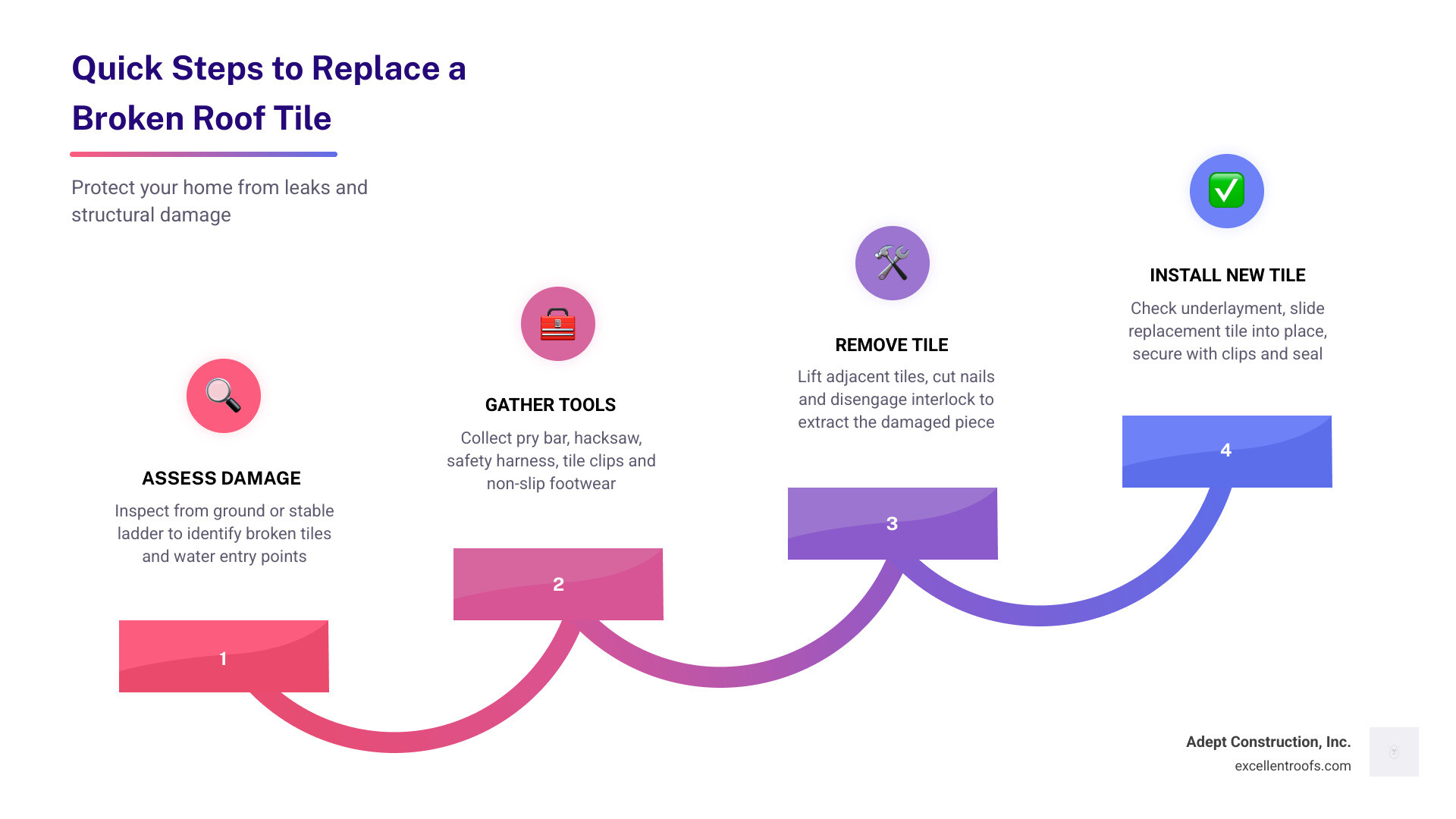
Quick answer — how to replace a broken roof tile:
- Assess the damage from the ground or a stable ladder before climbing up
- Gather tools and safety gear — pry bar or hacksaw, tile clips, roofing sealant, non-slip footwear, and a fall-arrest harness
- Lift the tiles directly above the broken one using wooden wedges or a gloved hand
- Remove the broken tile by cutting the nail with a hacksaw or disengaging the interlock
- Inspect the underlayment for tears or moisture damage before installing the new tile
- Slide the replacement tile into position, hook it onto the batten, and refix with clips or nails
- Seal and inspect after installation — test with a hose if needed
Research shows that 30–40% of roof tile leaks in residential homes are caused by broken or missing tiles. Even a single cracked tile can allow water to reach the underlayment, leading to mold growth and rotting roof timbers — damage that costs far more to fix than a single tile ever would.
The good news? For an accessible, low-slope roof with isolated damage, this is a repair many capable homeowners can handle themselves. For anything more complex — steep pitches, multiple broken tiles, or damage near valleys and skylights — professional help is the smarter call. Adept Construction offers residential roofing services for exactly these situations.
I’m Gerald Michaels, founder of Adept Construction, Inc., and I’ve spent nearly three decades replacing broken roof tiles and repairing roofs across Naperville and Chicago’s western suburbs. In this guide, I’ll walk you through everything I’ve learned — from safe removal techniques to sourcing the right replacement tile — so you can make a confident decision about your roof.
Common replacing a broken roof tile vocab:
Why Replacing a Broken Roof Tile is Critical for Your Home
When we talk to homeowners in Downers Grove and Naperville, they often ask if a single hairline crack is really an emergency. The answer is simple: your tiles are the first line of defense, but they aren’t the only one. However, once a tile is compromised, the secondary barrier—the underlayment—is forced to do a job it wasn’t designed to do alone.
Statistics indicate that 30–40% of residential roof leaks stem directly from broken or missing tiles. When water bypasses a tile, it sits on the underlayment. While underlayment is water-resistant, it is not waterproof under standing water or constant saturation. Over time, this moisture leads to mold growth, rotted roof battens, and eventually, internal ceiling damage.
Furthermore, there is a legal and structural threshold to consider. According to the TRI Alliance Technical Brief, building codes generally state that no more than 25% of a total roof area should be repaired or replaced within a 12-month period unless the entire system is brought up to current code. This makes small, timely repairs essential for staying within compliance and avoiding a forced full replacement. If you aren’t sure where your roof stands, checking for Signs It Is Time to Replace Your Roof can help you decide if a single tile fix is enough or if you’re facing a larger systemic issue.
Essential Tools and Safety Equipment for Tile Repair
Safety isn’t just a suggestion when you’re 20 feet in the air; it’s the most critical part of the job. Tile roofs are notoriously slippery, especially if there is any algae or moss growth. Before you even think about replacing a broken roof tile, you need the right gear.

The Must-Have Toolkit:
- Ladder Stabilizer: This prevents the ladder from sliding sideways and protects your gutters from being crushed.
- Safety Harness: A fall-arrest system is mandatory for steep pitches.
- Flat Pry Bar or “Slate Ripper”: Essential for lifting the tiles above the broken one without snapping them.
- Long-Handled Hacksaw: Often, tiles are nailed down. A hacksaw blade can slide under the tile to cut the nail, which is much safer than trying to pry a nail out and risking damage to surrounding tiles.
- Roofing Sealant: High-quality, UV-resistant silicone or specialized tile adhesive.
- Replacement Tiles and Clips: Ensure these match your existing profile exactly.
- Non-slip Footwear: Soft-soled work boots provide the best grip on concrete and terracotta.
Cost Comparison: DIY vs. Professional
While DIY might seem like a way to save, consider the “oops” factor. Breaking two adjacent tiles while trying to fix one is a common DIY headache.
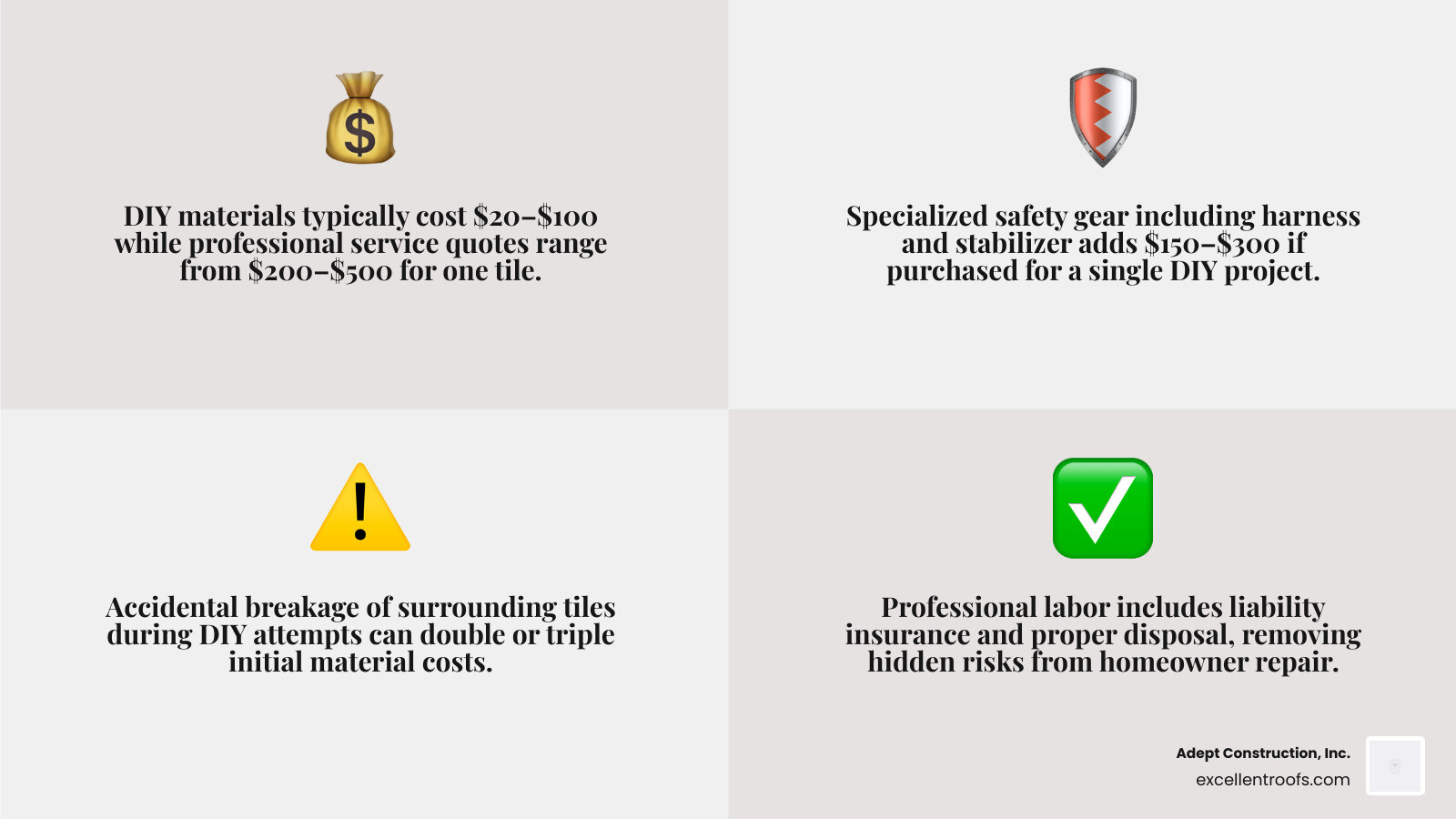
| Factor | DIY Estimate | Professional Estimate |
|---|---|---|
| Materials | $20 – $100 | Included in Quote |
| Safety Gear | $150 – $300 | Already Owned |
| Labor | Your Free Saturday | $200 – $500 (Single Tile) |
| Risk | High (Falls/More Damage) | Low (Insured/Guaranteed) |
The Step-by-Step Process for Removing and Installing Tiles
The secret to replacing a broken roof tile successfully is not in the strength you use, but in the finesse. You are essentially playing a high-stakes game of Jenga.

First, clear any debris around the area. Leaves and grit can get trapped in the “interlocks” (the grooves where tiles overlap), preventing the new tile from sitting flush. Once the area is clean, you must perform a thorough underlayment inspection. If the underlayment is torn, simply sliding a new tile in won’t stop the leak. You’ll need to patch the underlayment with a compatible membrane, lapping it “shingle-style” (upper piece over the lower piece) to ensure water flows over the patch. For more on this, see our guide on How to Replace a Broken Roof Tile Yourself Easily.
Step-by-Step Instructions for Replacing a Broken Roof Tile
- Lift the “Course” Above: Use two wooden wedges or flat bars to gently lift the two tiles directly overlapping the broken one. This removes the weight and gives you room to maneuver.
- Cut the Fastener: Most modern tiles are held by a nail or a clip. If it’s nailed, slide your hacksaw underneath and cut the nail shank. If it’s clipped, use a screwdriver to disengage the metal clip from the side.
- Slide Out the Fragments: Carefully remove all pieces of the broken tile. Do not leave small shards behind, as they will prevent the new tile from locking into place.
- Prepare the Replacement: If the original tile was nailed, you likely won’t be able to nail the new one in without removing even more tiles. Instead, we recommend using a “tile clip” or a generous bead of roofing adhesive on the batten.
- Hook and Lock: Slide the new tile up into the gap. Ensure the “nibs” (the protrusions on the back of the tile) hook securely over the wooden batten.
- Lower the Surrounding Tiles: Remove your wedges and let the upper tiles settle back into their interlocks. They should sit perfectly flat. If the new tile is “kicking up,” it isn’t seated on the batten correctly.
This process is similar to Repairing Roof Shingles: A Step-by-Step Guide, but with the added weight and fragility of masonry materials.
Sourcing the Right Materials for Replacing a Broken Roof Tile
You cannot simply buy “a roof tile” and expect it to work. Tiles are engineered with specific water-shedding channels that must align perfectly.
- Identify the Material: Is it concrete or terracotta (clay)? Concrete tiles are heavier and have a grainy texture. Terracotta is often thinner and “rings” when tapped.
- Check for Back Stamps: Most manufacturers stamp their name and the tile profile on the underside. If you can find a piece of the broken tile with this stamp, your search just got 90% easier.
- Profile Matching: Take the broken pieces to a specialized local roofing supplier. Big-box hardware stores rarely carry the specific interlocking profiles used in Illinois residential roofing.
- Weathering Matters: A brand-new tile will look brighter than your 20-year-old roof. Don’t worry—it will weather over time. If the color difference is jarring, “harvest” an old tile from a hidden area of the roof (like behind a chimney) and use the new tile there.
For more tips on matching materials, check out The Step-by-Step Guide to Replacing Damaged Roof Shingles.
When to Repair with Sealant vs. Full Replacement
We often see “repairs” where someone has simply smeared silicone over a crack. While this might stop a drip for a week, it is not a permanent fix.
When Sealant Works: Sealant is appropriate for tiny hairline cracks that do not penetrate the full thickness of the tile, or for securing a small chipped corner that doesn’t affect the water-shedding interlock.
The “Full-Width” Rule: If a crack goes through the tile, you must seal the entire width, including the hidden drainage course under the lap. If you only seal the visible part, water will still travel under the tile and hit your underlayment.
Temporary Fixes: If a storm hits and you can’t get a matching tile immediately, an aluminum patch is a great “stop-gap.” Use a piece of 0.019-thickness aluminum, slide it under the tile above, and ensure it overlaps the tile below by at least 4 inches. This creates a metal “bridge” for the water. However, this is a temporary measure. You should always ask yourself, Do You Need Roof Repair or Replacement? if you find yourself patching the same area repeatedly.
Professional Intervention for Complex Roof Damage
While replacing a broken roof tile in the middle of a flat section is doable for a handy homeowner, some areas are strictly “pros only.”
- Valleys and Chimneys: Tiles in these areas are often custom-cut and integrated with metal flashing. Messing with these without experience is a recipe for a major leak.
- Steep Pitches: If your roof is too steep to walk on without specialized equipment, do not attempt a DIY fix.
- Solar Panels: If a tile breaks under a solar array, the panels usually need to be professionally de-energized and removed to access the damage.
- Structural Sagging: If you notice the roof “dipping” where the tile broke, you likely have rotted rafters that require structural repair.
If you are in our neck of the woods, we provide expert Roof Repair in Downers Grove and Roof Repair in Naperville. Our team has the specialized ladders and “crawling boards” needed to move across a tile roof without causing more damage.
Frequently Asked Questions about Roof Tile Maintenance
How can I temporarily fix a broken tile if a replacement isn’t available?
If you can’t find a match, use aluminum flashing (minimum 0.019 thickness). Cut it to the size of the tile and slide it into place in a “shingle-fashion” overlap. Bend the top edge upward to prevent wind-blown rain from getting behind it. This will keep you dry until a permanent replacement is sourced.
How often should I inspect my tile roof for damage?
In Illinois, we recommend bi-annual inspections—once in the spring and once in the fall. Our harsh freeze-thaw cycles can cause small cracks to expand. You should also do a visual check after any major hail storm or high-wind event. Keeping your gutters clean also prevents water from backing up under the bottom course of tiles.
Is it safe to walk on a tile roof during repairs?
Generally, no. Tiles are fragile and not designed to support concentrated human weight. If you must walk on them, only step on the lower third of the tile, directly over where it is supported by the wooden batten. Professional roofers use roof boards or padded ladders to distribute their weight across multiple tiles.
Conclusion
At Adept Construction, Inc., we believe that a small repair today saves a massive headache tomorrow. Whether you are replacing a broken roof tile yourself or looking for a team of experts to handle a complex project, the goal is the same: a dry, safe home.
As a family-owned business in Downers Grove, we pride ourselves on superior workmanship and knowledgeable staff who treat your roof like it was our own. We’ve built our reputation on high-quality results and local referrals throughout Naperville and the surrounding areas.
Don’t let a small crack turn into a structural disaster. We offer free estimates for all your roofing needs. Contact us today to schedule your inspection and experience the peace of mind that comes with professional Residential Roofing Services.