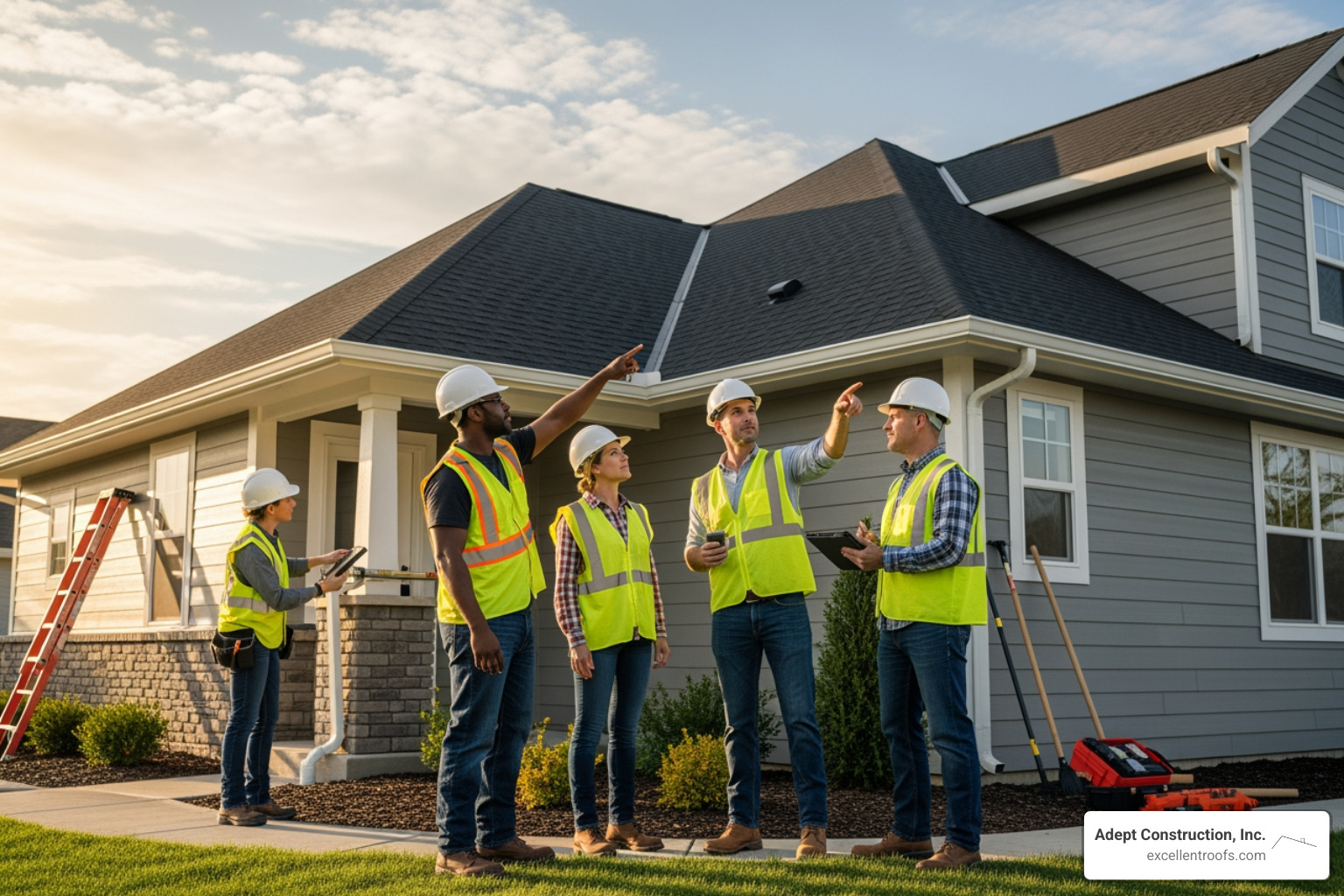

Why Understanding the Roof Tear-Off Process Matters
A tear off roof shingles project is the essential first step in any professional roof replacement. It involves completely removing old roofing materials down to the bare deck, allowing contractors to inspect the underlying structure, repair hidden damage, and install a new roof system built to last. When you choose professional roofing services, you’re investing in quality workmanship that protects your home for decades.
Quick Answer: Key Steps to Tear Off Roof Shingles
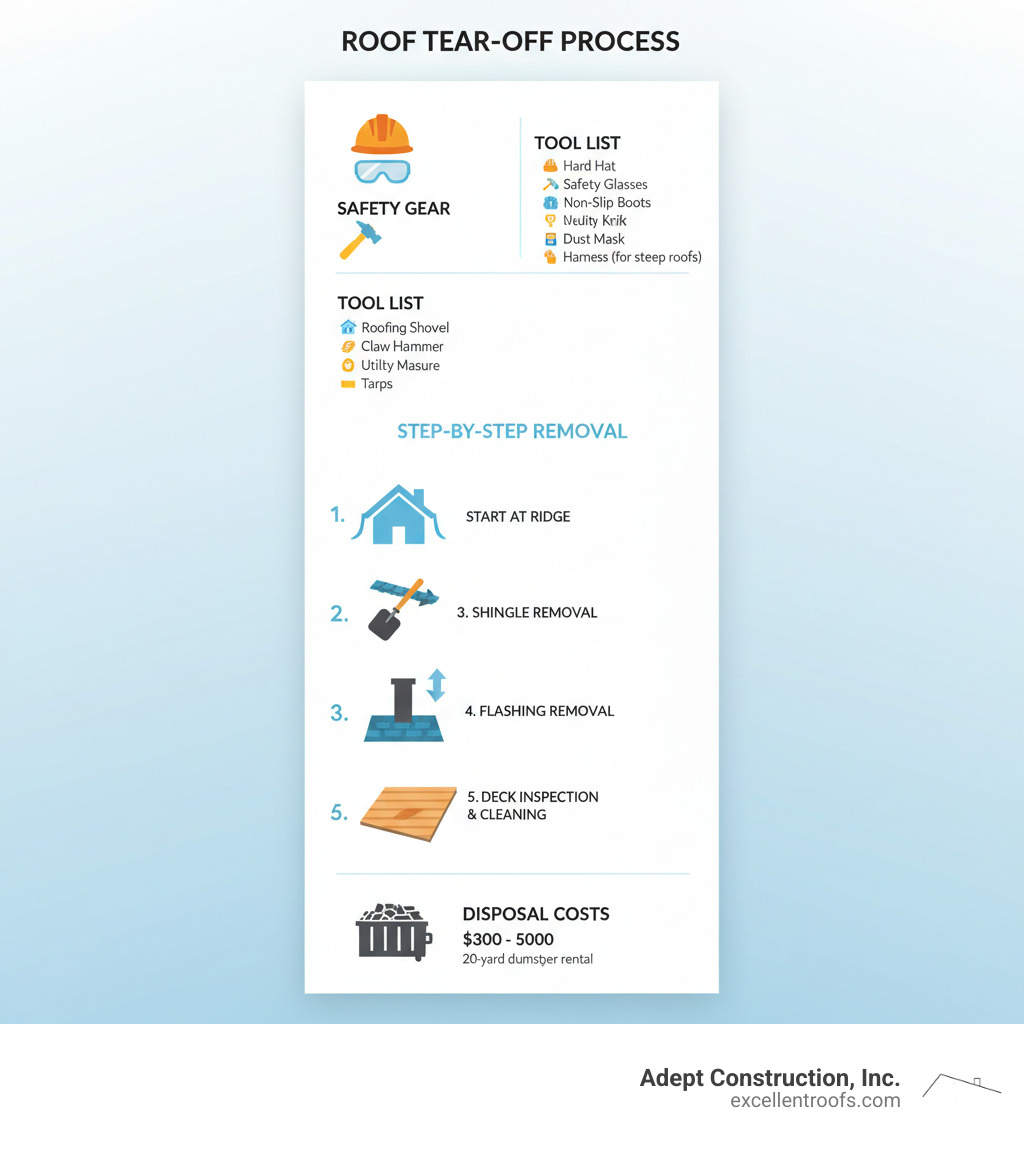
- Protect your property with tarps and plywood.
- Start at the ridge and remove caps, working downward.
- Use a roofing shovel to pry up shingles, underlayment, and nails.
- Remove all flashing around chimneys, vents, and valleys.
- Clean and inspect the deck for rot or structural damage.
- Dispose of debris in a rented dumpster (typically $300-$500).
A tear-off provides a longer lifespan (20-30 years vs. 16 for an overlay), allows for a full deck inspection, and can add significant value to your home. Most building codes limit homes to two shingle layers, and manufacturer warranties often require installation on a clean deck.
Why a proper tear-off matters:
- Reveals hidden water damage, rot, or structural issues.
- Ensures your new roof sits on a flat, solid foundation.
- Maximizes the lifespan of new shingles.
- Protects your investment with full manufacturer warranty coverage.
- Improves curb appeal with a smooth, professional finish.
While a DIY tear-off might seem to save money, the physical demands, safety risks, and potential for overlooking critical damage make professional help the smarter choice. I’m Gerald Michaels, founder of Adept Construction, Inc., and since 1997, I’ve seen how a proper tear-off sets the foundation for a roof that protects families and adds lasting value to their homes.
Tear-Off vs. Overlay: Making the Right Choice for Your Home
When your roof needs replacing, you face a key decision: completely tear off roof shingles or install a new layer over the old one (an overlay). This choice impacts your home’s structural integrity, value, and long-term costs, making it a critical consideration for homeowners in Naperville and Downers Grove.
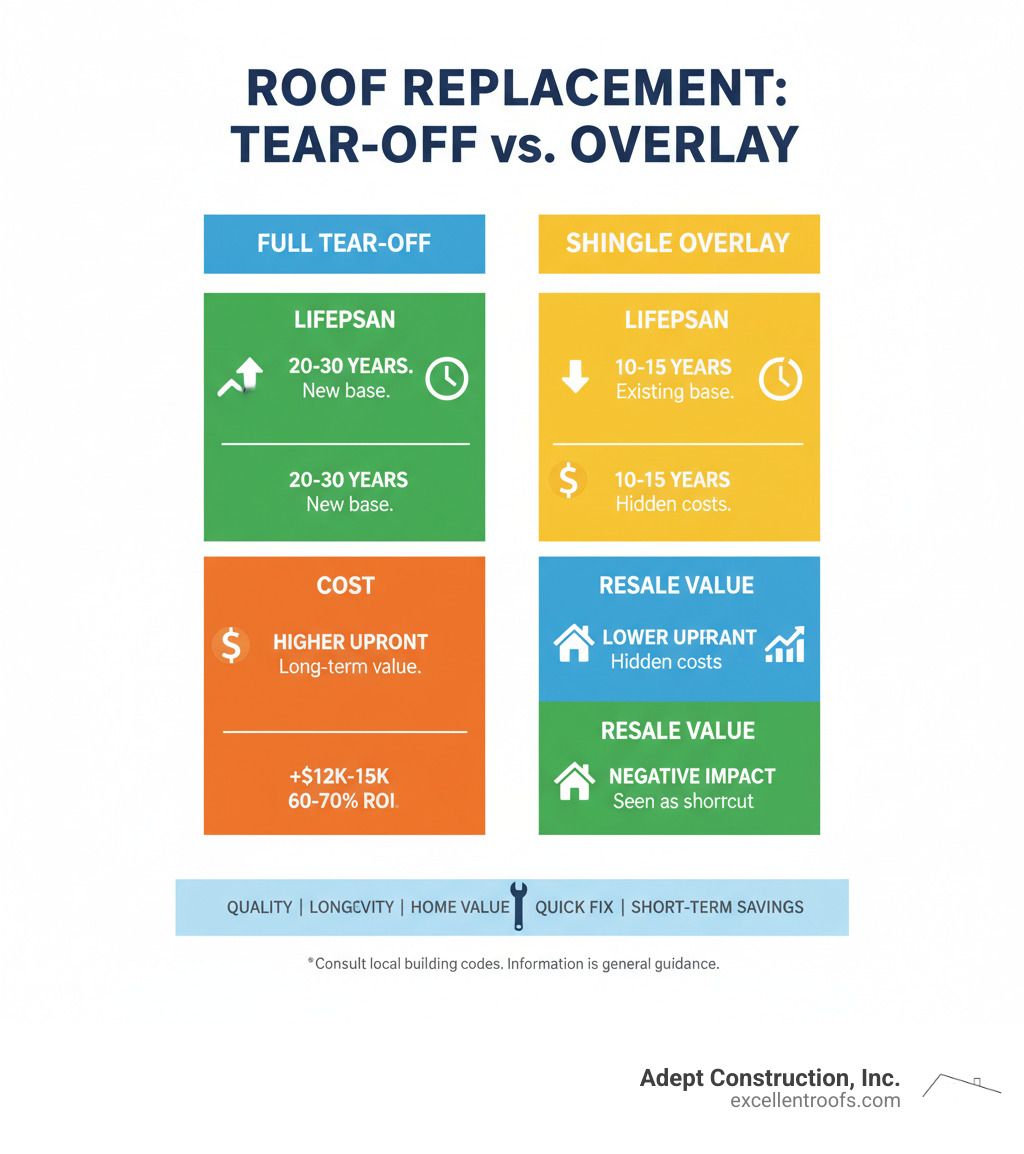
The table below breaks down the key differences:
| Factor | Roof Tear-Off | Roof Overlay |
|---|---|---|
| Cost | Higher upfront investment | ~25% less expensive |
| Lifespan | 20-30 years | Approximately 16 years |
| Resale Value | Adds $12,000-$15,000 | May reduce buyer confidence |
| Warranty | Full manufacturer coverage | Often voided or limited |
| Inspection Quality | Complete deck inspection | Hidden damage remains concealed |
The Pros and Cons of a Roof Overlay
A roof overlay, or re-roof, involves installing new shingles over existing ones. The primary appeal is cost and time savings, as it’s about 25% cheaper and faster than a full tear-off. However, these initial benefits come with significant long-term risks.
The biggest drawback is that an overlay masks underlying problems. Rot, water damage, and poor ventilation are simply covered up, allowing them to worsen and lead to more expensive repairs later. The added weight of a second shingle layer also puts extra stress on your home’s structure, potentially causing sagging over time. An overlay’s lifespan is only about 16 years, far short of the 20-30 years expected from a proper roof replacement. Furthermore, most manufacturers will not honor their best warranties on an overlay, and the final appearance can be wavy or uneven.
The Benefits of a Full Roof Tear-Off
A complete tear off roof shingles project is the industry gold standard for good reason. Its greatest benefit is the full deck inspection. By stripping the roof to its bare sheathing, we can identify and repair any rot, water damage, or structural weaknesses. This ensures your new roof is built on a solid foundation.
If you have a leaky roof, a tear-off allows for a definitive fix. A new roof on a clean deck can last 20-30 years and adds an average of $12,000-$15,000 to your home’s resale value. It also guarantees full manufacturer warranty coverage and results in a smooth, professional finish that boosts curb appeal. A single, properly ventilated layer of shingles performs better and lasts longer.
When is a Roof Tear-Off Mandatory?
In some cases, a full tear-off is required by law or necessity.
- Multiple Shingle Layers: Most building codes, including the International Building Code, permit a maximum of two shingle layers. If your roof already has two, you must tear them off.
- Significant Damage: If existing shingles are extensively curled, cracked, or missing, an overlay is not a viable option as it requires a stable base.
- Suspected Deck Rot: Any signs of a sagging or soft roof deck make a tear-off non-negotiable to address structural issues.
- Switching Materials: Changing roofing materials, especially to a heavier type, almost always requires a complete tear-off.
While an overlay offers a tempting shortcut, a full tear-off protects your home and investment for decades. When you’re ready for your roof replacement in Naperville or roof replacement in Downers Grove, we can help you make the right choice.
Preparing for Your Project: Safety, Tools, and Debris Management
Proper preparation is key to a successful and safe tear off roof shingles project, whether you hire a professional or attempt a DIY project (which we advise against for safety reasons).
Essential Safety Precautions
Roofing is inherently dangerous. Prioritize safety above all else.
- Safety Gear: Always use a safety harness tied to a secure anchor, especially on steep roofs. Wear non-slip safety boots, gloves, and goggles.
- Stable Footing: Use roof jacks and scaffolding to create stable platforms and prevent sliding.
- Ladder Safety: Ensure your ladder is stable, properly angled, and extends at least three feet above the roofline.
- Work with a Partner: Never work alone. A spotter on the ground can provide assistance and call for help if needed.
- Weather: Only work on dry, clear days. Avoid wet, icy, or windy conditions.
Tools and Materials for the Job
Having the right tools makes the process safer and more efficient.
- Roofing Shovel (Roof Ripper): This specialized tool ($40-$75) is designed to efficiently pry up shingles and nails.
- Pry Bar and Hammer: For removing stubborn nails and flashing.
- Property Protection: Use tarps and plywood to protect landscaping, windows, and other property features.
- Debris Movement: A wheelbarrow helps move debris to the dumpster.
- Cleanup Tools: A push broom and a magnetic sweeper are essential for a thorough cleanup, especially for collecting stray nails.
Planning for Debris and Disposal
A roof tear-off generates a large amount of waste. Plan its removal in advance.
- Dumpster Rental: A 20-cubic yard dumpster is typically sufficient for an average-sized roof and costs between $300 and $500. Schedule its delivery for the start day.
- Property Protection: Before work begins, lay down tarps and plywood to cover landscaping, decks, windows, and AC units to protect them from falling debris.
- Disposal: Asphalt shingles are heavy and contribute to landfill waste. We prioritize responsible disposal and use recycling facilities that process old shingles for asphalt paving whenever available in the Downers Grove and Naperville areas.
The Step-by-Step Guide to Tear Off Roof Shingles
Understanding the methodical process of how to tear off roof shingles provides valuable insight into this critical phase of roof installation. This systematic approach ensures efficiency, safety, and a thorough assessment of your roof’s condition.
Step 1: Protect Your Property and Set Up for Safety
Professional work begins on the ground. The first step is to protect your property by laying heavy-duty tarps around the home’s perimeter to cover landscaping, decks, and patios. We use plywood to shield windows and AC units from falling debris. Finally, ladders and roof jacks are securely set up to create a safe working environment, and the dumpster is positioned for efficient debris disposal.
Step 2: How to tear off roof shingles and flashing
The removal process starts at the peak of the roof to work with gravity. First, the ridge cap shingles are removed. Working downward in manageable sections, the crew uses roofing shovels to pry up shingles and the nails holding them in place. As they move down the roof, all old flashing—including valley, vent, and step flashing—is removed. Reusing old flashing is a common cause of leaks, so it must always be replaced with new, corrosion-resistant metal.
Step 3: Clean the Deck and Inspect for Damage
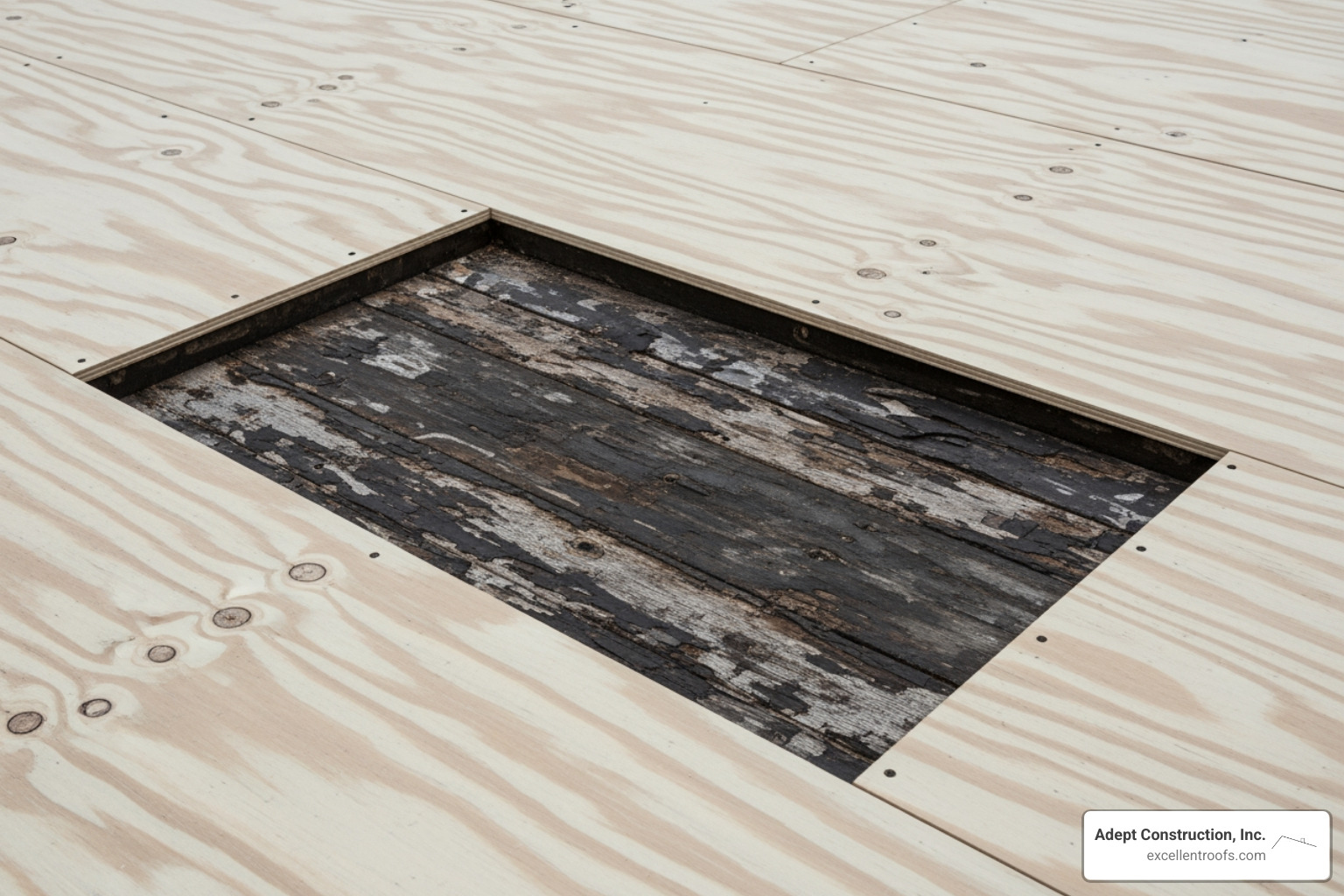
This step is why a full tear-off is superior to an overlay. Once the old materials are gone, the bare deck is swept clean, and all remaining nails are removed or hammered flush. Our crew then walks every square foot of the deck, inspecting for soft spots, rot, or dark stains that indicate water damage. These are signs you might need roof repair in Downers Grove, IL or roof repair in Naperville, IL that would otherwise go unnoticed.
Any compromised sheathing is cut out and replaced with new plywood or OSB of the same thickness to create a uniform, solid surface. Addressing these issues is critical to ensuring the longevity of your new roof. With a clean and sound deck, the roof is ready for the installation of new materials.
Frequently Asked Questions about Tearing Off Shingles
Can I perform a roof tear-off myself?
While technically possible for a simple, low-pitched roof, we strongly advise against a DIY tear off roof shingles project for most homeowners. The work is extremely physically demanding and carries a high risk of falls, which are a leading cause of construction injuries. Without professional training and safety equipment, the danger is significant. Furthermore, an inexperienced eye can easily miss subtle signs of deck rot or structural damage, which can lead to catastrophic failure under your new roof. For homeowners in areas like Naperville, IL, hiring a professional ensures the job is done safely, correctly, and with a valid warranty.
How much does it cost to tear off roof shingles?
The cost to tear off shingles typically ranges from $1.20 to $4.00 per square foot, including labor and disposal. For an average home, this amounts to $1,500 to $3,000 for the tear-off portion of the project. Factors influencing the cost include the roof’s steepness, accessibility, and the number of existing shingle layers. While a tear-off adds to the upfront cost of a roof installation, it’s an investment in a longer-lasting roof, full warranty coverage, and increased home value.
How does a tear-off affect my new roof’s warranty?
This is a critical factor. Most shingle manufacturers require installation on a clean, sound deck to honor their best warranties. Installing new shingles over an old layer (an overlay) often voids the warranty, as the manufacturer cannot guarantee performance over a potentially compromised base. A full tear-off allows for proper inspection and preparation, ensuring your investment is protected by full manufacturer warranty coverage for decades.
What are the signs that a roof deck may need repair during a tear-off?
Once the old shingles are removed, the deck’s true condition is revealed. Key signs of damage include:
- Soft Spots: Areas that feel spongy underfoot indicate moisture has rotted the wood.
- Discoloration: Dark stains or visible mold growth point to water intrusion.
- Delamination: Plywood layers that are separating signal moisture has weakened the material.
- Cracks or Holes: Any visible damage to the sheathing must be repaired.
Our crew thoroughly inspects for these issues and replaces any damaged sections to ensure a solid foundation for your new roof.
What are the implications of having multiple layers of shingles?
If your roof already has two layers of shingles, a full tear-off is required by building codes in most areas, including throughout Illinois. This rule exists for several important reasons. The excessive weight of multiple layers can stress your home’s structure, potentially leading to sagging or even collapse. Multiple layers also trap heat and moisture, which accelerates deterioration and shortens the lifespan of your new roof. A tear-off is not just a recommendation in this case—it’s a legal and structural necessity.
Finalizing Your Roof Replacement Project
A complete tear off roof shingles is the correct first step toward a durable, long-lasting roof. It provides peace of mind and superior long-term performance that an overlay simply cannot match.
For homeowners in the Downers Grove, IL and Naperville, IL areas, trusting a professional is the surest way to a successful outcome. The experienced team at Adept Construction, Inc. has the knowledge and skill to handle the entire process, from a safe and thorough tear-off to a flawless installation. Since 1997, we have built our reputation on superior customer service, knowledgeable staff, and high-quality workmanship.
We understand a roof replacement is a significant investment. We take the time to walk you through every step, answer your questions, and ensure you feel confident in your decision. If you’re considering a new roof, we’re here to help.
Contact us today for a free, no-obligation estimate on your roof replacement in Downers Grove, IL or roof replacement in Naperville, IL. Let’s ensure your new roof is built to last.