
Understanding Residential Flat Roof Coating: A Smart Solution for Homeowners
Residential flat roof coating is a liquid-applied membrane that creates a seamless, protective barrier over your existing flat roof. It serves as a cost-effective restoration method that extends roof life, provides superior waterproofing, and improves energy efficiency—often at about half the cost of a traditional roof tear-off and replacement.
Key benefits of residential flat roof coating include:
- Lifespan Extension – Adds 10-20 years to your existing roof
- Cost Savings – Costs approximately 50% less than full replacement
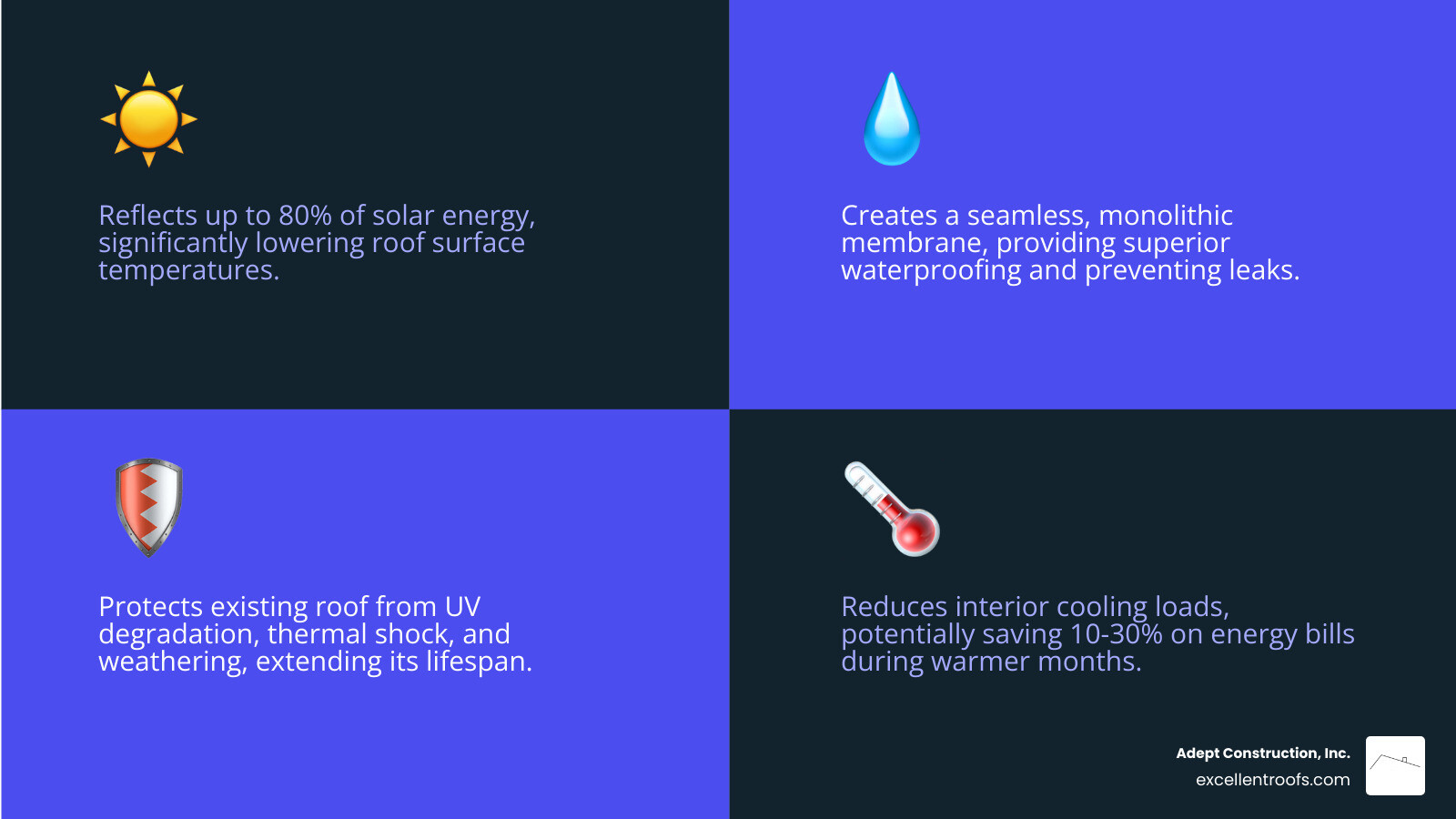
- Energy Efficiency – Reflective coatings can reduce cooling costs by 10-30%
- Seamless Waterproofing – Creates a monolithic membrane that seals leaks and prevents water intrusion
- UV Protection – Shields your roof from damaging sun rays that cause premature deterioration
Flat roof coatings work by forming a flexible, protective layer that expands and contracts with your roof’s natural movement. They effectively address common flat roof problems like ponding water, UV degradation, seam failures, and thermal shock damage. For homeowners seeking reliable roofing solutions, coatings offer a proven alternative to costly replacement when your roof still has structural integrity but needs improved protection.
As Gerald Michaels, founder of Adept Construction, Inc., I’ve been helping homeowners in the Chicago suburbs make informed decisions about residential flat roof coating since 1997. My nearly three decades of experience have shown me that choosing the right coating system—and ensuring it’s properly applied—can transform an aging flat roof into a durable, energy-efficient asset.
Why Coat Your Flat Roof? The Primary Benefits
Applying a residential flat roof coating is a smart investment that yields multiple benefits, far beyond just stopping leaks. It’s about protecting your home, enhancing its value, and saving money in the long run.
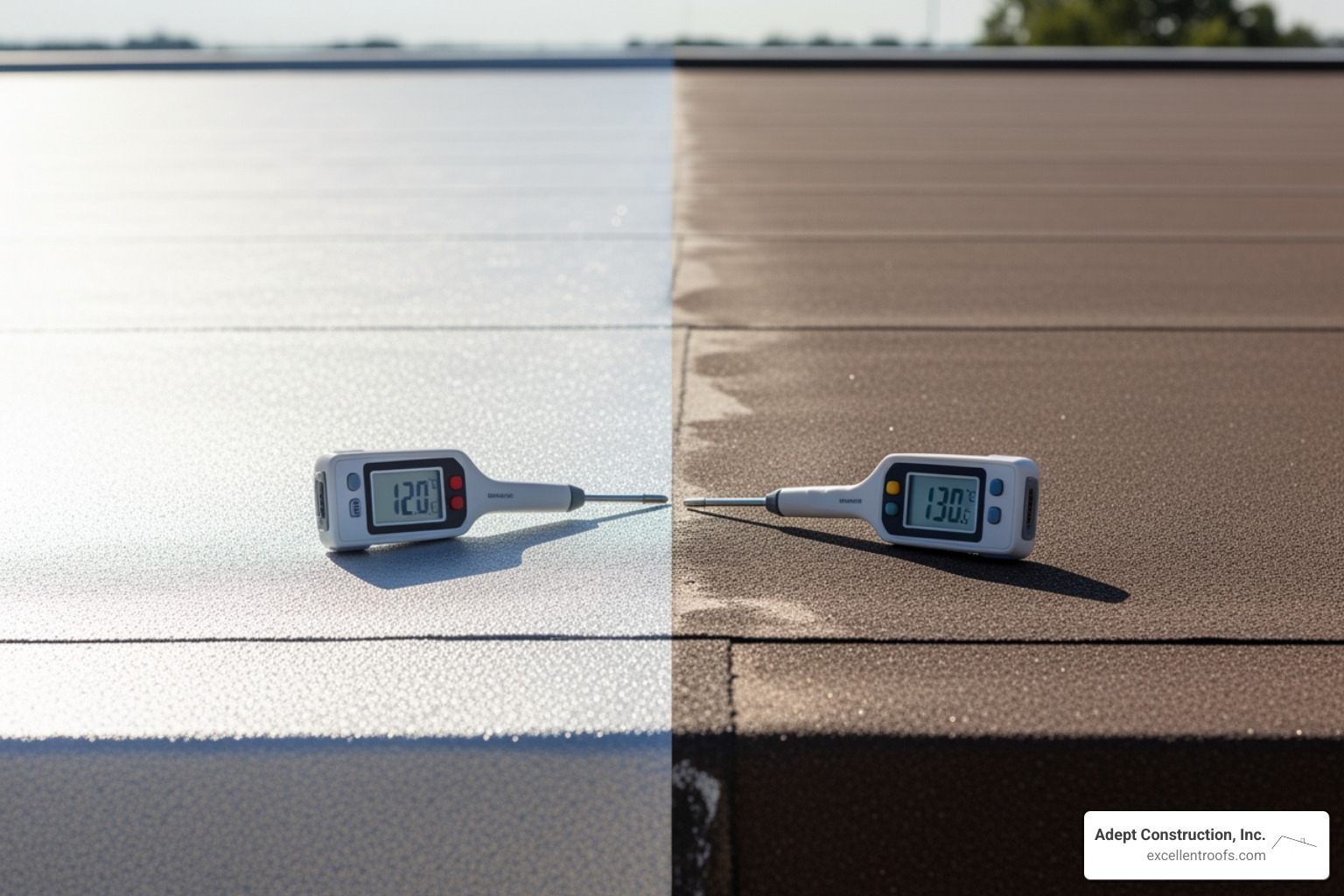
The primary benefits homeowners enjoy after applying a quality coating include extending the roof’s life by 10-20 years, adding a durable and seamless waterproof layer, and improving energy efficiency. White, reflective coatings can significantly lower roof temperatures, which leads to cooler indoor temperatures and a noticeable drop in utility bills. Furthermore, many modern coatings are formulated with additives that resist mold and mildew growth, keeping your roof cleaner and healthier.
Solves Common Flat Roof Problems
Flat roofs are prone to specific issues due to their low slope, but a residential flat roof coating is designed to address these common problems:
- Ponding Water Issues: Coatings, especially silicone, create a waterproof barrier that is highly resistant to damage from standing water, a common issue on low-slope roofs in the Downers Grove and Naperville areas.
- UV Ray Degradation: Reflective coatings act as a “sunscreen,” shielding the roof from UV rays that cause materials to crack and become brittle. This prevents premature deterioration of seams, laps, and flashing details.
- Cracks and Leaks: A liquid-applied coating fills and seals minor cracks and imperfections, restoring the roof’s integrity without requiring extensive repairs.
- Seam and Flashing Failure: Coatings form a monolithic membrane over the entire roof, reinforcing and sealing the most vulnerable points—seams and flashings—where leaks often begin.
- Thermal Shock Damage: The elastomeric properties of coatings allow them to expand and contract with Illinois’s drastic temperature swings. This flexibility prevents the stress and fatigue that leads to cracks and premature membrane failure.
A Smart Financial Decision
Choosing a residential flat roof coating is a savvy financial move. It typically costs about 50% less than a full replacement, directly reduces utility bills by keeping your home cooler, and delays the major expense of a tear-off by many years. A well-maintained, energy-efficient roof also increases your property’s value.
We understand the importance of smart investments for your home. To learn more about how a coating can benefit your specific roof and to explore options, you can learn more about our flat roofing systems and how they can be integrated with coatings.
Exploring the Types of Residential Flat Roof Coatings
When considering a residential flat roof coating, it’s important to understand the different types available. Each possesses elastomeric properties, meaning they are flexible enough to expand and contract with your roof. The best choice depends on your specific roof, climate, and budget.
Here’s a comparison of the most common types:
| Feature | Acrylic Coatings | Silicone Coatings | Polyurethane Coatings |
|---|---|---|---|
| Cost | Most affordable (e.g., $10-$50/gallon) | Mid to High (e.g., $50-$100/gallon) | Mid to High (e.g., $50-$100+/gallon) |
| Durability | Good, but can thin over time | Excellent, maintains integrity over long periods | Excellent, highly resistant to physical damage |
| UV Resistance | High reflectivity, but can degrade with extreme UV | Superior, maintains reflectivity and doesn’t chalk | Good, but aromatic types are less UV stable |
| Ponding Water | Poor, susceptible to damage | Excellent, can withstand continuous ponding water | Good, offers strong water resistance |
| Application | Water-based, easy to apply | Moisture-cured, can be slippery, attracts dirt | Moisture-sensitive during application |
| Lifespan | 5-10 years (may need reapplication) | 10-20 years | 10-20 years |
| Eco-Friendly | Water-based, low VOC | Low VOC (some formulations) | Aromatic types have higher VOC, aliphatic are lower |
| Breathability | Good, allows trapped moisture to escape | Low, can trap moisture | Low, can trap moisture |
Acrylic Coatings: The Reflective & Affordable Option
Acrylic coatings are a popular, cost-effective choice for residential flat roof coating. As a water-based, low-VOC product, they are eco-friendly and offer high solar reflectivity, making them an excellent “cool roof” option for lowering energy costs in hot summers. However, their primary weakness is a susceptibility to damage from ponding water, making proper roof drainage essential. They may also require reapplication every 5-10 years to maintain peak performance.
Silicone Coatings: The Superior Waterproofing Choice
Silicone coatings are the premium solution for residential flat roof coating, especially where water is a concern. They are 100% waterproof and exceptionally resistant to ponding water, making them ideal for flat roofs in Downers Grove and Naperville that struggle with drainage. Silicone also offers superior, long-lasting UV resistance, ensuring continued energy efficiency. The main drawbacks are a higher initial cost and a surface that can attract dirt, which may reduce reflectivity over time if not cleaned.
Polyurethane Coatings: The Durable & Traffic-Resistant Solution
Polyurethane coatings are known for their exceptional durability, making them the best choice for roofs that experience foot traffic. This type of residential flat roof coating is highly resistant to impacts, punctures, and abrasion. There are two types: aromatic (a cost-effective base coat) and aliphatic (a UV-stable topcoat). The primary challenge with polyurethane is its sensitivity to moisture during application, which requires professional installation under precise weather conditions to ensure proper curing and longevity.
How to Choose the Right Residential Flat Roof Coating
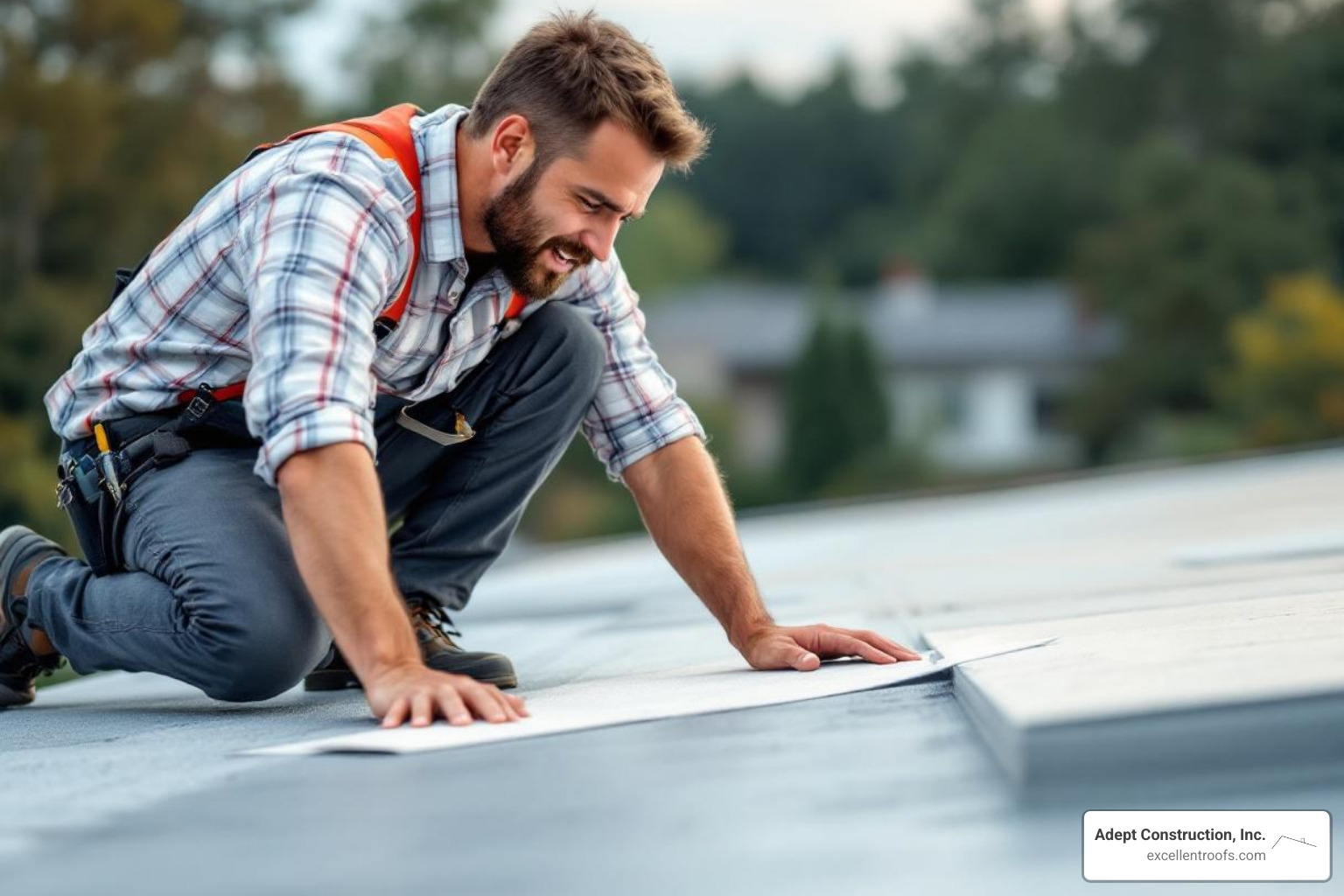
Selecting the ideal residential flat roof coating requires a careful assessment of your home and local conditions. It is not a one-size-fits-all solution, which is why a professional evaluation is critical to ensure the best outcome for your home in Downers Grove or Naperville.
Factors Influencing Your Decision
Several key factors will guide your choice:
- Climate Considerations: Illinois weather, with its hot summers and snowy winters, demands a coating that is both UV-stable and flexible. For roofs prone to ponding water from rain or snowmelt, a silicone coating is often the most reliable choice due to its superior water resistance.
- Existing Roof Material: The coating must be compatible with your current roof substrate (e.g., EPDM, TPO, Metal, Asphalt). Different materials require specific primers to ensure proper, long-lasting adhesion.
- Roof Condition: A coating is an excellent solution for a structurally sound roof with minor wear and tear. However, if there is widespread damage, significant moisture saturation, or structural failure, a full replacement is the necessary course of action.
- Drainage and Maintenance: While some coatings handle ponding water well, positive drainage is always ideal. You should also consider maintenance, as some coatings may require occasional cleaning to maintain optimal reflectivity.
Look for Key Certifications and Ratings
When choosing a residential flat roof coating, look for these ratings to ensure quality and performance:
- ENERGY STAR® rated products: These coatings meet EPA guidelines for energy efficiency, meaning they reflect more sunlight and absorb less heat. An ENERGY STAR® rated product can lead to significant energy savings.
- CRRC Rated Roof Products Listing: The Cool Roof Rating Council (CRRC) independently verifies a product’s reflective properties. Checking the CRRC Rated Roof Products Listing ensures you’re getting a proven cool roof product.
- Class A fire rating (ASTM E84/UL 790): This is the highest fire resistance rating for roofing materials, indicating the coating can withstand severe exposure to external fires.
- Low-VOC for environmental friendliness: Coatings with low Volatile Organic Compounds (VOCs) are a more environmentally responsible choice and contribute to better air quality.
The Application Process: From Prep to Finish
The success and longevity of any residential flat roof coating depend entirely on the quality of the application process. This is a precision-oriented job that requires professional expertise from start to finish.
Step 1: Thorough Roof Preparation
Proper surface preparation is the most critical step. Without it, even the best coating will fail.
- Inspection and moisture survey: We begin with a detailed inspection and moisture scan. If a survey reveals that 25% or more of the roof area contains trapped moisture, a complete tear-off is generally recommended.
- Power washing and cleaning: The entire roof surface is thoroughly power washed to remove all dirt, dust, debris, and other contaminants. The surface must be impeccably clean and completely dry before any coating is applied.
- Repairing leaks and cracks: Any existing leaks, cracks, blisters, or damaged areas are repaired using professional-grade sealants and reinforcing fabrics. These repairs must cure fully before the coating process begins.
- Priming the surface for proper adhesion: Depending on the roof material, a specific primer may be required to ensure the coating bonds permanently to the surface. We perform adhesion tests on questionable substrates to guarantee a strong, effective bond.
Step 2: The Importance of Professional Application
Once the roof is perfectly prepped, the coating application begins. This is where professional skill is paramount.
- Ensuring correct mil thickness (DFT): Coatings must be applied to a specific Dry Film Thickness (DFT), measured in mils. This is critical for the coating’s performance, durability, and warranty validity.
- Proper detailing around penetrations: Professionals carefully detail areas around pipes, vents, and AC units, often using reinforcing fabric to create a seamless, watertight seal at these vulnerable points.
- Using professional-grade equipment: We use specialized equipment like professional airless sprayers to ensure a smooth, uniform coating at the correct thickness across the entire roof.
- Avoiding application errors: Application must occur within specific temperature and humidity ranges. Professionals monitor weather conditions to prevent applying coatings in weather that could compromise curing and lead to premature failure.
- The role of a certified contractor for warranty: Many high-quality coating systems offer long-term warranties that are only valid if installed by a manufacturer-certified contractor. Choosing a certified professional ensures the application meets these strict guidelines, protecting your investment.
Coating vs. Replacement: Which is Right for Your Home?
Deciding between a residential flat roof coating and a full roof replacement hinges on your roof’s current condition and your long-term goals.
A roof coating is a viable option if your roof is structurally sound but needs improved protection. It’s a cost-effective way to address minor leaks and surface degradation from UV rays, extending the roof’s life by many years. We often recommend coatings for roofs that are aging but not yet severely compromised.
However, a full replacement is necessary for roofs with widespread moisture damage, structural issues, or that are past their service life. Applying a coating to a failing roof is merely a temporary band-aid. If a moisture survey shows significant saturation (25% or more), replacement is the only safe, long-term solution to protect your home’s integrity.
For a roof replacement in Downers Grove, IL, a full inspection is the first step to accurately diagnose the roof’s condition. Conversely, if you only need to address small leaks or reinforce flashing, consider a roof repair in Naperville, IL. Our team can help you assess your roof and recommend the most appropriate solution.
Frequently Asked Questions about Residential Flat Roof Coating
How long does a residential flat roof coating last?
A professionally applied, high-quality residential flat roof coating can extend the life of your roof by 10 to 20 years. The exact lifespan depends on several factors, including the type of coating used (silicone and polyurethane typically last longer than acrylics), the quality of the application, the underlying roof material, and the specific climate conditions in areas like Downers Grove and Naperville. Regular maintenance and annual inspections can further maximize its lifespan.
Can you apply a roof coating over an existing roof?
Yes, in most cases. Residential flat roof coatings are specifically designed to be applied over various existing roof substrates. These include common materials like EPDM (rubber), TPO, metal, modified bitumen, asphalt, and even concrete. However, a crucial prerequisite is that the existing roof must be structurally sound, thoroughly cleaned, completely dry, and properly prepared. Our team always conducts a detailed inspection to confirm the suitability of your existing roof for a coating application, addressing any repairs or priming needs beforehand.
How much money can a cool roof coating save?
A reflective or “cool” residential flat roof coating can significantly reduce your home’s cooling costs. By reflecting a high percentage of the sun’s UV and infrared rays, these coatings can lower the roof surface temperature by 50-80°F (10-44°C) during peak summer months. This reduction in heat absorption can translate into substantial energy savings, typically ranging from a 10-30% reduction in air conditioning expenses. The actual savings can vary based on factors such as your home’s insulation, existing roof color, and the intensity of local sunlight.
Protect Your Investment with the Right Choice
As we’ve explored, a residential flat roof coating offers a powerful combination of benefits: extending roof life, reducing energy costs, enhancing durability, and providing superior waterproofing. It’s a smart, cost-effective alternative to full roof replacement when your roof is a good candidate for restoration.
Making the right choice for your home’s flat roof requires careful consideration of coating types, your existing roof’s condition, local climate, and essential certifications. This is not a DIY project; the success and longevity of your coating depend heavily on professional preparation and precise application.
At Adept Construction, Inc., we’re committed to providing expert guidance and high-quality workmanship. We offer comprehensive solutions for homeowners in Downers Grove, IL and Naperville, IL. Our knowledgeable staff will assess your specific needs, explain your options clearly, and ensure your residential flat roof coating is applied perfectly.
Don’t let an aging flat roof become a headache. Contact us today to receive a free estimate and find the perfect coating solution for your home. Let us help you protect your investment and enjoy a more comfortable, energy-efficient home.