
Understanding What Drives Residential Roof Replacement Cost
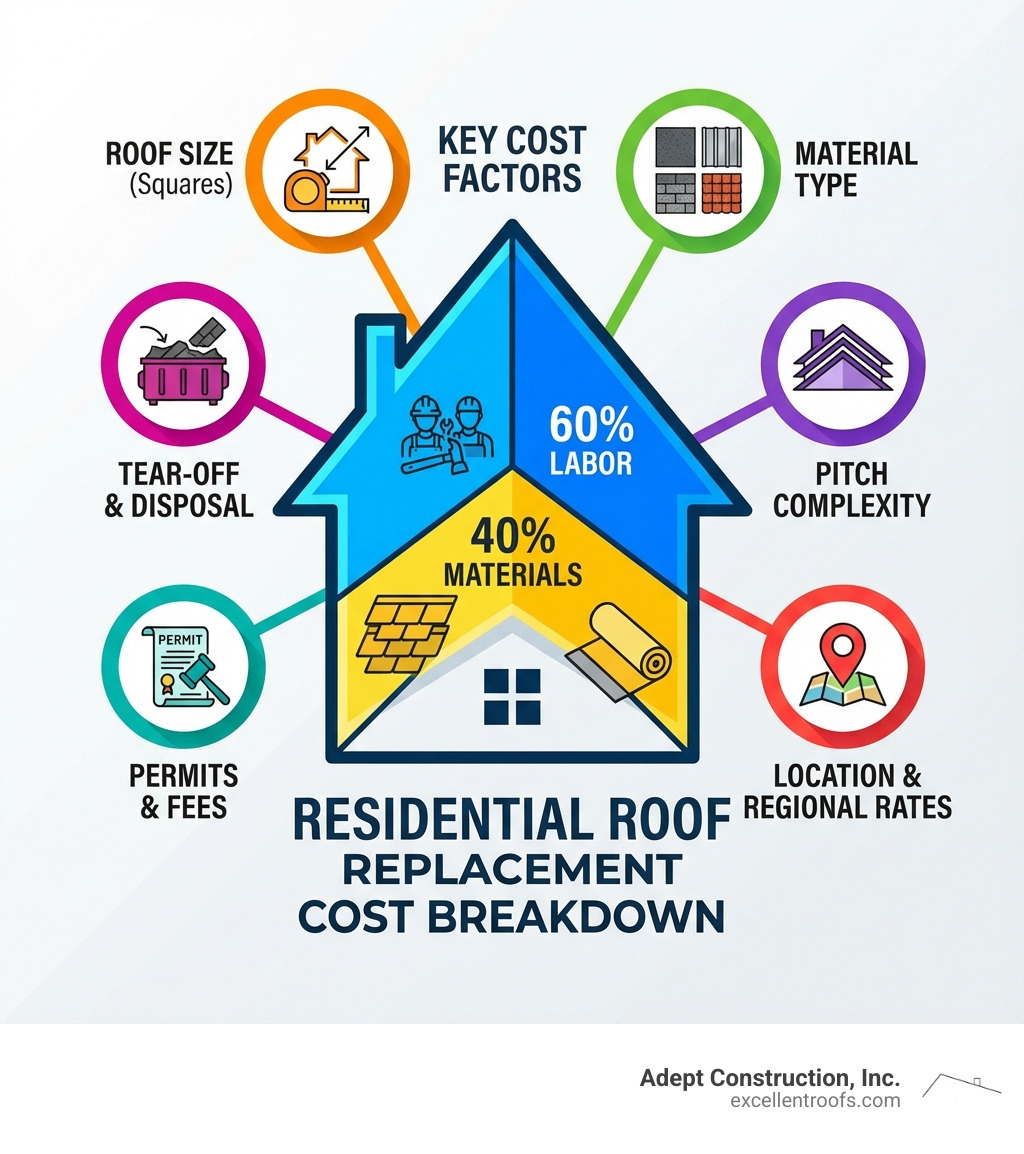
Residential roof replacement cost is one of the most significant home improvement investments you’ll make, and understanding the numbers upfront with a trusted roofing contractor helps you plan with confidence. Here’s what you need to know:
Quick Cost Overview:
- National Average: $11,000
- Typical Range: $7,000–$14,500
- Cost Per Square Foot: $4.35–$11.00
- Labor Percentage: Approximately 60% of total cost
- Materials Percentage: Approximately 40% of total cost
Key Factors That Influence Your Final Price:
- Roof size (measured in roofing squares)
- Material choice (asphalt, metal, composite, etc.)
- Roof pitch and complexity
- Geographic location
- Labor rates and contractor experience
- Additional costs (permits, tear-off, disposal)
A roof replacement is more than just a repair—it’s a long-term investment in your home’s safety, energy efficiency, and resale value. Whether you’re dealing with an aging roof, storm damage, or simply planning ahead, knowing what to expect financially helps you avoid surprises and make informed decisions.
I’m Gerald Michaels, founder and president of Adept Construction, Inc., and since 1997, I’ve helped homeowners throughout Naperville, Downers Grove, and the surrounding Chicago suburbs steer the residential roof replacement cost process with transparency and expertise. Over nearly three decades, I’ve seen how the right information and the right contractor can transform a stressful project into a smooth, satisfying experience.
Ready to get started? At Adept Construction, Inc., we offer free estimates for all professional roof replacement projects. Contact us today to schedule your no-obligation consultation and learn exactly what your new roof will cost.
Residential roof replacement cost terms you need:
Understanding the Average Residential Roof Replacement Cost
The average cost to replace a residential roof in the U.S. is approximately $11,000, with most homeowners spending between $7,000 and $14,500. This range reflects the diverse factors at play, from the size of your home to the materials you choose. When we break down this cost, labor typically accounts for about 60% of the total, while materials make up the remaining 40%. This split highlights the value of skilled workmanship in a successful roof replacement.

How Roof Size and Pitch Impact Price
The size of your roof is a primary driver of the overall residential roof replacement cost. We calculate roof size in “squares,” where one roofing square equals 100 square feet. A larger roof naturally requires more materials and more labor, directly increasing the total expense. For example, replacing a 2,000-square-foot roof might cost around $9,858 for asphalt shingles.
The roof’s pitch, or its steepness, also significantly impacts the price. Steeper roofs are more challenging and dangerous to work on, requiring additional safety equipment, specialized techniques, and more labor hours. This can add anywhere from $1,000 to $3,000 in extra costs compared to a lower-pitched roof. Consider the table below, showing how average costs can escalate with roof size based on data from Homewyse:
| Square Feet | Average Cost (Asphalt Shingles) |
|---|---|
| 1,000 | $5,025 |
| 1,100 | $5,508 |
| 1,200 | $5,992 |
| 1,500 | $7,442 |
| 1,700 | $8,408 |
| 2,000 | $9,858 |
| 2,500 | $12,275 |
| 3,000 | $14,691 |
How Labor Affects Your Residential Roof Replacement Cost
As we’ve noted, labor is a substantial component of your residential roof replacement cost, typically making up 60% of the total. This isn’t just about the hours spent on your roof; it encompasses the expertise, safety measures, and efficiency that experienced professionals bring to the job. Factors influencing labor costs include the complexity of your roof’s design (think multiple valleys, dormers, or skylights), its accessibility, and the number of stories your home has. A two-story home, for instance, will generally incur higher labor costs due to increased safety requirements and the effort involved in moving materials.
Difficult roof accessibility can also lead to increased labor hours and equipment expenses. Our skilled crews are trained to handle challenging installations safely and efficiently, ensuring a high-quality outcome.
Regional Price Variations
Just as median home prices vary across the country, so too does the residential roof replacement cost. Your geographic location—right down to your specific neighborhood—plays a significant role. Urban and metropolitan areas often experience higher labor rates and material costs compared to rural regions, influenced by factors like local cost of living and demand.
For homeowners in Illinois, these regional differences are particularly relevant. While Chicago might see roof replacement costs ranging from $9,000 to $31,000, costs in other parts of the state could be lower, typically between $6,000 and $16,000. Wealthier suburbs, like those we serve in Downers Grove and Naperville, may also see higher costs due to a premium on skilled labor and potentially higher-end material choices.
We understand the local market intimately. If you’re considering a roof replacement, you can find specific information custom to our service areas on our dedicated pages for roof replacement in Downers Grove, IL and roof replacement in Naperville, IL. For more on how we serve our community, visit our Downers Grove and Naperville location pages.
Breakdown of Roofing Materials: Cost vs. Lifespan
Choosing the right roofing material is a pivotal decision that balances upfront residential roof replacement cost with long-term value, durability, and aesthetics. Each option offers a unique set of benefits and price points.
How Material Choice Impacts Residential Roof Replacement Cost
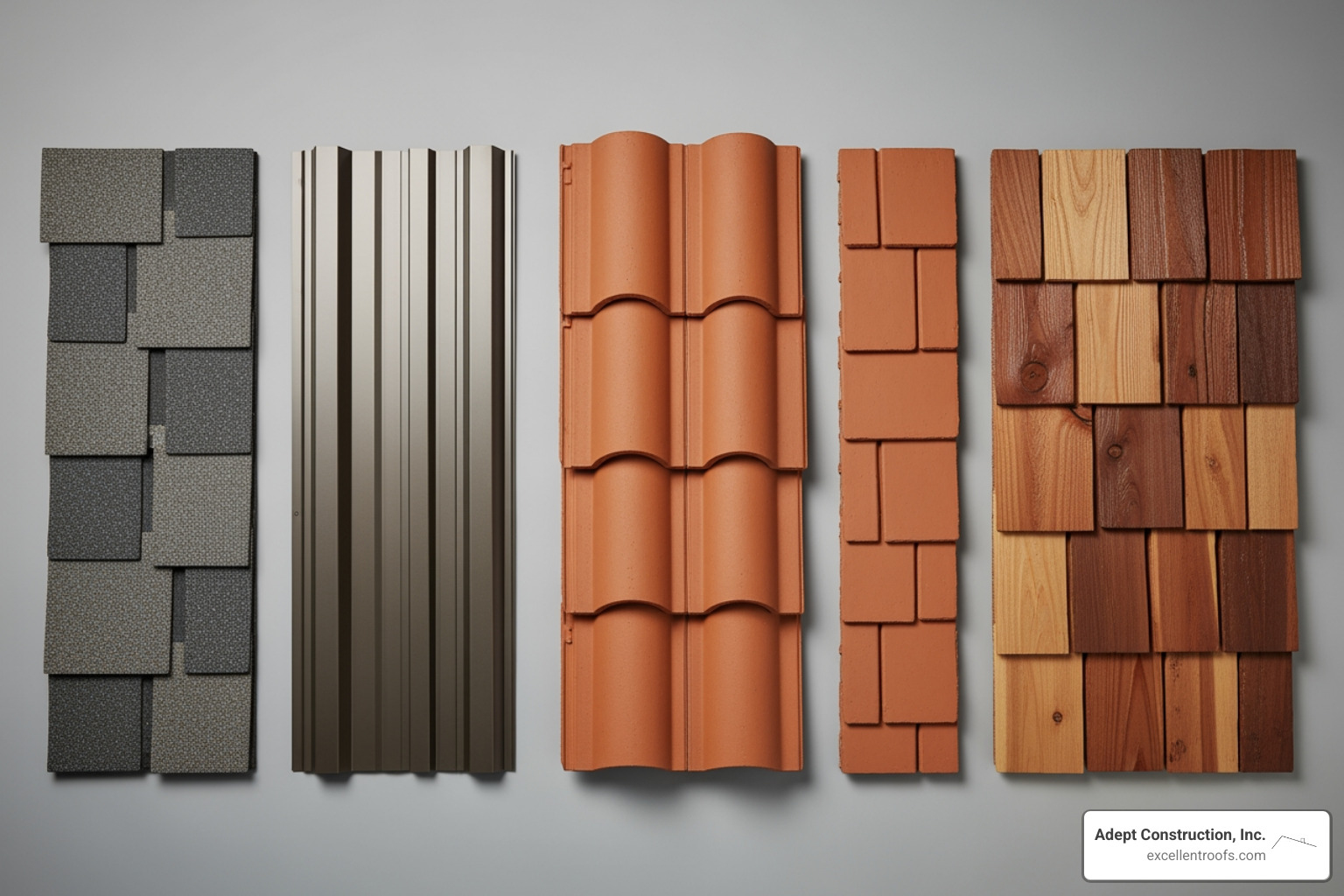
The material you select for your new roof will be one of the most significant factors determining the total project cost.
- Asphalt Shingles: These remain the most common and cost-effective roofing material, offering an excellent balance of affordability and durability. Installed costs typically range from $3.50 to $16.00 per square foot. Asphalt shingles are a versatile choice that suits most budgets and home styles.
- Metal Roofing: Known for its strength and longevity, metal roofing has a higher upfront residential roof replacement cost, ranging from $4.00 to $40.00 per square foot. However, its long lifespan and energy efficiency often make it a smart long-term investment, especially in areas prone to severe weather. Metal roofs are also gaining popularity due to their resistance to leaks and wind uplift.
- Composite Roofing: This material offers a durable and versatile alternative, often mimicking the look of natural slate or wood shakes without the high maintenance. Composite roofing falls into a mid-range cost category, providing improved durability and aesthetic appeal.
- Cedar Shake Roofing: For a natural, rustic aesthetic, cedar shake is a beautiful option. It comes with a premium residential roof replacement cost, typically between $6.00 and $16.00 per square foot. While stunning, cedar shakes require more maintenance than other materials and are best suited for specific climates.
Understanding the characteristics and benefits of each option is key to making the right choice.
Lifespan and Long-Term Value of Different Materials
The true cost of a roof isn’t just its initial price tag, but how long it lasts and the value it provides over its lifetime.
- Asphalt Shingles: These are a popular choice due to their affordability and moderate lifespan, typically lasting 15–30 years. According to the 2024 Journal of Light Construction Cost Vs. Value report, a new asphalt shingle roof provides a healthy return on investment (ROI) of 59%, making them a practical choice for many homeowners.
- Metal Roofing: With a lifespan of 40–70 years, metal roofs offer exceptional durability and require minimal maintenance, justifying their higher upfront cost. Their longevity means fewer replacements over the life of your home.
- Composite Roofing: Designed for durability, composite roofs typically last 30–50 years, offering a long-lasting solution with excellent performance.
- Cedar Shake: While beautiful, cedar shake roofs have a lifespan of 20–40 years, which can be influenced by climate and maintenance.
- Slate Roofs: Though not as common in our area due to their premium cost (natural slate can be $20.00–$35.00 per square foot), slate roofs boast the longest lifespan, often lasting 75–200 years.
Understanding these lifespans helps you weigh the initial residential roof replacement cost against the long-term benefits and potential savings on future replacements.
Additional and “Hidden” Roof Replacement Costs
When budgeting for a new roof, it’s easy to focus solely on materials and labor. However, several additional expenses can impact your final bill. We believe in complete transparency, so budget for these to avoid any unexpected surprises.
Tear-Off, Permits, and Other Fees
Beyond the visible components of your new roof, these factors contribute to the overall residential roof replacement cost:
- Old Roof Removal (Tear-Off): Before we can install your new roof, the old one often needs to be removed. This “tear-off” process, including debris disposal, can cost an additional $1–$5 per square foot. The cost varies based on the number of existing layers and the type of material.
- Debris Disposal: The old roofing materials need to go somewhere! Your contractor will factor in the cost of dumpster rental and disposal fees, which can add around $500 to the total.
- Building Permits: Most municipalities in Illinois, including Downers Grove and Naperville, require building permits for full roof replacements and any structural changes. These permits ensure your new roof meets local building codes and safety standards. Permit costs can range anywhere from $100 to $500, though some areas might see costs up to $1,400 depending on the city. We handle the permit process for you, ensuring everything is compliant.
- Inspections, Underlayment, Flashing, and Drip Edge: These aren’t “hidden” as much as they are essential components for a complete, code-compliant, and watertight installation.
- Underlayment: Provides an additional layer of protection against moisture.
- Flashing: Critical for sealing vulnerable areas like chimneys, skylights, and vents.
- Drip Edge: Installed along the edges of the roof to direct water away from the fascia and into the gutters, protecting your home’s eaves.
- Inspections: Beyond the initial permit, a post-replacement inspection ensures the work was done correctly and safely.
Repair vs. Replacement: Making the Cost-Effective Choice
One of the most common questions we hear is, “Should I repair my roof or replace it entirely?” The answer hinges on several factors, primarily the age of your roof and the extent of the damage.
- When to Repair: If your roof is relatively young (under 10-15 years old) and the damage is localized—a few missing shingles, a small leak near a flashing point, or minor storm damage—a targeted repair is often the most cost-effective solution. For homeowners in our service areas, we offer expert roof repair in Downers Grove and Naperville.
- When to Replace: If your roof is nearing or past its expected lifespan (e.g., asphalt shingles over 20 years old), or if the damage is widespread (e.g., significant granule loss, curling or buckling shingles across multiple sections, or structural issues), a full replacement is usually the smarter long-term investment. While the upfront residential roof replacement cost is higher, it prevents recurring repair expenses and provides superior protection and peace of mind. If the cost of current and anticipated future repairs starts to exceed 50-60% of a new roof’s price, replacement becomes the more economical choice.
For a detailed comparison to help you make this crucial decision, we recommend reading our informative blog post: Do You Need Roof Repair or Replacement?.
How to Save Money and Choose the Right Contractor
A new roof is a significant investment in your home, but there are proven strategies to manage costs without sacrificing quality. Crucially, choosing a reputable contractor is the most important step in ensuring both cost-effectiveness and a successful outcome.
Tips for Saving on Your Roof Replacement
We understand that managing the residential roof replacement cost is a top priority for homeowners. Here are some strategies that can help:
- Schedule Your Project During the Off-Season: Roofing contractors often experience peak demand during late spring and summer. Scheduling your replacement in late fall or winter (weather permitting) can sometimes lead to better pricing or faster scheduling due to lower demand.
- Obtain Multiple Quotes from Licensed Contractors: Don’t settle for the first estimate you receive. We always encourage homeowners to get at least three detailed quotes from different licensed and insured roofing companies. This allows you to compare pricing, materials, and scope of work accurately.
- Check for Insurance Coverage After Storm Damage: If your roof damage is a result of a recent storm (hail, wind, etc.), your homeowners insurance policy might cover a significant portion, or even all, of the replacement cost. We can help you steer the insurance claims process to ensure you receive the coverage you’re entitled to.
- Take Advantage of Local Promotions or Financing Options: Keep an eye out for special offers or financing solutions that reputable contractors may provide. We occasionally offer promotions that can help make your roof replacement more affordable.
Choosing a Reputable Roofing Contractor
Selecting the right roofing company is paramount. A quality installation from an experienced professional protects your investment and ensures your roof performs as expected for decades. Here’s what to look for:
- Verify Licenses and Insurance: This is non-negotiable. Always confirm that any contractor you consider is fully licensed and carries comprehensive liability insurance and workers’ compensation. This protects you from liability in case of accidents or property damage during the project.
- Read Online Reviews and Request Local References: A company’s reputation speaks volumes. Check third-party review sites and ask for references from past clients in Downers Grove, Naperville, or surrounding areas. Hearing directly from satisfied customers provides invaluable insight.
- Ensure Experience with Your Chosen Roofing System: Different roofing materials and systems require specialized knowledge and installation techniques. Confirm your contractor has extensive experience with the specific roofing material you’ve selected, whether it’s asphalt shingles, metal, or composite.
- Get a Detailed, Written Contract: A comprehensive contract should clearly outline the scope of work, materials to be used (including brand and color), start and completion dates, payment schedule, warranty information (both material and labor), and what’s included in the price (e.g., tear-off, disposal, permits). Avoid any contractor who is vague or pushes for a cash-only deal.
For a comprehensive, step-by-step guide to finding the best professionals, see our detailed article: The Ultimate Guide to Choosing the Right Roof Replacement Contractor.
Frequently Asked Questions about Roof Replacement Costs
We understand that homeowners have many questions when facing a significant investment like a roof replacement. Here are answers to some of the most common inquiries regarding residential roof replacement cost.
What is the typical return on investment for a new roof?
A new roof is more than just a necessary repair; it’s a significant upgrade that improves your home’s curb appeal, structural integrity, and overall market value. While the ROI varies by material and market conditions, it generally provides a strong return. According to Remodeling’s 2023 Cost vs Value Report, a new asphalt shingle roof can recoup approximately 61% of its cost upon resale, while a metal roof typically recoups around 49%. Beyond the financial return, a new roof offers peace of mind, improved energy efficiency, and protection against the elements, which are invaluable benefits.
How long does a roof replacement take?
The timeline for a residential roof replacement can vary. For a typical residential home, the process usually takes one to three days. However, several factors can influence this duration:
- Roof Size and Complexity: Larger roofs or those with intricate designs (multiple peaks, valleys, dormers, skylights) will naturally take longer.
- Material Choice: Some materials, like asphalt shingles, can be installed more quickly than others, such as slate or certain metal systems.
- Weather Conditions: Unfavorable weather, like heavy rain or strong winds, can cause delays.
- Crew Size and Efficiency: An experienced and well-coordinated crew can complete the job more efficiently.
While the physical installation is often quick, the initial phase of scheduling, getting inspections, and coordinating with insurance (if applicable) can take a month or longer.
Can I put new shingles over old ones to save money?
While installing new shingles directly over existing ones, known as a “roof-over” or “re-roofing,” can seem like a cost-saving measure because it eliminates the tear-off expense, we generally do not recommend it for primary residences. Here’s why:
- Conceals Underlying Damage: A roof-over hides any existing damage to the roof deck, such as rot, mold, or structural issues. These problems can worsen undetected, leading to more costly repairs down the line.
- Adds Excessive Weight: Most roof structures are designed to support a specific load. Adding a second layer of shingles can exceed this limit, potentially stressing the framing and compromising structural integrity.
- Voids Warranties: Many roofing material manufacturers will void their product warranties if the shingles are installed over an existing layer, as it can affect performance and lifespan.
- Shorter Lifespan: A second layer of shingles can trap heat, accelerating the deterioration of both the old and new shingles, thus reducing the lifespan of your new roof.
For these reasons, a full tear-off and replacement is almost always the best practice. It allows us to inspect the roof deck thoroughly, make any necessary repairs, and ensure a clean, stable base for your new roofing system, providing a longer-lasting, higher-quality roof.
Conclusion
Understanding the factors that influence residential roof replacement cost empowers homeowners to make informed, confident decisions for their most valuable asset. From selecting the right materials and considering labor nuances to navigating regional pricing and choosing a trustworthy contractor, every element contributes to the final price and the long-term success of your roofing project.
At Adept Construction, Inc., we pride ourselves on being a family-owned roofing company dedicated to transparent pricing, superior customer service, and exceptional workmanship. We believe in educating our clients throughout the process, ensuring you feel confident in your investment.
For a free, no-obligation estimate custom to your home in Downers Grove, Naperville, or the surrounding Illinois suburbs, contact us today. Let us help you protect your home with our expert residential roofing services.