
Enhancing Curb Appeal with Cedar Shake Siding Gable Accents
Cedar shake siding gable ends are architectural features that utilize split or sawn cedar wood to provide texture and weather protection to the triangular portion of an exterior wall. For homeowners seeking professional roofing services in Illinois, these accents represent a premium investment in both aesthetics and structural durability. A well-designed gable accent transforms a plain roofline into a striking focal point by highlighting the pitch and adding depth to the facade.
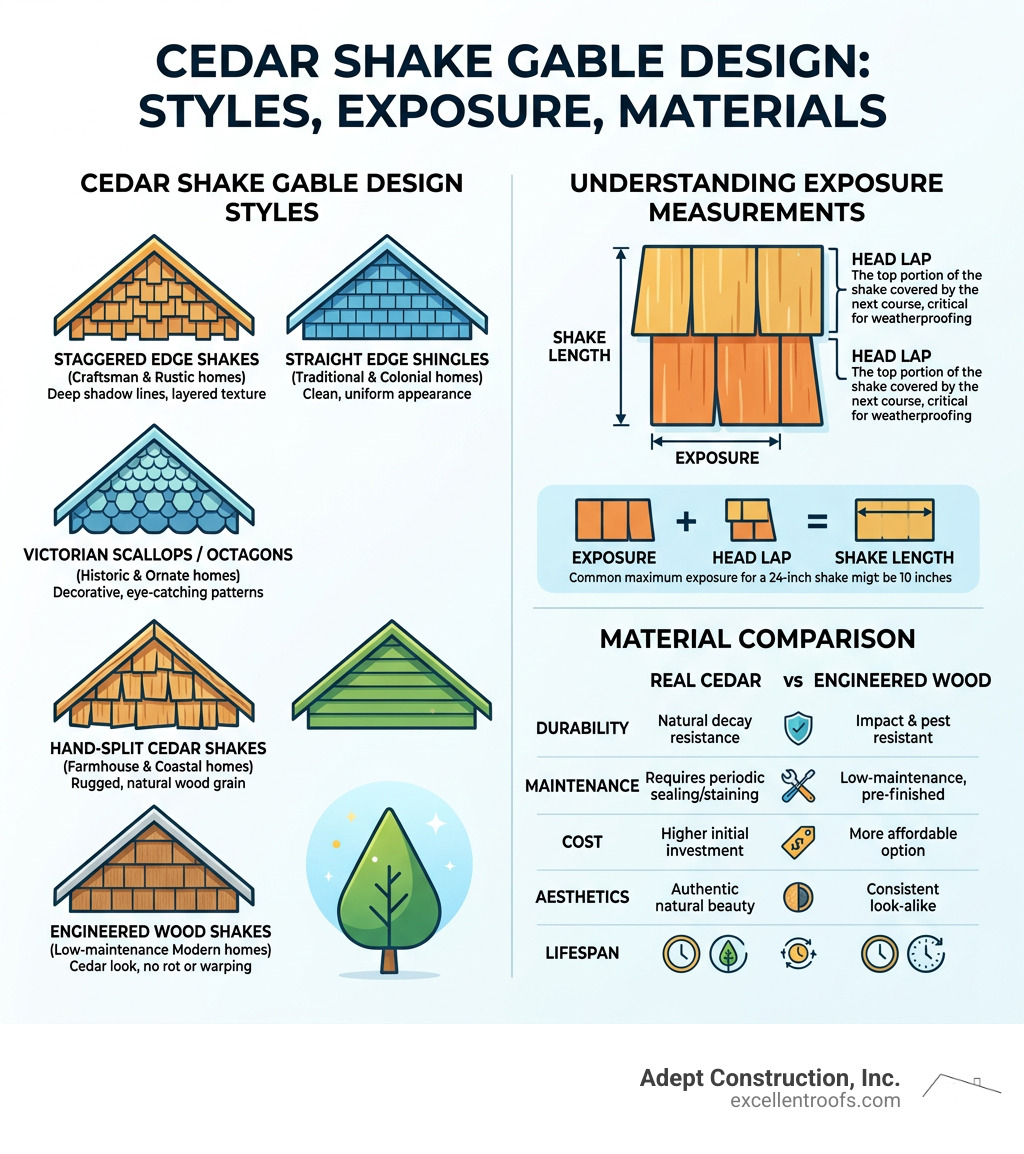
Here’s a quick overview of the most popular cedar shake gable design ideas:
| Style | Best For | Key Feature |
|---|---|---|
| Staggered Edge Shakes | Craftsman & rustic homes | Deep shadow lines, layered texture |
| Straight Edge Shingles | Traditional & colonial homes | Clean, uniform appearance |
| Victorian Scallops / Octagons | Historic & ornate homes | Decorative, eye-catching patterns |
| Hand-Split Cedar Shakes | Farmhouse & coastal homes | Rugged, natural wood grain |
| Engineered Wood Shakes | Low-maintenance modern homes | Cedar look, no rot or warping |
Gable ends are a natural canvas for these designs. As one design source puts it, gable end details are a great way to highlight roof pitches — and cedar shakes deliver that effect better than almost any other material.
This guide walks you through expert cedar shake roofing and siding solutions — from choosing the right material to installation tips and long-term maintenance — so you can make a confident, informed decision for your home.
I’m Gerald Michaels, founder of Adept Construction, Inc., and I’ve spent nearly three decades installing and restoring cedar shake siding gable ends across Chicago’s western suburbs. In this guide, I’ll share what actually works in the field — not just what looks good in a catalog.
In our experience serving the Downers Grove and Naperville areas, we’ve seen how a cedar shake siding gable can completely redefine a home’s personality. A gable end serves as a high-contrast architectural detail that significantly increases a home’s market value. By breaking up the monotony of standard horizontal lap siding, these accents highlight the roof’s pitch and create a “Shingle Style” or “Craftsman” look that is highly sought after here in the Midwest.
Adding texture and color to gable ends is one of the easiest ways to boost curb appeal without a full-scale renovation. Whether you are building a new custom home or looking to “dress up” an existing facade, the gable is the perfect place to experiment with bold design choices.
Design Styles for Cedar Shake Siding Gable Ends
When selecting materials, homeowners often look at options like Natural Cedar Wood Shingle siding to achieve that authentic, earthy feel. Depending on your home’s architecture, you might consider:
- Victorian Scallops and Octagons: These decorative cuts are essential for Queen Anne or Folk Victorian homes. They turn a plain gable into a work of art.
- Craftsman Staggered Edges: These offer a more rugged, hand-crafted appearance with uneven bottom edges that create deep, interesting shadow lines.
- Rustic Hand-Split Textures: Perfect for a “woodsy” or coastal aesthetic, these shakes look like they were split right off the log.
For those looking to coordinate their siding with their roof, we offer more info about cedar roofing systems to ensure a cohesive look from top to bottom.
Popular Color Options and Weathering Effects
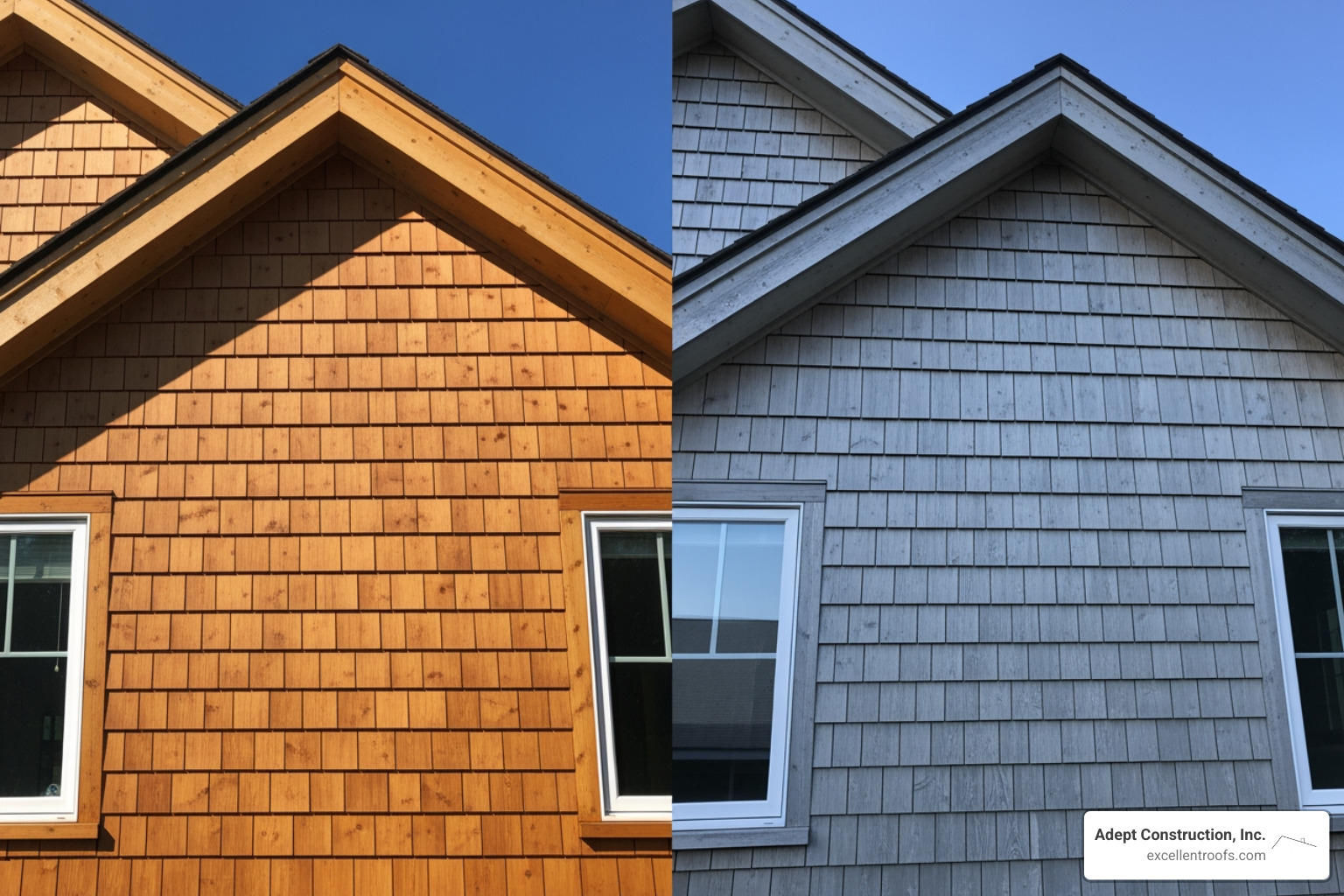
Natural cedar is famous for its “living” finish. If left untreated, Western Red Cedar will weather to a classic, dignified silver-grey patina over time. However, many homeowners in Illinois prefer to preserve the warm, honey-toned hues of new wood.
- Semi-Transparent Stains: These allow the natural wood grain to show through while providing UV protection.
- Ageless Cedar Blends: Some modern products use color technology to mimic the look of aged cedar without the actual structural weathering.
- Solid Stains: If you want a specific color—like a deep “Oceanside” blue or “Colonial Grey”—solid stains provide a uniform look while protecting the wood fibers.
Cedar Shakes vs. Shingles: Choosing the Right Texture
One of the most common questions we get at Adept Construction is: “What’s the difference between a shake and a shingle?” While the terms are often used interchangeably, they are technically different products.
The primary difference lies in the manufacturing process. Cedar shakes are typically hand-split and then resawn, resulting in a rugged, thick, and highly textured appearance. Cedar shingles, on the other hand, are sawn on both sides, giving them a uniform, smooth finish and a thinner profile.
Shakes provide the deep shadow lines ideal for rustic or “heavy” gables, whereas shingles offer a refined, tailored look for traditional, modern, or colonial homes.
| Feature | Cedar Shakes | Cedar Shingles |
|---|---|---|
| Texture | Rugged, hand-split, uneven | Smooth, sawn, uniform |
| Thickness | Heavier butt (usually 1/2″ to 3/4″) | Thinner, tapered |
| Shadow Line | Deep and dramatic | Subtle and clean |
| Best Application | Rustic gables, roofs | Refined sidewalls, ornate gables |
If you’re interested in the specifics of the shingle side of things, check out our guide on installing cedar shingle siding. Generally, for the best performance in our climate, we recommend 100% clear, edge-grain Western Red Cedar, as it resists warping and twisting better than flat-grain alternatives.
Top Alternatives to Natural Cedar Shake Siding Gable Ends
While we love the smell and feel of real wood, we recognize that natural cedar isn’t for everyone. For homeowners seeking the aesthetic of wood without the intensive maintenance, engineered wood and polymer composites are excellent alternatives.
Engineered Wood and Polymer Benefits
Products like LP® SmartSide® Engineered Wood Shake offer the look of hand-split cedar without the natural defects like knots or checks. These products often feature “RigidStack” technology, which provides clean lines and high wind resistance—a major plus for Illinois storms.
The benefits of these alternatives include:
- 30-Year No-Fade Warranties: Many synthetic products come with pre-finished colors that won’t fade for decades.
- Moisture Resistance: Engineered wood is treated to resist rot, fungal decay, and termites.
- Cost Efficiency: While the material cost can be similar to wood, the cedar shake siding installation cost for engineered products is often lower because they install 25% to 40% faster than individual wood shakes.
Synthetic Shake Profiles for Gables
Manufacturers like CertainTeed offer a wide variety of shake and shingle profiles made from high-quality polymers. These are available in single-course 7-inch lengths, which are specifically designed to minimize waste when cutting to fit the angles of a gable.
Step-by-Step Guide to Cedar Shake Siding Gable Installation
Properly installing a cedar shake siding gable is an exercise in precision. Because gables are exposed to high winds and driving rain, the installation must be watertight.
- Preparation and Flashing: We start with a high-quality weather-resistive barrier. Meticulous flashing is required at the gable-to-wall transitions and around any gable vents to prevent moisture infiltration.
- Fastener Selection: We only use stainless steel or hot-dipped galvanized nails. Standard nails will react with the natural tannins in cedar, causing ugly black “bleed” streaks down your beautiful new siding.
- Balanced Exposure: For exterior sidewalls, the exposure (the portion of the shake visible to the eye) is typically 7.5 inches for an 18-inch shake. This ensures a “2-ply” application, meaning there are always at least two layers of wood protecting your home at any given point.
- Expansion Gaps: Wood moves. We leave a small gap (about 1/8″ to 1/4″) between shakes to allow them to expand and contract with the shifting humidity levels in Naperville and Downers Grove.
For technical specifications on premium shakes, the Certi-Sawn® Tapersawn Cedar Shakes guidelines are the industry gold standard. If you’re curious about how this translates to a full roof, see our cedar roof installation ultimate guide.
Maintenance and Longevity of Natural Cedar Features
A natural cedar shake siding gable can last 30 to 50 years—but only if you treat it right. Cedar contains natural preservatives that resist rot, but the sun and rain will eventually break down the surface fibers.
Protecting Your Investment
Regular inspections are critical in our service areas. The freeze-thaw cycles in Naperville, IL and Downers Grove, IL can stress wood fibers, leading to small cracks or “checking.” If you notice significant wear or damage, seeking expert roof repair in Naperville IL or roof repair services in Downers Grove is essential to prevent structural rot.
- Staining: We recommend applying a quality oil-based stain every 3 to 5 years. This replenishes the wood’s natural oils and provides a UV barrier.
- Debris Removal: Keep the “valleys” where the gable meets the roof clear of leaves and pine needles. Trapped moisture is the #1 enemy of cedar.
- Avoid Power Washing: High-pressure water can blast away the soft grain of the wood, leaving it “fuzzy” and prone to rot. Low-pressure chemical cleaning is much safer.
- Repairing Damage: If you notice a split or warped shake, don’t wait. A quick cedar shingle repair can prevent water from reaching the sheathing.
For homeowners already dealing with aging cedar, we offer specialized cedar roof repair in Naperville to extend the life of your exterior features.
Frequently Asked Questions about Cedar Shake Siding Gable Projects
What is the average cost to install cedar shakes on a gable?
Installation costs typically range from $8 to $12 per square foot for natural cedar. Factors that influence this include the height of the gable (which may require scaffolding) and the complexity of the cuts. Engineered alternatives may offer lower labor costs because they come in longer panels that install much faster.
How do I choose between natural cedar and vinyl shakes for my gable?
It comes down to your priorities. Choose natural cedar for authentic historical restoration, the unmatched scent of real wood, and maximum property value. Choose vinyl or polymer if you want a “set it and forget it” solution with lower maintenance and better fire ratings in high-density neighborhoods.
What are the main cost factors for installation?
When calculating your budget, don’t forget the waste factor. Because gables are triangular, there is significantly more “cut waste” than on a standard rectangular wall—usually around 15% to 20%. You can find more detail on budgeting in our cedar roof replacement cost guide.
Conclusion
At Adept Construction, Inc., we specialize in high-quality gable transformations that combine durability with timeless style. Whether you prefer the rugged, natural look of hand-split shakes or the precision and low maintenance of engineered wood, our team ensures a flawless finish that protects your home for decades. We understand the unique architectural needs of Chicago’s western suburbs, providing expert roof replacement in Downers Grove and roof replacement services in Naperville IL. Contact us today for a free estimate on your next project. We look forward to helping you “shake up” your home’s exterior!