
Fundamental Functions of Professional Roofing in Construction
Roofing in construction is the system of materials, structure, and design that forms the top enclosure of any building — protecting everything inside from weather, heat loss, and structural stress.
Here is a quick overview of what roofing in construction covers:
| Topic | What to Know |
|---|---|
| Main functions | Weather protection, insulation, structural support, moisture control |
| Common materials | Asphalt shingles, metal, slate, clay tile, TPO, EPDM |
| Roof shapes | Gable, hip, mansard, flat, shed, gambrel |
| Steep vs. flat | Steep-slope sheds water; flat/low-slope uses membranes |
| Key components | Deck, underlayment, flashing, ventilation, ridge cap |
| Lifespan range | 20–30 years (asphalt) up to 100+ years (slate) |
| Sustainability options | Cool roofs, green roofs, solar-integrated shingles |
Whether you own a home in the suburbs or manage a commercial property, understanding how a roof is built — and what makes it last — helps you make smarter decisions and avoid costly mistakes. This guide covers everything from expert roofing services and material choices to ventilation, design loads, and the latest innovations in roofing technology.
I’m Gerald Michaels, founder of Adept Construction, Inc., with nearly three decades of hands-on experience in roofing in construction across Naperville, Downers Grove, and Chicago’s western suburbs. I’ve seen how the right roofing decisions protect homes for generations — and how the wrong ones lead to leaks, damage, and unnecessary expense.
A roof is far more than just the “hat” of a building; it is a complex engineering feat. In roofing in construction, the primary objective is to create a high-performing envelope that balances protection with breathability.

The core functions of a modern roofing system include:
- Weather Shielding: This is the most obvious role. A roof must shed water, resist wind uplift, and withstand the weight of snow.
- Thermal Insulation: By acting as a barrier, the roof helps maintain consistent indoor temperatures. Proper insulation prevents heat from escaping in the winter and entering in the summer.
- Structural Integrity: The roof ties the walls of the building together. It must be strong enough to support its own weight (dead load) and temporary weights like workers or snow (live loads).
- Moisture Barrier: Beyond just stopping rain, a roof manages internal humidity. Without a proper underlayment, condensation can rot the wooden structure from the inside out.
- Aesthetic Value: Especially in residential areas like Downers Grove, the roof accounts for up to 40% of a home’s exterior visual space, significantly impacting curb value.
All professional installations must adhere to the International Building Code for Roof Assemblies to ensure safety and longevity.
Residential Roofing in Construction
Residential systems are typically “steep-slope,” meaning they have a pitch sharp enough to let gravity do the work of shedding water. Shingle roofing is the king of this category. In North America, asphalt shingles dominate approximately 75% of the residential market because they are cost-effective and durable.
For homeowners looking for a more distinct look, cedar shake roofing offers natural beauty and excellent insulation, though it requires more regular maintenance. Alternatively, composite roofing uses advanced polymers to mimic the look of slate or wood while providing superior fire and impact resistance.
Commercial Roofing in Construction
Commercial buildings often feature large, expansive footprints that require flat roofing solutions. Unlike residential roofs, these “low-slope” systems rely on waterproof membranes rather than overlapping shingles.
Common commercial materials include:
- TPO (Thermoplastic Polyolefin): A white, reflective membrane that is highly energy-efficient and easy to install.
- EPDM (Ethylene Propylene Diene Terpolymer): A synthetic rubber known for its incredible durability and resistance to extreme temperatures.
- PVC: Similar to TPO but highly resistant to chemicals and fire, making it ideal for restaurants or industrial facilities.
Roof Design: Understanding Shapes, Pitch, and Styles
The “tech” level of a roof is often inversely related to its slope. As a rule of thumb in roofing in construction, the lower the slope, the more advanced the waterproofing technology must be.
- Gable Roofs: The classic “A-frame” shape. They are simple to build, provide great drainage, and allow for attic space or vaulted ceilings.
- Hip Roofs: Sloped on all four sides. These are more stable in high winds and are common in many Illinois suburban designs.
- Mansard Design: A four-sided roof with a double slope on each side, creating a very steep lower slope. This design maximizes interior living space but requires regular maintenance to prevent leaks on the flatter top section.
- Gambrel Styles: Often called “barn roofs,” these provide extra headroom in the upper floor.
- Shed Roofs: A single-sloped surface, often used for modern additions or minimalist architectural styles.
For a deeper dive into how these shapes impact your home, check out The Ultimate Guide to Residential Roofing Materials and Designs.
Essential Components of a Complete Roofing System
A roof is a “system,” not just a surface. When we perform a roof installation, we assemble several layers that work in harmony.
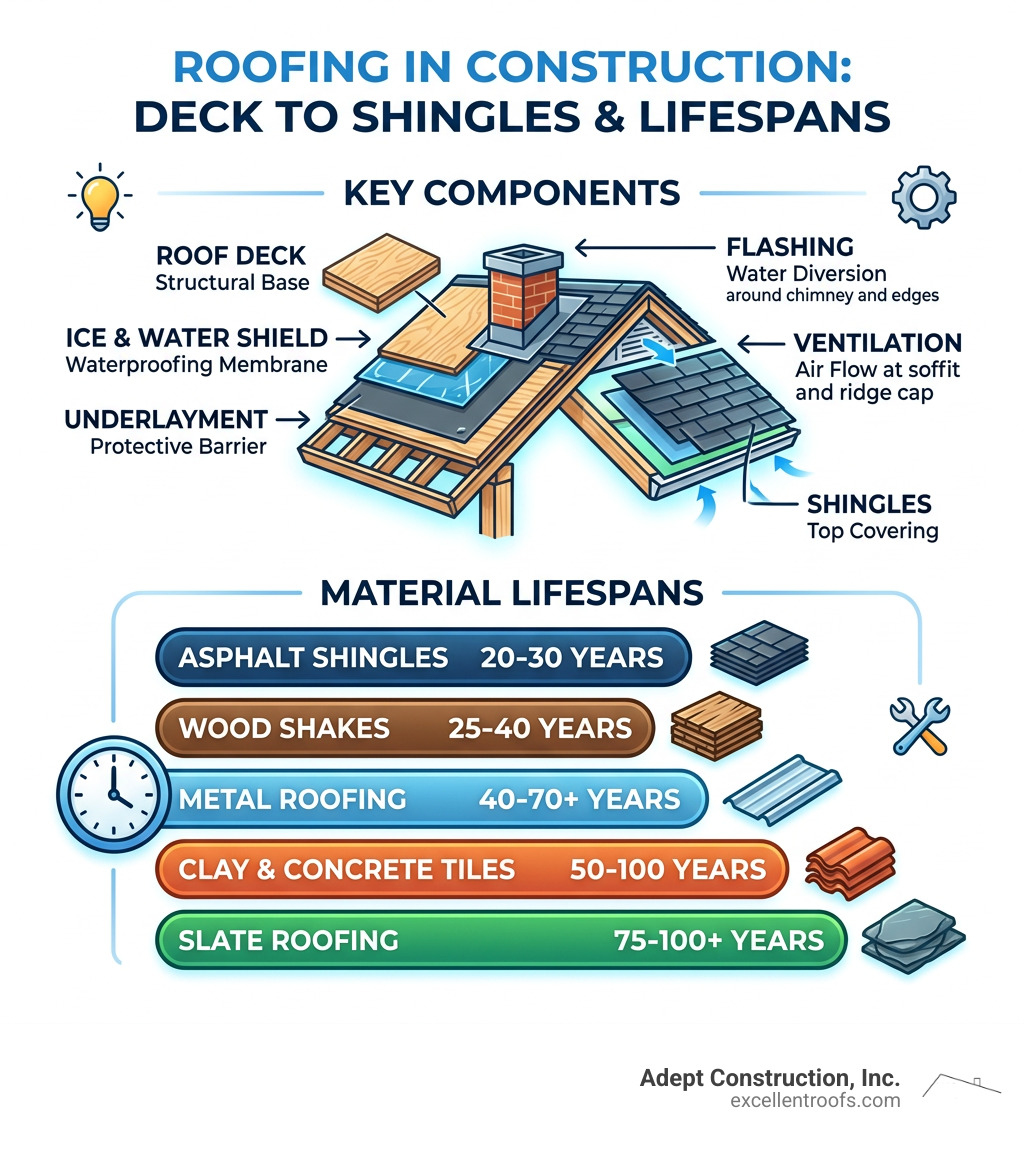
- Roof Deck: The structural foundation, usually made of plywood or OSB panels, that supports the entire system.
- Underlayment: A water-resistant or waterproof barrier installed directly on the roof deck. Modern synthetic underlayments provide a secondary line of defense if the outer shingles are damaged.
- Flashing: Metal pieces (usually aluminum or galvanized steel) installed around “interruptions” like chimneys, vents, and valleys to divert water away from seams.
- Drip Edges: An L-shaped metal strip installed at the edges to help water clear the fascia and shed away from the building perimeter.
- Ice and Water Shields: A self-adhering membrane essential in cold climates like ours to prevent any potential damage from ice dams.
- Ridge Caps: Specially designed shingles that cover the peak of the roof where the two slopes meet.
We follow the NRCA Roofing Guidelines to ensure every component meets the highest industry standards.
Managing Design Loads and Structural Stress
Engineers must calculate the “load” a roof will carry to prevent sagging or collapse.
- Dead Loads: The permanent weight of the roofing materials themselves.
- Live Loads: Temporary weight, such as workers during a repair.
- Snow Loads: In Illinois, roofs must be designed to withstand significant weight from accumulated snow.
- Wind Uplift: High winds create a vacuum effect that tries to “lift” the roof off the house. Fastening patterns are strictly regulated to combat this.
| Material | Approx. Weight per Square (100 sq. ft.) |
|---|---|
| Asphalt Shingles | 200 – 350 lbs |
| Metal Roofing | 50 – 150 lbs |
| Clay/Concrete Tile | 600 – 1,100 lbs |
| Natural Slate | 800 – 1,500 lbs |
The Importance of Roof Ventilation and Insulation
Proper ventilation is the “secret sauce” of a long-lasting roof. Without it, heat and moisture get trapped in the attic, leading to mold, rotted wood, and “cooked” shingles that brittle prematurely.
The standard building code usually requires a 1:150 ventilation ratio (1 square foot of vent area for every 150 square feet of attic floor). This is achieved through a “balanced” system of intake vents (at the soffits or eaves) and exhaust vents (at the ridge).
Proper airflow prevents:
- Condensation: Warm air from the house hitting a cold roof deck creates water droplets.
- Ice Dams: Trapped heat melts snow on the roof; the water then refreezes at the cold eaves, backing up under shingles.
- Energy Loss: In summer, a ventilated attic can be 30-50 degrees cooler than an unventilated one, lowering AC costs.
Extensive research on energy-efficient roof and attic design confirms that a “cold roof” design (where the attic stays near the outside temperature) is most effective for our local climate.
Sustainable Innovations and Future Roofing Technology
The future of roofing in construction is green—and smart. We are seeing a massive shift toward materials that don’t just protect, but also perform.
- Cool Roofs: These use a roofing material that reflects sunlight and heat. By increasing solar reflectance and thermal emittance, these roofs stay significantly cooler. White products can reflect 60–90% of sunlight, compared to just 20% for traditional dark shingles.
- Green Roofs: Also known as vegetative roofs, these use a waterproof membrane covered by soil and plants. They provide incredible insulation and manage stormwater runoff.
- Solar-Integrated Shingles: Rather than bulky panels bolted on top, these are shingles that are solar cells. They blend seamlessly with the architecture.
- Smart Roof Sensors: New technology allows us to install sensors that detect moisture or structural shifts before a leak even becomes visible.
- Robotics: Innovations like Robotic shingle installers are beginning to enter the industry, promising faster and safer installations.
Choosing the right tech depends on your specific needs. You can learn more by Comparing Roof Materials: What’s Best for Your Climate?
Frequently Asked Questions about Roofing
What is the average lifespan of different roofing materials?
The average lifespan of roofing materials varies by type: asphalt shingles last 20–30 years, metal lasts 50+ years, and slate can last over 100 years. For more details, see What Type of Roof Has the Longest Lifespan?.
How often should a roof be inspected for maintenance?
We recommend bi-annual inspections—once in the spring and once in the fall. You should also perform a check after any major storm involving hail or high winds. Routine tasks like removing debris and trimming shrubs or overhanging branches can prevent moisture from being trapped against your shingles. If you spot trouble, timely repairs are much cheaper than a full replacement.
What are the signs that a roof needs replacement versus repair?
Deciding on a roof replacement usually comes down to three factors: age, extent of damage, and structural health.
- Repair: If you have a single leak or a few missing shingles from a windstorm.
- Replacement: If the roof is over 20 years old, the deck is sagging, or you see widespread “balding” (loss of granules) on your shingles.
Conclusion
At Adept Construction, Inc., we believe that every building deserves a roof built to last. Based in Downers Grove and serving the Naperville area, we’ve built our reputation on superior customer service and knowledgeable staff who understand the nuances of roofing in construction.
Whether you need a complex roof replacement in Downers Grove IL or a quick, reliable roof repair in Naperville IL, our family-owned team is here to help. We pride ourselves on high-quality workmanship that stands the test of time.
Ready to protect your home with the best in the business? We offer free estimates to help you plan your next project with confidence. Contact us today to discuss your residential roofing needs and experience the Adept difference!