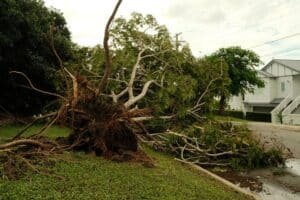

Why Roof Damage Insurance Claims Catch Most Homeowners Off Guard
Roof damage insurance claims are formal requests you file with your homeowners insurance company to get paid for roof repairs or replacement after a covered event like a storm, hail, or fallen tree.
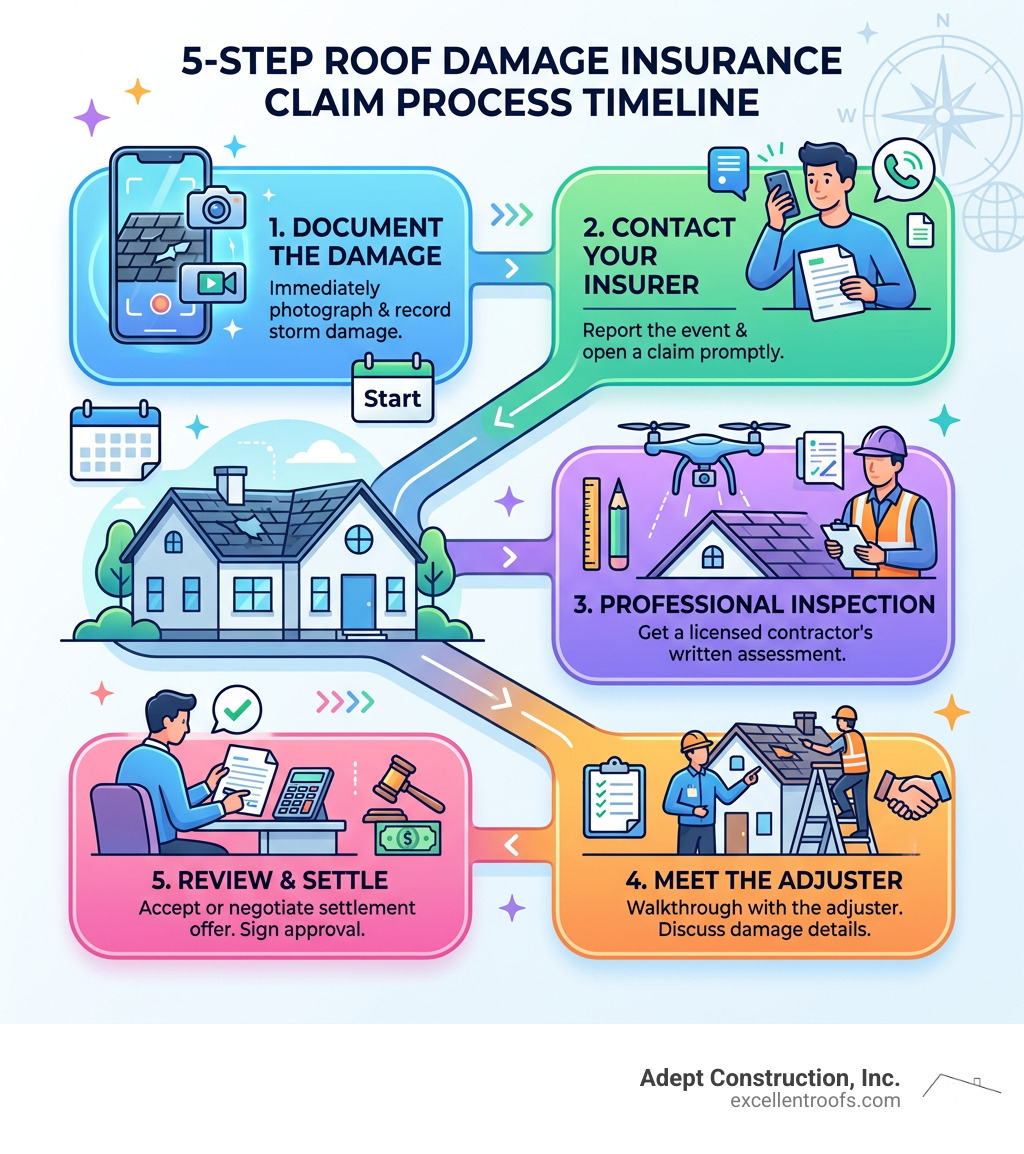
Here is a quick overview of how the process works:
- Document the damage – Take photos and videos immediately after the event
- Contact your insurer – Report the damage and open a claim
- Get a professional inspection – Hire a licensed roofing contractor for a written damage report
- Meet with the adjuster – Walk the adjuster through the damage, ideally with your contractor present
- Review and negotiate the settlement – Accept, negotiate, or appeal the offer before repairs begin
As a trusted local roofing company serving the Chicago suburbs, we have seen how confusing this process can be for homeowners.
The stakes are real. State Farm reported a $1 billion increase in hail-related claims between 2021 and 2022 alone. Nationwide, convective storm damage doubled from $30 billion in 2022 to $60 billion in 2023. Meanwhile, inflation and supply chain disruptions have pushed the average claim cost up by roughly $2,000.
Most homeowners file a roof insurance claim only once or twice in their lives — usually right after a major storm, when they are already stressed and short on time. That is exactly when mistakes happen: missed deadlines, poor documentation, or accepting a payout that does not cover the full cost of repairs.
I’m Gerald Michaels, founder of Adept Construction, Inc., with nearly three decades of experience guiding homeowners through roof damage insurance claims across Naperville and the greater Chicago area. In this guide, I’ll walk you through every step so you know exactly what to do — and what to avoid.
Understanding Your Coverage for Roof Damage Insurance Claims
Before you pick up the phone to call your agent, you need to know what your policy actually promises. Homeowners insurance is designed to protect you against sudden and accidental losses, not the slow march of time.
Standard policies typically cover “perils”—specific events that cause damage. Common covered perils include:
- Fire and Lightning: Direct strikes or heat damage.
- Windstorms: High winds that lift or crease shingles.
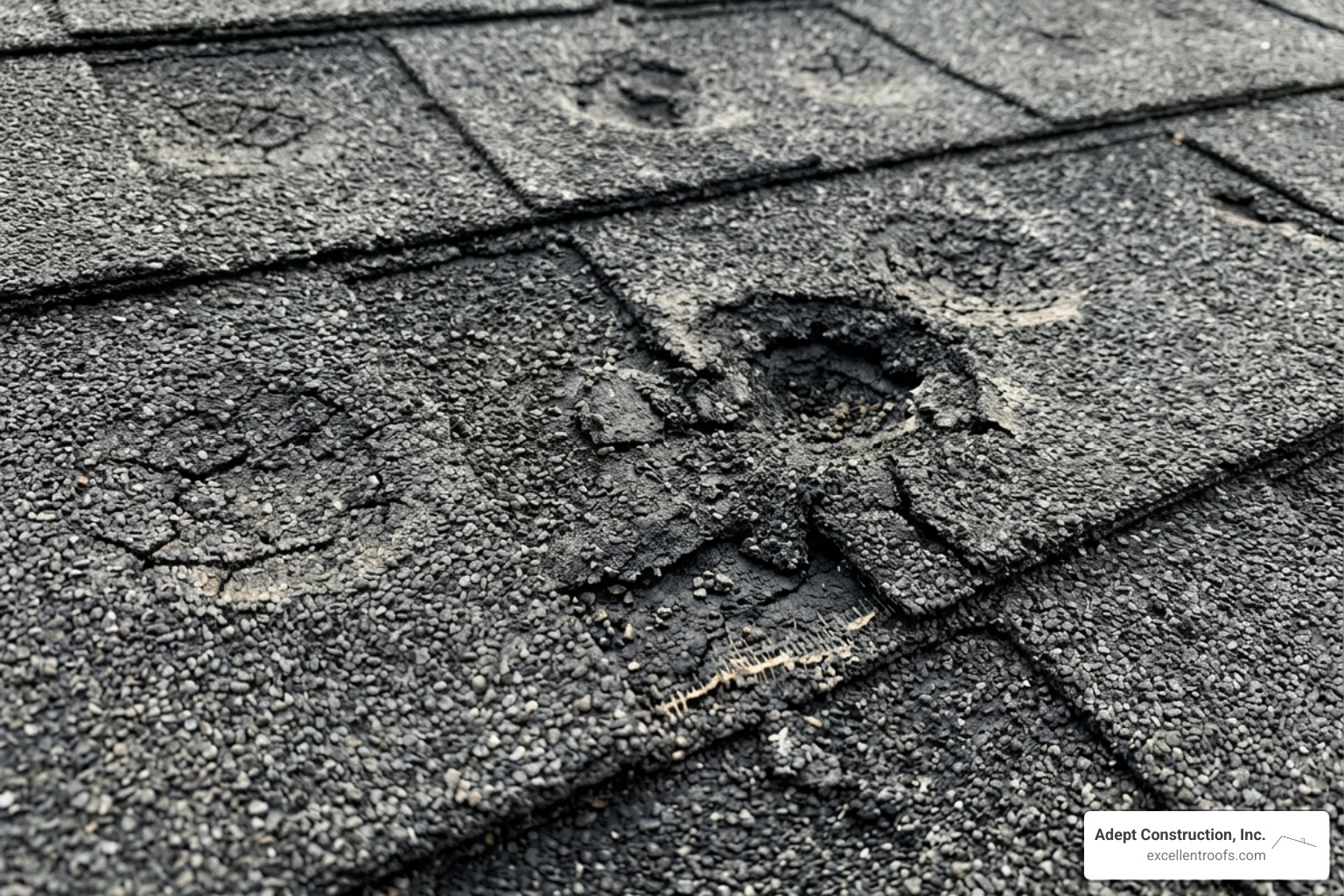
- Hail: Impact that bruises the shingle mat or knocks off protective granules.
- Falling Objects: Most commonly, a tree limb crashing down during a storm.
However, is roof repair covered by insurance? The answer depends heavily on the cause of the damage. Insurance companies are quick to deny claims rooted in maintenance neglect. For example, rodent and bird damage are generally excluded because insurers view pest control as a homeowner’s maintenance responsibility. Similarly, general wear and tear, rust, mold, and rot resulting from a long-term leak you ignored will likely be rejected.
Actual Cash Value vs. Replacement Cost Value
This is the single most important distinction in your policy. It determines whether you get a brand-new roof or just a fraction of the cost.
- Replacement Cost Value (RCV): This is the “gold standard.” If a storm destroys your 15-year-old roof, the insurer pays what it costs to install a new, similar roof today (minus your deductible).
- Actual Cash Value (ACV): This policy accounts for depreciation. If your shingles have a 30-year lifespan and are 15 years old, the insurer may only pay 50% of the replacement cost, leaving you to bridge the massive financial gap.
| Feature | Replacement Cost Value (RCV) | Actual Cash Value (ACV) |
|---|---|---|
| Payout Basis | Current market price for new materials | Depreciated value based on age |
| Out-of-Pocket | Only your deductible | Deductible + Value of depreciation |
| Premium Cost | Higher monthly premiums | Lower monthly premiums |
Many homeowners believe they have guaranteed replacement cost, but upon closer inspection of their endorsements, they find their roof is actually covered under an ACV schedule.
The Impact of Roof Age on Policy Payouts
In the insurance world, age isn’t just a number—it’s a risk factor. Many carriers are tightening their rules, often switching a roof from RCV to ACV once it hits the 15-year mark. Some insurers even use a “roof surfacing payment schedule,” which dictates exactly how much they will pay based on the age and material of the roof.
Understanding these nuances is vital for successful roof damage insurance claims. If your roof is older, you may face higher deductibles or limited payouts. We always recommend reviewing your roof damage insurance claims coverage annually with your agent to avoid surprises after a storm hits Downers Grove or Naperville.
Step-by-Step Guide to Filing a Successful Claim
When a storm rolls through Illinois, the clock starts ticking. Most policies have a filing window—often 365 days—but waiting that long is a recipe for a denial. Prompt reporting is your best defense against the “pre-existing damage” argument insurers love to use.
Your first move should be to find storm damage restoration companies that understand the local climate. While you might be tempted to call the insurance company first, having a professional assessment in hand makes that initial phone call much more effective. You want to hire a qualified roof inspector who can provide a detailed report before the insurance company sends their own representative.
Documenting Evidence for Roof Damage Insurance Claims
Insurance companies run on data. To win your claim, you need to provide a “story” backed by evidence.
- Ground-Level Photos: Take wide shots of the entire house and close-ups of any debris, fallen limbs, or shingles in the yard.
- Video Proof: Walk around the perimeter and narrate what you see.
- Interior Checks: Look for top signs your roof needs immediate repair after a storm, such as water spots on the ceiling or moisture in the attic.
- Date Stamps: Ensure your camera’s date/time stamp is accurate to prove the damage aligns with a specific weather event.
Professional Inspections for Roof Damage Insurance Claims
A detailed inspection report from an experienced roofer carries far more weight than a homeowner’s self-assessment. According to the National Roofing Contractors Association, homeowners who work with professional contractors during the claims process receive settlements that are 30-40% higher than those who file independently.
At Adept Construction, Inc., we provide a comprehensive damage report and a written estimate that uses the same “technical language” adjusters use. This ensures nothing is “lost in translation” when the insurance company reviews your file. For more details on what to look for, check out our storm damage roof repair ultimate guide.
Navigating the Adjuster Meeting and Settlement Process
After you file the claim, the insurance company will send an adjuster to perform a loss inspection. This is the “make or break” moment of the entire process.
We strongly advise our clients in Downers Grove and Naperville to have their contractor present during this meeting. Why? Because adjusters are human—they can miss things. A contractor can point out subtle hail bruises or wind-lifted shingles that might be overlooked. If you need a roof repair in Downers Grove, IL or a full roof replacement in Naperville, IL, having an advocate on the roof with the adjuster ensures the scope of work is accurately captured.
Managing Deductibles and Payout Checks
Once the claim is approved, you will deal with the financial logistics.
- Fixed Deductibles: A flat amount, like $1,000 or $2,000, that you pay out of pocket.
- Percentage Deductibles: Common in storm-prone areas, this is based on your home’s total insured value. If your home is insured for $300,000 and you have a 2% percentage deductible, you are responsible for the first $6,000.
The settlement usually comes in two checks. The first check is for the Actual Cash Value (the cost minus depreciation). The second check, often called “recoverable depreciation,” is released only after the work is completed and a final invoice is submitted. Warning: Never work with a contractor who offers to “waive your deductible.” This is considered insurance fraud in Illinois and can lead to serious legal trouble for both parties.
Making Temporary Repairs Safely
You have a legal obligation to prevent further damage to your home. If you have a hole in your roof, you can’t just let it rain inside while waiting for the adjuster.
- Tarping: Use heavy-duty emergency tarps to cover exposed areas.
- Board-ups: Use plywood for structural holes.
- Keep Receipts: Insurance will typically reimburse the cost of these temporary measures, so save every receipt.
If you aren’t sure how to proceed, read our guide on did the storm hit your roof? how to spot damage and what to do next.
Why Roof Claims Get Denied and How to Appeal
It is a frustrating reality: sometimes roof damage insurance claims are denied. Common reasons include:
- Wear and Tear: The insurer claims the roof was just old and failing on its own.
- Cosmetic Damage: The hail dented your vents but didn’t “break the functional integrity” of the shingle.
- Missed Deadlines: You waited too long after the storm to report.
- Insufficient Documentation: You didn’t provide enough proof that a specific storm caused the damage.
In hail damage Downers Grove cases, we often see disputes over whether a shingle is actually “damaged” or just “weathered.” If the dispute is large enough, some homeowners hire a public adjuster. These professionals work for you, not the insurance company, and typically charge fees between 5% and 15% of the final settlement.
The Formal Appeal Process
If you receive a denial letter, don’t panic. You have the right to appeal.
- Review the Denial Letter: Understand exactly which clause they are using to deny the claim.
- Request a Re-inspection: Ask for a different adjuster to visit, and ensure your contractor is there this time.
- File a Formal Appeal: Send a letter via certified mail to your insurer’s claims department. Include your policy number, new evidence (like a more detailed contractor report), and a clear rebuttal of their denial reasons.
- Community Resources: Check storm damage in Downers Grove: your community resources for local guidance on dealing with widespread storm events.
Maximizing Payouts with Impact-Resistant Upgrades
One way to lower your future risk (and potentially your premiums) is to upgrade your materials during the repair process. Installing a “Fortified Roof” or shingles with a UL 2218 Class 4 impact rating can make your home much more resilient.
Many insurers offer premium credits for these upgrades. In some regions, there are even fortified home incentives and grants available to help cover the extra cost. When we handle hail damage roof repair, we always discuss these high-durability options with our clients to help them get the most value out of their claim.
Frequently Asked Questions about Roof Insurance
How long do I have to file a roof damage claim?
While many policies allow up to one year (365 days) from the date of loss, you should report the damage within days or weeks. Prompt reporting prevents the insurer from claiming the damage was caused by subsequent neglect or “pre-existing” wear and tear.
Will filing a roof claim raise my insurance premiums?
Generally, a single claim for a “catastrophe” (like a massive hailstorm that hits your entire neighborhood) will not trigger an individual rate hike. However, if you file multiple claims in a short period, or if your entire region sees a spike in convective storms, everyone’s premiums may rise at renewal.
Can I choose my own roofing contractor?
Yes. Your insurance company may suggest “preferred vendors,” but you have the legal right to choose any licensed professional. We recommend choosing a contractor with GAF storm restoration training to ensure they are up to date on the latest industry standards and insurance requirements.
Conclusion
Navigating roof damage insurance claims doesn’t have to be a solo battle. At Adept Construction, Inc., we bring family-owned expertise and high-quality workmanship to every project. Whether you are in our Naperville, IL service area or our Downers Grove, IL service area, we are here to act as your advocate.
We specialize in identifying hidden storm damage and providing the documentation you need to ensure your home is fully protected. Don’t leave your roof’s future to chance—or to an insurance adjuster’s quick glance.
Contact Adept Construction, Inc. today for a free estimate and a professional roof inspection. Let us help you get your home back to its best.