

Why Acting Fast on Storm Damage Claims Can Save You Thousands
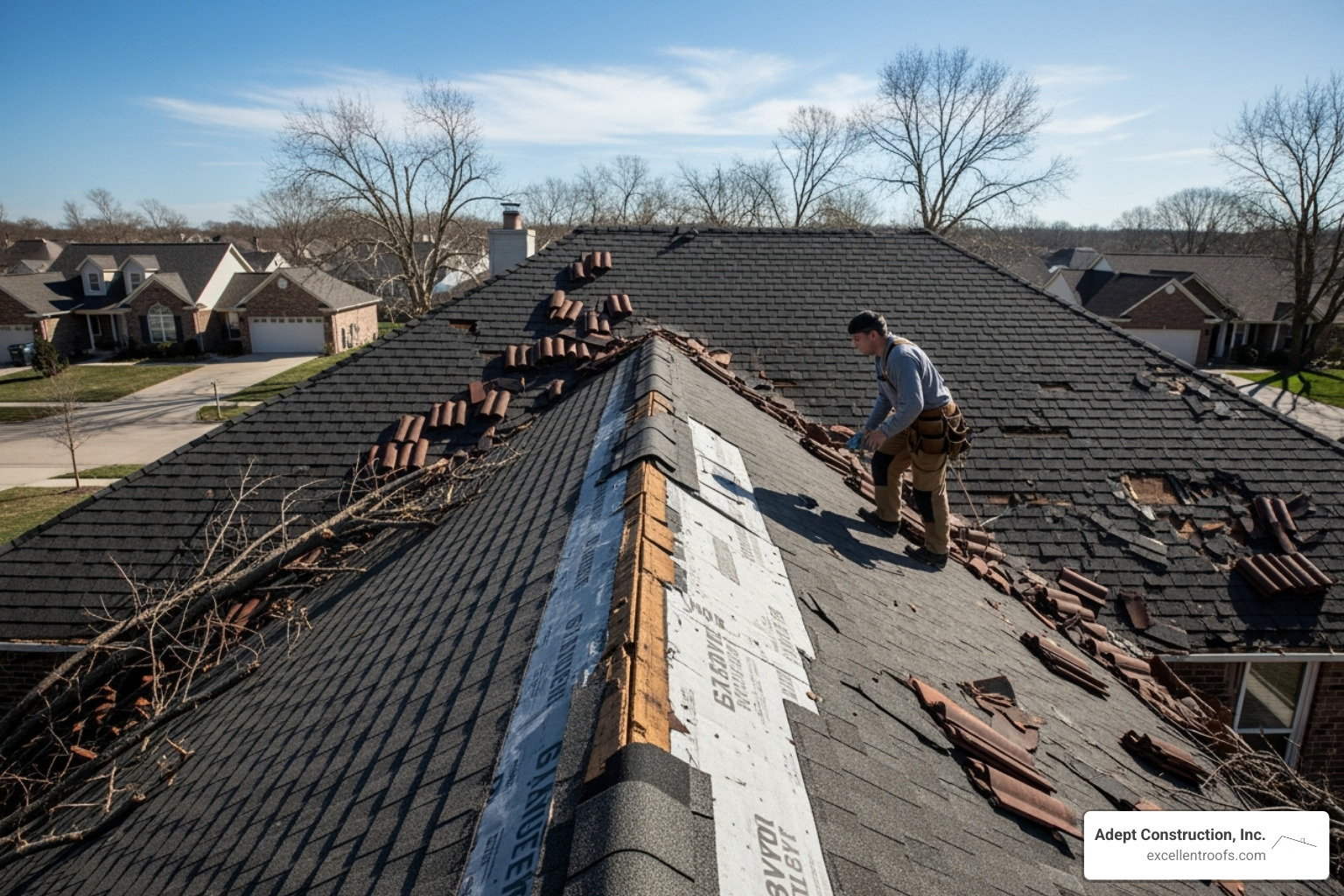
When severe weather strikes, filing a storm damage roof insurance claim is a critical step in protecting your home and finances. The process can seem complex, but with the right guidance, you can steer it successfully. A trusted local roofing company is your most important partner, helping you document damage, negotiate with adjusters, and ensure quality repairs.
Quick Answer for Filing a Storm Damage Roof Insurance Claim:
- Document the damage immediately – Take photos and videos from ground level.
- Contact your insurance company within 24-48 hours to report the claim.
- Schedule a professional inspection with a licensed roofer.
- Meet with the insurance adjuster and have your contractor present.
- Review the settlement and supplement if necessary.
- Complete repairs with a reputable local contractor.
Severe weather events cause billions in insured losses annually, with wind and hail damage being the most common claims filed by homeowners. These statistics highlight why understanding the claims process is so important for Illinois homeowners. The key to a successful claim is acting quickly and working with the right professionals. Waiting too long is a common mistake that can lead to claim denial or reduced payouts.
I’m Gerald Michaels, founder of Adept Construction. With nearly three decades of roofing experience in the Chicago suburbs, I’ve helped countless homeowners steer the storm damage roof insurance claim process, ensuring they receive fair settlements and quality repairs that protect their investment.
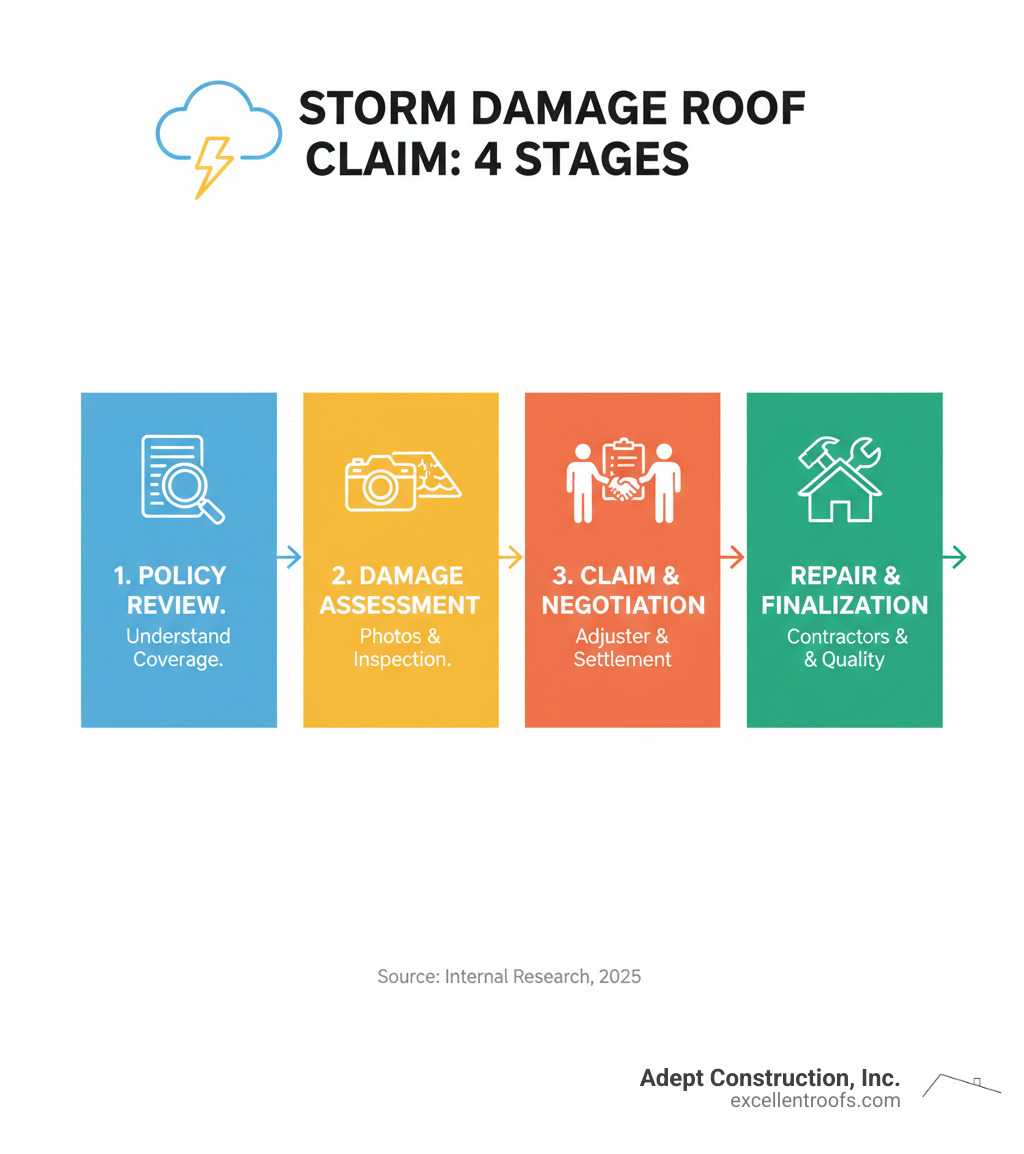
Understanding Your Insurance Policy: What’s Covered and What’s Not?
Before a storm hits, understanding your homeowners’ insurance policy is your first line of defense. Knowing the specifics of your coverage can significantly impact your storm damage roof insurance claim. The age of your roof, its maintenance history, and the type of damage all play crucial roles in determining your payout.
Most homeowners are surprised to learn that their policy type—Replacement Cost Value (RCV) or Actual Cash Value (ACV)—can mean the difference between paying $1,000 versus $9,000 for the same roof replacement. Understanding these details beforehand puts you in a stronger position.
What Storm Damage Is Typically Covered?
Insurance companies cover damage from sudden and accidental events. For roofs, this typically includes:
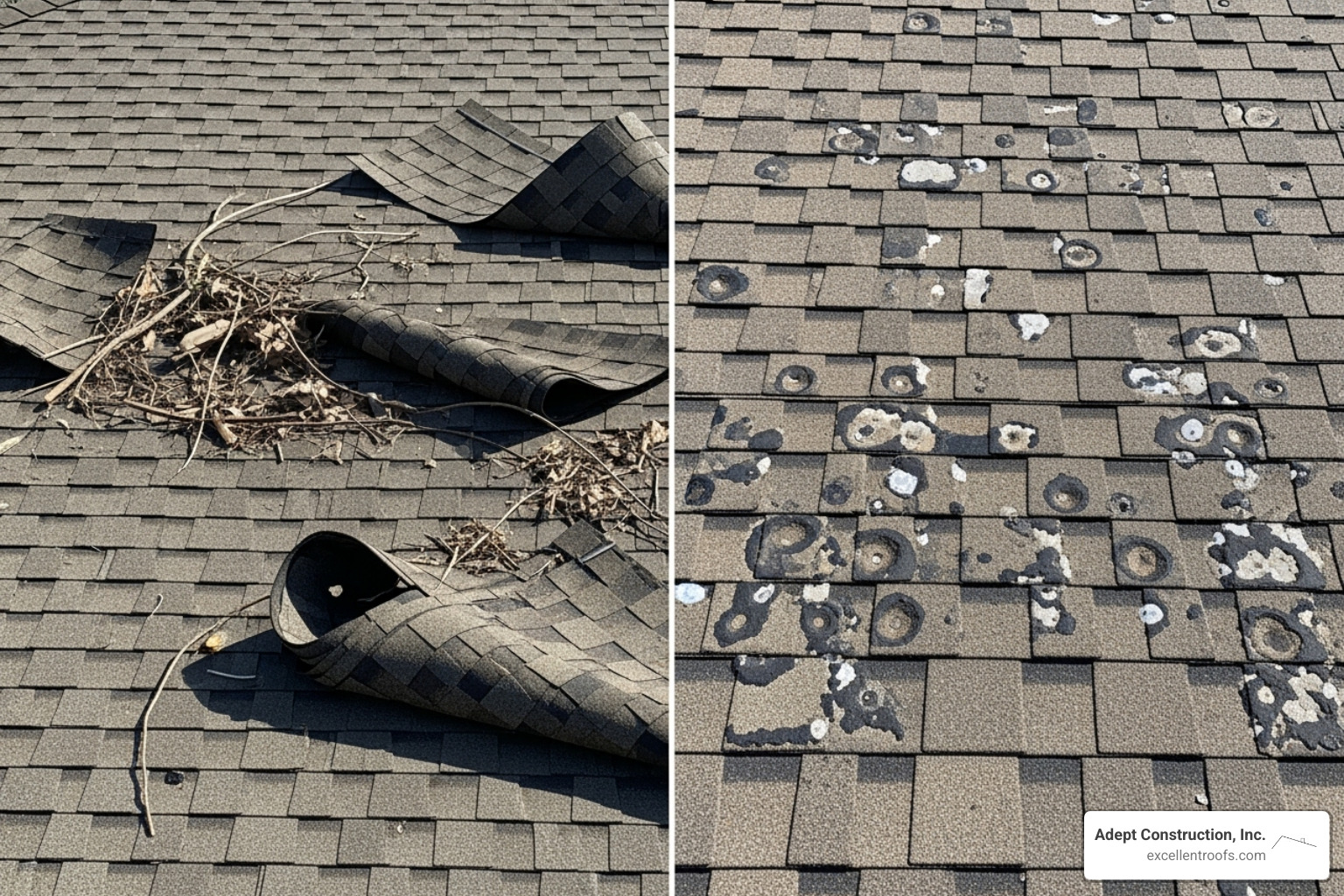
- Wind Damage: High winds can lift, crease, or remove shingles, exposing the underlayment. Wind can also drive rain into vulnerable areas.
- Hail Damage: Hail knocks protective granules off shingles, leaving dark spots or “bruises” that expose the asphalt to UV damage. On metal roofs, it leaves dents. If you suspect hail, our guide on what to do if you spot hail damage on your roof can help.
- Fallen Trees/Debris: Damage from trees or branches crashing onto your roof is almost always covered, from minor punctures to major structural issues.
- Snow and Ice Damage: Heavy snow can stress your roof’s structure. More commonly, ice dams form at the roof’s edge, forcing water under shingles and causing interior leaks.
Crucially, water damage resulting from a storm-caused roof failure is typically covered. However, insurers distinguish this from problems caused by wear and tear or poor maintenance.
RCV vs. ACV: A Critical Difference for Your Payout
The difference between Replacement Cost Value (RCV) and Actual Cash Value (ACV) policies is financially significant for your storm damage roof insurance claim.
- Replacement Cost Value (RCV) policies pay to replace your damaged roof with new materials of similar quality, without deducting for depreciation. You typically receive an initial payment for the depreciated value, and the rest is paid after you complete the repairs.
- Actual Cash Value (ACV) policies only pay what your roof was worth at the time of the storm, factoring in age and wear. This can leave you with a large gap between the insurance payout and the cost of a new roof installation.
Consider this example for a $15,000 roof replacement:
| Policy Type | Initial Payout (minus deductible) | Depreciation Withheld | Final Payout (after repairs) | Homeowner Out-of-Pocket |
|---|---|---|---|---|
| RCV | $10,000 | $4,000 | $14,000 | $1,000 (Deductible) |
| ACV | $6,000 | N/A | $6,000 | $9,000 (Deductible + Depreciation) |
This example assumes a $1,000 deductible and 40% depreciation.
With an ACV policy, your out-of-pocket cost is substantially higher.
Understanding Deductibles, Exclusions, and Special Coverages
Your deductible is the amount you pay before insurance kicks in. It can be a flat amount (e.g., $1,000) or a percentage of your home’s insured value (e.g., 1% of $300,000 is a $3,000 deductible).
Common exclusions can derail a claim. Insurers won’t pay for damage from:
- Wear and Tear: Normal aging of roofing materials.
- Lack of Maintenance: Problems caused by neglected upkeep, like clogged gutters.
- Improper Installation: Failures due to faulty workmanship from a previous contractor.
- Cosmetic Damage: Some policies exclude damage that is only cosmetic and doesn’t affect the roof’s function.
Ordinance and Law coverage is vital. If a roof replacement in Downers Grove, IL requires upgrades to meet current building codes, this coverage pays for those extra costs. Without it, you pay out-of-pocket. Additional Living Expenses (ALE) coverage helps pay for temporary housing and meals if storm damage makes your home uninhabitable.
After the Storm: Your Immediate Action Plan
Once a storm passes and it’s safe, a systematic approach to assessing and documenting damage is crucial for a successful storm damage roof insurance claim. A clear plan of action helps protect your property and your financial interests.
What Are the Signs of Storm Damage?
Storm damage can be subtle. Look for these common signs from the ground:
- Missing, cracked, or curled shingles: These are the most obvious signs of wind damage. Look for shingles in your yard.
- Dented gutters and downspouts: Metal components clearly show the impact of hail.
- Shingle granules in gutters: Hail knocks these protective granules loose. Finding a large amount after a storm is a red flag.
- Bruised or soft spots on shingles: Hail impacts can create soft spots or dark marks where granules have been dislodged.
- Damaged flashing: Wind can lift or tear the metal strips around chimneys, skylights, and vents, creating entry points for water.
- Interior water stains or leaks: Stains on ceilings or walls are a sure sign your roof’s barrier has been breached.
- Debris on the roof: Fallen branches can cause punctures or scrape away protective materials.
For a more detailed guide, see our article on the Top Signs Your Roof Needs Immediate Repair After a Storm. Even minor signs warrant a professional inspection, as underlying damage is often hidden.
How to Document Damage for a Stronger Claim
Thorough documentation is the foundation of a strong storm damage roof insurance claim. It provides clear evidence and helps expedite your settlement.
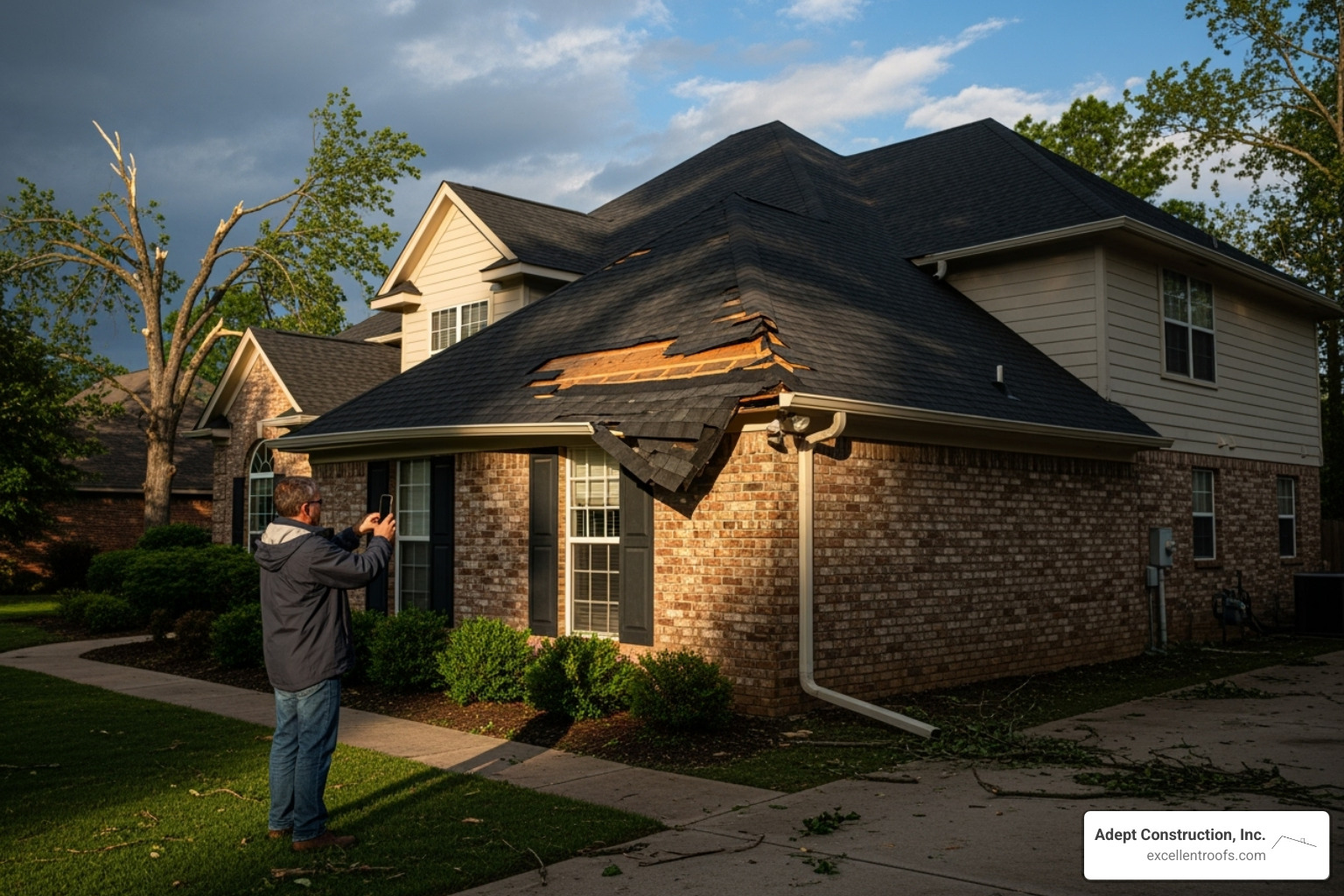
- Prioritize Safety: Never climb on a wet or damaged roof. Assess damage from the ground or a secure ladder. If you see downed power lines or suspect structural damage, stay away and call for help.
- Prevent Further Damage: Cover damaged areas with a tarp to mitigate further water intrusion. Your policy requires you to do this, and the cost of temporary materials is typically reimbursable. Keep all receipts.
- Take Photos and Videos: Document everything with date and time-stamped photos and videos. Capture wide shots for context and close-ups of specific damage points like lifted shingles, hail dents, and interior water stains.
- Create a Written Log: Note the date of the storm and a detailed list of all damage you find. This record is invaluable for tracking your claim and communicating with your insurer.
Acting quickly is essential. Many policies require prompt notification, and delaying can give an insurer reason to argue that damage worsened due to inaction, potentially leading to a denied or reduced claim. You don’t have to manage this alone; working with professionals who understand storm damage claims protects your interests.
How to Steer the Storm Damage Roof Insurance Claim Process
Successfully navigating a storm damage roof insurance claim is manageable with the right approach and professional support. Understanding each step empowers you to advocate for a fair settlement that fully covers your repairs.
Step-by-Step: Filing Your Storm Damage Roof Insurance Claim
- Contact Your Insurer Immediately: Use your insurance company’s 24/7 hotline to report the damage. You will receive a claim number—use it in all future communications.
- Provide Initial Documentation: Promptly send the photos, videos, and damage log you created. This gives the adjuster a clear picture of the situation before their visit.
- Schedule the Adjuster’s Inspection: The field adjuster represents the insurance company and will inspect your property to assess the damage. When they call to schedule, contact your roofer immediately.
- Have Your Roofer Present: It is crucial that your roofing contractor attends the adjuster’s inspection. A trained roofer can spot subtle damage an adjuster might miss and explain local building code requirements that affect the repair scope.
- Review the Adjuster’s Estimate: Once you receive the adjuster’s report, forward it to your contractor for a thorough review. They will compare it to their own assessment and identify any discrepancies or omissions.
For comprehensive support, learn more about our specialized storm damage services.
What to Do if You Disagree with the Adjuster’s Report
Disagreements with an adjuster’s initial assessment are common. If you believe the report is inaccurate or incomplete, you have several options:
- Request a Re-inspection: Ask for a different, perhaps more experienced, adjuster to provide a second opinion.
- Hire a Public Adjuster: For complex disputes, a public adjuster works exclusively for you to assess damage and negotiate with the insurer. They charge a percentage of the settlement but often secure higher payouts.
- Bring in a Structural Engineer: An engineer’s report provides an objective, technical assessment that carries significant weight in disputes over structural integrity or the cause of damage.
- Supplement the Claim: This is a standard process for adding costs or damage missed in the initial estimate. Common supplements include code-required upgrades, missed items, and contractor overhead. Your roofer can handle this submission for you.
Understanding Claim Denials and Delays
Insurers deny storm damage roof insurance claims for specific reasons. Understanding them helps you avoid pitfalls.
- Pre-existing Damage: The most common reason for denial. The insurer argues the damage is from wear and tear or lack of maintenance, not the recent storm.
- Improper Installation: If damage is traced back to faulty workmanship from the original installation, the claim may be denied.
- Coverage Exclusions: Your policy may not cover certain perils, like flooding or gradual deterioration.
- Delayed Filing: While Illinois law provides a long statute of limitations, insurance policies require “prompt” notification. Waiting too long can jeopardize your claim.
If severe damage makes your home uninhabitable, check your policy for Additional Living Expenses (ALE) coverage, which helps pay for temporary housing and other costs during repairs.
Choosing a Reputable Roofer & Avoiding Scams
After a major storm, the demand for roof repairs attracts both legitimate professionals and opportunistic scammers. The contractor you choose for your storm damage roof insurance claim can make the difference between a smooth recovery and a costly nightmare.
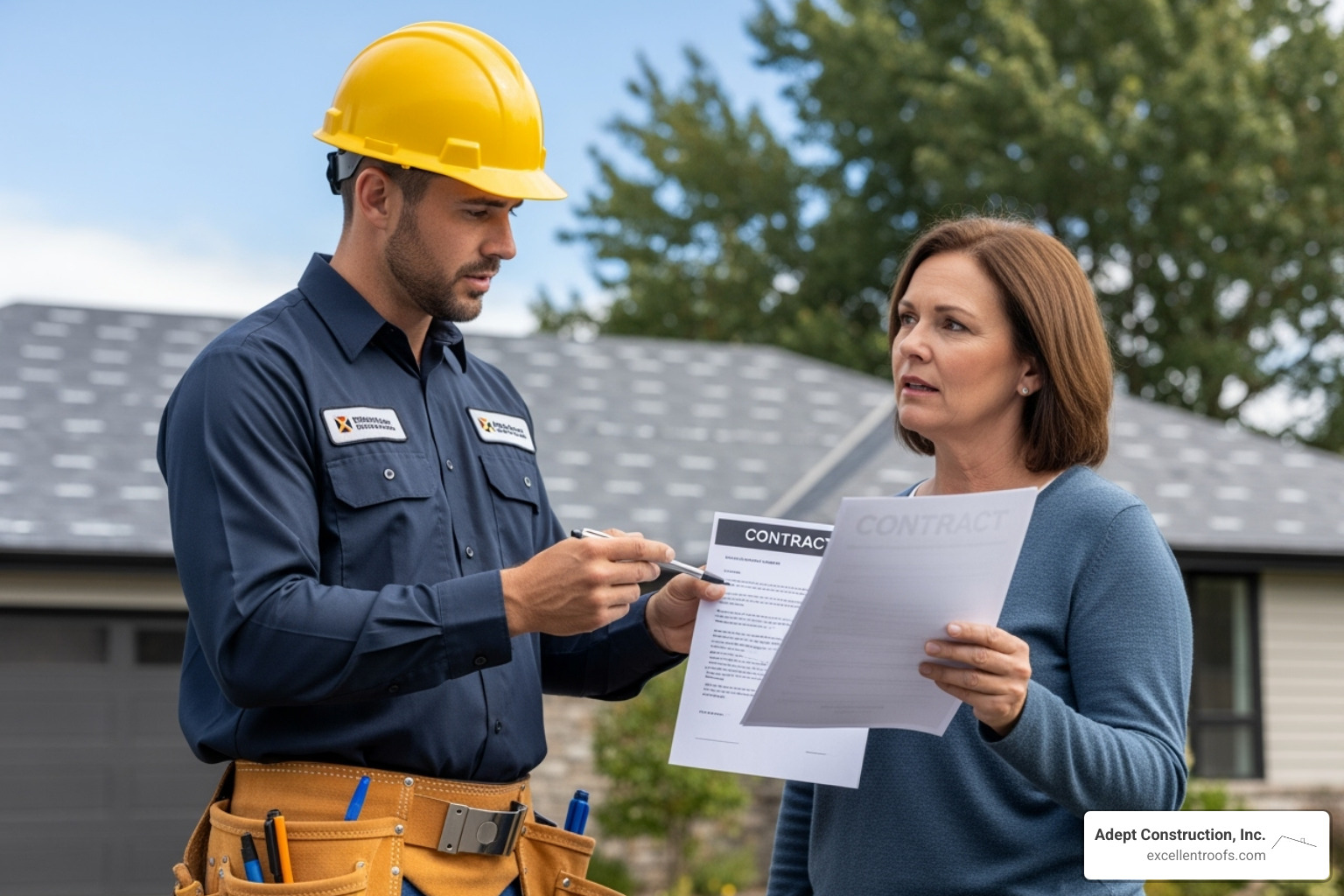
The right contractor acts as your advocate, ensuring you get fair compensation and quality repairs. The wrong one can lead to poor workmanship, voided warranties, and financial loss.
Best Practices for Hiring a Roofing Contractor
Don’t rush into a decision with the first person who knocks on your door. Follow these steps to find a trustworthy contractor:
- Verify Local Presence: Choose a company with deep roots in your community, like a business serving Downers Grove, IL and nearby areas for decades. They have a reputation to uphold.
- Check Licensing and Insurance: In Illinois, roofing contractors must have a state license (starting with 104 for residential). Verify it on the IDFPR website. Also, demand proof of both general liability and workers’ compensation insurance to protect yourself.
- Insist on a Detailed Written Contract: The contract must specify the exact scope of work, materials (brand and color), timeline, payment schedule, and warranty details. Vague agreements are a major red flag.
- Research Their Track Record: Look for positive reviews on Google, Yelp, and the BBB. Ask for local references you can contact or drive by to see their work.
Our Essential Checklist for Choosing the Right Roofing Contractor offers more tips for vetting potential hires.
How to Spot and Avoid Common Roofing Scams
“Storm chasers” are contractors who follow severe weather to exploit homeowners. Here’s how to spot them:
- Aggressive Door-to-Door Sales: Be wary of anyone who shows up uninvited and pressures you to make an immediate decision.
- Offers to Waive Your Deductible: This is insurance fraud. A contractor who offers to “absorb” or “cover” your deductible is likely inflating the bill to the insurer or cutting corners on your job.
- Demands for Large Upfront Payments: A small deposit for materials (10-20%) is reasonable. Demands for 50% or more, especially in cash, are a sign of a scam.
- High-Pressure Tactics and Vague Promises: A professional will provide a detailed written estimate and give you time to consider it. Scammers create a false sense of urgency.
- Unrealistic Prices or Warranties: Bids that are significantly lower than others often signal inferior materials or hidden costs. A warranty is only as good as the company that backs it.
The Illinois Attorney General’s investigation into home repair fraud confirms that storm repairs are a common target. Homeowners who properly vet contractors are far less likely to become victims.
Frequently Asked Questions about Roof Damage Claims
When facing a storm damage roof insurance claim, homeowners often have the same urgent questions. Here are clear, direct answers to the most common concerns.
How long do I have to file a roof damage claim in Illinois?
While Illinois law provides a multi-year statute of limitations for property damage, your insurance policy has a much stricter deadline. Most policies require you to report damage “promptly” or within a specific timeframe, often one year. Waiting months to file can lead your insurer to question the claim’s validity or argue that your delay caused further damage, potentially resulting in denial. The best practice is to report damage to your insurer immediately after a storm.
Will filing a storm damage roof insurance claim raise my rates?
Filing a single claim for storm damage, which is considered an “Act of God,” is unlikely to cause a significant rate hike on its own. However, after a major storm, insurers often raise rates across the entire affected region to cover their losses, so your premium may increase whether you file a claim or not. The cost of ignoring damage—leading to leaks, mold, and structural issues—far exceeds any potential premium increase. The smart financial decision is to file a legitimate claim.
Can I just keep the insurance money and not fix my roof?
No, this is considered insurance fraud and can have severe consequences. Insurance payments are intended for repairs. If you have a Replacement Cost Value (RCV) policy, your insurer will withhold the final depreciation payment until you provide proof of completed work. Furthermore, if you have a mortgage, the lender is typically a co-payee on the insurance check and will not release the funds until they verify that the roof repair in Naperville, IL is finished to protect their investment. Failing to make repairs can also lead your insurer to deny future claims for related damage.
Your Partner in Storm Recovery
When a storm damages your roof, you’re not just facing repairs—you’re navigating a complex insurance process. You don’t have to do it alone. The most successful storm damage roof insurance claims involve three key steps: acting quickly, documenting everything, and partnering with a trusted local roofing expert.
A reputable contractor is your strongest advocate. We know what adjusters look for, how to document hidden damage, and how to negotiate for the full settlement you deserve. Having an expert on your side during the adjuster’s inspection can prevent thousands of dollars in damage from being overlooked.
At Adept Construction, Inc., we have helped countless homeowners in the Downers Grove and Naperville areas turn a stressful situation into a smooth recovery. As a family-owned company, we treat every home as if it were our own, building our reputation on honest assessments, superior craftsmanship, and exceptional customer service.
If you suspect your home has suffered storm damage, don’t wait for a small issue to become a major disaster. Contact us today for a free, no-obligation inspection and estimate. Let us help you restore not just your roof, but your peace of mind. Learn more about our storm damage expertise and see why your neighbors trust us with their most important investment.