
Asphalt Shingle Roof Install: Professional Standards Homeowners Should Know
A professional Asphalt shingle roof install requires comprehensive system design, including thorough deck inspection, water-shedding underlayments, precision flashing, and engineered ventilation. For homeowners seeking dependable workmanship and clear guidance, professional roof replacement services provide a safer, code-compliant path for steep, complex, or aging roofs.
Homeowners do not need a roofing tutorial to make a smart decision. They need to understand the professional standards that separate a durable roofing system from a short-lived surface covering. During a complete roof replacement, qualified roofers evaluate:
- Roof deck condition, structural soundness, and whether the sheathing can hold fasteners securely.
- Local code requirements, manufacturer specifications, and job-site safety controls.
- Ice dam exposure, wind uplift risk, attic ventilation, and freeze-thaw conditions common across the Chicago area.
- Flashing conditions at valleys, chimneys, skylights, plumbing stacks, dormers, and wall transitions.
- Warranty requirements for shingles, underlayment, edge metal, fasteners, and ventilation components.
A sound installation is about more than shingles. Every layer must work as part of a professional water-shedding system, while correct fasteners and flashing help prevent leaks, wind damage, and premature roof failure.
I am Gerald Michaels, founder and president of Adept Construction, Inc., with nearly three decades of residential and commercial roofing experience. My work in Asphalt shingle roof install projects focuses on careful preparation, durable details, and clean, accountable job sites.
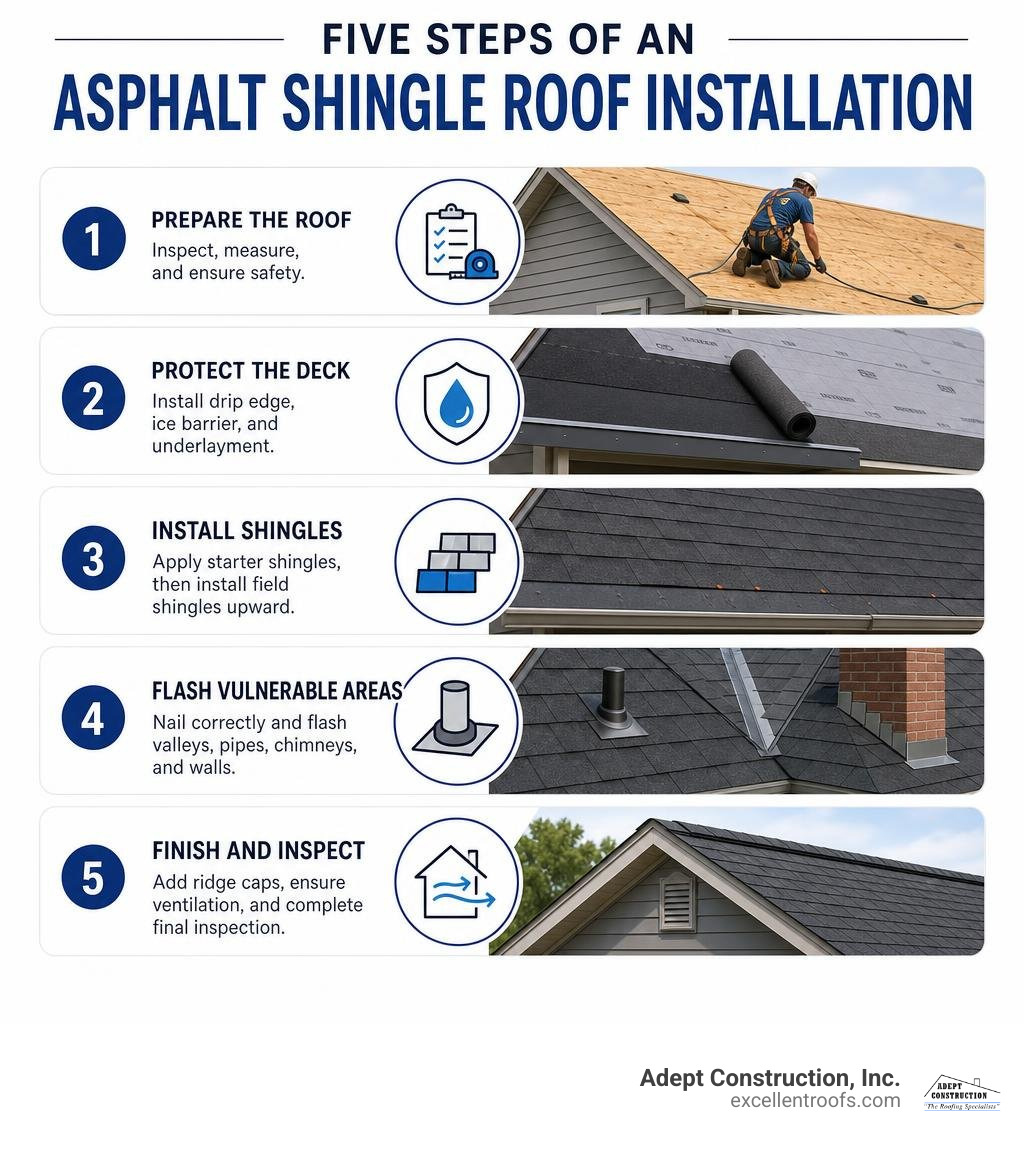
Asphalt shingle roof install terms at a glance:
Pre-Installation Prep: Safety, Measuring, and Materials
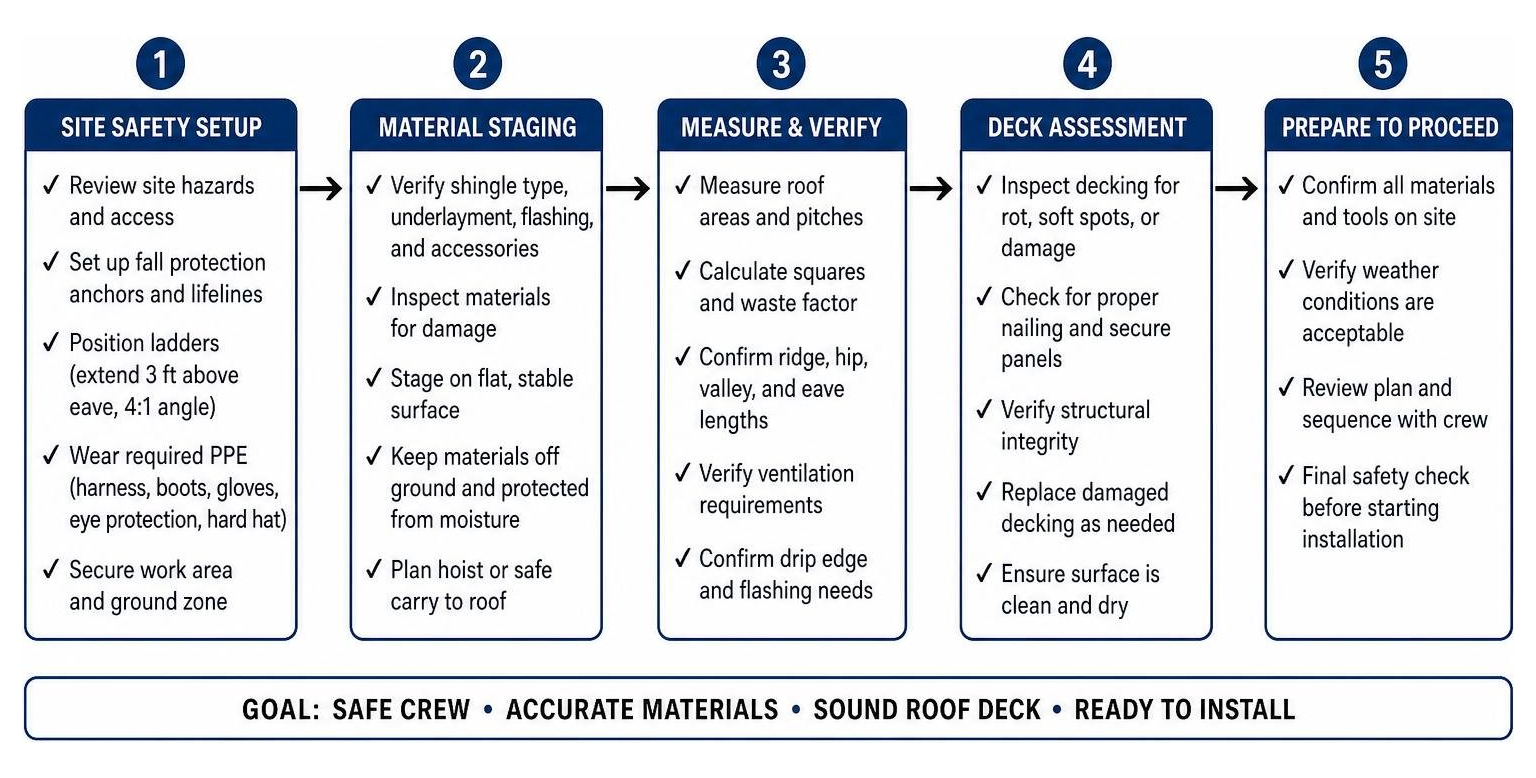
A successful Asphalt shingle roof install begins long before materials arrive on site. Thorough professional preparation establishes crew safety, supports accurate project scoping, and helps ensure compliance with local building codes across DuPage County.
In Northern Illinois, weather patterns demand meticulous material selection and structural checks. Chicago-area freeze-thaw cycles, spring hail, and severe straight-line winds stress roofing systems continuously. Professional roofers evaluate architectural load requirements and select high-grade asphalt shingles designed to withstand severe local climate conditions.
| Shingle Feature | Traditional 3-Tab Shingles | Dimensional Architectural Shingles |
|---|---|---|
| Design Layering | Single-layer flat profile | Multi-layer laminated construction |
| Wind Resistance | Typically rated up to 60 mph | Rated up to 110-130 mph |
| Expected Lifespan | 15 to 20 years | 25 to 30+ years |
| Average Weight | ~200 lbs per roofing square | ~240-300+ lbs per roofing square |
| Aesthetic Depth | Uniform, repetitive grid pattern | Shadow lines, dimensional slate look |
Selecting between 3-tab and dimensional shingles affects total structural weight, appearance, wind performance, and long-term value. Review our comprehensive Asphalt Shingles Prices Guide 2026 to evaluate material costs and structural performance differences.
Safety Gear and OSHA Guidelines
Safety protocols on steep-slope roofs eliminate severe injury hazards and secure job site operations. Occupational Safety and Health Administration (OSHA) regulations require full fall protection systems for all work performed at heights of 6 feet or greater above lower levels.
Professional roofing crews utilize complete fall arrest systems comprising full-body harnesses, shock-absorbing lanyards, high-strength roof anchors, and continuous safety lifelines. Ladder safety requires rigid adherence to industry standards, and roofing work should be performed only by trained crews with proper supervision. Personal protective equipment (PPE) includes high-traction steel-toe work boots, heavy-duty work gloves, eye protection, and hard hats.
Professional Roof Assessment and Project Scoping
Professional roofing estimators perform detailed roof assessments to identify pitch, access limitations, existing layers, deck condition, ventilation deficiencies, and architectural complexity. These factors influence labor requirements, disposal needs, material selection, permit planning, and the final project scope.
Complex rooflines with dormers, multiple gables, valleys, skylights, and chimneys require more careful staging and more detailed waterproofing review than simple roof shapes. Consult our A-Z Guide to Asphalt Shingles Roof Replacement Cost to understand how roof complexity impacts professional replacement pricing.
Preparing for an Asphalt Shingle Roof Install
Site staging protects property, landscaping, and vehicles during professional teardown and installation. Lawn areas are cleared so crews can perform thorough cleanup and magnetic sweeps after the work is complete.
Vehicles and outdoor furniture are relocated away from the house perimeter. Heavy plywood protects driveway surfaces where debris dumpsters are placed. Prior to stripping old materials, professional contractors verify local DuPage County permit requirements to guarantee compliance with regional construction codes and municipality inspections.
Deck Preparation, Drip Edges, and Underlayment Order
The roof deck forms the structural foundation of the entire roofing assembly. Installing new asphalt shingles over damaged, rotting, or sagging decking leads to premature roof failure, structural leaks, and voided manufacturer warranties.
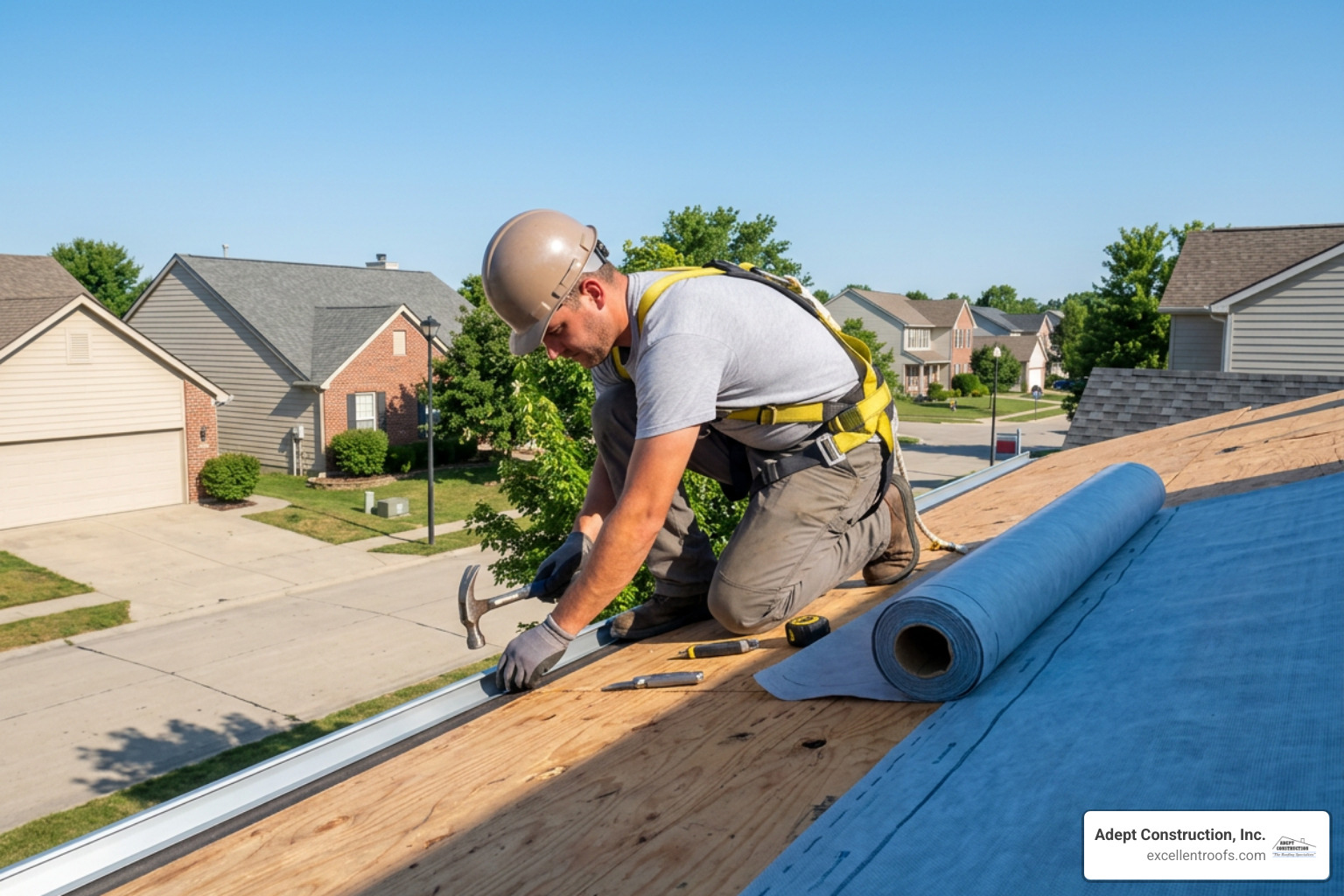
A professional inspection of the decking evaluates panel thickness, structural deflection, moisture damage, delamination, soft spots, and fastener retention. Plywood sheathing must meet a minimum thickness of 3/8-inch, while Oriented Strand Board (OSB) requires a minimum 7/16-inch thickness with 1/8-inch expansion gaps between panels. Unsound sheathing must be corrected before a new roofing system is approved for installation. Technical standards from the Roofing Installation Guide detail deck deflection thresholds and structural tolerances.
Drip Edge and Ice Dam Barrier Placement
Drip edges and self-adhering ice barriers provide critical protection against water backup and severe ice dams common to Northern Illinois winters.
For homeowners, the key issue is not learning the installation sequence; it is confirming that a contractor understands proper water-shedding integration. Edge metal, underlayment, and self-adhered ice barrier must be coordinated so water is directed away from the roof deck and into the gutter system rather than beneath the roofing assembly.
A professional proposal should identify where ice dam protection is required, how eaves and rakes will be detailed, and how the work will comply with local code and shingle manufacturer specifications. This strict layering standard helps prevent water from wicking backward beneath protective roof membranes during extreme thaw cycles.
Roof Deck Protection and Low-Slope Rules
Synthetic roof underlayment acts as a secondary water-resistant barrier across the main roof field, protecting the deck from moisture intrusion if shingles suffer storm damage. Synthetic membranes offer superior tear strength and UV resistance compared to traditional asphalt-saturated felt.
Slope determines whether asphalt shingles are appropriate and what level of deck protection is required. Asphalt shingles should only be used on roof slopes of 2 in 12 or greater. Low-slope asphalt shingle applications require enhanced underlayment protection under building code and manufacturer requirements because slower drainage increases water backup risk. Shingles are never permitted on slopes lower than 2:12.
Review professional underlayment standards in our guide on How to Install Asphalt Shingles Step by Step.
Professional Asphalt Shingle Roof Install Standards
Executing a professional Asphalt shingle roof install requires accurate layout control, manufacturer-compliant fastening, and strict quality checks. These are contractor responsibilities, not homeowner DIY tasks.
Understanding professional installation standards helps homeowners evaluate proposals and identify red flags. Minor errors in alignment, overdriven fasteners, or improper flashing lead to severe structural rot, interior ceiling damage, mold growth, and denied insurance claims. Professional roof replacement cost typically ranges between $8,000 and $18,000 depending on pitch, size, and architectural detailing. A professional roofer conducts systematic quality inspections at every stage to verify watertight integrity.
Starter Shingles and First-Course Quality Checks
Starter strip shingles form the baseline seal along roof edges, helping resist severe wind uplift and blocking exposed joints at the perimeter.
Homeowners should ask whether the contractor uses manufacturer-approved starter products rather than improvised cut shingles. The proposal should also confirm that starter materials, perimeter sealing, and shingle alignment will meet the selected shingle manufacturer’s warranty requirements.
Proper Nailing Technique and Fastener Placement
Fasteners are the single most critical structural element securing shingles against high wind uplift. Incorrect nailing is the primary cause of wind damage blow-offs and voided manufacturer warranties.
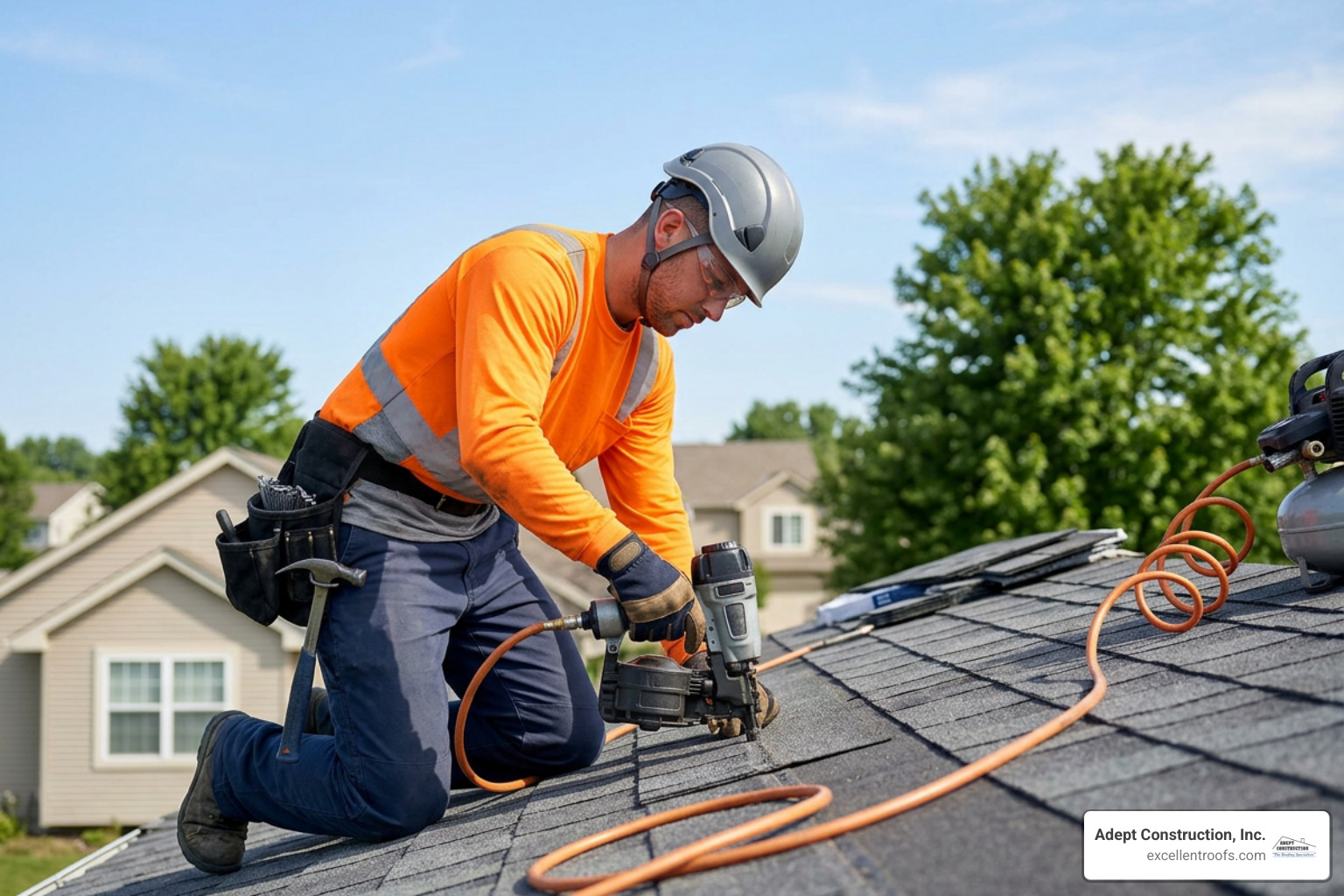
Professional crews use corrosion-resistant roofing nails that match shingle manufacturer requirements and local exposure conditions. Nails must be driven straight and flush so they secure the shingle without cutting through it or lifting the overlying course. High-wind applications require manufacturer-approved enhanced fastening patterns, and the contractor should be able to document the fastening standard used on the project.
Professional crews rely on calibrated pneumatic nailers, code-compliant galvanized fasteners, specialized flashing cements (ASTM D4586), and continuous quality-control practices to ensure structural compliance.
Flashing, Valleys, and Roof Penetrations
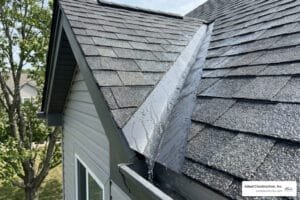
Valleys, vertical walls, and roof penetrations represent the primary points where roof leaks originate. Imperfect flashing allows rain and snowmelt to channel directly into interior framing structures.
A professional roof inspection should evaluate:
- Step flashing at chimney walls, sidewalls, and dormers.
- Valley design, metal condition, and underlayment protection.
- Plumbing stack boots, exhaust penetrations, skylight transitions, and sealant condition.
- Counterflashing, masonry interfaces, and areas where roof planes meet vertical surfaces.
Quality flashing work is one of the clearest differences between a durable roof system and a roof that develops hidden leaks. For structures experiencing leak damage, consult our dedicated guide on Repair Asphalt Shingle Roof Naperville IL.
High-Wind, Cold Weather, and Ventilation Considerations
Regional weather variations dictate specialized professional planning to ensure long-term roof durability across Northern Illinois communities.
Coastal and High-Wind Nailing Protocols
Severe spring thunderstorms and straight-line wind gusts exert violent negative pressure across roof edges and ridge crests. High-wind exposure requires manufacturer-approved fastening, perimeter reinforcement, and careful inspection of rake edges, eaves, hips, and ridges.
Homeowners should ask contractors whether the selected shingle system carries an appropriate wind rating for the property and whether the installation will follow the manufacturer’s enhanced wind warranty requirements. A reputable contractor documents the product, fastener type, ventilation plan, and warranty terms in writing.
Cold Weather Installation and Thermal Sealants
Asphalt shingles have been used successfully in cold climates for over one hundred years. However, low temperatures significantly reduce shingle flexibility and alter thermal bonding characteristics.
Most asphalt shingles include thermally activated asphalt sealant, which bonds the shingles together after they are applied to the roof. In cold winter conditions, solar heat is insufficient to activate factory adhesive strips immediately.
Professional cold-weather planning focuses on:
- Protecting shingle bundles from cold cracking before they are used.
- Using manufacturer-approved sealing methods when thermal strips cannot activate promptly.
- Choosing valley and flashing details that reduce the risk of material cracking in low temperatures.
- Scheduling work around unsafe wind, ice, or precipitation conditions.
Learn more about weather-resistant choices in our Asphalt Shingle Roofing Addison Guide.
Attic Ventilation and Ice Dam Prevention
Adequate attic ventilation works in conjunction with high-performance roofing materials to eliminate destructive winter ice dams and reduce summer attic heat retention. Ice dams form when heat escaping from an unventilated attic melts snow on the upper roof deck; melted water runs down to cold eave edges, freezes into solid ice, and backs up under shingle courses.
Balanced ventilation requires intake and exhaust components that work together across the attic space. Continuous airflow maintains cooler roof deck temperatures, preventing snow melt cycles and protecting underlying deck structures from condensation rot.
Finishing Touches for an Asphalt Shingle Roof Install
Completing an Asphalt shingle roof install requires professional hip and ridge capping, final sealing, attic ventilation verification, and job-site cleanup. Ridge materials must match the shingle system and wind exposure requirements.
The final inspection should confirm that exposed fasteners are properly sealed, vents are functioning, gutters are clear, and the property is free of stray metal debris. Continuous magnetic sweeps are performed across lawns and driveways to pick up all stray metal debris, leaving the property spotless and secure.
Frequently Asked Questions
How many bundles of asphalt shingles do I need for 100 square feet?
Bundle needs depend on the exact shingle product, roof geometry, starter requirements, ridge cap materials, valley details, and waste created by architectural complexity. Homeowners should not rely on a simple bundle estimate for ordering materials because shortages, mismatched lots, and underordered accessories can delay the project and affect warranty compliance. A professional roofing estimator measures the roof, verifies the system components, and orders materials based on the full replacement scope.
What is the correct order for drip edge and underlayment installation?
Drip edge and underlayment must be integrated according to local code, manufacturer instructions, and proper water-shedding principles. The important homeowner takeaway is that edge metal, ice barrier, and underlayment should direct water away from the roof deck rather than trapping moisture at the perimeter. Ask your contractor to explain how eaves, rakes, and ice dam areas will be protected before work begins.
Can asphalt shingles be installed in freezing winter weather?
Yes, professional roofers install asphalt shingles during winter conditions using specialized cold-weather protocols. Because thermal self-sealing adhesive strips do not activate automatically in low temperatures, roofing crews use manufacturer-approved sealing practices and careful material handling to reduce cracking risk and secure the roof until warmer conditions allow full thermal bonding.
Conclusion
A durable Asphalt shingle roof install demands rigorous preparation, accurate safety measures, strict underlayment ordering, and flawless fastener execution. Proper installation protects your property from severe freeze-thaw cycles, high wind uplift, and costly water damage.
While understanding installation steps helps homeowners evaluate contractor proposals, roofing work on steep, high-elevation surfaces presents severe safety risks and technical challenges. Mistakes in underlayment layering or flashing placement lead to hidden structural decay, interior ceiling leaks, and voided manufacturer warranties.
Trusting experienced, fully licensed roofing professionals guarantees your project is constructed to precise building code standards. For superior craftsmanship, transparent service, and reliable warranties across Naperville and Downers Grove, contact Adept Construction, Inc. today or explore our full range of roof replacement services.