
What Is Composite Roofing?
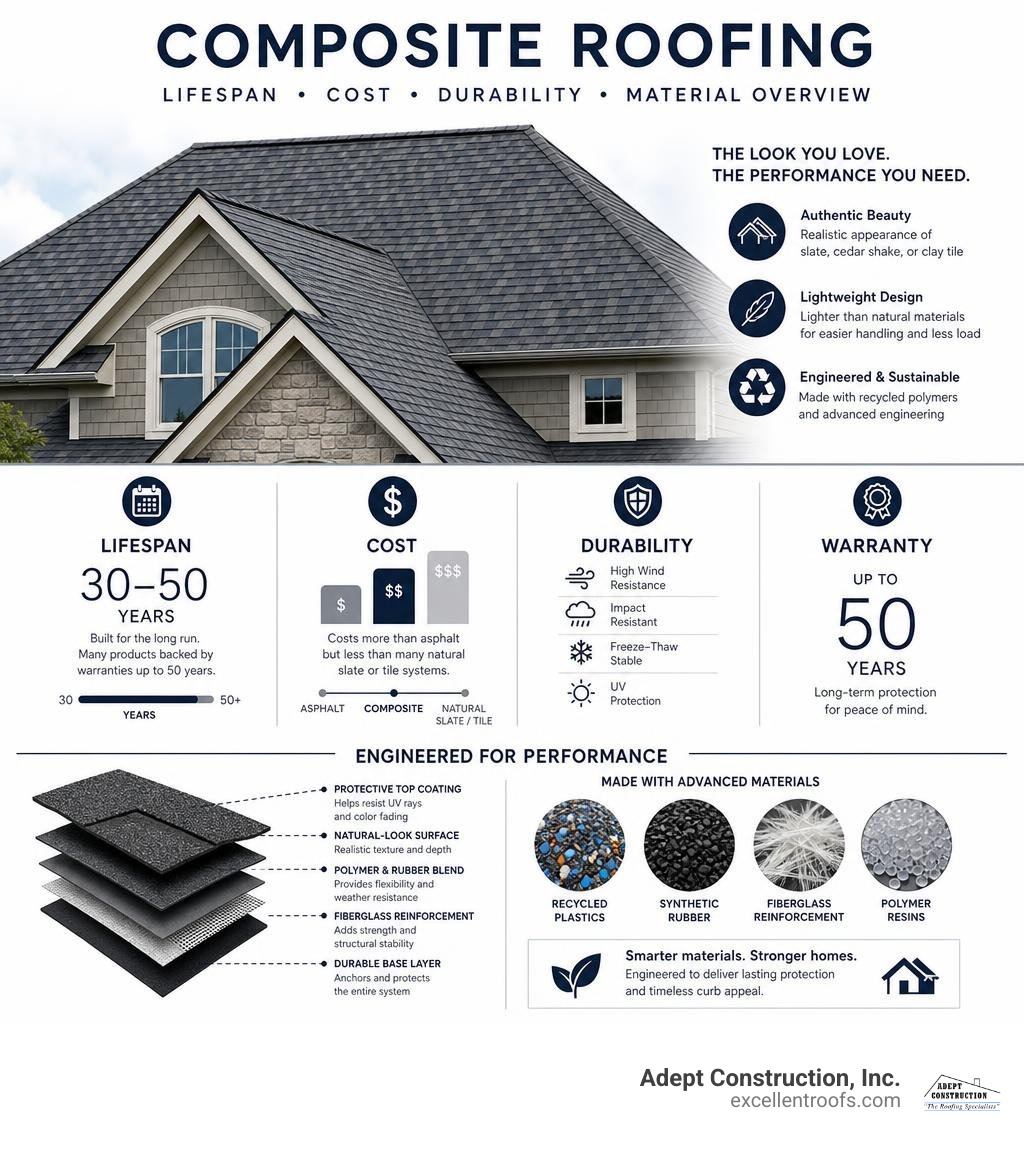
Composite roofing uses engineered shingles or tiles made from materials such as recycled plastics, rubber, fiberglass, and polymer resins. It is designed to give homes the look of slate, cedar shake, or clay tile while using a lighter, more durable roofing material.
For homeowners comparing long-term roof options, composite products typically last 30 to 50 years, often carry warranties up to 50 years, and cost more than asphalt but less than many natural slate or tile systems. I’m Gerald Michaels, founder and president of Adept Construction, Inc., with nearly three decades of experience helping homeowners and property managers make informed decisions. You can explore reliable roofing guidance from Adept Construction before choosing a material based on looks alone. Our experience with composite roofing and roof replacement starts with clear communication, careful inspection, and workmanship built to protect the property beneath it.
Understanding Composite Roofing Materials and Types
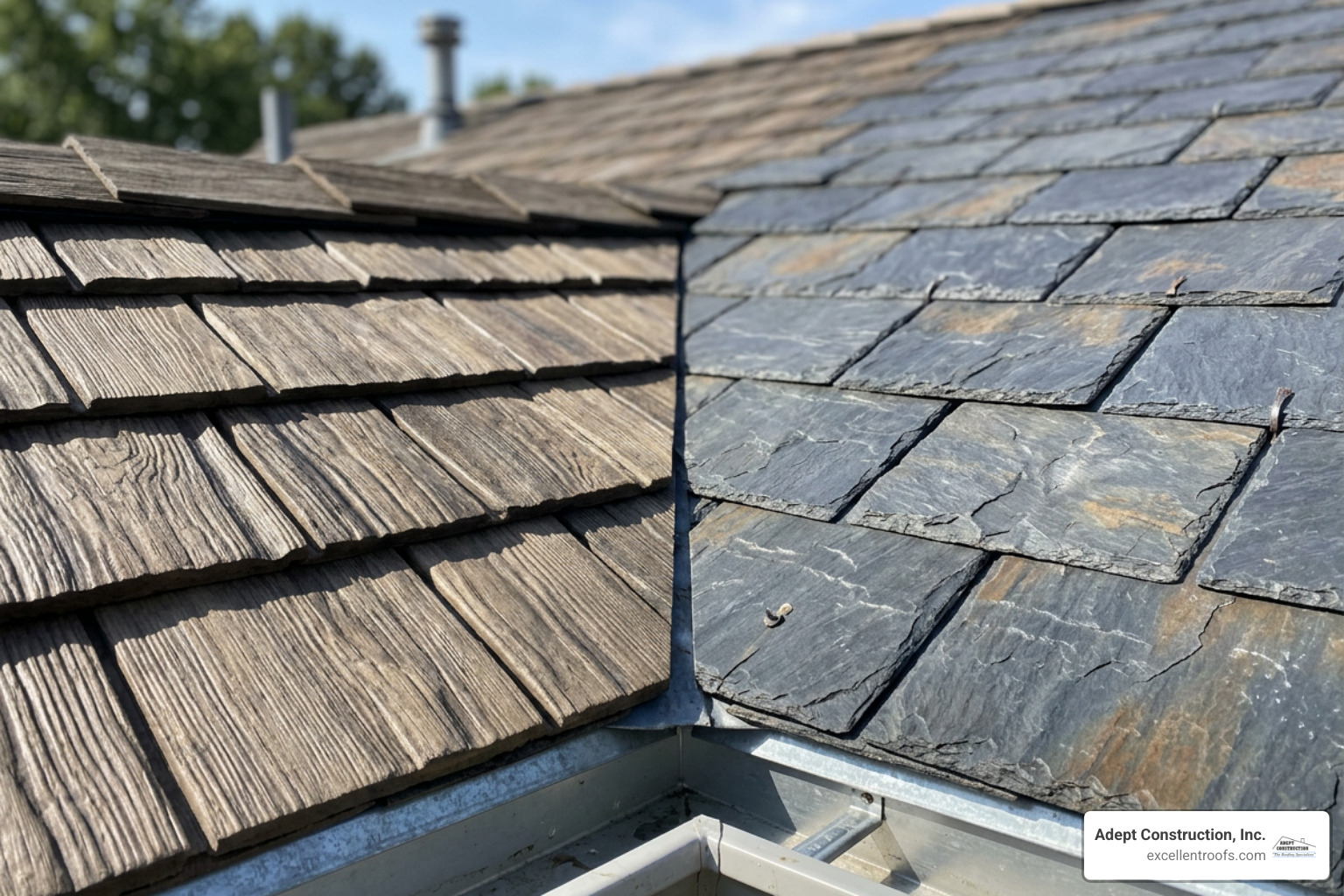
Engineered composite shingles combine multiple distinct materials to achieve structural strength, weather endurance, and aesthetic fidelity. High-grade synthetic polymers, including post-industrial and post-consumer recycled plastics, form the primary matrix. Manufacturers compound these plastics with synthetic rubber blends to provide cold-weather flexibility, while fiberglass reinforcement delivers tensile stability and tear resistance.
Understanding these raw ingredients reveals how composite shingles outperform single-material alternatives. Synthetic polymer blends resist organic decay, preventing the moss, mold, and algae growth that plague natural wood shakes in northern climates. Furthermore, high-density polyethylene (HDPE) composite tiles, detailed in the Quarrix Class A Composite Roofing Tile Manual, maintain structural integrity through thermal fluctuations. Selecting the right composite system demands evaluating how material composition aligns with long-term performance goals, as detailed in our Guide to Residential Roofing Materials.
Comparing Synthetic Slate, Wood Shake, and Corrugated Panels
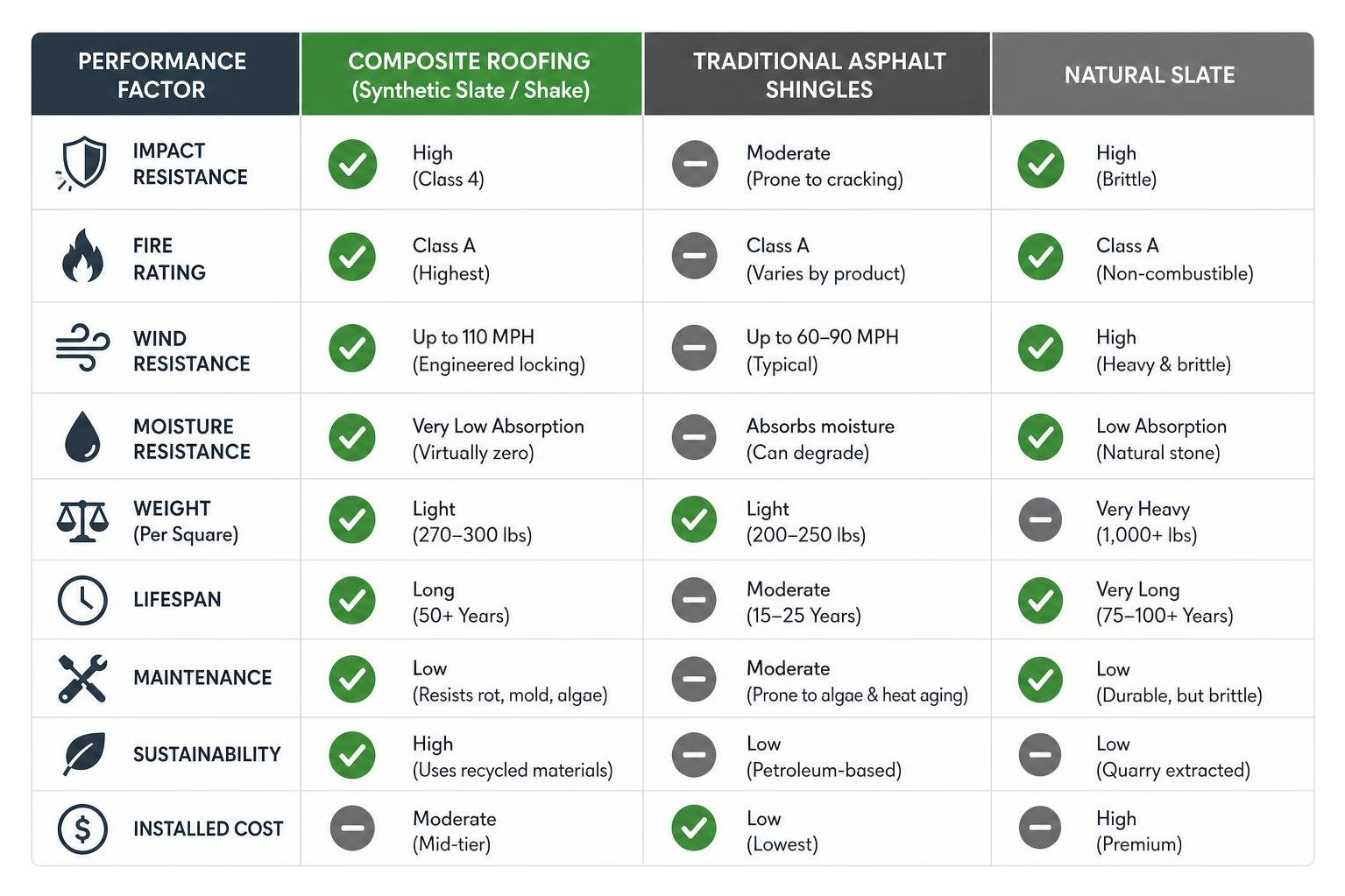
Synthetic slate shingles replicate the distinctive chiseled edges and authentic shadows of natural quarry slate without massive structural weight. Natural slate requires reinforced roof framing due to weights exceeding 1,000 pounds per square (100 square feet). Synthetic slate tiles weigh between 270 and 300 pounds per square, removing the need for costly structural reinforcement.
Synthetic wood shake shingles capture the hand-split grain texture of natural cedar while eliminating cedar’s fire hazards and susceptibility to rot. Polycarbonate and PVC corrugated plastic roof panels represent a separate category; these lightweight panels offer UV stabilizer additives and color masterbatch technology for light transmission over carports, gazebos, or agricultural structures. Synthetic composite tiles, by contrast, serve primary steep-slope residential structures demanding high curb appeal and energy efficiency.
Key Benefits: Impact Resistance and Fire Ratings
Severe northern weather brings intense stress to residential roof systems. Chicago-area freeze-thaw cycles expand trapped water within porous materials, fracturing asphalt shingles and natural clay tiles. Spring hail and straight-line winds regularly dislodge standard roofing materials. Composite shingles provide complete weather resilience through advanced manufacturing engineering.
- Class 4 Impact Resistance: Tested under FM 4473 standards, composite roof shingles withstand repeated impacts from two-inch steel balls dropped from extreme heights without cracking or splitting.
- Class A Fire Ratings: Evaluated under ASTM E108 test standards, high-performance synthetic shingles utilize advanced flame-retardant additives to block flame penetration and flame spread.
- Extreme Wind Endurance: Engineered locking mechanisms and full-contact fastening profiles provide wind resistance rated up to 110 MPH.
- Low Moisture Absorption: Composite materials absorb virtually zero water, eliminating freeze-thaw cracking, rot, and internal fiber breakdown during winter freezing spells.
Composite Roof Replacement and Upgrades
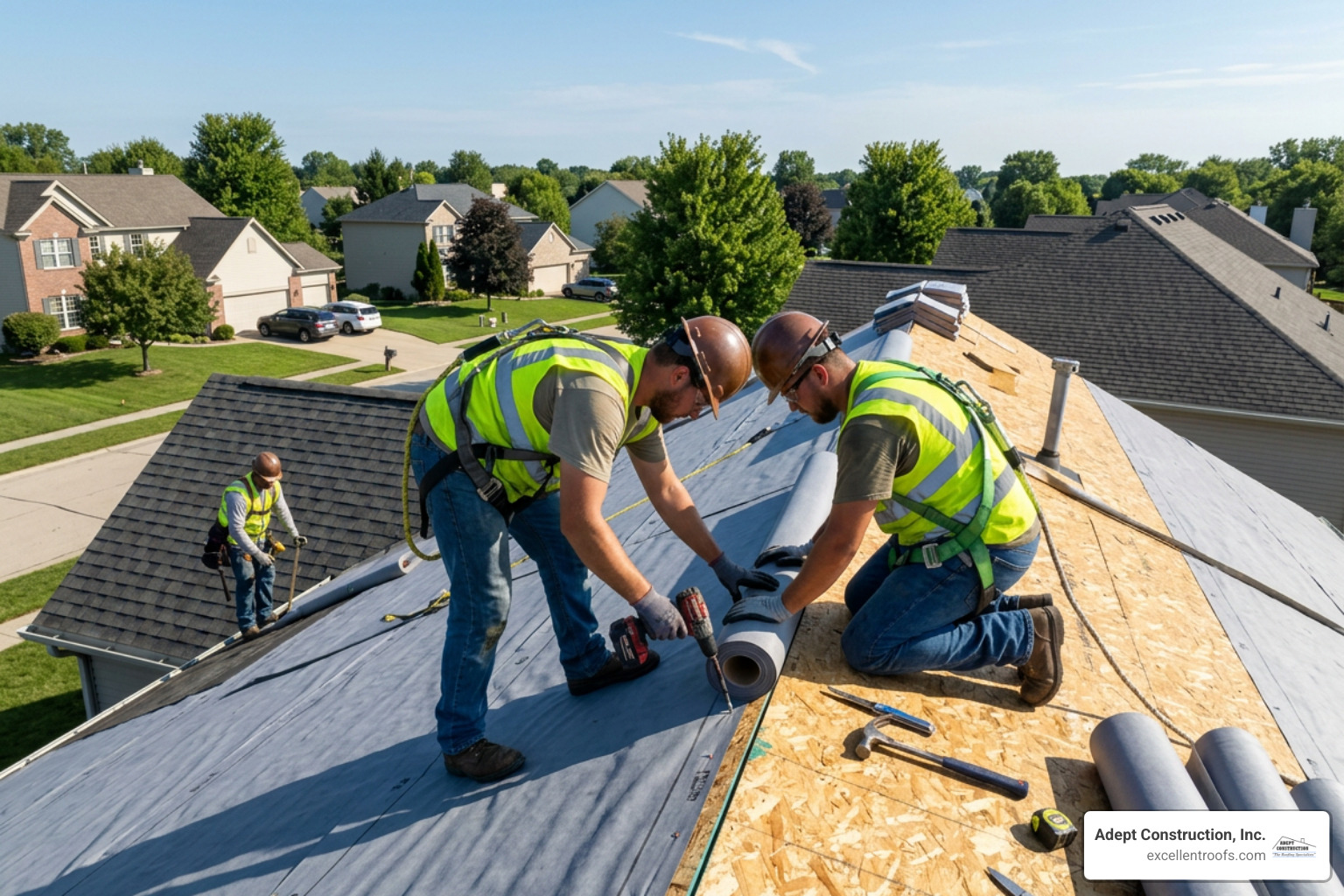
Replacing an existing roof with high-grade synthetic shingles requires careful structural assessment and complete material stripping down to the roof deck. A successful installation depends on precise deck preparation, self-sealing underlayment, and proper flashing integration.
When aged roofs suffer structural distress, compromised decking, or ice dam damage, ignoring underlying moisture issues creates health risks, structural rotting, and total system failure. Failing roof systems cost thousands of dollars in hidden interior repairs when water penetrates roof sheathing. A professional roof inspection evaluates roof pitch, rafter spacing, structural deflection, deck rot, and ventilation pathways to design a replacement strategy that complies with local building codes.
Can Synthetic Shingles Be Installed Over Existing Roofs?
Installing synthetic composite shingles directly over old asphalt shingles is strongly discouraged by manufacturers and professional contractors. Overlaying synthetic tiles onto existing shingles creates several severe operational problems:
- Warranty Invalidation: Synthetic roofing manufacturers require flat, clean, solid wood decking to validate 50-year warranty coverage.
- Hidden Deck Damage: Laying new tiles over old asphalt conceals rotted sheathing, water saturation, and mold growth.
- Uneven Surface Application: Synthetic shingles require a flat plane to lock together tightly; worn asphalt shingles create dips and bulges that compromise weatherproofing.
- Fastener Failure: Standard fasteners cannot achieve proper deck penetration when driven through multiple layers of old roofing materials.
A complete tear-off removes dead weight, allows structural repairs, and prepares the deck for high-performance underlayment. Reviewing comprehensive Tear Off and Replacement Costs clarifies the financial value of executing a complete tear-off before placing high-end synthetic materials.
Key Standards for Professional Composite Installation
Professional roofing contractors adhere to strict manufacturer specs and engineering standards to handle severe wind uplift and regional weather conditions. Rather than attempting DIY applications, property owners benefit from certified installers who understand the specific structural and material dynamics involved:
- Decking Integrity and Substrate Readiness: Technicians verify the condition of the plywood sheathing, replacing water-damaged sections and reinforcing loose panels to support long-term weight distribution.
- Advanced Waterproofing Systems: High-performance synthetic underlayment and self-adhering ice-and-water membranes are integrated along critical points like eaves, valleys, and sidewalls, protecting homes from severe winter ice dam formation.
- Specialized Batten and Fastening Protocols: Profiles like Double Roman tiles may require elevated corrugated high-density polyethylene (HDPE) plastic battens for optimized ventilation and drainage, paired with corrosion-resistant ring-shank nails positioned in engineered fastening zones.
- Custom Perimeter and Valley Flashing: Heavy-gauge metal valley flashings, step flashings, and eave closures are engineered to seal all roof intersections, preventing driving rain and snow melt from reaching the underlying framing.
Cost Analysis, Lifespan, and ROI
Understanding composite roofing financial dynamics requires comparing initial installation costs against long-term operational savings. Synthetic shingles demand a higher upfront investment than three-tab or architectural asphalt, yet deliver a lower lifetime cost per year due to extended longevity.
| Roofing Material Type | Material Cost (Per Sq. Ft.) | Installed Cost (Per Square – 100 Sq. Ft.) | Average Lifespan | Fire Rating | Impact Rating |
|---|---|---|---|---|---|
| Standard Asphalt Shingles | $1.50 – $2.50 | $350 – $550 | 15 – 20 Years | Class A | Class 1 – 3 |
| Architectural Asphalt | $2.50 – $4.00 | $450 – $750 | 20 – 30 Years | Class A | Class 3 – 4 |
| Composite Plastic Shingles | $4.00 – $6.00 | $640 – $960 | 30 – 50 Years | Class A | Class 4 |
| Natural Cedar Shake | $6.00 – $9.00 | $900 – $1,400 | 20 – 30 Years | Class C (Unrated) | Class 2 – 3 |
| Natural Slate Tile | $9.00 – $16.00 | $1,500 – $2,800 | 75 – 100+ Years | Class A | Class 3 – 4 |
Material prices for synthetic composite shingles average $4 to $6 per square foot. Total installation expenses—combining materials, contractor labor, underlayment, tear-off, and waste disposal—typically fall between $400 and $600 per square for basic composite plastic systems, and up to $960 per square for premium synthetic slate profiles. For a standard 1,700-square-foot home deck, total turnkey installation costs range from $10,880 to $16,320. Detailed pricing breakdowns are available in our Composite Roof Cost Per Square Foot Breakdown.
Breakdown of Composite Roofing Price Factors
Key project variables drive final composite roofing costs higher or lower based on property complexity:
- Roof Deck Area and Pitch: Greater surface area increases total material quantities. Steep roofs (pitches exceeding 6:12) require additional safety rigging, slow labor progress, and increase installation costs.
- Valleys, Dormers, and Penetrations: Complex roof planes featuring dormers, chimneys, skylights, and multiple valleys require custom flashing work and higher material waste factors (10% to 15%).
- Labor Complexity and Skill: Synthetic polymers require experienced installers who understand thermal expansion allowances, batten alignment, and specialized adhesive requirements. Labor accounts for approximately 60% of total project costs.
- Tear-Off and Disposal Fees: Removing multi-layer asphalt roofs incurs labor charges and local landfill dump fees, averaging $30 to $50 per truckload.
- Municipal Building Permits: Compliance with local building codes requires official building permits. For projects in Downers Grove IL or Naperville IL, DuPage County permit requirements establish structural, flashing, and underlayment compliance standards.
Long-Term Savings, 50-Year Warranties, and Home Value
Investing in composite roofing yields substantial financial dividends over time. While traditional asphalt roofs require full replacement every 15 to 20 years, composite plastic roofs last 30 to 50 years with minimal maintenance.
Many major synthetic shingle manufacturers back their products with non-prorated 50-year limited warranties covering manufacturing defects, color fading, and wind damage. Furthermore, standard residential roof replacements deliver an immediate return on investment (ROI) of nearly 60% in total property resale value. When combined with potential home insurance premium discounts for installing Class 4 impact-resistant tiles, composite roofing stands as a financially sound long-term property upgrade.
Maintenance, Care, and Environmental Impact
Composite roofs require remarkably little ongoing maintenance compared to natural wood or slate systems. The non-porous structure of polymer synthetic shingles prevents moisture retention, rendering the surface hostile to moss, algae, and fungal growth.
Commercial liquid-applied composite systems, such as cold-applied membranes detailed in the BURmastic Composite Ply Technical Specs, showcase the extreme tensile strength and tear resistance achievable through composite engineering. Residential synthetic tiles leverage similar chemical advantages to prevent curling, blistering, and mineral granule loss. Additional care guidance is detailed in our Complete Composite Shingle Roof Guide.
Environmental Impact and Recycled Material Use
Composite roofing products deliver significant eco-friendly benefits by repurposing landfill-bound waste materials. Manufacturers transform post-consumer plastics, recycled rubber tires, and industrial post-polymer scrap into high-grade roofing tiles.
- Landfill Diversion: Every square of composite shingles utilizes hundreds of recycled plastic containers and reclaimed rubber scrap, keeping non-biodegradable waste out of local landfills.
- Reduced Transportation Emissions: Weighing one-third as much as natural slate, composite tiles reduce fuel consumption and carbon emissions during freight transit.
- Solar Reflectivity and Energy Efficiency: Light-colored pigments and cool-roof reflective additives deflect solar infrared heat, reducing air conditioning loads during hot summer months.
- Complete Recyclability: Synthetic polymer shingles can be ground down and reprocessed into new construction products at the end of their 50-year lifespan.
Care Guidelines and Typical Repair Costs
Maintaining a synthetic composite roof requires simple, periodic preventative care rather than heavy chemical treatments or frequent tile replacements:
- Gentle Cleaning Procedures: To remove surface dirt or tree sap, hire professional roof cleaners who utilize gentle, low-pressure water sprays and biodegradable cleaners. The average cost to hire a professional roof cleaner is $400.
- Avoiding High-Pressure Washers: High-pressure washing blasts destroy thermal seals, force water under flashing channels, and void manufacturer warranties.
- Localized Tile Repairs: If severe tree branch impacts damage individual synthetic tiles, single units can be unscrewed and swapped out without removing surrounding courses. Minor isolated tile repairs typically cost between $150 and $350.
- Specialized HDPE Sealants: When sealing perimeter flashings or pipe boots adjacent to high-density polyethylene (HDPE) tiles, contractors use specialized sealants such as Geocel 3500. Standard silicone or asphalt sealants fail to bond with synthetic polymers.
- Annual Flashing Inspections: Routine annual inspections verify that pipe boots, chimney flashings, and valley troughs remain clear of organic debris and structural movement.
Conclusion
Upgrading your home with a modern composite roof provides exceptional architectural elegance, Class 4 impact protection, and a 30 to 50-year lifespan. Choosing between synthetic slate, cedar shake, or specialized tile systems requires balanced analysis of material costs, roof structural capacity, and local climatic stress.
At Adept Construction, Inc., our family-owned business brings decades of hands-on expertise to every residential and commercial project. Based in Downers Grove IL and serving property owners across Naperville IL, we deliver exceptional workmanship, transparent pricing, and dedicated customer service. Schedule your professional roof inspection and explore our expert residential roofing services to protect your home for decades to come.