
Why Stopping Roof Leaks Quickly Can Save You Thousands
Stopping roof leaks fast is the most critical action a homeowner can take to prevent catastrophic structural failure. Immediate intervention mitigates the risk of mold proliferation and wood rot. If you are facing an active leak, the expert roofing contractors in Illinois at Adept Construction, Inc. recommend a systematic response to minimize damage. According to the National Roofing Contractors Association, moisture infiltration is the leading cause of premature roof system failure.
Follow these steps immediately:
- Place a bucket under any active drip to protect floors and belongings.
- Turn off electricity near the leak — water and electricity are a deadly combination.
- Go to your attic with a flashlight and trace the water to its highest point.
- Apply a temporary fix (roofing cement or a tarp) if it is safe to do so.
- Call a licensed roofing contractor for a permanent repair as soon as possible.
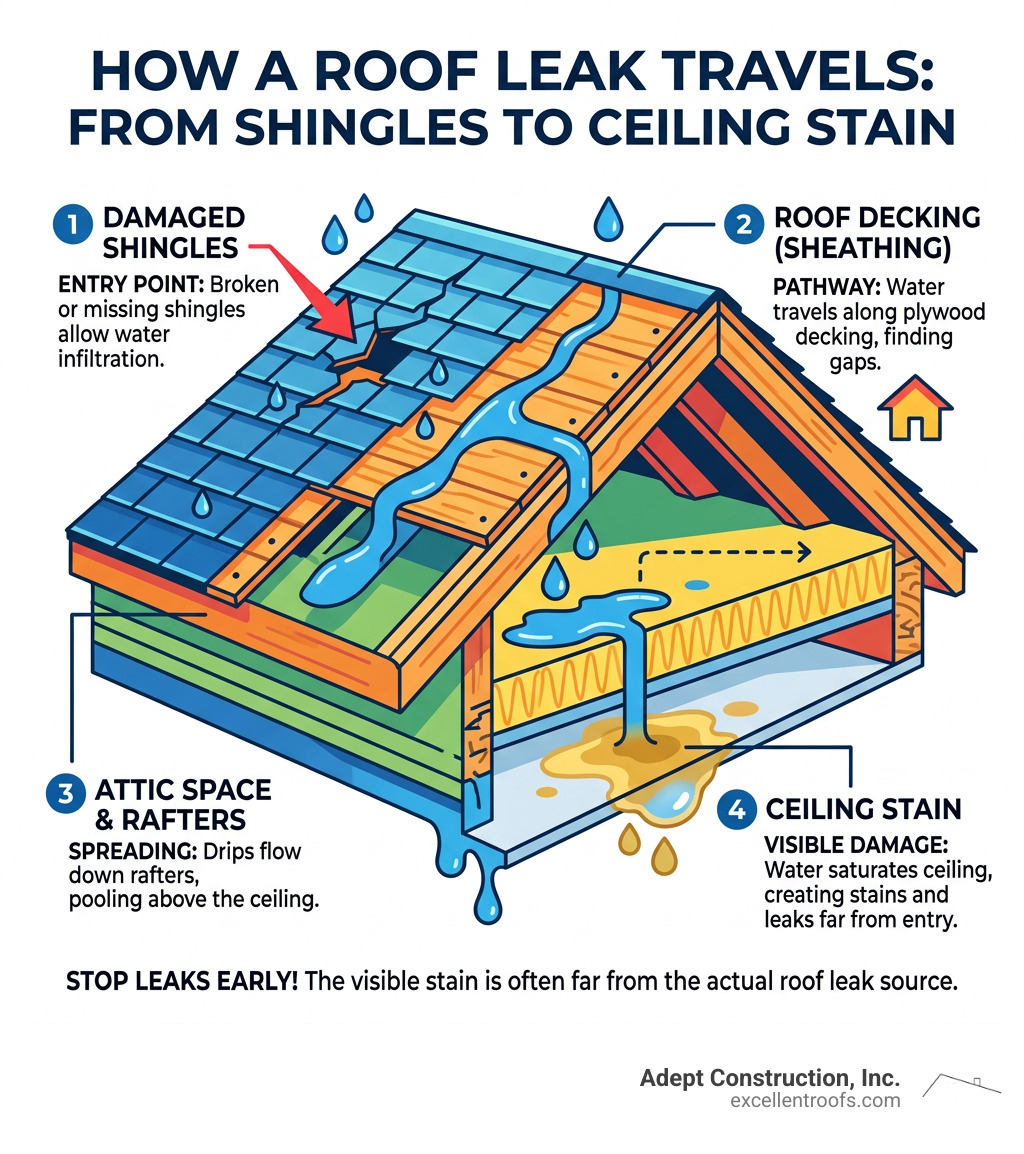
Even a small leak can spiral into serious damage fast. Water works its way through shingles, along rafters, and deep into your home’s structure — often showing up on your ceiling far from where it actually entered. Left unchecked, a minor drip can cause wood rot, mold growth, and even ceiling collapse. The cost of ignoring a leak is almost always higher than the cost of fixing it early.
That’s why knowing exactly what to do — and in what order — matters so much. Whether you’re dealing with a sudden storm or a slow, mysterious stain on your ceiling, this guide walks you through every step: finding the source, stopping the water temporarily, and knowing when to call in a professional for residential roofing services that fix the problem for good.
I’m Gerald Michaels, founder of Adept Construction, Inc., a family-owned roofing company based in Naperville, Illinois, with nearly 30 years of hands-on experience stopping roof leaks across Chicago’s suburbs. I’ll share exactly what works — and what doesn’t — so you can act with confidence.
Identifying the Source of a Roof Leak Safely
Finding the exact entry point of water is often the hardest part of stopping roof leaks. Because roofs are pitched, gravity pulls water downward and sideways along rafters or the tops of ceilings before it finally drips onto your floor. This means the puddle in your kitchen might be caused by a hole in the roof ten feet away.
Safety must be your first priority. Never walk on a wet, slippery roof during a rainstorm. Instead, start your investigation in the attic. You will need a high-powered flashlight, a tape measure, and a piece of chalk or a marker.
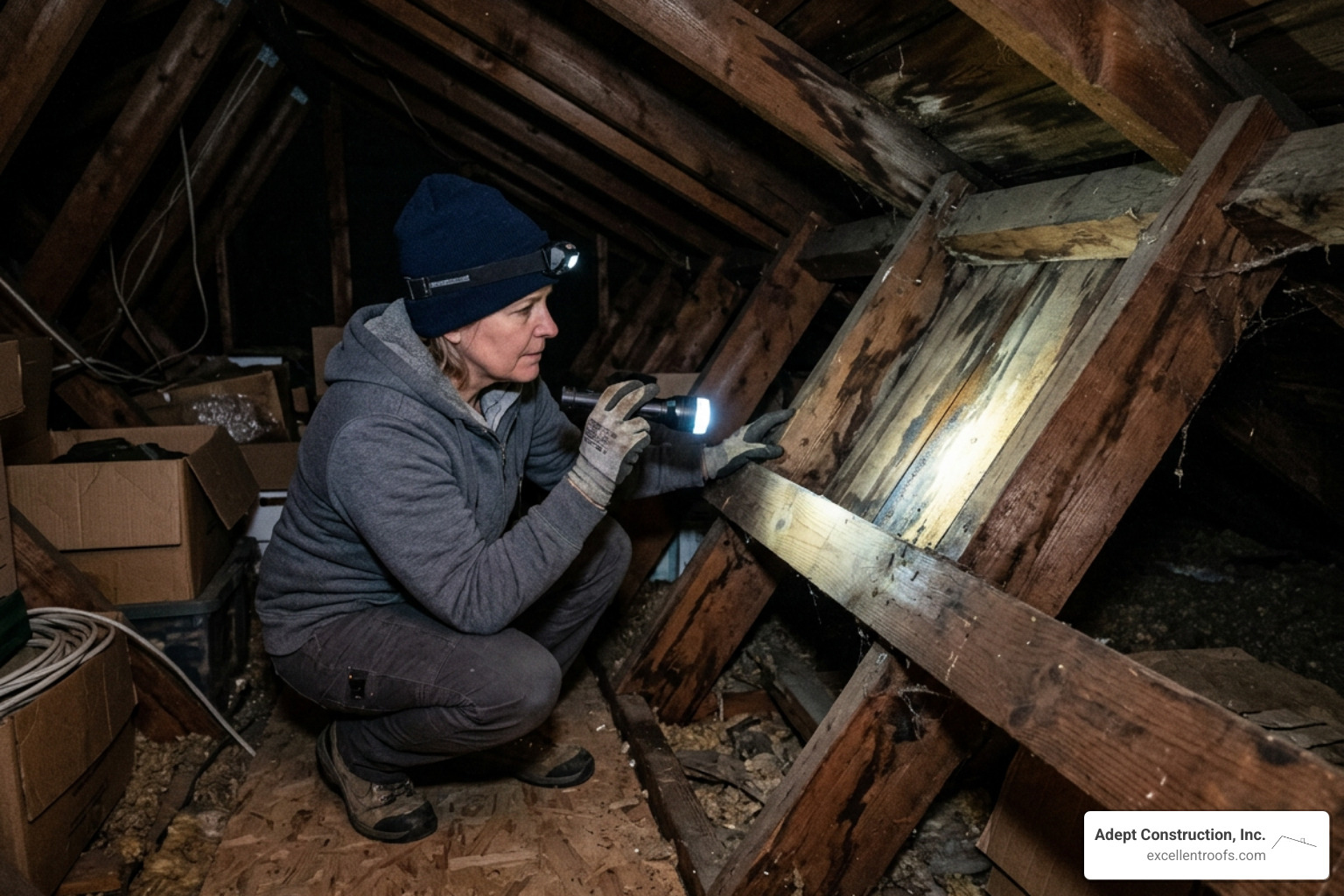
When you enter the attic, look for “water trails”—dark streaks or shiny dampness on the underside of the roof decking (the wood boards). Trace these trails upward to the highest point where the wood is wet. If the rain has stopped and the wood has dried, look for dark water stains, black mold spots, or white “efflorescence” (salty deposits left by evaporated water).
For more detailed diagnostic steps, check out our Roof Leak Detection Complete Guide.
How to Spot the Entry Point for Stopping Roof Leaks
If the attic inspection doesn’t reveal the culprit, you may need to perform a “hose test” once the weather is clear and the roof is dry. This requires two people: one on the roof with a garden hose and one in the attic with a flashlight.
- Start Low: The person on the roof should spray water on the area directly above where the leak appears inside.
- Isolate Sections: Soak one small area at a time (like a chimney base or a vent pipe) for several minutes before moving upward.
- Communicate: The person in the attic should yell or use a phone to alert the person outside the moment water appears.
This systematic approach is the gold standard for Roof Leak Detection Naperville residents use to find stubborn leaks that only show up during heavy wind-driven rain.
Common Culprits Behind Roof Failures
Most leaks aren’t caused by a “hole” in the middle of a shingle. Instead, they happen at “penetrations”—places where something pokes through the roof. According to our research into What Causes Roof Leaks, these are the usual suspects:
- Plumbing Vent Boots: These are the rubber gaskets around the pipes sticking out of your roof. Over time, the rubber cracks and dry-rots, allowing water to run straight down the pipe into your walls.
- Damaged Shingles: High winds in Illinois can lift shingles, breaking their tar seal. Once the seal is broken, rain can blow underneath.
- Corroded Flashing: Flashing is the thin metal used to seal joints around chimneys and dormers. If it rusts or the caulk around it cracks, water will find a way in.
- Old Mounting Holes: If you’ve ever had a satellite dish removed, the old bolt holes can leak if they weren’t properly sealed with roofing cement.
Immediate Steps for Stopping Roof Leaks During a Storm
When water is actively pouring into your home during a Naperville thunderstorm, you don’t have time for a permanent fix. You need to focus on “triage”—preventing the water from destroying your drywall and flooring.
Minimizing Interior Water Damage
If you see a bulge in your ceiling drywall where water is pooling, it is actually safer to puncture the bulge. Use a small screwdriver or an ice pick to poke a hole in the center of the damp spot. This creates “controlled drainage,” allowing the water to flow into a bucket rather than spreading across the ceiling and causing the entire sheet of drywall to collapse under the weight.
Move furniture, electronics, and rugs out of the area immediately. If you can’t move a heavy item, cover it with plastic sheeting.
| Repair Type | Estimated Cost | Expected Lifespan |
|---|---|---|
| Emergency Tarping | $120 – $800 | 30 – 90 Days |
| Professional Pipe Boot Repair | Under $400 | 10 – 15 Years |
| Small Shingle Patch | $100 – $300 | 1 – 2 Years |
| Permanent Professional Repair | $325 – $1,200+ | Life of the Roof |
Documenting Damage for Insurance Claims
Before you clean up, take photos. Insurance companies require proof of the “peril” that caused the leak. In Illinois, wind speeds of 60 mph or higher are typically required to trigger a wind damage claim.
Capture clear photos of:
- The water dripping inside.
- Any damaged drywall or flooring.
- The exterior of the roof (from the ground if possible) showing missing shingles.
- The date and time of the storm.
For a step-by-step on navigating this process, see our Roof Damage Repair Naperville Guide.
Essential DIY Methods for Temporary Roof Repair
Once the rain stops and the sun comes out, you can attempt a temporary fix to keep your home dry until a professional arrives. Stopping roof leaks with DIY methods is a “band-aid” solution that typically lasts 30 to 90 days.
Using Materials for Stopping Roof Leaks Temporarily
If you have a large area of damage, such as from a fallen tree limb, you must properly tarp the roof.
- Don’t just nail the tarp down: The nail holes will create more leaks.
- The Sandwich Method: Wrap the edges of a heavy-duty tarp around 2×4 boards. Screw the boards into the roof over the peak (the ridge) so water can’t get under the top edge.
- Tension is Key: Keep the tarp tight so water doesn’t pool in the folds.
For smaller leaks, you can use the “Shingle Slide” method. If you find a missing shingle, slide a piece of galvanized sheet metal or a spare shingle under the course above it. This ensures that water flows over the patch rather than behind it. For more techniques, read our Asphalt Roof Leak Repair Ultimate Guide.
Fixing Specific Penetration Leaks
If you’ve identified a cracked pipe boot as the source, you can often buy time by applying a thick layer of roofing cement (also called “flash cement” or “roof tar”) around the base of the pipe.
Avoid using standard silicone caulk or duct tape. Silicone does not bond well to asphalt shingles and will peel off within days. Duct tape degrades almost instantly under the sun’s UV rays. Instead, use specialized materials designed for Repair Leaking Shingle Roof applications.
For more insights, check out these 5 Facts About Roof Leak Repairs.
When to Call a Professional for Roof Repairs
While DIY fixes are great for emergencies, stopping roof leaks permanently requires professional skills. Roofing is dangerous, and improper repairs can lead to hidden rot that destroys your home’s value.
You should call a professional immediately if:
- The leak is near a chimney, skylight, or complex valley.
- The roof is over 15 years old (repairs become difficult as shingles become brittle).
- You see signs of structural sagging or “soft spots” when walking on the roof.
- You have a flat roof, which requires specialized EPDM or membrane repair kits.
If you are in our service area, we provide expert Roof Repair Downers Grove IL services to ensure your home stays dry through the next storm.
The Risks of Ignoring a Roof Leak
Ignoring a “small” leak is a gamble you will eventually lose. Water is the primary enemy of your home’s structure.
- Mold and Mildew: It only takes 24-48 hours for mold to start growing in wet insulation. This can lead to serious respiratory issues for your family.
- Fire Hazards: Water traveling along rafters can enter junction boxes or light fixtures, causing electrical shorts and fires.
- Structural Rot: Constant moisture rots the wooden “bones” of your house. Replacing a few shingles is cheap; replacing a collapsed roof truss is not.
Learn more about the 6 Signs You May Have a Leak in Your Roof before the damage becomes irreversible.
Choosing a Local Licensed Contractor
In Illinois, roofing contractors must be licensed and insured. “Storm chasers”—companies that knock on doors after a big hail storm—often do poor work and vanish before the warranty can be used.
When choosing a contractor for Roof Repair Naperville IL, look for:
- A Physical Local Address: We have been part of the Downers Grove and Naperville communities for decades.
- License Verification: Ensure they hold a valid Illinois Roofing License.
- Manufacturer Certifications: Companies that use high-quality materials like Owens Corning shingles often provide better warranties.
Frequently Asked Questions about Roof Leaks
How much does a typical professional roof leak repair cost?
A standard professional repair for a common issue, like a pipe boot or a small area of flashing, typically costs between $300 and $600. More complex repairs involving valleys, chimneys, or skylights can range from $800 to $1,500. Replacing an entire roof for a typical home can range from $8,000 to $20,000 depending on materials.
Can I use silicone caulk to stop a roof leak?
No. Standard silicone caulk is one of the most common mistakes homeowners make. It does not adhere well to the granules on asphalt shingles and will quickly pull away as the roof expands and contracts with the heat. Always use a dedicated roofing sealant or asphalt-based roofing cement.
How long does a temporary roof patch last?
A DIY patch using roofing cement or a tarp is generally considered effective for 30 to 90 days. After this time, UV exposure and temperature changes will cause the patch to fail. It should only be used to “buy time” until a permanent professional repair can be scheduled.
Conclusion
Stopping roof leaks is a race against the clock. The moment you see a stain on your ceiling, the clock is ticking toward expensive structural damage and mold growth. By acting quickly to contain the water, safely identifying the source, and applying a temporary fix, you can protect your home and your wallet.
At Adept Construction, Inc., we pride ourselves on being the family-owned experts that Naperville and Downers Grove residents trust. Our superior customer service and high-quality workmanship ensure that when we fix a leak, it stays fixed. Whether you need a minor repair or a full roof replacement, we are here to help.
Don’t wait for the next storm to test your roof. Contact us today for a free estimate and let us give you the peace of mind you deserve.