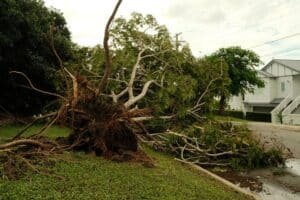

What to Do When a Hailstorm Hits Your Roof
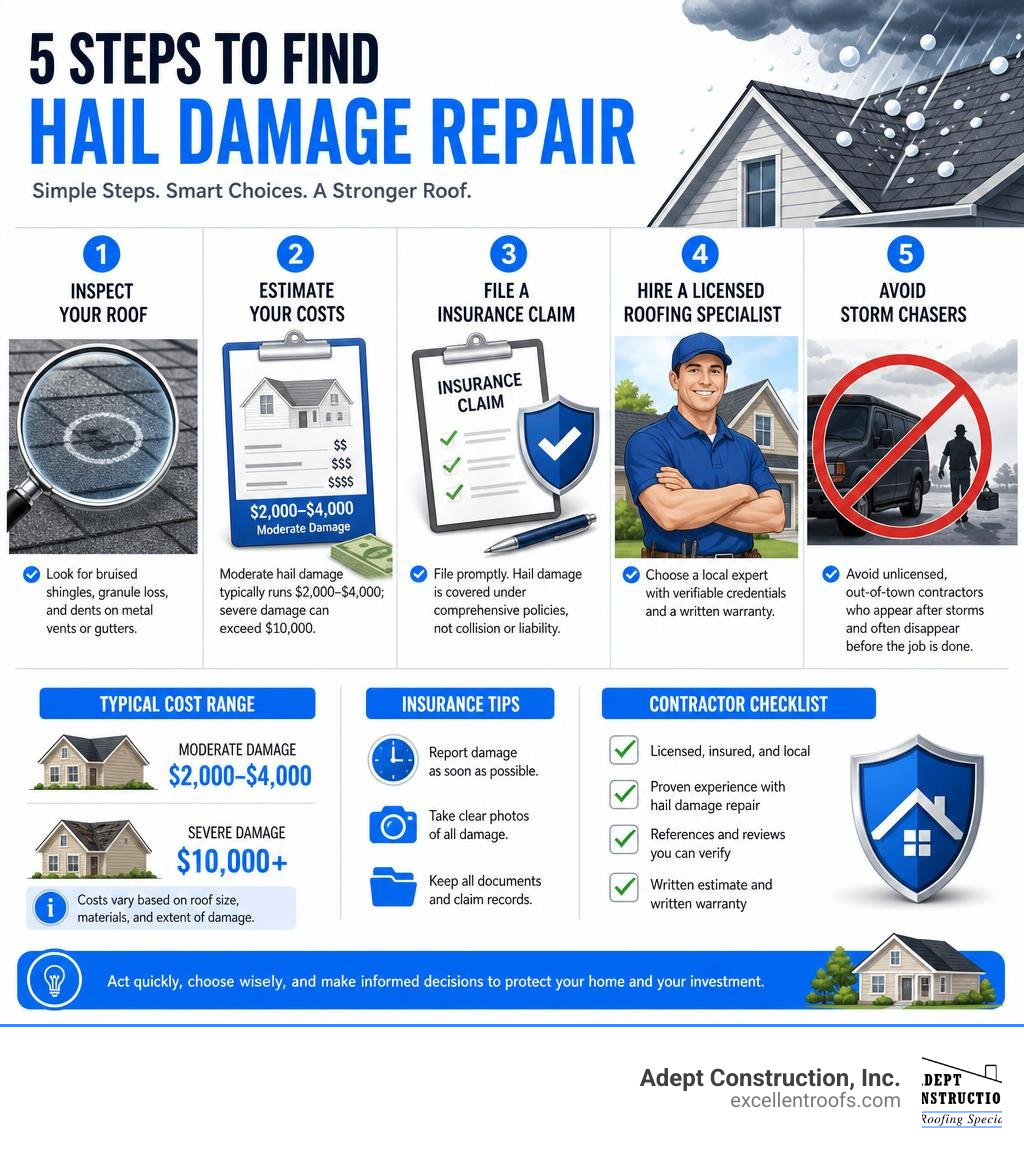
Hail damage repair is something thousands of Illinois homeowners face every year — often without knowing where to start. If your roof just took a hit, here is what you need to know right now:
How to find hail damage repair in 5 steps:
- Inspect your roof for bruised shingles, granule loss, and dents on metal vents or gutters
- Estimate your costs — moderate hail damage typically runs $2,000–$4,000; severe damage can exceed $10,000
- File a comprehensive insurance claim promptly — hail damage is covered under comprehensive policies, not collision or liability
- Hire a licensed local roofing specialist with verifiable credentials and a written warranty
- Avoid storm chasers — unlicensed out-of-town contractors who appear after storms and often disappear before the job is done
Hailstorms don’t give much warning. One serious storm can leave your roof bruised, cracked, and leaking — and the damage isn’t always visible from the ground. In March 2026, hailstones up to 4.8 inches were confirmed across Darien, Woodridge, Westmont, and Downers Grove, causing widespread roof damage across the western suburbs. That kind of storm is a reminder that professional roofing services aren’t a luxury — they’re a necessity when it comes to protecting your home.
The good news: with the right steps, the process of getting your roof properly assessed, documented, and repaired is more straightforward than most homeowners expect.
I’m Gerald Michaels, founder of Adept Construction, Inc., a family-owned roofing company based in Naperville with nearly three decades of experience in hail damage repair and storm restoration across Chicago’s western suburbs. I’ve walked hundreds of homeowners through this exact process, and this guide gives you the clearest, most actionable path from storm damage to a fully restored roof.
Step 1 & 2: Identify Roof Damage and Estimate the Costs
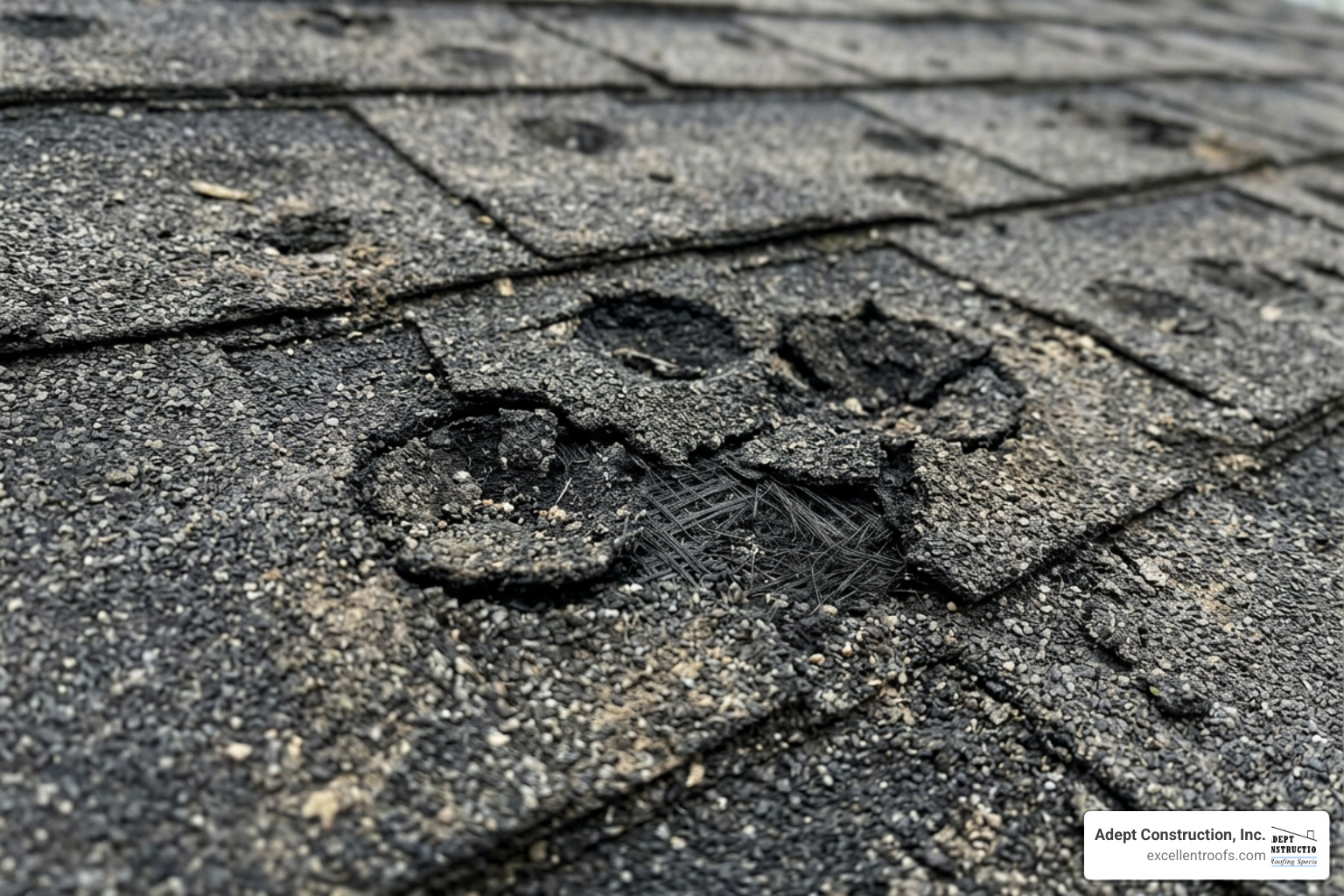
Identifying hail damage on your roof requires looking for specific physical indicators left by impact. Hail strikes shingles with tremendous force, which immediately degrades the protective outer layers of your roofing system. On standard asphalt shingles, hail damage appears as dark, circular bruises where the protective mineral granules have been knocked away, exposing the black fiberglass mat underneath. This granule loss is not merely cosmetic; granules protect your shingles from ultraviolet (UV) radiation, and without them, the asphalt layer quickly degrades, cracks, and leaks.
If you have a metal roofing system, the signs of impact are different. Hail strikes on metal panels leave distinct pockmarks, dents, and occasionally fractured seams. While metal roofs are highly durable, deep dents can pool water and lead to premature corrosion. Homeowners dealing with these issues should consult our guide on metal roof hail damage to understand how impact affects different metal gauges.
To properly assess your roof, you must check the following five areas:
- Shingle Surfaces: Look for dark circular bruises, localized cracking, or soft spots that feel like a bruised apple when pressed.
- Granule Accumulation: Check your gutters and the ground beneath your downspouts. Heavy accumulation of loose granules indicates severe shingle shedding.
- Metal Vents and Flashing: Look for dents on soft metal components like ridge vents, attic fans, and valley flashing.
- Siding and Trim: Pockmarks on wood siding or cracks in vinyl siding indicate that hail hit your home at an angle.
- Exposed Wood: Look for split wood shakes or physical tears on shingles, which occur when hail exceeds two inches in diameter.
For a comprehensive breakdown of what to look for immediately following a storm, read our detailed article on hail damage roof repair.
Assessing the Cost of Hail Damage Repair
The cost of restoring your roof after a storm depends entirely on the size of the hail, the wind speed, and the total surface area damaged. Minor cosmetic repairs on a few shingles might cost a few hundred dollars, whereas a complete roof replacement for severe damage can exceed $10,000.
To help you understand your potential financial responsibility, we have compiled a cost breakdown based on hail size and damage severity:
| Hail Size | Physical Damage Level | Typical Repair / Replacement Cost | Recommended Action |
|---|---|---|---|
| Under 1 Inch (Pea to Dime) | Minor cosmetic marks, light granule loss | $750 – $2,000 | Spot shingle replacement and monitoring |
| 1 to 1.5 Inches (Quarter to Ping Pong) | Moderate shingle bruising, significant granule loss | $2,000 – $4,000 | Partial roof repair or targeted section replacement |
| 1.75 to 2.5 Inches (Golf Ball to Tennis Ball) | Deep shingle bruising, cracked substrates, dented vents | $4,000 – $8,000 | Comprehensive repair or full roof replacement |
| 2.75+ Inches (Baseball to Grapefruit) | Fractured shingle mats, structural decking damage, broken glass | $8,000 – $15,000+ | Immediate full roof replacement |
Step 3: File Your Insurance Claim Correctly
Filing an insurance claim for storm damage can feel intimidating, but understanding the rules of comprehensive coverage makes the process highly manageable. Hail damage is classified as an “act of nature” (or act of God), meaning it is covered under the comprehensive portion of your homeowner’s insurance policy. Because these storms are entirely out of your control, insurance companies cannot legally raise your individual premium rates solely because you filed a storm-related claim.
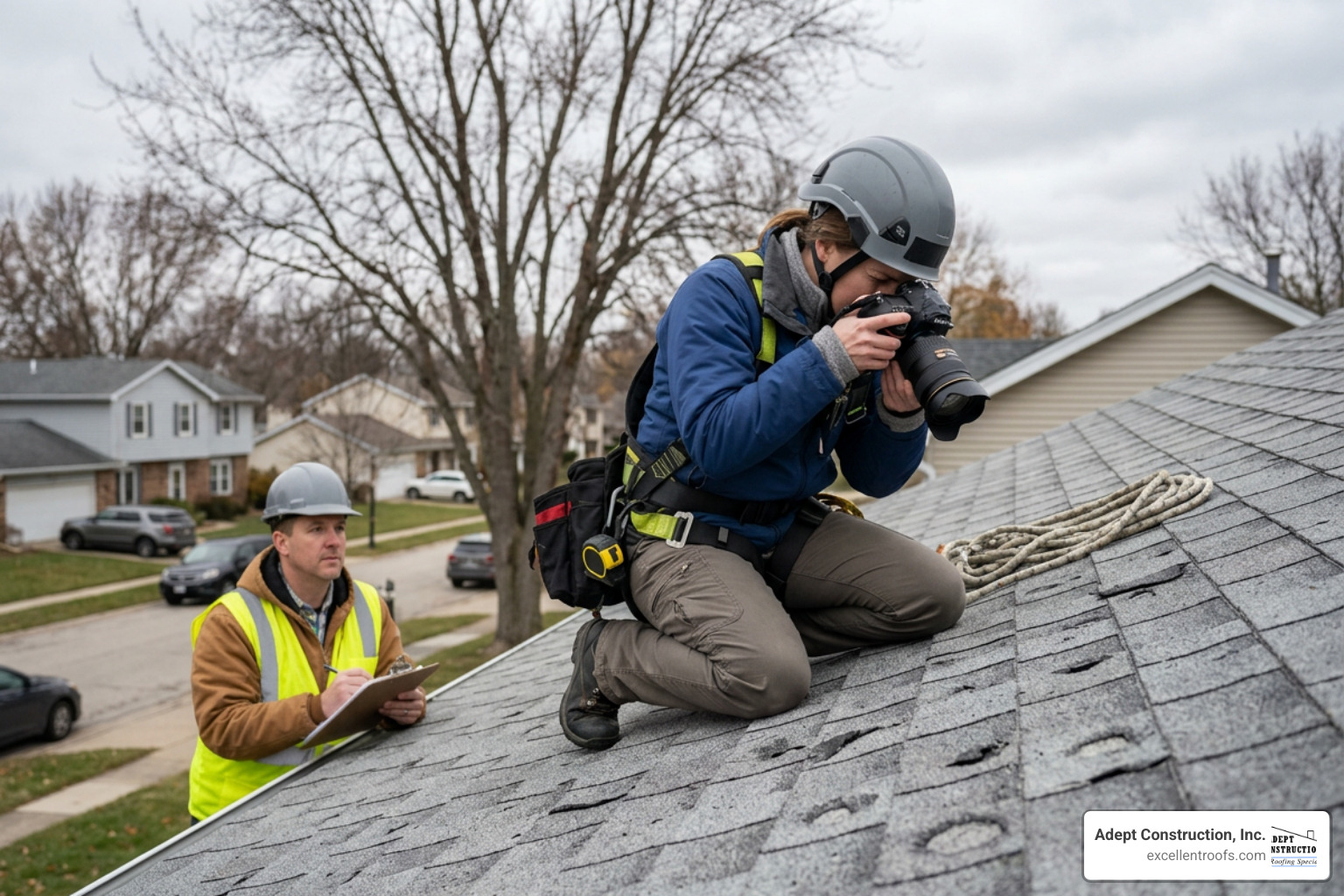
When you prepare to file, your first step is to document everything. Take timestamped photos of your property, your yard, and any visible damage from the ground immediately after the storm. Once you have documented the initial evidence, contact your insurance provider to open a claim file. This establishes your timeline and ensures you remain within the policy’s reporting window.
For a complete look at how to organize your paperwork, read our guide on roof damage insurance claims. You can also learn more about how professional damage documentation works by reviewing Caliber Collision’s guide on storm impact, which highlights the importance of thorough physical assessments when presenting claims to adjusters.
Navigating Insurance Claims for Hail Damage Repair
The insurance claim process requires active communication between you, your chosen roofing contractor, and your insurance adjuster. Once your claim is filed, the insurance company will schedule an adjuster meeting to inspect your roof. It is highly beneficial to have your roofing contractor present during this meeting. Adjusters often inspect roofs from the ground or under poor lighting, which can cause them to miss up to 60% of the actual damage. A professional contractor can point out subtle bruising and hidden structural issues that the adjuster might otherwise overlook.
If the adjuster’s initial estimate is too low to cover the actual cost of repairs, your contractor will initiate the supplement process. A supplement is a formal request sent to your insurance company with photographic evidence and detailed documentation explaining why additional materials or labor are required to complete the repair safely and to local building codes.
To see a step-by-step breakdown of how this negotiation works, refer to Local Hail Solutions’ claim process, which details the coordination required to ensure your insurance company pays for 100% of the necessary repairs.
Step 4: Hire a Local Specialist for Hail Damage Repair
When it comes to storm restoration, working with local experts who understand the unique weather patterns and building codes of your community is essential. Local roofing companies have permanent physical offices, established local phone numbers, and a reputation to maintain within the community. They are familiar with local municipal permit processes and ensure your roof is repaired in strict compliance with local laws.
Hiring an established local business also guarantees that your workmanship warranty will be honored years down the road. If you experience a leak two years after your roof is repaired, a local contractor will be there to fix it. An out-of-town contractor will likely be hundreds of miles away.
To understand why local expertise matters, look at the trusted resources compiled by storm damage restoration companies. For specific guidance tailored to our local communities, you can read about managing storm damage in Downers Grove or find professional tips on managing storm damage roof repair in Naperville.
Choosing Between Repair and Full Roof Replacement
One of the most important decisions you will make after a storm is whether to perform targeted repairs or replace the entire roof. This decision depends on several critical factors:
- The Age of Your Roof: If your roof is more than 15 years old, investing thousands of dollars in targeted repairs is rarely cost-effective. A full replacement is often the smarter financial choice.
- The Extent of the Damage: If hail has damaged more than 25% of your roof’s surface, most insurance companies will cover a full replacement rather than individual repairs.
- Structural Integrity: If hail has fractured the underlying wooden roof deck, spot-repairing shingles will not solve the underlying structural weakness.
- Shingle Matching: Asphalt shingles fade over time due to sun exposure. Spot-repairing sections of an older roof can leave your home with mismatched, unsightly patches.
If you are unsure which path is right for your home, our team provides comprehensive storm-damage services to assess your roof’s condition. For residents in our northern service areas, scheduling a professional Naperville roof repair consultation can help you determine the most durable and cost-effective solution for your home.
Step 5: Verify Credentials and Avoid Storm Chasers
The days following a major hailstorm always bring an influx of “storm chasers” to local neighborhoods. Storm chasers are out-of-state, unlicensed contractors who travel from region to region following severe weather events. They knock on doors, offer free inspections, and promise to “waive your insurance deductible” or perform repairs at impossibly low prices.
To protect your home and your wallet, you must verify the credentials of any contractor you consider hiring. In Illinois, all roofing contractors must hold a active license issued by the Illinois Department of Financial and Professional Regulation (IDFPR). This license proves that the contractor has passed rigorous safety exams, carries appropriate liability insurance, and maintains a clean professional record.
Be on high alert for these common storm chaser red flags:
- Out-of-State License Plates: If their trucks are registered in another state, they will likely leave Illinois as soon as the storm season ends.
- Unsolicited Door-Knockers: Legitimate local contractors rarely need to knock on doors to find work after a major storm.
- Offers to Waive Your Deductible: In Illinois, it is insurance fraud for a contractor to pay, waive, or rebate your insurance deductible. A legitimate company will always require you to pay your deductible.
- Pressure to Sign Immediately: Never sign a contract or authorization form on your front door. A reputable company will provide a written, itemized estimate and give you time to review it.
- Cash-Only Demands: Never pay for roofing work in cash, and never pay the full balance of a repair upfront.
Frequently Asked Questions About Roof Hail Damage
How do I know if my roof has hail damage?
The most reliable way to identify hail damage is through a professional physical inspection. From the ground, you can look for dents on your metal gutters, downspouts, window frames, and outdoor air conditioning units. On the roof itself, look for dark circular bruises on your shingles, localized areas of heavy granule loss, and small pockmarks on metal vents. If you suspect damage, a licensed professional should inspect the shingles by hand, checking for soft spots and structural fractures that are invisible from the ground.
How long do I have to file a hail damage claim in Illinois?
In Illinois, most homeowner’s insurance policies allow between one and two years from the exact date of the storm to file a hail damage claim. However, you should always file your claim as promptly as possible. Delaying your claim can lead to progressive water damage, mold growth, and structural rot, which insurance companies may refuse to cover if they determine the damage worsened due to homeowner neglect.
Are hail-resistant shingles worth installing?
Yes, installing hail-resistant shingles is highly recommended for homeowners in hail-prone areas like northern Illinois. These shingles carry a UL 2218 Class 4 rating, which is the highest impact-resistance rating available. Class 4 shingles are engineered with polymer-modified asphalt, allowing them to withstand simulated hail impacts of up to two inches in diameter without cracking. In addition to providing superior physical protection, many insurance providers offer substantial premium discounts to homeowners who install Class 4 impact-rated shingles on their homes.
Conclusion
Finding reliable hail damage repair doesn’t have to be a stressful experience. By following these five simple steps — identifying the damage, estimating costs, filing your insurance claim correctly, hiring a local specialist, and verifying credentials — you can protect your home and ensure your roof is restored to pre-storm condition.
At Adept Construction, Inc., we have spent nearly thirty years providing honest, high-quality roofing services to our neighbors across the western suburbs. Whether you live in our Downers Grove service area or our Naperville service area, our knowledgeable team is here to help you navigate the storm restoration process from start to finish.
If your roof was recently hit by hail, don’t wait for leaks to appear. We provide completely free, honest, and detailed storm damage inspections. Contact us for a free estimate today, and let our family take care of yours.