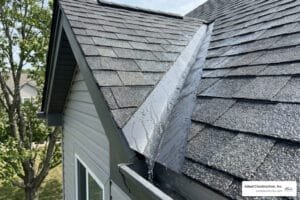

How to Choose a Reliable Storm Restoration Contractor
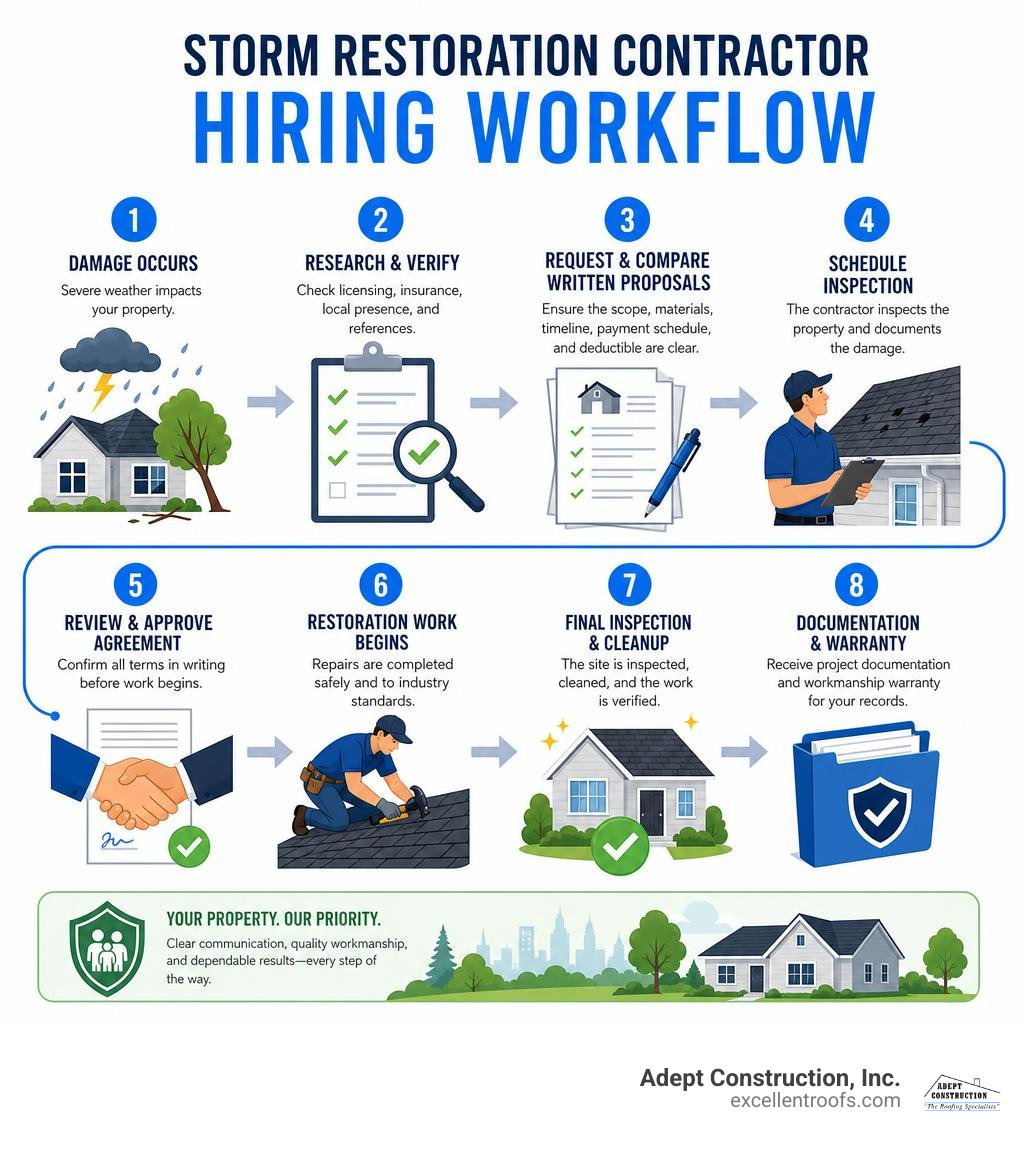
After wind, hail, or heavy rain damages your property, hire a storm restoration contractor who can inspect the full exterior, stop active leaks, document damage, and complete repairs that meet local requirements. Before signing anything:
- Verify licensing, general liability insurance, and workers’ compensation coverage.
- Choose an established contractor with a local address, recent references, and clear workmanship warranty terms.
- Get a written scope of work that explains repairs, materials, timeline, payment schedule, and your insurance deductible.
- Avoid high-pressure door-to-door sales tactics, vague estimates, and offers to waive or cover your deductible.
A qualified storm damage roofing contractor helps protect the building from further water intrusion while giving you clear documentation for your insurance claim. This matters because hail can bruise shingles or dislodge granules without creating an immediate leak, while wind can lift roofing materials and expose vulnerable layers below.
Storm damage creates urgency, but it should not force a rushed decision. The right contractor communicates clearly, works professionally with adjusters, keeps the site safe and clean, and stands behind the finished work.
I am Gerald Michaels, founder and president of Adept Construction, Inc., with nearly three decades of roofing experience serving homeowners and property managers with residential and commercial roof replacements. As a storm restoration contractor, I believe thorough inspections, honest guidance, and dependable workmanship are the foundation of a successful recovery.
Understanding Post-Storm Property Damage and Assessment
Severe weather destabilizes roofing structures, compromises building envelopes, and creates hidden moisture entry points. In our experience across northern Illinois, property owners face distinct weather patterns that demand immediate, thorough evaluations. Hail season consistently runs from mid-April through September, frequently delivering high-velocity impacts that weaken asphalt substrates and commercial roofing membranes. When severe weather hits our area, consulting our Storm Damage Downers Grove Complete Guide provides actionable insight into property preservation and immediate exterior protection.
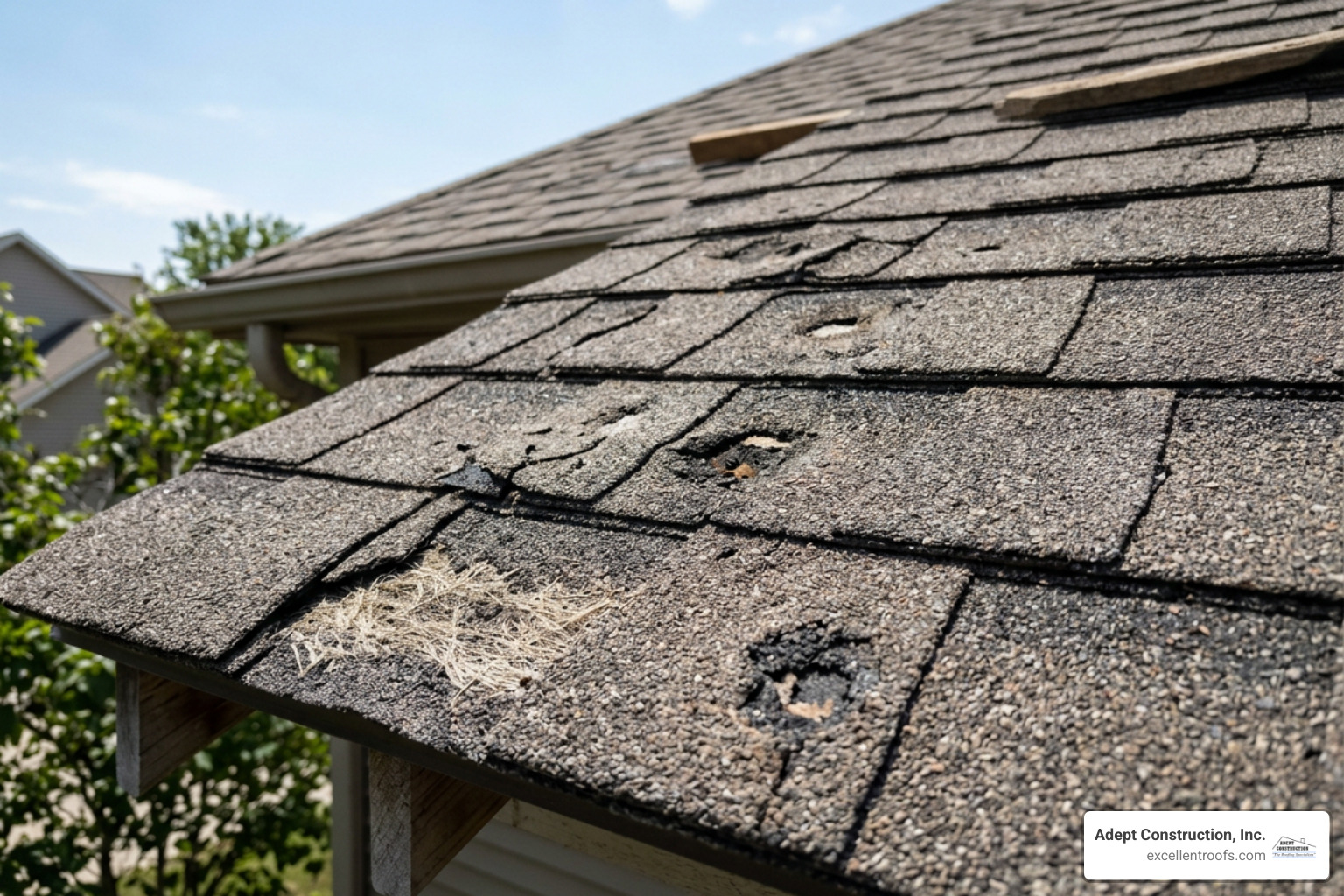
A comprehensive assessment examines the entire building envelope rather than just obvious shingle blow-offs. Hail strikes loosen protective mineral granules, exposing the underlying asphalt binder to ultraviolet degradation. Strong straight-line winds lift shingle tabs, breaking the manufacturer seal strips and leaving the structure vulnerable to wind-driven rain.
When winter sets in, Chicago-area freeze-thaw cycles exploit these minor fissures. Water enters micro-tears in the underlayment, expands as ice, and widens punctures across the roof decking. Unchecked moisture leads to structural rot, ruined attic insulation, interior drywall failure, and severe ice dams along roof eaves.
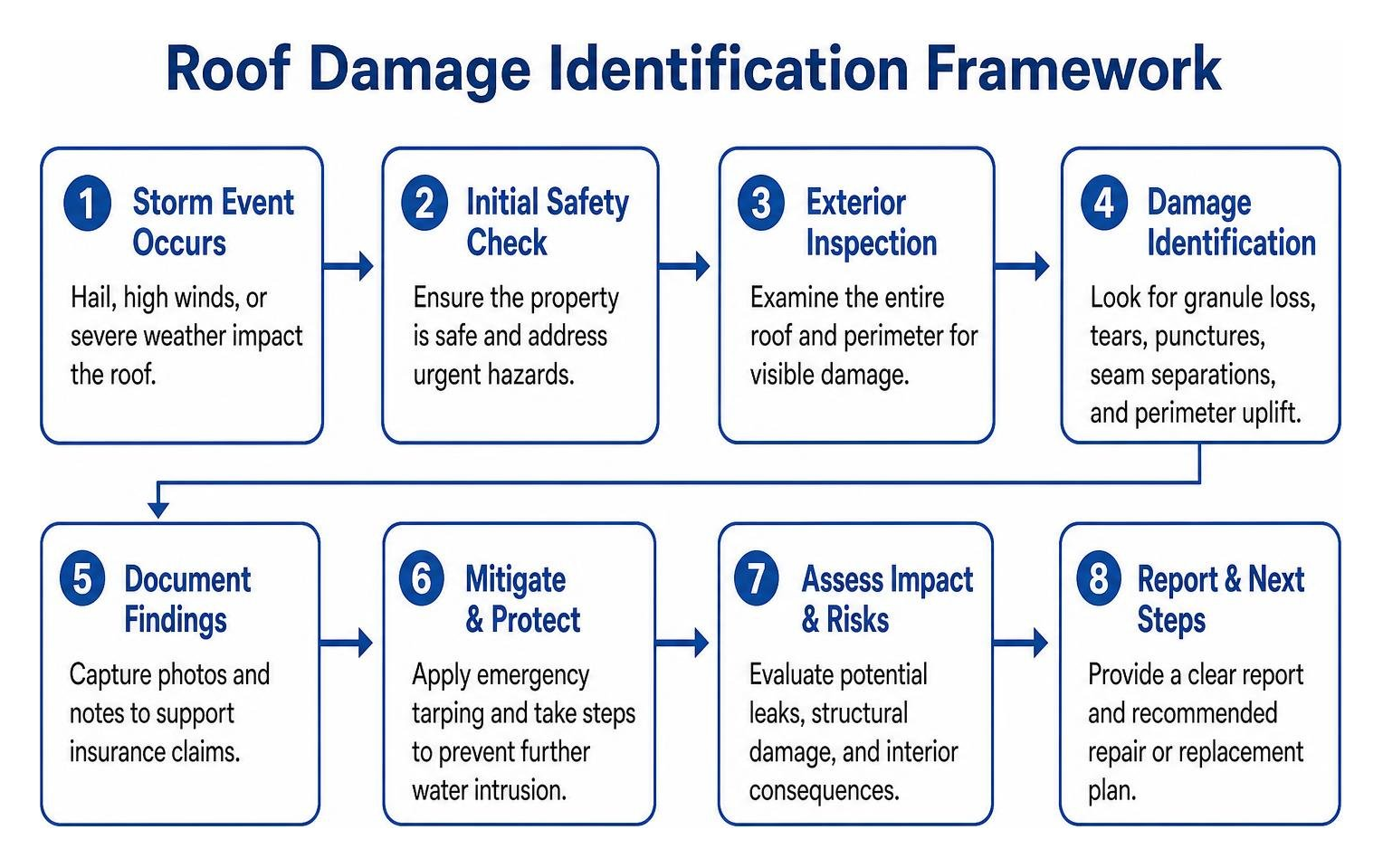
Identifying Wind and Hail Destruction
Storm impacts leave distinct forensic signatures across residential and commercial properties:
- Granule Loss: Hail dislodges the protective mineral layer on shingles, leaving dark, soft asphalt spots (bruising) that accelerate weathering.
- Thermal and Mechanical Tears: High-velocity straight-line winds create creased shingles and tear synthetic underlayments away from decking fasteners.
- Membrane Punctures: Commercial flat roofs suffer puncture wounds and seam separations that allow water to migrate beneath insulation boards.
- Perimeter Uplift: Edge metal, drip edges, and flashing tear loose, exposing roof perimeters to unmitigated wind-driven rainfall.
Property owners who observe displaced roofing materials can review our guide on Hail Damage Roof Repair or learn How to Spot Wind Damage on Your Roof to identify non-visible compromises before structural interior leaks manifest.
Emergency Tarping and Structural Stabilization
Preventing secondary interior destruction requires immediate structural stabilization directly following a severe storm event. If high winds or fallen tree limbs compromise your roof’s water-shedding surface, professional crews deploy reinforced, heavy-duty moisture barriers secured with wooden furring strips. This prevents water from entering the living spaces below without causing additional shingle destruction.
Property owners facing active water intrusion must reach out to Emergency Roofers Near Me for 24/7 mitigation services, board-up protection, and structural stabilization that satisfy the mandatory mitigation clauses in standard insurance policies.
Key Qualifications of a Professional Storm Restoration Contractor
Engaging a qualified contractor ensures your property is restored using industry-standard construction practices and code-compliant materials. The insurance restoration sector has made major strides toward ethical business standards, supported by national trade events like the annual SRC Summit founded in 2013. A legitimate contractor maintains comprehensive business protections, active manufacturer credentials, and extensive local experience.
| Evaluation Metric | Established Local Contractor | Out-of-State Storm Chaser |
|---|---|---|
| Physical Presence | Brick-and-mortar office with verifiable local address | Temporary P.O. Box or temporary hotel room |
| Workmanship Warranty | 5 to 10+ year locally backed labor warranty | Vanishes once the initial storm work subsides |
| Licensing & Permits | Registered with DuPage County and local building departments | Unregistered or uses third-party pull permits |
| Insurance Coverage | Full General Liability and comprehensive Workers’ Comp | Minimal coverage, often lacking active workers’ comp |
| Payment Terms | Staged draws matching work completion milestones | Demands full insurance payout checks up front |
Licensing, Insurance, and Local Verification
A professional restoration partner holds an active Illinois Roofing Contractor License and maintains comprehensive general liability insurance alongside active workers’ compensation coverage. Municipalities throughout our service areas enforce strict building codes to safeguard residents against improper installation.
For example, when performing complete roof replacements or structural decking repairs in Naperville IL, contractors must pull permits directly through the local municipal development center and adhere to specific ice barrier membrane mandates for DuPage County freeze-thaw protection. Always demand physical, current certificates of insurance sent directly from the contractor’s insurance carrier before work begins on your property.
Red Flags When Hiring a Storm Restoration Contractor
Severe weather events inevitably draw transient contractors seeking quick insurance payouts. Protect your home by recognizing common industry red flags:
- Unsolicited High-Pressure Canvassing: Door-to-door salespeople pressuring you to sign an immediate “Letter of Intent” or “Contingency Agreement” on the spot.
- Deductible Forgiveness Schemes: Any promise that the contractor will “absorb,” “waive,” or “rebate” your insurance deductible is illegal under Illinois law and constitutes insurance fraud.
- Lack of Local Contact Data: Marketing materials featuring out-of-state license plates, missing physical addresses, and 1-800 phone numbers lacking a local northern Illinois area code.
- Immediate Demands for Full Endorsement: Requesting that you sign over the initial insurance settlement check before materials arrive on-site or permits are issued.
The Step-by-Step Insurance Claim and Repair Process
Filing an insurance claim and restoring a storm-damaged building envelope involves precise sequencing. The process begins with comprehensive damage identification and ends with building code-compliant reconstruction. Property owners navigating this system can review The Ultimate Storm Damage Insurance Claim Process Guide for complete details on claim documentation and adjuster meetings.

Documenting Scope of Loss and Working With Adjusters
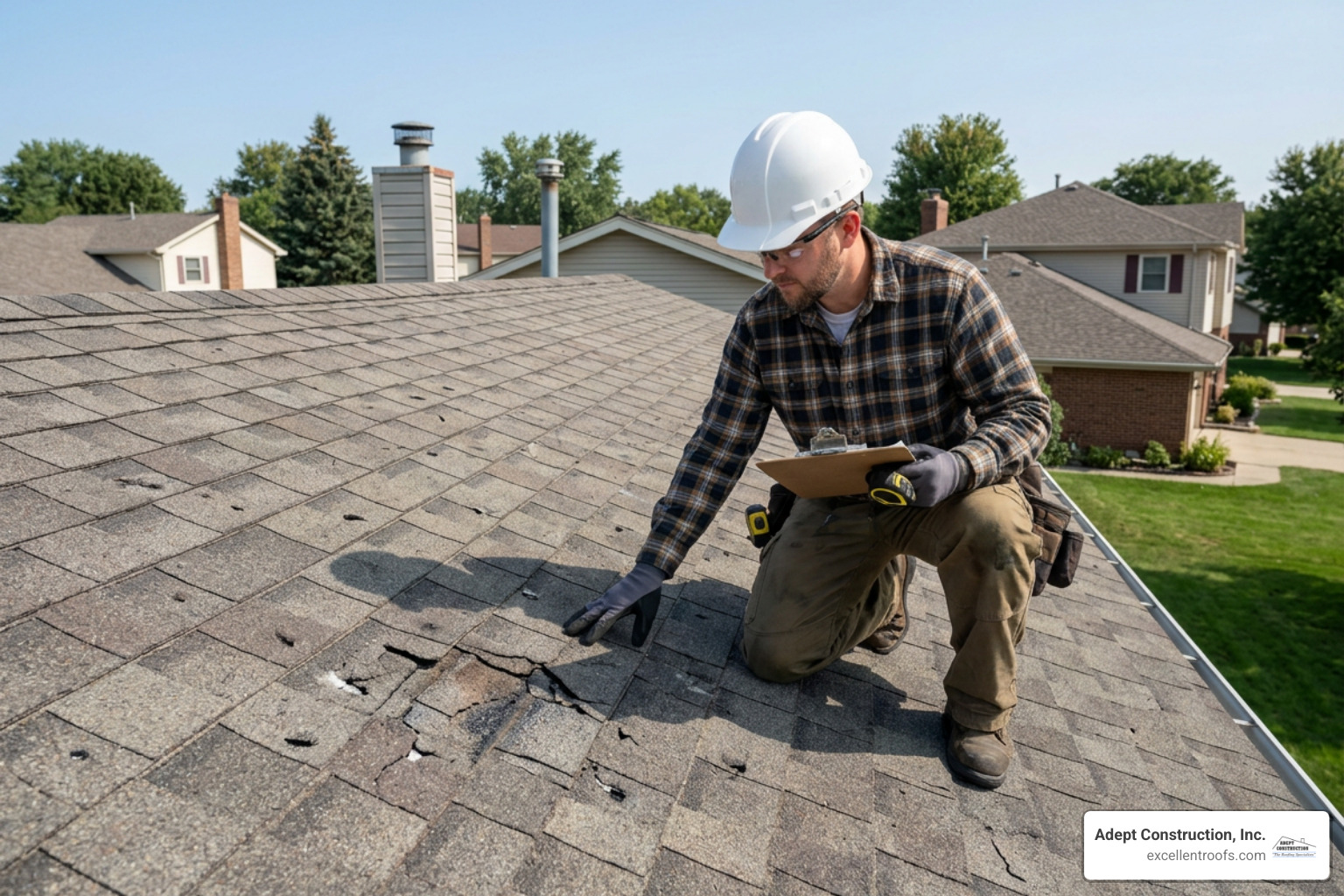
A successful insurance restoration relies on meticulous, incontrovertible evidence. Our project managers document every elevation of the property, taking high-resolution macro photographs of bruised asphalt shingles, cracked cedar shakes, dented soft metals (box vents, gutters, flashing), and punctured siding.
When your insurance company assigns an adjuster, we meet them on-site. Walking the roof together ensures that line-item damage scopes align with industry-standard estimating software (such as Xactimate). This on-site collaboration prevents discrepancies in shingle quantities, steep-slope charges, ice and water shield requirements, and code-mandated drip edge installations.
How a Storm Restoration Contractor Navigates Insurance Claims
Navigating an insurance claim requires clear scope management:
- Detailed Estimate Comparison: We cross-reference the adjuster’s initial scope of loss against actual building dimensions and manufacturer installation instructions.
- Filing Supplements: If hidden damage emerges after roof tear-off—such as rotted plywood decking or unsealed chimney flashing—we submit detailed photo supplements and line-item revisions directly to your insurance carrier for approval.
- Depreciation Recovery: Upon full completion of the project, we issue a final Certificate of Completion and invoicing documentation, enabling your insurance carrier to release the withheld recoverable depreciation funds.
- Final Quality Walkthrough: A dedicated project supervisor inspects the entire installation, cleans magnetic sweeps across the yard for stray nails, and reviews manufacturer warranty registrations with the owner.
Frequently Asked Questions About Storm Damage Restoration
How soon after a severe storm should I inspect my roof?
Schedule a professional exterior inspection within 48 to 72 hours of a severe weather event. While major blow-offs and interior leaks are obvious, hail bruising and minor membrane tears remain invisible from the ground. Left untreated, high-temperature summer sunshine degrades ungranulated asphalt, while autumn rains and winter freeze-thaw cycles allow moisture to enter the roof decking, causing extensive rot before homeowners notice an active ceiling leak.
Does filing a storm damage claim raise homeowner insurance rates?
Insurance claims resulting from widespread weather events (such as severe hail, straight-line winds, or tornadoes) are classified by insurance carriers as “Acts of God.” Because these natural occurrences are outside property owner control, insurance companies do not raise individual rates for filing a single storm claim. Instead, carriers adjust collective risk premiums across entire zip codes or geographic regions based on overall storm activity.
What is the difference between storm damage repair and full roof replacement?
Storm damage repair addresses localized damage, such as replacing a small section of wind-blown shingles or reattaching pulled flashing. A full roof replacement is required when wind and hail damage is widespread across multiple roof slopes, when structural roof decking has lost integrity, or when current building codes mandate system upgrades (such as proper attic ventilation and ice-dam membrane barriers) that cannot be achieved through spot repairs alone.
Conclusion
Restoring your home or commercial building after severe weather requires an experienced, certified, and fully insured partner. Adept Construction, Inc. provides prompt, professional exterior restoration backed by durable workmanship warranties and trusted local leadership. If your property has sustained hail or wind impacts, visit our Storm Damage resource center to schedule your comprehensive on-site damage assessment.