
Identifying the Most Common Signs of Roof Damage
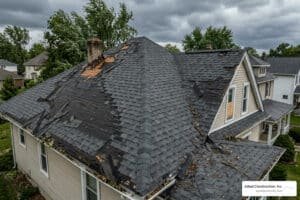
Roof damage compromises structural integrity immediately upon the breach of the water-shedding layer. Identifying and addressing these issues early is the most effective method for preventing catastrophic structural failure and excessive repair costs. For homeowners requiring professional roofing services, immediate intervention within the first 30 days of a storm event typically reduces long-term repair expenses by up to 60%. In our experience serving Naperville and Downers Grove, proactive maintenance is the key to roof longevity.
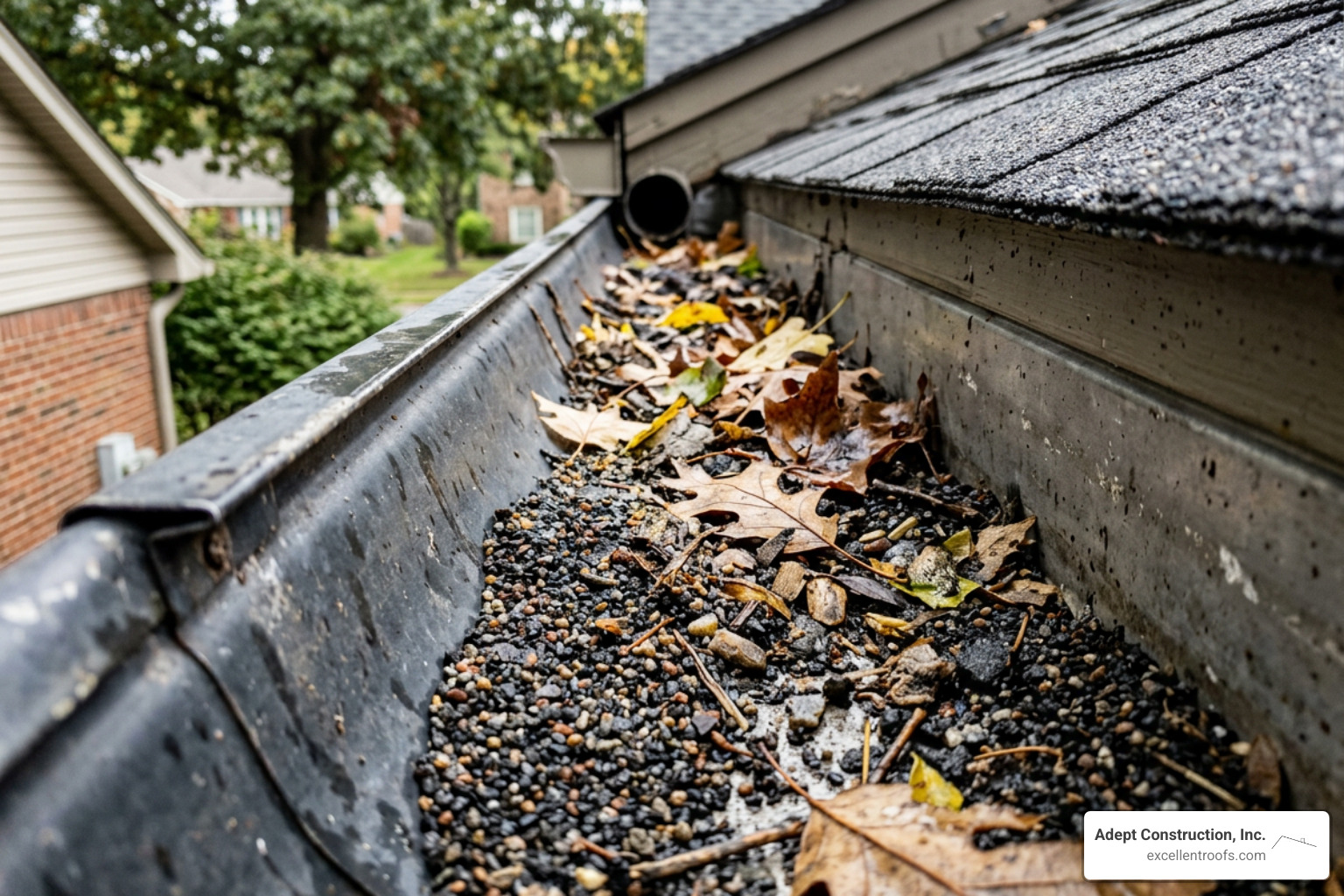
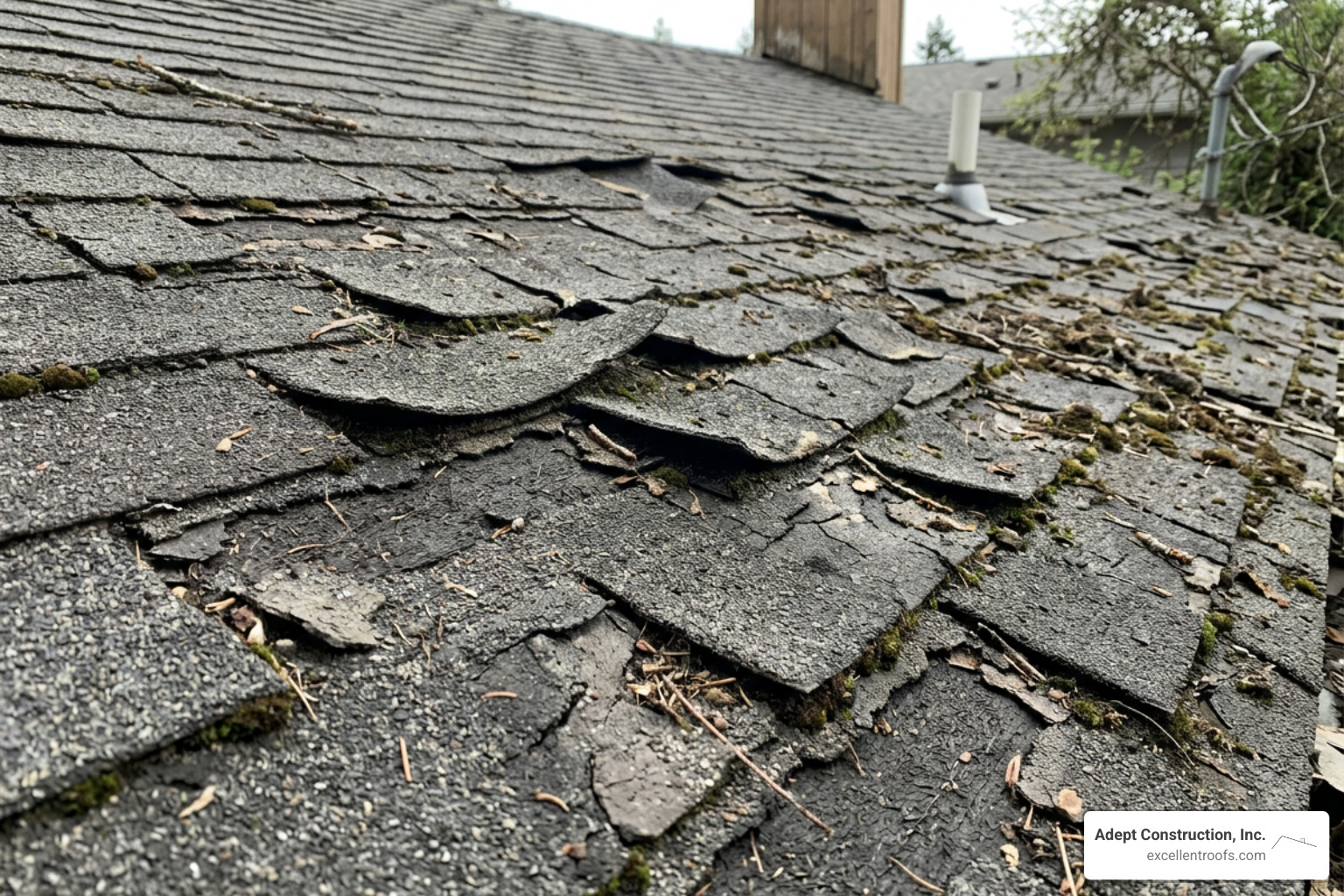
The most telling sign of aging or damaged shingles is granule loss. These small, sand-like pebbles protect your shingles from UV rays. If you see them piling up in your gutters like coffee grounds, your shingles are becoming brittle and losing their waterproofing ability.
Other critical signs include:
- Water Stains: Check your ceilings and top-floor walls for brownish “puddles” or streaks.
- Missing or Damaged Shingles: After high winds, shingles can blow off entirely or “tab up,” breaking the adhesive seal.
- Curling or Buckling: Shingles that curl at the edges or humped in the middle are no longer shedding water correctly.
- Daylight in the Attic: If you can see sunlight peeking through the roof boards (rafters) while standing in your attic, water is definitely getting in.
- Sagging Roof Deck: This often indicates long-term moisture has rotted the plywood sheathing underneath.
For a deeper dive into these red flags, check out our guide on 6 Signs You May Have a Leak in Your Roof. If you suspect a leak but can’t see it, our Roof Leak Detection Complete Guide can help you trace the path of water from the ceiling back to the entry point.
How to Safely Fix Roof Damage: DIY vs. Professional
Deciding whether to fix roof damage yourself or call a pro usually comes down to two things: the height of the roof and the complexity of the leak.
Minor punctures—like a hole from a fallen branch or a single missing shingle on a low-slope, one-story garage—are often manageable for a handy homeowner. However, once you deal with steep pitches, second stories, or leaks involving “valleys” (where two roof planes meet), the risk increases exponentially.
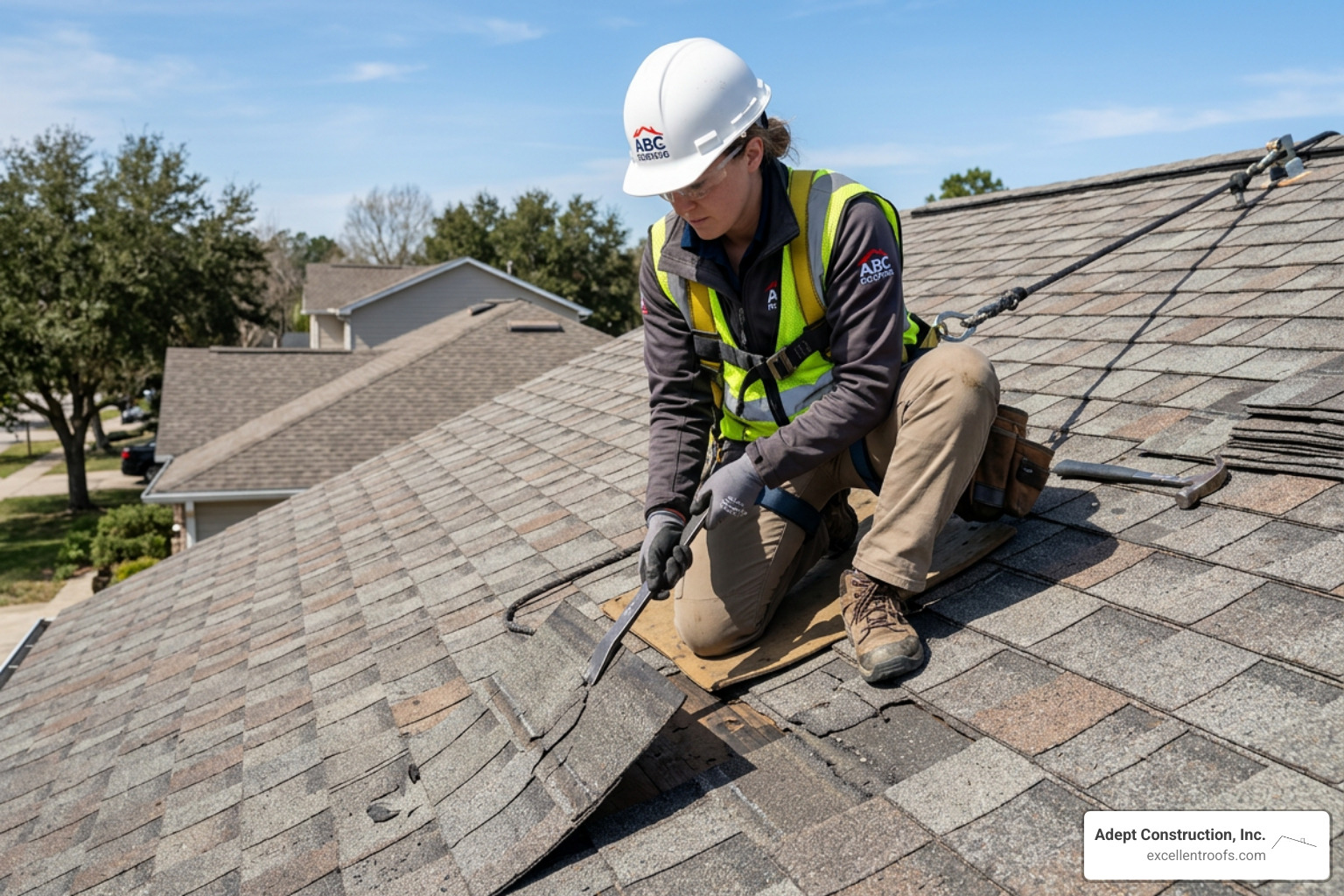
According to OSHA fall prevention regulations, falls are the leading cause of injury in construction. Professional crews use specialized safety harnesses, toe boards, and roof anchors to stay secure. If you don’t have this equipment, even a “simple” fix isn’t worth the physical risk.
| Repair Type | DIY Estimated Cost | Professional Estimated Cost | Risk Level |
|---|---|---|---|
| Single Shingle Replacement | $25 – $50 | $150 – $350 | Low (if 1-story) |
| Small Puncture Patch | $20 – $40 | $200 – $400 | Low |
| Flashing Repair | $50 – $100 | $400 – $800 | Moderate |
| Major Storm Damage | Not Recommended | $1,000 – $5,000+ | High |
If you are looking for a quick, reliable fix for smaller issues, searching for handyman roofing repair near me can connect you with professionals who handle minor maintenance without the need for a full crew. For more details on the pros and cons of each approach, read our Roof Repair Complete Guide.
Essential Tools to Fix Roof Damage Safely
If you decide to tackle a minor repair, you need more than just a ladder. You’ll need a flat bar (to pry up shingles without tearing them), a reliable Hammer, a utility knife, and a Caulk gun.
You will also need galvanized roofing nails and New shingles that match your existing roof’s color and weight. Always wear soft-soled boots for better traction and use a ladder stabilizer to prevent the ladder from sliding sideways while you’re climbing.
Using Sealant to Fix Roof Damage Leaks
Sometimes the leak isn’t a broken shingle, but a gap in the sealant around a vent pipe or chimney. Using a high-quality roof sealant can close these gaps.
However, be careful: silicone caulk is often a temporary “band-aid” that can peel away over time. We recommend professional-grade rubberized roofing cement for a more permanent bond. Our Asphalt Roof Leak Repair Ultimate Guide explains the difference between various sealants. A Small Roof Leak can often be fixed with a $10 tube of sealant if you catch it before the wood underneath starts to rot.
Step-by-Step Guide to Fix Roof Damage from Shingles
Replacing a damaged asphalt shingle is the most common way to fix roof damage. Here is the professional method we use at Adept Construction, Inc.:
- Break the Seal: Use your flat bar to gently slide under the shingle above the damaged one. Shingles are stuck together with a strip of sealant; you need to break this bond carefully to reach the nails.
- Remove the Nails: There are usually four to eight nails per shingle. You’ll need to pry them out of the damaged shingle and the one directly above it.
- Slide Out the Damage: Once the nails are gone, the damaged shingle should slide right out.
- Install the New Shingle: Slide a new, matching shingle into the gap. Line it up with the shingles on either side to ensure the “tabs” match.
- Secure and Seal: Nail the new shingle down using galvanized nails. Finally, apply a small dab of roofing cement under the tabs to re-establish the wind-resistant seal.
For a visual walkthrough, see our Repairing Roof Shingles A Step-by-Step Guide. Whether you are doing a Missing Shingle Repair or need to Repair Asphalt Shingle Roof Naperville IL, taking your time with the alignment is key to a leak-proof finish.
Addressing Specific Issues: Hail, Wind, and Ice Dams
Illinois weather is notoriously tough on roofs. Between summer hailstorms and winter ice dams, your roof takes a beating year-round.
Hail Damage: Hail doesn’t always create a hole, but it often leaves “bruises” or dents. These dents knock the protective granules off, exposing the asphalt to the sun. If you find more than eight hail hits per 100 square feet, it’s time to consider a full replacement. You can learn more about identifying these marks in our hail damage roof repair resource.
Wind Damage: Hurricane-force winds (74+ mph) are rare here, but gale-force gusts (39-54 mph) happen often. These winds can lift shingles, breaking the seal and allowing rain to blow underneath. Our wind damage roof repair Illinois guide highlights why even “minor” wind damage needs a quick fix.
Ice Dams: In Naperville and Downers Grove, ice dams are a major winter headache. They form when heat escapes your attic, melts snow on the roof, and then that water refreezes at the cold eaves. This creates a “dam” that traps water, forcing it under your shingles. Proper ventilation and “ice and water shield” membranes are the best defenses.
If a storm just rolled through, check out the Top Signs Your Roof Needs Immediate Repair After a Storm or visit our storm damage service page for immediate assistance.
When to Replace Instead of Repairing Your Roof
There comes a point where you can no longer fix roof damage with a simple patch. If your asphalt shingle roof is over 20 years old and showing widespread curling, it’s likely reached the end of its life.
Repairing one spot on an old roof often leads to damage in another spot because the shingles are too brittle to be handled. We often tell our clients: if the cost of repairs exceeds 30% of the cost of a new roof, replacement is the smarter financial move.
Structural failure, such as a sagging ridgeline or widespread rot in the decking, also necessitates a full tear-off. We specialize in high-quality residential roofing and can help you weigh the options between a roof replacement in Downers Grove or a roof replacement in Naperville IL.
Still unsure? Our guide on Do You Need Roof Repair or Replacement breaks down the math and the signs to look for.
Frequently Asked Questions about Roof Repair
How much does it cost to fix roof damage?
For a simple asphalt shingle repair, you might spend less than $100 on DIY materials. Professional repairs typically range from $250 to $1,000 depending on the height and complexity. If you have specialty materials like slate or cedar shake, costs can rise to $5,000 or more.
Does homeowners insurance cover roof leaks?
Yes, usually—if the damage was “sudden and accidental,” like a windstorm or a fallen tree. However, insurance almost never covers leaks caused by “wear and tear” or lack of maintenance. Always document the damage with photos immediately after a storm to support your claim.
How long does a professional roof repair take?
Most minor repairs are completed in 2 to 5 hours. Even a full roof replacement for a standard residential home in Illinois can often be finished in just 1 to 2 days, depending on the weather.
Conclusion
Adept Construction, Inc. provides definitive roofing solutions to protect your property’s value and safety. Whether you require targeted roof repair in Naperville or comprehensive roof repair in Downers Grove, our team delivers industry-leading workmanship. We specialize in residential roofing and storm restoration. We offer free estimates for all projects to ensure homeowners have accurate data before making repair decisions. Contact us today for a free estimate and see why we are considered the Top Roof Repair Naperville Quality Services You Can Trust.