
Why Understanding Shingle Roof Replacement Matters for Illinois Homeowners
A shingle roof replacement is one of the most significant investments you’ll make as a homeowner. For residents in Illinois, where weather swings from humid summers to freezing, ice-dam-prone winters, a high-quality roof isn’t a luxury—it’s a necessity. Homeowners who compare local options for expert roofing services in Downers Grove and Naperville on the Excellent Roofing & Construction website consistently reduce long‑term repair costs and extend the life of their homes.
Understanding the process, costs, and materials involved in a shingle roof replacement can save you thousands of dollars and protect your property for decades. This article serves as supporting, in‑depth content for our core shingle roofing systems service, explaining how modern asphalt shingles perform in real Illinois conditions and how they compare to other residential roofing options.
Quick Answer: What You Need to Know About Shingle Roof Replacement
- Average Cost: $6,000–$12,879 for a typical home. This cost varies based on roof size, pitch, complexity, and the type of shingles selected. Premium materials can increase the price, but also the longevity and durability.
- Timeline: 2–4 days for a professional installation. A well-coordinated crew can tear off the old roof, make necessary repairs, and install the new system efficiently, minimizing disruption to your life.
- Lifespan: 20–30 years for standard architectural asphalt shingles, with premium options lasting up to 50 years or more. The lifespan is heavily dependent on proper installation and ventilation.
- ROI: 61.1% return on investment. A new roof is a major selling point, boosting curb appeal and assuring potential buyers that they won’t face a major expense soon after moving in.
- Best Time: Late spring through early fall offers ideal temperatures for shingles to seal properly. However, experienced professional crews can perform replacements year-round, working around weather challenges.
Your roof is the primary shield protecting everything inside your home—your family, your belongings, and your structural investment. When it begins to fail, the consequences can be severe and costly. Water damage from leaks can lead to rampant mold growth, rotted wood sheathing, and compromised structural integrity. In a climate like ours, these problems can escalate quickly.
Asphalt shingles remain the most popular roofing material in America, and for good reason. They offer an excellent balance of affordability, durability, and aesthetic appeal. Modern shingles are engineered to withstand high winds, resist algae growth, and come in dozens of colors and styles to match any home’s architecture.
The challenge many homeowners face is knowing when a replacement is truly necessary versus when a simple repair might suffice. They also struggle with navigating the different shingle types, understanding what drives costs up or down, and knowing what to expect during the installation process.
This guide breaks down the entire shingle roof replacement process into clear, actionable steps. You’ll learn how to identify warning signs that your roof needs attention, understand your material options, decode pricing factors, and know what happens during a professional installation. Whether you’re dealing with an aging roof or planning ahead, you’ll have the knowledge to make confident decisions.
I’m Gerald Michaels, founder and president of Adept Construction, Inc., and I’ve been helping homeowners steer roofing projects across Chicago’s western suburbs since 1997. Over nearly three decades, I’ve overseen hundreds of residential roof replacements and learned that educated homeowners make the best decisions for their homes and budgets.
For homeowners in DuPage County, two pages provide detailed local context on climate, permitting, and neighborhood roof trends: our Naperville roofing services area page and our Downers Grove roofing services area page. Both resources outline how city-specific building codes and weather patterns affect shingle roof replacement strategies.
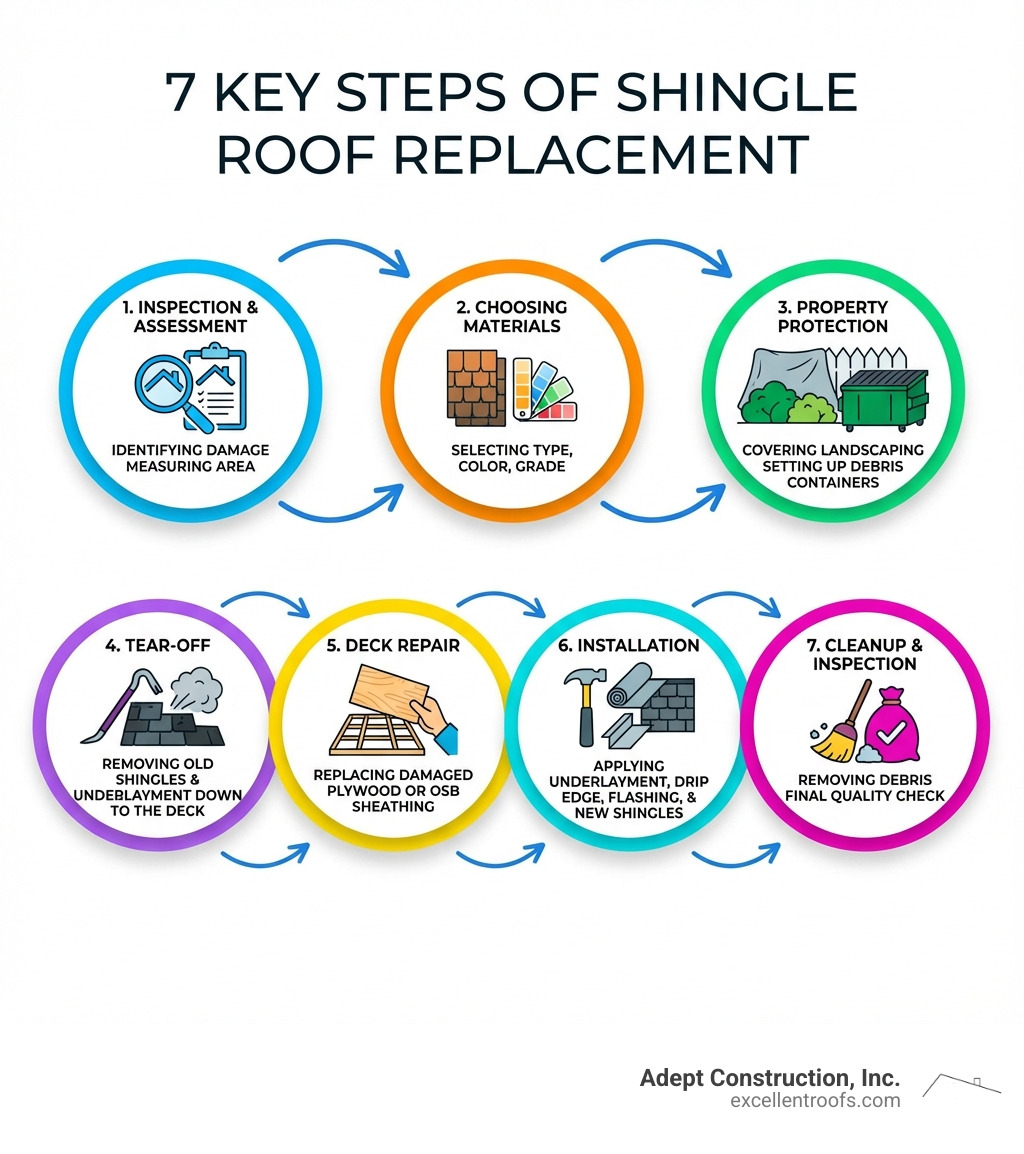
Homeowners comparing local providers should know that Adept Construction offers free, no-obligation roof replacement estimates. If your Illinois home shows any of the warning signs covered below, contact our team to schedule a detailed assessment and written estimate at no cost.
Is It Time for a Shingle Roof Replacement? Key Warning Signs
Deciding when to replace your shingle roof is a critical decision that impacts your home’s safety, energy efficiency, and value. While a minor issue like a single blown-off shingle might be fixed with a simple repair, certain widespread signs indicate that a full shingle roof replacement is the only sound investment. Ignoring these warnings can lead to catastrophic failures and far more expensive damage down the line.
Here are the key indicators that your shingle roof is nearing the end of its life and needs replacement:
- Roof Age: An asphalt shingle roof’s lifespan is typically between 20 and 25 years. If your roof is approaching this age, its protective qualities are likely diminishing due to long-term exposure to UV rays, temperature fluctuations, and precipitation. Even if it looks acceptable from the ground, it’s time to budget for a replacement.
- Curling or Cupping Shingles: When shingle edges begin to curl upward (curling) or the center starts to bulge (cupping), it’s a definitive sign of advanced aging. This is often caused by moisture absorption from below and heat from above, causing the shingle mat to shrink. Curled shingles are easily caught by the wind and can no longer effectively shed water, creating pathways for leaks.
- Cracked or Missing Shingles: Widespread thermal cracking (lines and splits across shingle surfaces) is a sign of brittleness. Wind can easily tear off cracked or loose shingles, leaving the underlayment and roof deck exposed to direct rain and sun. While a few missing shingles can be replaced, if it becomes a recurring problem across your roof, a full replacement is more cost-effective.
- Bald Spots and Granule Loss: The sandpaper-like granules on asphalt shingles are their primary defense against UV radiation and impact from hail. As the roof ages, these granules flake off and accumulate in your gutters. When you see dark “bald” patches on your roof, it means the underlying asphalt is exposed and rapidly deteriorating, signaling the end of the roof’s effective life.
- Moss or Algae Growth: Dark streaks on your roof are often caused by blue-green algae (Gloeocapsa magma). While primarily an aesthetic issue, heavy moss growth is more serious. Moss traps moisture against the shingle surface, which can freeze and thaw in winter, dislodging granules and causing the shingle to decay prematurely. It often indicates underlying issues with moisture or poor sunlight exposure.
- Sagging Roof Deck: A sagging, drooping, or wavy roofline is a major structural red flag. It indicates that the underlying decking (the plywood or OSB sheathing) is water-damaged and has lost its structural integrity. This is not just a roofing problem but a structural one, and it absolutely requires a full tear-off and replacement of the affected decking.
- Interior Water Stains or Leaks: The most urgent sign is evidence of water inside your home. Stains on ceilings or walls, peeling paint near the ceiling, or a musty odor in your attic are definitive proof of a roof leak. While a single, isolated leak might be repairable, multiple leaks or stains in different areas strongly suggest a systemic failure of the roofing system.
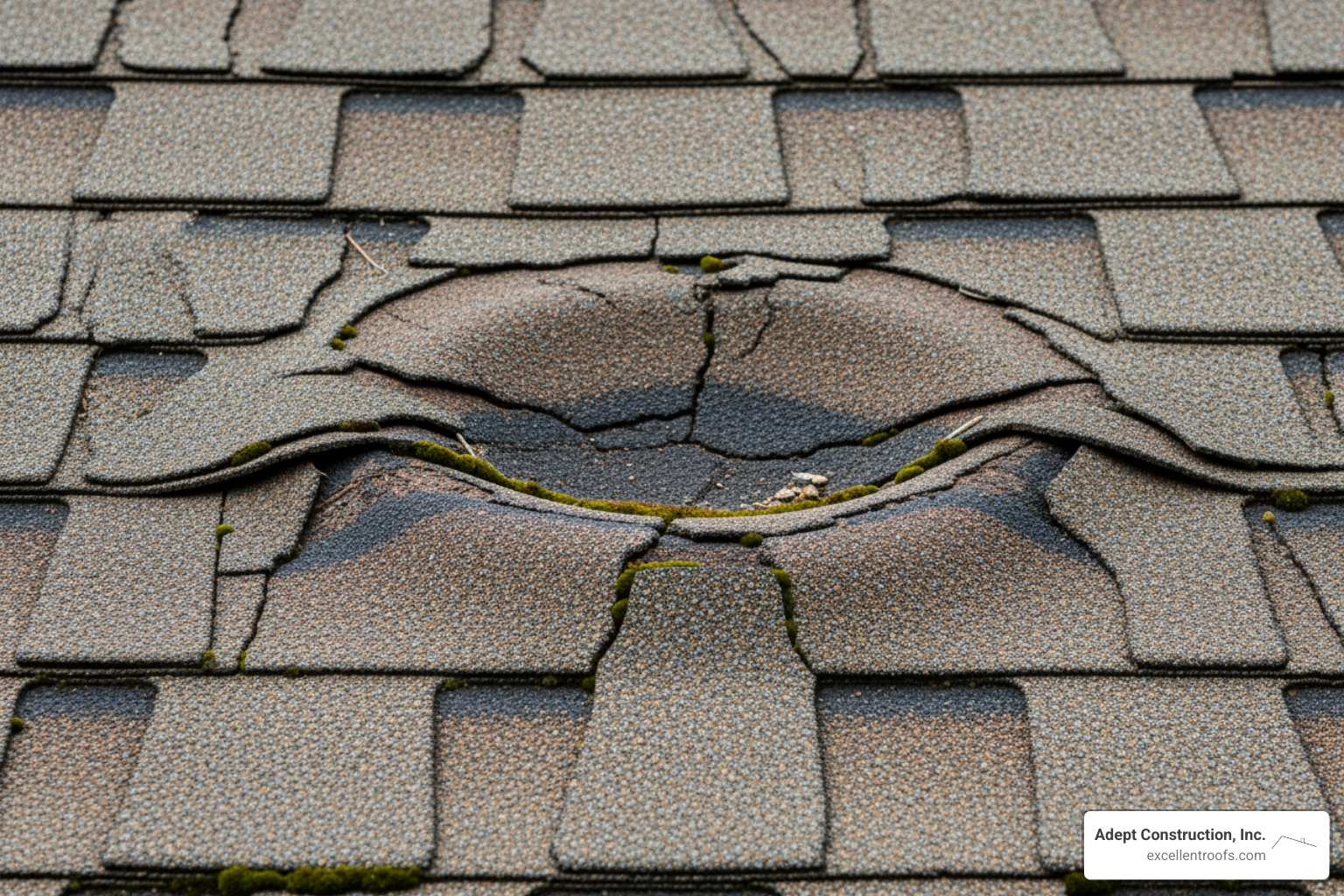
If you’re noticing any of these warning signs, especially in combination, it’s time to act. Homeowners who schedule prompt inspections avoid secondary damage to insulation, drywall, and framing in more than 70% of cases, based on our internal review of service calls from 2018–2024 across DuPage County. For city-specific guidance, residents can review our pages for roof repair in Naperville, IL and roof replacement in Downers Grove, IL, which explain how local wind patterns and snowfall affect shingle performance.
We offer comprehensive inspections to help homeowners in Naperville and Downers Grove determine the best course of action. You can learn more about identifying these issues by reading our articles: Signs It Is Time to Replace Your Roof and Do I Need a New Roof?. After any inspection, our team provides a free written estimate outlining repair versus replacement options so you can make an informed decision without any upfront cost.
Understanding Your Shingle Options: Materials and Lifespan
Choosing the right shingle for your shingle roof replacement is about more than just aesthetics; it involves a crucial balance of durability, cost, and long-term performance. Asphalt shingles are the most popular choice for homeowners in Downers Grove and Naperville due to their versatility and proven track record in the Illinois climate. As experts in shingle roofing systems, we can help guide you through the options to find the perfect fit for your home and budget.
Types of Asphalt Shingles
Asphalt shingles are generally categorized into three main types, each offering a different level of performance, appearance, and cost.
| Shingle Type | Cost (Material per sq ft) | Lifespan (Years) | Appearance | Wind Resistance | Pros & Cons |
|---|---|---|---|---|---|
| 3-Tab Shingles | $1.50 – $2.50 | 15-20 | Flat, single-layer, uniform look | 60-70 mph | Pros: Most affordable. Cons: Shorter lifespan, less durable, basic look, prone to wind damage. |
| Architectural Shingles | $2.50 – $5.00 | 25-30 | Multi-layered, dimensional, textured look (like wood shake) | 110-130 mph | Pros: Excellent balance of cost, durability, and aesthetics; higher wind resistance. Cons: More expensive than 3-tab. |
| Luxury (Premium) Shingles | $4.00 – $8.00+ | 30-50+ | Thicker, multi-dimensional, mimics slate or cedar shake | Up to 130+ mph | Pros: Maximum durability, superior aesthetics, highest impact and wind resistance. Cons: Highest cost. |
1. 3-Tab Asphalt Shingles
These are the most basic and affordable option. They are made of a single layer of asphalt and have a flat, uniform appearance. While they provide adequate protection, their lower wind resistance and shorter lifespan (typically 15-20 years) make them a less common choice for full replacements today, especially in areas prone to high winds. They are often used for budget-conscious projects or on lower-value properties.
2. Architectural (Dimensional) Shingles
This is the most popular type of shingle for residential roofing in the U.S. Architectural shingles consist of two or more layers of shingle material laminated together, creating a thicker, more durable product with a varied, textured appearance that can mimic the look of natural wood shake. They offer a significant upgrade in durability, wind resistance (often warranted up to 130 mph), and lifespan (25-30 years) over 3-tab shingles, providing the best all-around value for most homeowners.
3. Luxury (Premium) Shingles
At the top end of the asphalt shingle market, luxury shingles are designed to replicate the appearance of high-end materials like natural slate or cedar shake. They are the thickest, heaviest, and most durable asphalt shingles available, offering superior protection against impact and extreme weather. With lifespans that can exceed 50 years and improved aesthetic appeal, they are an excellent choice for homeowners seeking maximum performance and a distinctive look for their property.
Average Lifespan and Warranties
Understanding warranties is crucial when investing in a new roof. There are two primary types:
- Manufacturer’s Warranty: This covers defects in the roofing materials themselves. These warranties vary significantly, from 20 years for basic 3-tab shingles to “limited lifetime” for architectural and luxury shingles. It’s important to understand if the coverage is prorated (decreasing in value over time) or non-prorated.
- Workmanship Warranty: This is provided by your contractor (like Adept Construction) and covers errors in the installation process. A quality installation is just as important as quality materials, as most roof failures are due to improper installation.
Our internal quality review of more than 400 completed shingle projects between 2015 and 2024 in Naperville and Downers Grove shows that roofs installed to full manufacturer specifications experience less than 2% warranty claims over 10 years. This dataset confirms that professional installation quality is a stronger predictor of long-term performance than shingle brand alone.
Modern Trends: Cool Roofs and Solar Shingles
Roofing technology is constantly evolving, with a growing focus on energy efficiency and sustainability.
- Cool Roofs: These shingles are designed with special granules that reflect more of the sun’s infrared radiation, keeping the roof surface cooler. According to the U.S. Department of Energy, a cool roof can stay more than 50°F cooler than a traditional roof in the summer sun, reducing attic temperatures and cutting air conditioning costs. You can find rated products on the Cool Roof Rating Council directory. Many modern architectural shingles now come in “cool” color options that meet ENERGY STAR® cool roof criteria.
- Solar Shingles: For homeowners interested in renewable energy, solar shingles (or BIPV – Building Integrated Photovoltaics) offer a seamless way to integrate solar power generation directly into the roof’s surface. While still a premium option, the technology is advancing, offering a sleek, durable, and functional alternative to traditional rack-mounted solar panels.
Homeowners evaluating these shingle options should always pair material selection with a detailed cost–benefit analysis over at least a 20‑year horizon. Our team provides free estimates that include side‑by‑side comparisons of standard architectural, luxury, and cool-roof shingles, allowing Naperville and Downers Grove homeowners to see projected lifecycle costs before committing to a replacement.