
Why Residential Roof Restoration is a Game-Changer for Homeowners
Residential roof restoration is a comprehensive process that revitalizes your existing roof instead of replacing it entirely. For homeowners facing a worn-out roof, the prospect of a full replacement can be daunting. Fortunately, there’s a powerful alternative that extends your roof’s lifespan and improves curb appeal at a fraction of the cost. This “phoenix effect” for your home is made possible by the professional roofing services offered by trusted experts.
Here’s what you need to know:
What is Residential Roof Restoration?
- A multi-step process that repairs, cleans, primes, and protects your existing roof
- Extends roof lifespan by 10-15 years at a fraction of replacement cost
- Addresses surface damage while preserving structurally sound roofing systems
Key Benefits:
- Cost savings: Typically 40-60% less expensive than full replacement
- Less disruption: Completed in days, not weeks
- Sustainability: Keeps roofing materials out of landfills
- Improved performance: Improves energy efficiency and weather protection
Best for roofs that are:
- 15-25 years old
- Structurally sound but showing surface wear
- Experiencing minor leaks or cosmetic issues
- Not yet requiring complete replacement
Most roofs have a lifespan of 25-30 years, but restoration can add 10-15 years to that timeline. Instead of tearing off your entire roof and sending thousands of pounds of material to a landfill, restoration repairs damage, seals vulnerabilities, and applies protective coatings to refresh your roof’s performance. The process is simpler and less disruptive than a full replacement, with minimal interruption to your daily routine.
However, restoration isn’t right for every roof. Understanding when to repair, restore, or replace requires knowledge of your roof’s age, condition, and damage. That’s where expert guidance is essential.
As Gerald Michaels, founder of Adept Construction, Inc., I’ve led residential roof restoration projects across Chicago’s West Suburbs for nearly three decades. Our commitment to honest assessments and superior workmanship has built lasting relationships with clients throughout Naperville and Downers Grove.
Ready to explore whether restoration is right for your home? We offer free estimates on all residential roofing services. Contact Adept Construction today for an honest assessment from a team that’s been trusted by homeowners since 1997.
Restoration vs. Repair vs. Replacement: Making the Right Choice
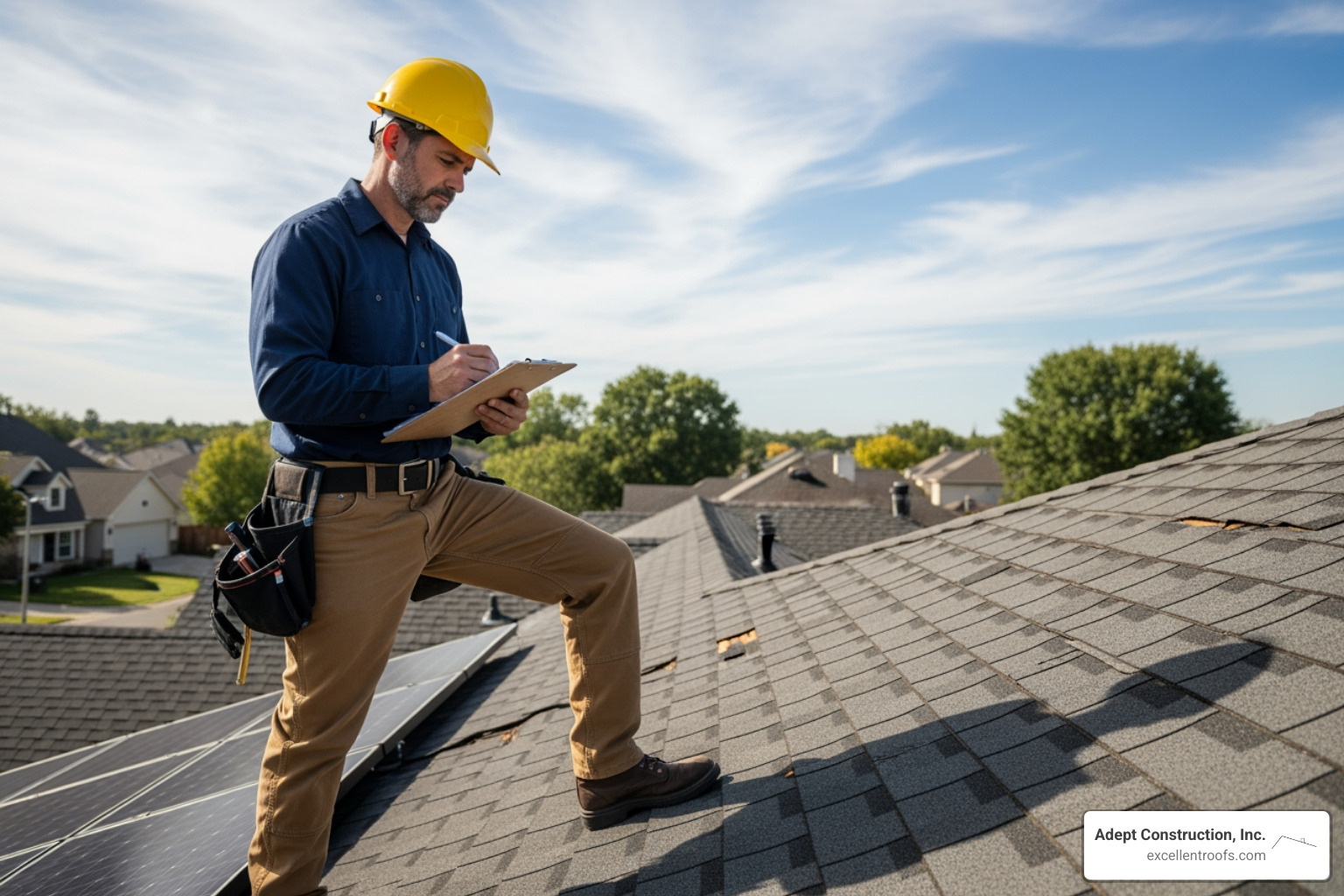
Understanding the distinctions between roof repair, restoration, and replacement is essential for making a cost-effective decision. Minor issues may only require a targeted roof repair in Downers Grove, IL, while widespread surface damage on a structurally sound roof is ideal for restoration. Full replacement is reserved for roofs that are beyond repair. This choice impacts your wallet, the longevity of your roof, and your home’s performance.
When to Choose Roof Repair: The Quick Fix
Roof repair is a “band-aid” solution for small, localized issues. It’s the most common and least expensive option, ideal when the overall roofing system is still in good shape.
Signs that a repair is sufficient include:
- Localized damage: A few missing or broken shingles from high winds or a small section of damaged flashing around a chimney.
- Small leaks: A minor leak that can be traced to a specific, identifiable source.
- Flashing issues: Damaged or rusted flashing around skylights, chimneys, or vents, which can be repaired or replaced in sections.
- Roof is under 15 years old: A relatively young roof with localized issues can almost always be repaired without a full overhaul.
A typical small section repair for asphalt shingles might cost between $200 to $500. For more details, see our roof repair services in Downers Grove, IL or our roof repair services in Naperville, IL.
The Case for Residential Roof Restoration: A Complete Revitalization
Residential roof restoration is a comprehensive process that brings your entire roof back to “full health” before problems escalate. It’s a game-changer for roofs with widespread wear that are still structurally sound.
Consider residential roof restoration when:
- Widespread surface wear: The roof looks tired, faded, or has extensive granule loss on asphalt shingles, even if it’s not actively leaking.
- Aging but structurally sound roof: A roof between 15-25 years old is an ideal candidate. Restoration can add another 10-15 years to its life, delaying a costly replacement.
- Faded color or granule loss: Restoration addresses the erosion of the protective layer on shingles, restoring both appearance and function.
- Cost-effectiveness and sustainability: Restoration is more budget-friendly than replacement and is a sustainable choice, as it revitalizes your existing roof rather than sending materials to a landfill. According to the EPA, construction and demolition debris accounts for a significant portion of landfill waste.
- Minimal disruption: A restoration is simpler and faster than a replacement, with minimal interruption to your daily life.
Learn more about the differences between roof restoration and replacement.
When Roof Replacement is Unavoidable
Sometimes, a roof reaches the end of its life, and replacement is the only safe option. This is necessary when the structure is compromised beyond what repairs or restoration can fix.
You might need a full roof replacement if:
- Roof is over 20-25 years old: Most roofing systems have a finite lifespan. A roof over 25 years old likely needs a replacement evaluation.
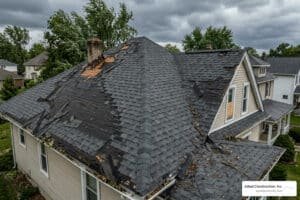
- Severe structural damage: This includes significant sagging, widespread rot, or damage to the underlying decking.
- Widespread water damage: If water damage is extensive and has affected large portions of the roof or interior, replacement is the only way to fully address it.
- Multiple previous repairs: If you’re constantly patching new leaks, a new roof provides a fresh start and long-term peace of mind.
A complete roof replacement is a significant investment. For comprehensive services, explore our roof replacement services in Downers Grove, IL and Naperville, IL.
| Feature | Roof Repair | Residential Roof Restoration | Roof Replacement |
|---|---|---|---|
| Cost | Lowest ($200-$1,500 per section) | Moderate (Fraction of replacement cost) | Highest ($5,000-$10,000+) |
| Lifespan Ext. | Short-term fix (addresses immediate issue) | Significant (adds 10-15 years) | Complete (resets lifespan for 15-50+ years) |
| Time | Hours to a day | Days | Several days to weeks |
| Disruption | Minimal | Minimal | Significant |
| Sustainability | Low (some waste) | High (revitalizes existing materials) | Low (significant landfill waste) |
| Ideal Scenarios | Localized damage, young roof, minor leaks | Aging but sound roof, widespread surface wear, cost-conscious | Old roof (20-25+ yrs), severe structural damage, widespread water damage |
The Comprehensive Residential Roof Restoration Process

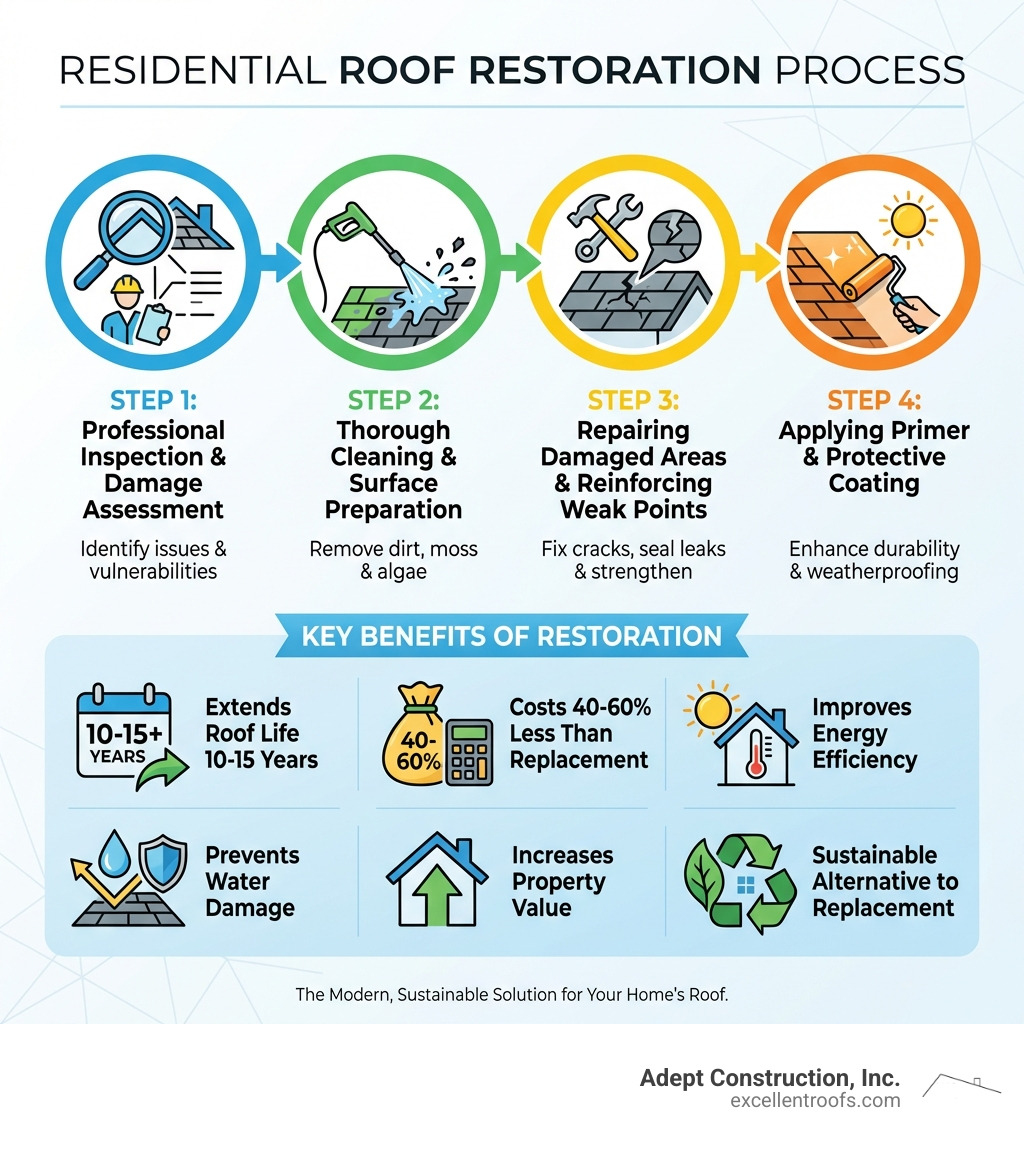
Professional residential roof restoration is a meticulous, multi-step process that refreshs your roofing system to extend its life and improve performance. We follow a proven method to ensure every project in Naperville and Downers Grove meets our high standards.
Step 1: Professional Inspection and Assessment
A thorough restoration begins with a detailed evaluation to understand the roof’s current state and pinpoint every issue.
- Detailed evaluation of damage: We look for cracked or missing shingles, deteriorated flashing, and other visible signs of wear.
- Structural integrity check: We assess the underlying structure to ensure it’s sound enough for restoration. If not, we may advise on a replacement.
- Moisture detection and leak identification: Using expert techniques, we find the source of any leaks to prevent future water damage. See our complete guide to roof leak detection.
- Pinpointing problem areas: We identify sections prone to ponding water, moss, or algae growth that require special attention.
Step 2: Thorough Cleaning and Preparation
A clean surface is essential for the new materials to adhere properly and for the restoration to last.
- High-pressure washing: We use specialized equipment to remove accumulated dirt, grime, and loose debris.
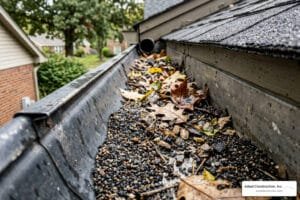
- Debris removal: All leaves, branches, and organic matter are cleared from the roof surface and gutters to ensure proper drainage.
- Mold and algae treatment: We apply treatments to eliminate harmful growths like mold and algae, which are common in Illinois’ humid climate.
- Preparing a clean surface for adhesion: This critical step ensures the new protective layers will bond effectively for long-term durability.
Step 3: Repairing and Reinforcing
With the roof prepped, we address all identified issues to make the roof watertight and structurally sound before applying protective coatings.
- Replacing broken tiles or shingles: Damaged or missing components are replaced to match the existing roof.
- Sealing cracks and gaps: We use high-quality sealants to close any potential entry points for water.
- Re-bedding ridge caps: On tile roofs, we secure loose ridge caps to ensure they are stable and watertight.
Step 4: Priming and Applying Protective Coatings
The final step involves applying specialized layers that protect the roof from future damage and restore its appearance.
- Application of specialized primer: A primer is applied to the prepared surface to ensure the topcoat achieves a strong, lasting bond.
- Final topcoat for UV and water resistance: We apply a durable, protective coating (e.g., acrylic, silicone) that creates a seamless membrane, improving resistance to UV rays, water, and weather.
- Restoring color and appearance: The topcoat revitalizes the roof’s look, improving curb appeal with a “like-new” finish, available in various colors.
Is Your Roof a Candidate? Signs and Suitable Materials
Not every roof qualifies for restoration, but many do. Identifying warning signs early and understanding which roofing systems respond best to restoration can save you from a costly replacement. Our team can accurately assess your roof’s potential for residential roof restoration in Downers Grove and Naperville.
Telltale Signs Your Roof Needs Restoration
Spotting these signs early can mean the difference between restoration and replacement:
- Widespread granule loss on shingles: Large amounts of shingle granules in your gutters indicate the protective layer is wearing away.
- Multiple small leaks: A pattern of small leaks suggests widespread material degradation, making it a prime candidate for restoration.
- Faded or discolored appearance: A faded roof indicates surface wear from UV exposure, which restoration can reverse.
- Curling or cracked shingles: Shingles that are curling or cracking are failing and can no longer effectively shed water.
- Roof age between 15-25 years: This is the ideal age range for restoration, which can add another decade or more to your roof’s life.
- Interior signs of roof damage: Water stains on ceilings, peeling paint, or mold growth often point to exterior issues that restoration can fix. For more, see signs your roof needs repair after a storm.
Best Roofing Materials for a Successful Residential Roof Restoration
Many common residential roofing materials are excellent candidates for restoration, though the techniques vary.
- Metal roofs: Restoration involves cleaning, treating rust, and applying elastomeric coatings to extend their already long lifespan.
- Asphalt shingles: As a popular choice in our region, shingle roofing can be restored by cleaning, repairing cracks, and applying a rejuvenation treatment to address granule loss and curling.
- Tile roofs: The restoration process for tile includes cleaning, re-sealing porous tiles, and replacing any broken or loose components to maintain their durability and appearance.
- Flat roofs: Flat roofing systems benefit greatly from new membrane coatings that seal leaks and improve energy efficiency without a full tear-off.
For a full overview of different roofing materials, visit our roofing systems page.
Maximizing Your Investment: Costs, Maintenance, and Finding a Pro
Choosing restoration is a strategic financial decision that increases roof longevity and home value. To maximize your investment, understand the benefits, commit to maintenance, and select a qualified professional.
Long-Term Cost Implications: Restoration vs. Replacement
Residential roof restoration is a smart long-term investment for several key reasons:
- Significant upfront savings: Restoration typically costs 40-60% less than a full replacement, allowing you to address issues at a fraction of the price.
- Extends roof lifespan by 10-15 years: By delaying the need for a full replacement, you can plan your finances more effectively for over a decade.
- Improved energy efficiency: Modern reflective coatings reduce heat absorption, lowering summer cooling costs.
- Increased property value: A well-maintained, aesthetically pleasing roof boosts curb appeal and market value.
By choosing restoration, you avoid the high cost of a full roof replacement while securing the benefits of a refreshed roof.
Maintenance Tips for Your Restored Roof
Regular maintenance is key to maximizing the lifespan and performance of your newly restored roof.
- Annual professional inspections: Have your roof inspected at least once a year to catch minor issues before they become major problems.
- Regular gutter cleaning: Keep gutters clear to ensure proper water drainage and prevent backups onto the roof.
- Checking seals around vents and flashing: Inspect seals around chimneys, vents, and skylights to ensure they remain watertight.
- Trimming overhanging tree branches: Trim branches to prevent scratches and debris buildup.
- Promptly addressing minor issues: Fix small areas of damage immediately to prevent them from escalating.
Choosing the Right Contractor for Your Project
Selecting the right contractor is as important as the restoration itself. A reputable professional ensures quality workmanship and peace of mind.
- Verify local experience and credentials: Look for a contractor with a proven track record in your area, like our decades of service in Downers Grove and Naperville.
- Check for license and insurance: Ensure the contractor is licensed and carries both general liability and workers’ compensation insurance to protect you from liability.
- Read recent customer reviews: Reviews and ratings provide insight into a contractor’s reputation and customer satisfaction.
- Request a detailed, written estimate: A professional provides a comprehensive estimate outlining the scope of work, materials, timeline, and warranty.
- Look for manufacturer certifications: Certifications indicate a contractor is trained to install specific products and can offer extended warranties.
- An A+ rating from the Better Business Bureau (BBB) is a strong indicator of reliability and customer service.
Conclusion
Residential roof restoration is a proven, cost-effective solution for homeowners seeking to protect and improve their property. By revitalizing your existing roof, you extend its life, improve curb appeal, and avoid the expense and disruption of a full replacement. It’s a sustainable choice that not only saves you money in the long run but also improves your home’s energy efficiency and structural integrity. For homeowners in Downers Grove, IL and Naperville, IL, working with a trusted local expert like Adept Construction, Inc. ensures your roof remains a reliable shield for years to come.
Our nearly three decades of experience in the roofing industry have taught us that honesty and integrity are paramount. We won’t push for a full replacement if a restoration is the more appropriate and cost-effective solution for your home. We’re here to provide an honest assessment and the highest quality workmanship, ensuring your peace of mind.
Ready to restore your roof to its former glory? Contact us today for a free, no-obligation estimate on our residential roofing services.