
Why Residential Metal Roofing Is the Smart Choice for Illinois Homeowners
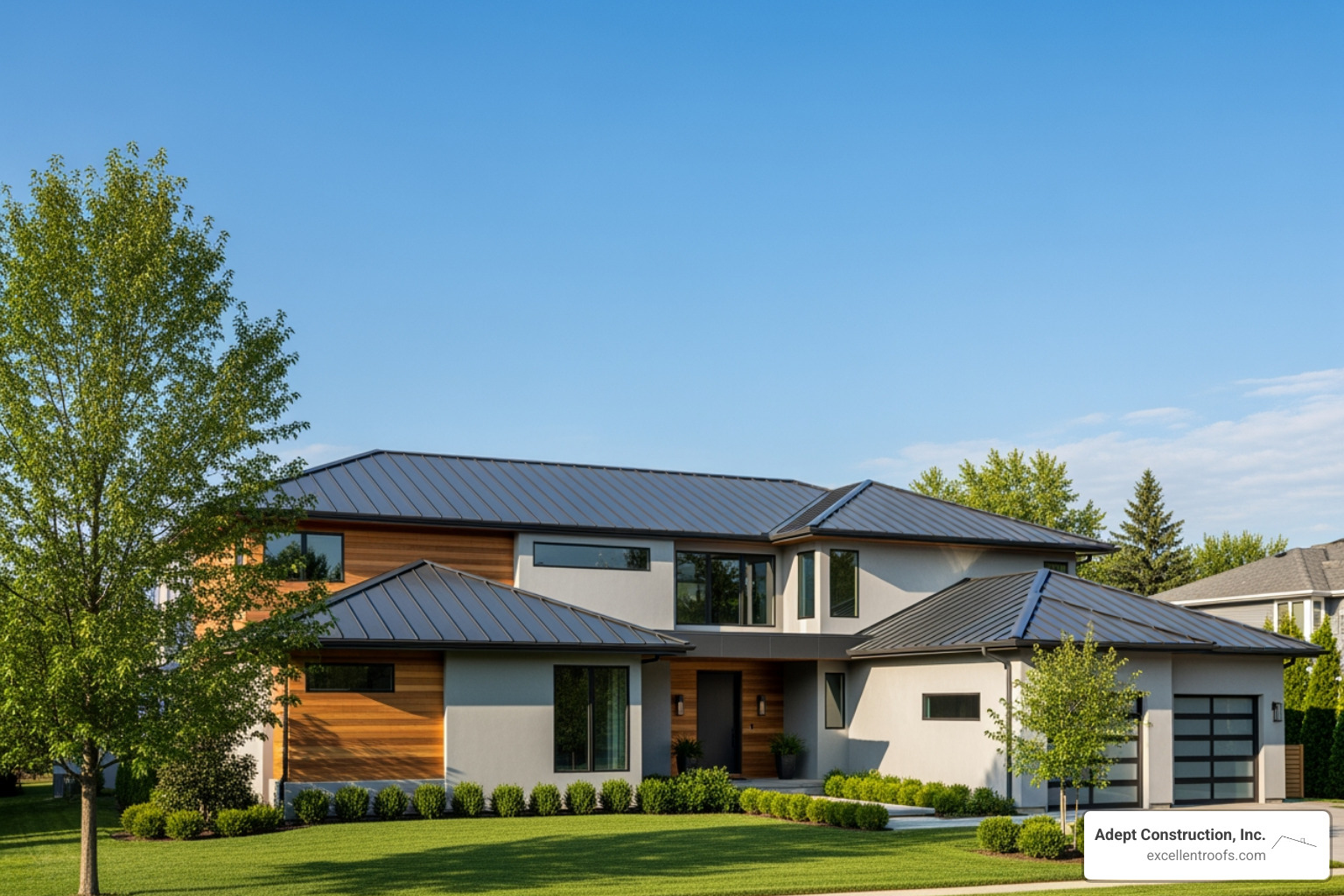
Residential metal roofing is a premium roofing solution known for its exceptional durability, energy efficiency, and curb appeal. For homeowners seeking a long-term investment that solves issues like repeated shingle replacements and high energy bills, metal is an ideal choice. For a complete overview of our services, visit our homepage.
Quick Answer: What Is Residential Metal Roofing?
- Lifespan: 40–80+ years (vs. 15–30 years for asphalt shingles)
- Materials: Steel, aluminum, copper, zinc, or Galvalume
- Styles: Standing seam, exposed fastener, metal shingles, and tiles
- Energy Savings: Reduces cooling costs by 10–25% through solar reflectivity
- Sustainability: Made from 35–95% recycled content; 100% recyclable at end of life
- Weather Resistance: Withstands winds up to 140 mph and hail up to 2 inches (Class 4 rating)
- Average Cost: $10–$20 per square foot installed
- ROI: Recoups approximately 48% of cost at resale; adds $23,000+ to home value
Modern metal roofing comes in dozens of profiles and colors, from sleek standing seam panels to shingles that mimic cedar shake or slate. Whether you’re building new or need a roof replacement in Naperville, IL, metal delivers superior performance against harsh Midwest weather. It resists wind, hail, fire, and heavy snow without the rot, algae growth, or frequent repairs associated with asphalt.
Illinois homeowners face unique challenges like freeze-thaw cycles, lake-effect snow, and severe storms. Metal roofing handles these conditions without cracking or curling. As the founder of Adept Construction, Inc., I’ve helped Chicagoland homeowners choose the right residential metal roofing systems since 1997. Our team specializes in residential roofing in Naperville, Downers Grove, and surrounding suburbs, delivering roofs that stand the test of time.
Ready to explore your options? Contact us today for a free estimate and find out why a metal roof might be the last roof you’ll ever need.
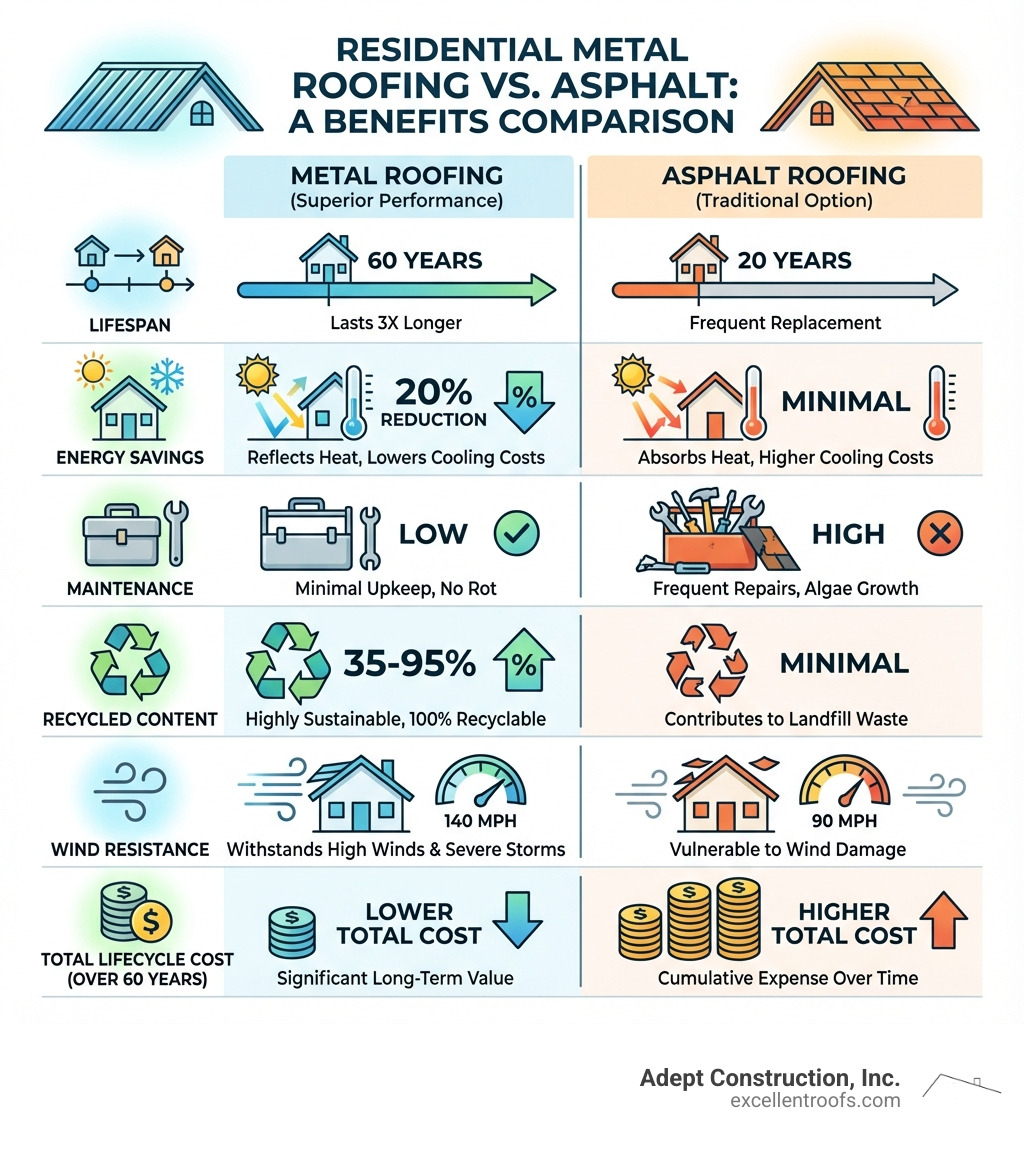
Simple residential metal roofing word guide:
Understanding Residential Metal Roofing
Residential metal roofing is a long-lasting, low-maintenance alternative to traditional materials like asphalt shingles. It consists of large, interlocking panels or stamped metal pieces that offer superior durability and weather resistance. While asphalt shingles last 15-30 years, a quality metal roof can last 40-80 years or more. It also boasts a Class A fire rating and is engineered to withstand 140 mph winds, making it ideal for Chicagoland’s unpredictable weather.
Metal roofing is also a smart choice for energy efficiency. Its high solar reflectivity can reduce cooling costs by 10-25%, lowering energy bills. Environmentally, metal roofs are highly sustainable, made from 35-95% recycled materials and being 100% recyclable at the end of their life. This contrasts sharply with the 12 billion square feet of asphalt shingles that end up in landfills annually. For more details on various roofing systems, explore our resources.
How Residential Metal Roofing Differs From Asphalt & Tile
The key differences between residential metal roofing and traditional materials are clear:
- Durability: Metal resists cracking, shrinking, and erosion common in asphalt shingles, lasting two to three times longer.
- Maintenance: Metal’s smooth surface sheds debris and resists mold, requiring far less upkeep than asphalt or tile.
- Weight: Metal is surprisingly lightweight, especially compared to heavy tile roofs, which may require extra structural support. Its strength-to-weight ratio is superior.
- Recyclability: Metal is made from recycled content and is 100% recyclable, significantly reducing landfill waste compared to asphalt shingles.
- Energy Efficiency: Metal’s reflective properties can save homeowners up to 40% on overall energy costs, while asphalt absorbs more heat and increases cooling demands.
Key Components of a Residential Metal Roofing System
A complete residential metal roofing system is an engineered assembly of critical components:
- Underlayment: This is a secondary moisture barrier installed over the roof deck, protecting your home from water intrusion. High-quality synthetic underlayments also offer sound dampening.
- Fasteners: These secure the panels to the roof deck. Standing seam systems use hidden clips that allow for thermal movement, while exposed fastener systems use specialized screws that require periodic inspection.
- Flashing: This is crucial for waterproofing around roof penetrations like vents and chimneys, as well as along edges. Proper flashing is essential to prevent leaks.
- Ventilation: Proper attic ventilation is vital for any roof. It regulates temperature, reduces moisture, and improves energy efficiency, preventing ice dams in winter.
- Energy-Saving Coatings: Many metal roofs feature factory-applied “cool roof” coatings. These paints reflect solar radiation, significantly lowering cooling costs.
Main Types of Residential Metal Roofing Systems
When choosing residential metal roofing, you’ll find several systems, each with unique aesthetics and fastening methods. The main types are standing seam and exposed fastener systems, along with various specialty profiles.
Standing-Seam Residential Metal Roofing
Standing-seam is the premium choice for residential applications, defined by its raised, interlocking seams that create clean vertical lines. Its key advantage is a hidden-fastener system. Clips secure the panels to the roof deck, allowing for thermal-movement as the metal expands and contracts with Chicagoland’s temperature swings. This prevents panel warping and fastener loosening, minimizing leak risks.
With its sleek, modern look, standing seam roofing boosts curb appeal and offers a strong return on investment. A 2024 report shows a prefinished steel standing seam roof recoups 48.1% of its cost at resale, making residential metal roofing a wise investment.
Screw-Down / Exposed-Fastener Panels
Exposed-fastener systems are more budget-friendly, with screws driven directly through the panel face into the roof deck. The visible screw heads are a defining feature. We typically recommend these systems for outbuildings like garages or sheds rather than a primary residence.
The main drawback is maintenance. The rubber washers on the screws can degrade over time, and thermal cycling can enlarge the screw holes, requiring screw replacement every 5-10 years to prevent leaks.
Specialty Profiles & Styles
Beyond panels, residential metal roofing offers specialty profiles that mimic traditional materials while providing metal’s superior performance:
- Metal-shake: Replicates the rustic look of cedar shakes.
- Metal-tile: Mimics classic clay or concrete tiles without the extreme weight.
- Metal-slate: Captures the sophisticated look of natural slate in a lighter, easier-to-install format.
These styles come in a vast range of color options, allowing homeowners to achieve any aesthetic vision and significantly boost curb-appeal.
| Feature | Standing Seam Metal Roof | Screw-Down (Exposed Fastener) Metal Roof |
|---|---|---|
| Fasteners | Hidden, clips secure panels to deck | Exposed, screws driven through panel face |
| Thermal Movement | Accommodated, panels float and expand/contract | Limited, can cause screw holes to wallow out |
| Longevity | 30-50+ years for steel/aluminum, 50+ for premium metals | 20-40 years, often limited by fastener degradation |
| Leak Risk | Very low, no penetrations on panel surface | Higher, due to exposed fasteners and potential seal failure |
| Maintenance | Very low, annual inspection of penetrations | Moderate, periodic screw/washer replacement (5-10 years) |
| Aesthetics | Sleek, clean lines, modern, high-end | More utilitarian, visible fasteners |
| Cost | Higher initial cost | Lower initial cost |
| Best Use | Residential living spaces, high-value homes | Outbuildings, garages, non-heated structures |
Choosing the Right Metal: Pros, Cons & Costs
Selecting the right metal for your residential metal roofing impacts aesthetics, performance, and cost. Each option offers unique benefits for Chicagoland homes. For more on the general benefits, visit the Metal Roofing Alliance.
- Steel: The most common choice, steel is strong, affordable, and offers good dent-resistance. It’s galvanized or Galvalume-coated for corrosion resistance. Cost: $10-$19 per sq. ft. installed.
- Aluminum: Lightweight and naturally rust-proof, aluminum is highly energy-efficient and contains a high percentage of recycled content. It is softer than steel and more prone to denting. Cost: $14-$20 per sq. ft. installed.
- Copper: A premium metal with a lifespan of 100+ years. It develops a distinctive green patina and requires virtually no maintenance but is very expensive and soft. Cost: $22.50-$32.00 per sq. ft. installed.
- Zinc: Another premium option with a lifespan of 80-100+ years. It is self-healing (minor scratches fade), corrosion-resistant, and pliable for complex designs, but it is also expensive and soft. Cost: $19.00-$27.00 per sq. ft. installed.
- Galvalume: This is steel coated with an aluminum-zinc alloy, combining steel’s strength with aluminum’s corrosion resistance at a lower cost. Cost: $9.00-$18.00 per sq. ft. installed.
When choosing, consider your budget, aesthetic goals, and potential energy-rebates for efficient materials.
Cost & ROI Snapshot for Residential Metal Roofing
The initial cost of residential metal roofing is higher than asphalt, but its long-term value is superior. A typical installation on a 2,000 sq. ft. home can range from $18,000 to $40,000.
- Return on Investment (ROI): A metal roof significantly boosts home value. The 2024 Cost vs. Value Report notes a 48.1% cost recoup at resale for a steel standing seam roof. A new metal roof can add over $23,000 to your home’s value.
- Utility Bill Savings: Energy-efficient metal roofs can reduce cooling costs by 10–25%. Over 30 years, these savings can offset a substantial portion of the initial cost.
Key factors influencing cost include material choice, roof size and complexity, and installer expertise.
Climate & Weather Performance
For homeowners in Naperville and Downers Grove, residential metal roofing excels in our challenging climate.
- Hail Resistance: Metal roofs have a Class 4 impact resistance rating, withstanding hail up to 2 inches in diameter.
- Snow-Shedding: The smooth surface sheds snow effectively, reducing heavy loads and the risk of ice dams during Illinois winters.
- Wind Performance: Engineered to withstand winds up to 140 mph, metal roofs offer superior protection during severe storms.
- Fire Resistance: A Class A fire rating makes metal roofing non-combustible, providing an important layer of safety.
- Freeze-Thaw Cycles: Unlike asphalt, metal handles frequent freeze-thaw cycles without cracking or degrading.
Sustainability & Energy Efficiency
Choosing residential metal roofing is an environmentally responsible decision. Metal roofs are made from 35–95% recycled materials and are 100% recyclable, diverting significant waste from landfills compared to asphalt shingles. Their “cool roof” coatings reflect solar heat, reducing cooling costs by 10–25%. Metal roofs are also an excellent, long-lasting platform for solar panel installations.
Installation, Maintenance & Warranties
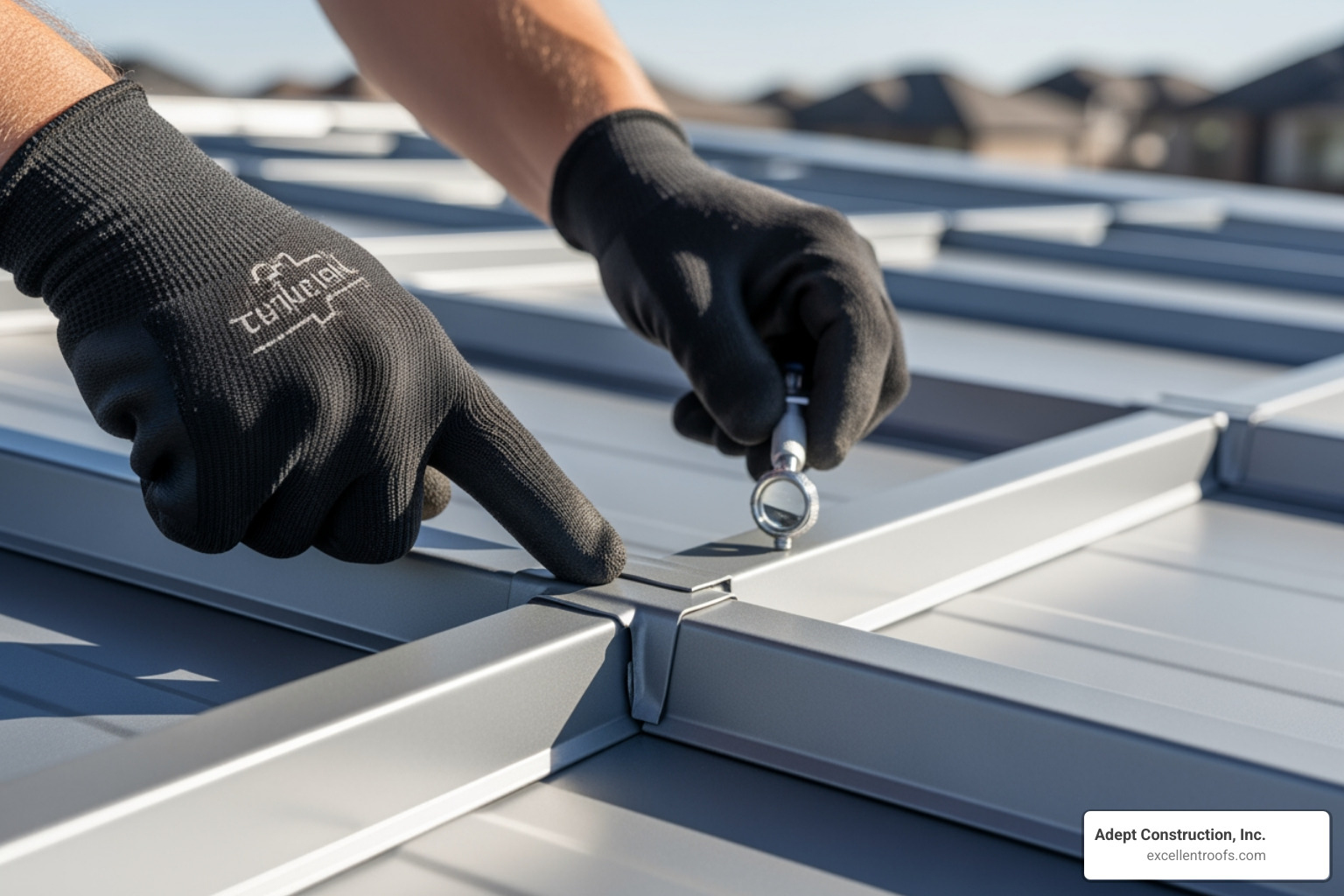
The performance of your residential metal roofing system depends on proper installation and minimal, consistent maintenance. Choosing a licensed-contractor like Adept Construction, Inc. is non-negotiable. Our experienced team ensures all work adheres to local code-compliance in Downers Grove and Naperville and manufacturer specifications. Proper installation includes a high-quality underlayment, adequate ventilation, and meticulous flashing for a watertight seal. For more on our process, visit our roof installation page.
Can Residential Metal Roofing Be Installed Over Existing Shingles?
Yes, installing a metal roof over existing shingles (the overlay-method) is often possible. This approach offers several benefits:
- Landfill Reduction: Avoids tearing off old shingles, making it an eco-friendly choice.
- Cost Savings: Reduces labor and disposal fees.
- Added Insulation: The old shingles provide a minor extra layer of insulation.
However, we must first confirm that your home’s structure can support the added weight and that the overlay complies with local building-code. The existing roof must also be flat enough to provide a stable base.
Maintenance Checklist & Longevity Boosters
Residential metal roofing is famously low-maintenance. Follow this simple checklist to ensure a long lifespan:
- Debris-Removal: Periodically clear leaves and branches from the roof and gutters.
- Fastener-Checks: For screw-down systems, inspect screws and washers every 5-10 years. On standing seam roofs, check any exposed fasteners on trim pieces.
- Sealant-Renewal: Inspect and reapply sealant around chimneys and vents as needed.
- Professional Inspection: We recommend a professional inspection every few years, especially after severe storms, to catch minor issues early.
Selecting a Qualified Metal Roofing Contractor
Choosing the right contractor is as important as the material itself. Metal roofing requires specialized skills.
What to look for:
- Experience: Seek a company with a proven track record in metal roofing. Adept Construction, Inc. has served the Downers Grove and Naperville areas since 1997.
- Certifications: Manufacturer certifications indicate high installation standards.
- Insurance and Licensing: Always verify the contractor is fully licensed and insured.
- Local Reviews: Check online reviews and ask for local references.
- Warranties: A good contractor offers comprehensive warranties on materials and labor.
- Transparency: Choose a contractor who provides clear communication and detailed estimates.
Our team is ready to provide exceptional residential roofing services for your project.
Cost vs. Value: Is Residential Metal Roofing Worth It?
While the initial investment for residential metal roofing is higher than asphalt, its life-cycle cost makes it a superior long-term investment. A metal roof’s 40-80 year lifespan means you avoid the cost and hassle of replacing an asphalt roof two or three times. Over 60 years, metal is often the less expensive choice.
Metal roofing also adds value in other ways:
- Insurance Discounts: Many providers offer discounts for metal roofs due to their high resistance to fire, hail, and wind.
- Home Value Increase: A new metal roof can add over $23,000 to your home’s value, and the 2024 Cost vs. Value Report shows a 48.1% cost recoup at resale.
- Energy Savings: Reduced cooling costs lead to tangible savings on utility bills year after year.
When you factor in longevity, low maintenance, energy savings, and increased home value, metal roofing provides an excellent return on investment. For more data, see the 2024 COST VS VALUE REPORT.
Financing & Incentives
Various financing options and incentives can make residential metal roofing more accessible:
- Energy Credits: Federal and state tax credits may be available for energy-efficient “cool roofs.”
- Utility Rebates: Check with your local utility provider in Naperville or Downers Grove for potential rebates.
- Manufacturer Warranties: Robust warranties protect your investment for decades.
- Financing Options: We offer flexible financing solutions to spread the cost over time. We can discuss these during your free estimate.
Regional Case Study – Chicagoland Homes
For homeowners in the Chicagoland area, residential metal roofing is uniquely suited to our climate. It withstands the freeze-thaw cycles that crack asphalt shingles and its smooth surface sheds heavy lake-effect snow, reducing structural load and ice dams. Furthermore, metal roofs are engineered to resist severe wind-storms (up to 140 mph) and hail, offering unparalleled protection. If you’re considering a roof replacement in Downers Grove, metal is a top-tier choice for durability.
Frequently Asked Questions about Residential Metal Roofing
Here are answers to some of the most common questions we hear from homeowners considering residential metal roofing.
How noisy is a metal roof during rain or hail?
This is a common myth. A properly installed residential metal roofing system is often no noisier than an asphalt roof. The sound is significantly dampened by the solid roof deck, high-quality underlayment, and proper attic insulation. Many homeowners find the sound of rain on a well-installed metal roof to be quiet and soothing.
Will a metal roof attract lightning?
No, a metal roof does not attract lightning. Lightning strikes the highest point in an area, regardless of the material. In the unlikely event of a strike, a metal roof is non-combustible and will safely dissipate the electrical charge if properly grounded, which is a standard safety practice.
How do metal roofs handle thermal expansion and contraction?
Metal roofing systems are engineered to manage thermal movement. Standing seam systems, in particular, use hidden clips that allow the panels to expand and contract with temperature changes without stressing the fasteners. This prevents warping and ensures long-term integrity, a crucial feature for the fluctuating temperatures in Chicagoland.
Conclusion
Residential metal roofing is a superior choice for homeowners seeking a long-term, high-performance solution. Its exceptional longevity, significant energy-savings, and improved curb-appeal make it a smart investment. For Chicagoland homeowners, a metal roof offers unparalleled protection against our harsh weather, from heavy snow to high winds.
Choosing metal is also an eco-conscious decision, thanks to its high recycled content and full recyclability. At Adept Construction, Inc., our expertise ensures your residential metal roofing is installed correctly, maximizing its benefits for decades. We are committed to providing superior workmanship and transparent communication to our clients in Naperville and Downers Grove.
Ready to invest in the last roof you’ll ever need? Contact us today for a free estimate on our residential roofing services.