
Identifying Property Hazards and Common Storm Impacts
Mastering storm damage repair requires a rapid, structured response: secure the building envelope with emergency tarps within 24 to 48 hours, document all physical impacts with timestamped photos for insurance adjusters, extract intruding moisture to halt mold germination, and coordinate code-compliant reconstruction. Executing these critical stabilization and restoration steps immediately prevents progressive water damage, stops interior ceiling collapses, and ensures full policy claim reimbursement. Recognizing the top signs your roof needs immediate repair after a storm prevents minor leaks from escalating into structural rot. In Northern Illinois, severe spring hail, straight-line winds exceeding 60 mph, and winter ice dams represent the primary threats that require comprehensive storm damage repair to protect residential and commercial properties.
Different storm events produce specific damage patterns:
| Storm Threat | Primary Exterior Indicators | Hidden Structural Hazards | Immediate Risk Level |
|---|---|---|---|
| Hail Impact | Dented gutters, circular shingle bruising, displaced granules | Fractured fiberglass matting, accelerated UV decay | Moderate to High |
| Straight-Line Wind | Lifted shingles, torn siding panels, bent fascia | Unsealed adhesive strips, water infiltration along sheathing | High |
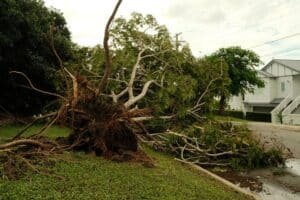
| Fallen Trees / Debris | Punctured decking, crushed framing, cracked rafters | Compromised load-bearing trusses, envelope failure | Critical |
| Winter Freeze-Thaw / Ice Dams | Backed-up gutter ice, loosened flashing, fascia rot | Soaked subroof decking, saturated attic insulation | High |
Recognizing Hail, Wind, and Fallen Tree Hazards
Hail causes localized destruction by striking roofing components at high velocity. Hailstones crush asphalt granules, exposing the underlying bitumen to sun exposure and moisture. Prompt hail damage roof repair restores this protective barrier before leaks reach the interior ceiling. Impact marks on aluminum gutters, downspouts, and metal valley liners serve as clear indicators of the hail’s diameter and direction.
Straight-line winds lift the edges of shingles and break their factory seal strips. Our wind damage roof repair Illinois guide highlights how wind creates negative pressure along roof eaves and ridges, pulling fasteners out of the roof deck.
When heavy tree limbs impact a structure, they crack structural trusses and puncture roof decking. This causes immediate structural instability that requires professional stabilization before anyone enters the space below.
Uncovering Hidden Structural and Moisture Issues
Surface damage represents only a portion of the total destruction caused by severe weather. Rain driven through lifted shingles saturates attic insulation, compresses thermal barriers, and causes subroof decking rot. Following professional recommendations to not let the rain in through comprehensive storm damage restoration stops water from migrating down interior wall cavities.
Restoration professionals use non-invasive moisture meters and thermal imaging cameras to track hidden water pathways behind drywall, around electrical conduits, and inside exterior wall assemblies.
Immediate Triage and First Response Protocol
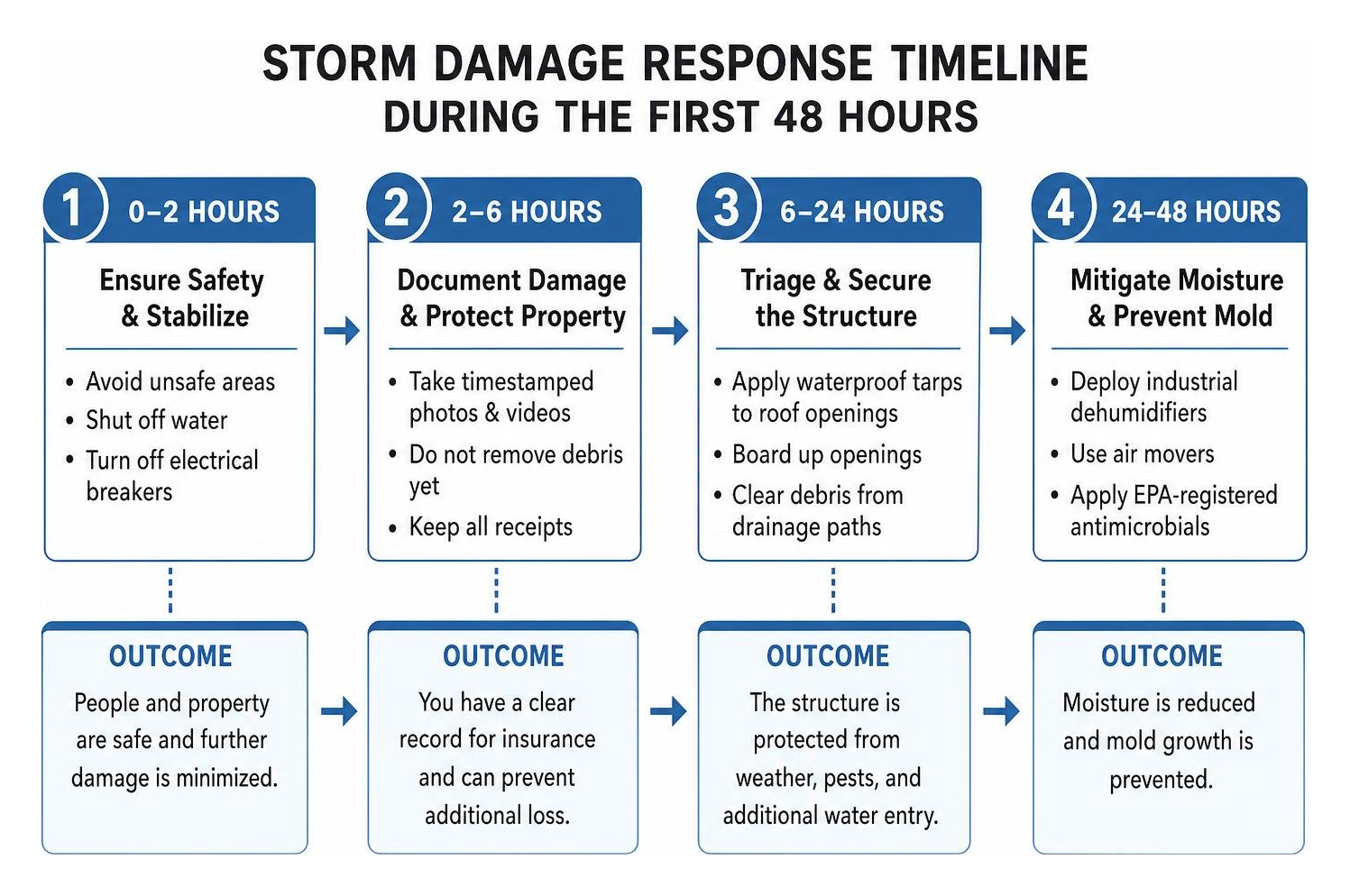
Property stabilization must occur immediately after the storm passes to prevent secondary loss. Homeowners must never climb onto a compromised roof or enter flooded basements where live electrical circuits create shock hazards. Shut off the main water line if plumbing is broken, and turn off electrical breakers for damaged zones of the home.
Document every damaged area with timestamped photos and continuous video walks before clearing away fallen branches or broken building materials. Retain all receipts for temporary tarps, plywood, and professional mitigation services, as insurance policies reimburse reasonable loss-prevention expenses.
Emergency Storm Damage Repair in the Critical 24 to 48 Hours
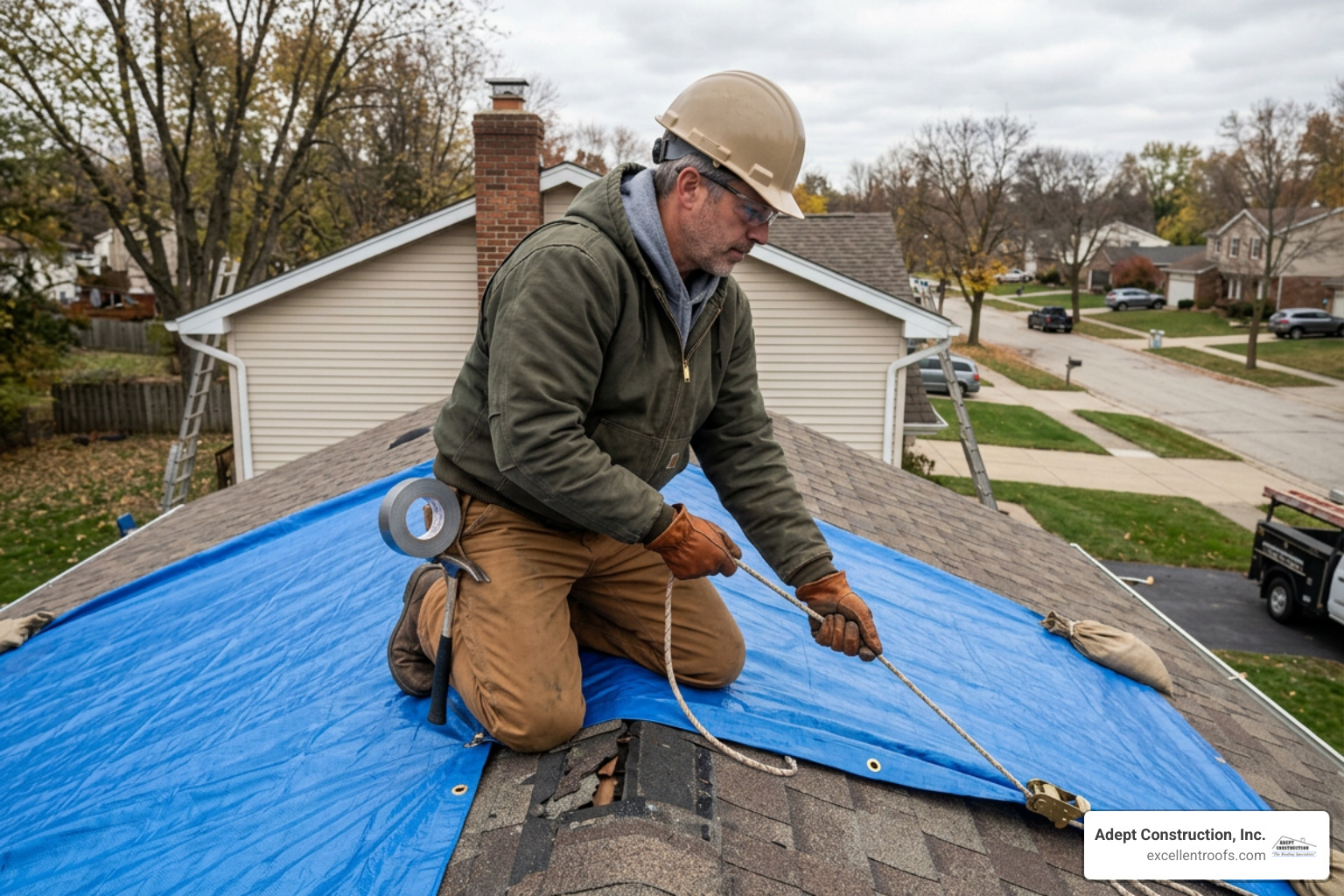
The critical window for securing a storm-damaged building is the first 24 to 48 hours. Structural openings must receive heavy-duty, waterproof tarping and plywood board-up to keep out weather and pests.
Partnering with certified emergency storm damage repair and disaster restoration professionals prevents further structural degradation. Stabilizing structural rafters, clearing debris from drainage pathways, and applying exterior barriers stops water from accumulating inside the building envelope.
Preventing Rapid Mold Proliferation and Moisture Spread
Active mold colonies begin germinating on wet drywall, ceiling tiles, and wood framing within 48 to 72 hours of water exposure. High indoor humidity accelerates fungal growth, degrading indoor air quality and requiring extensive remediation.
Industrial dehumidification units, high-velocity air movers, and EPA-registered antimicrobial applications extract deep moisture from structural elements. Water mitigation technicians establish containment zones to dry the building envelope before drywall and subfloors experience permanent structural breakdown.
Navigating the Insurance Claims and Adjuster Process
Filing an insurance claim requires clear organization and precise technical documentation. Review our walkthrough on the ultimate storm damage insurance claim process guide to align your claim submission with your policy requirements.
Property owners often consult licensed restoration contractors or public adjusters to create an itemized scope of loss using industry-standard estimating software. Studies show an average 51% increase in claim settlements when property owners work with professional advocates who present comprehensive documentation for every damaged trade.
During the on-site adjuster inspection, your contractor walks the property with the insurance representative to point out subtle issues, including fractured shingle mats, distorted metal flashing, and structural movement. If hidden damage appears after walls or roof layers are opened, the contractor submits supplemental claims with photos directly to the insurance carrier for approval.
A Comprehensive Roadmap to Storm Damage Repair
Restoring a storm-damaged home requires a structured plan that meets current building codes. Consult our storm damage roof repair ultimate guide for insight into building code requirements and restoration timelines.
Local municipalities in DuPage County require building permits for structural repairs, roof replacements, and electrical service replacements. Skipping necessary permits risks stop-work orders, municipal fines, and potential claim rejections by insurance companies. A licensed general contractor secures all permits, schedules trade inspections, and ensures structural work adheres to local energy and load standards.
Step-by-Step Storm Damage Repair and Restoration Process
- Emergency Stabilization: Install weatherproofing tarps, board up damaged windows, and install temporary structural supports where framing is compromised.
- Debris Disposal and Tear-Out: Clear tree limbs, strip waterlogged drywall, discard unsalvageable insulation, and clean drainage channels.
- Moisture Verification: Use specialized moisture meters to ensure all framing reaches safe equilibrium moisture content before closing walls.
- Exterior Envelope Reconstruction: Replace damaged structural decking, install premium underlayment, and lay replacement shingles, siding, and gutters.
- Municipal Trade Inspections: Coordinate mandatory local building department inspections for structural framing, roofing, and electrical systems.
- Interior Rebuilding and Finishing: Hang moisture-resistant drywall, apply texture and paint, reinstall trim, and replace floor coverings.
Single-Source General Contracting vs. Multiple Subcontractors
Hiring independent subcontractors for roofing, siding, gutters, and interior drywall often leads to scheduling conflicts, finger-pointing, and project delays. A single-source general contractor manages the entire scope of work, holding sole accountability for timelines and craftsmanship.
This approach allows homeowners to upgrade exterior building products during the restoration, such as installing Class 4 impact-resistant shingles or heavy-gauge vinyl siding. Working with established local restoration general contractors across the Chicago suburbs ensures coordinated schedules and written multi-year warranties covering all trades.
Selecting a Vetted Restoration Partner and Community Resources
Choosing the right partner protects property owners from predatory, out-of-state contractors who arrive after major storms. Follow our step-by-step guide to finding a reliable storm restoration contractor to verify local business addresses, state licenses, and active general liability and workers’ compensation policies.
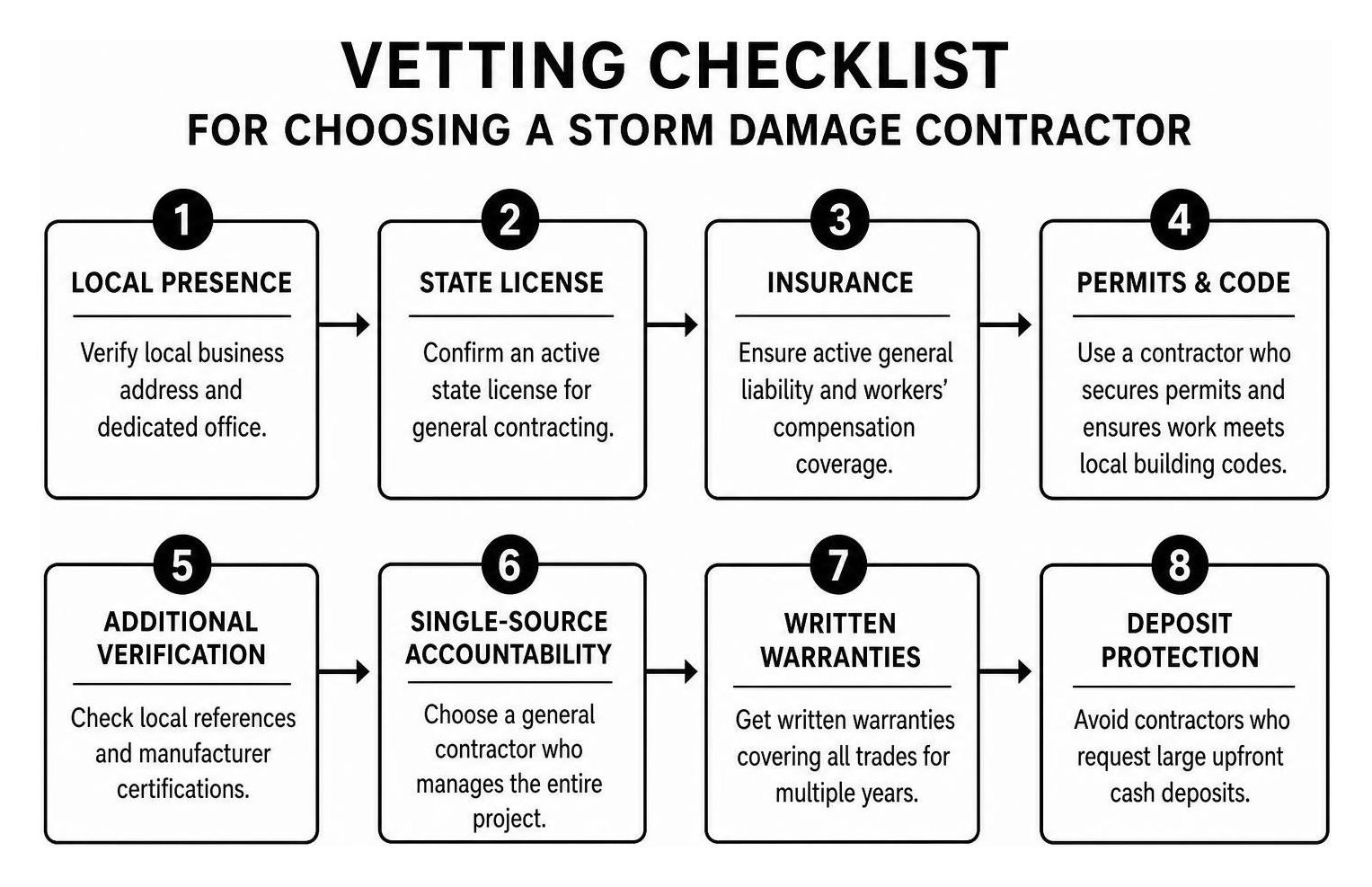
Unlicensed operators frequently request large upfront cash deposits and vanish before finishing the project, leaving owners with open permits and unfinished repairs. Experienced regional restoration providers maintain dedicated physical offices, local references, and strong manufacturer certifications.
For property owners dealing with severe structural damage or insurance lapses, community relief organizations offer direct assistance:
- The American Red Cross: Provides immediate emergency shelter, food, and basic necessities to displaced families.
- DuPage County Community Services: Offers emergency housing resources and rehabilitation assistance grants for qualified homeowners.
- FEMA Disaster Assistance: Distributes low-interest disaster recovery loans and individual assistance grants when official disaster declarations are issued.
Frequently Asked Questions about Storm Restoration
How quickly does mold begin growing after storm water intrusion?
Mold spores germinate on wet drywall, wood framing, and carpet padding within 48 to 72 hours of water exposure. Immediate water extraction and industrial dehumidification prevent mold from spreading throughout the structure.
Do I need a municipal building permit for storm damage repairs?
Yes. Municipalities throughout DuPage County, including Downers Grove and Naperville, require building permits for structural framing repairs, full roof replacements, and electrical meter repairs. Unpermitted work can result in fines and complicate future property sales.
What should I do if my storm damage claim is underpaid or denied?
Request a re-inspection from your insurance carrier and supply an itemized estimate prepared by a licensed restoration contractor. If disagreements persist, you can invoke your policy’s formal appraisal clause to resolve scope-of-loss disputes.
Conclusion
Recovering from storm damage requires organized documentation, rapid stabilization, and skilled craftsmanship. Addressing hazards within the initial 24 to 48 hours protects your property and establishes an accurate claim record with your insurance company. Following a structured restoration plan ensures code-compliant repairs that protect the structural integrity and value of your home.
Adept Construction, Inc. delivers professional storm damage repair services across Downers Grove and Naperville, Illinois. Our experienced team manages every phase of exterior and structural restoration, backing our work with a dependable 3-year workmanship warranty. Property owners can schedule a comprehensive storm damage inspection to secure their home.