
When a Hailstorm Hits: What Every Illinois Homeowner Needs to Know
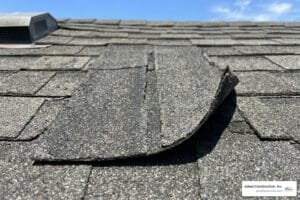
Hail damage roof repair is one of the most urgent — and most misunderstood — home emergencies a property owner can face. The damage is often invisible from the ground, yet it silently shortens your roof’s lifespan and can void your insurance claim window if you wait too long.
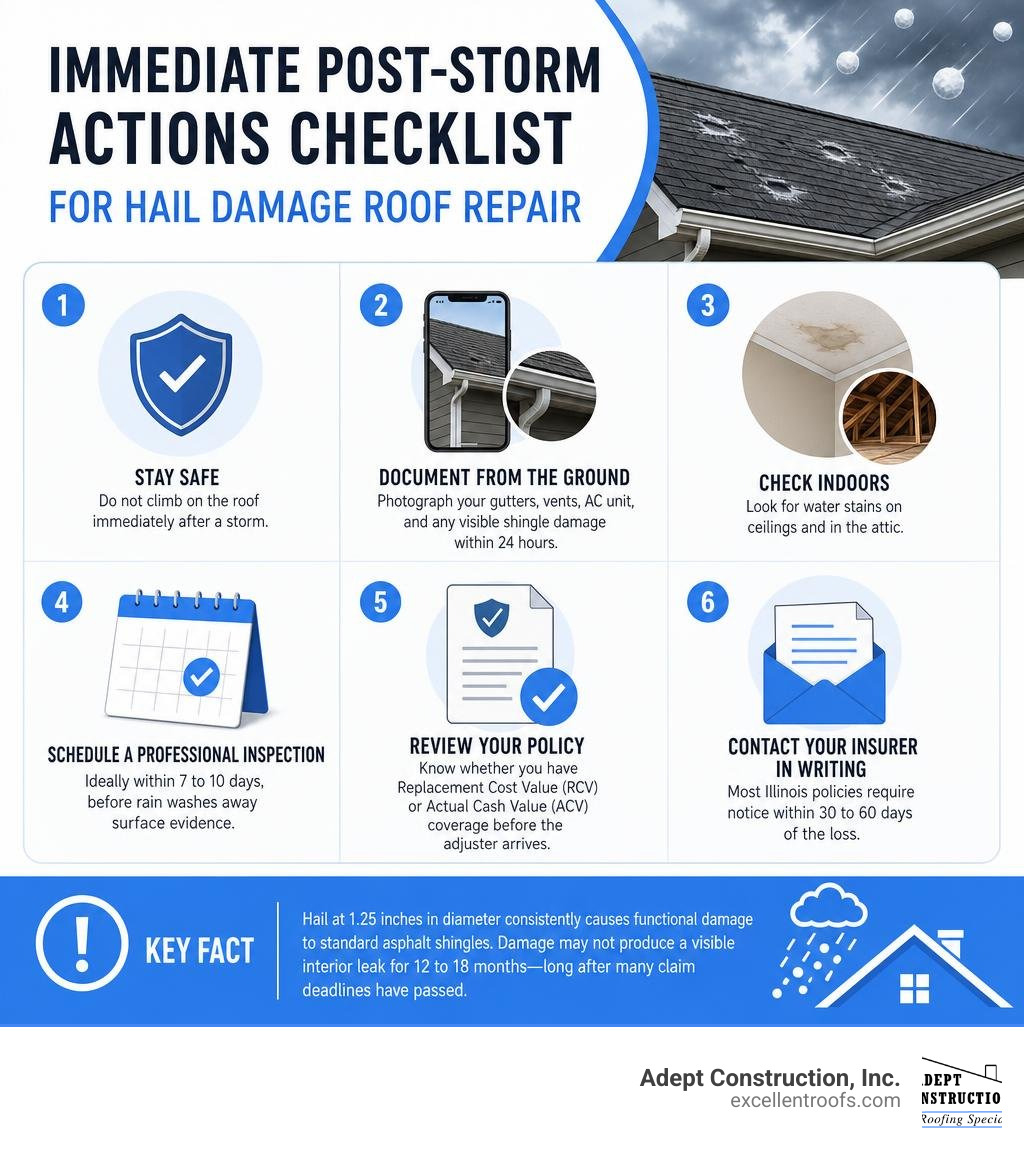
Here is a quick summary of what to do right after a hailstorm:
- Stay safe — do not climb on the roof immediately after a storm
- Document from the ground — photograph your gutters, vents, AC unit, and any visible shingle damage within 24 hours
- Check indoors — look for water stains on ceilings and in the attic
- Schedule a professional inspection — ideally within 7 to 10 days, before rain washes away surface evidence
- Review your policy — know whether you have Replacement Cost Value (RCV) or Actual Cash Value (ACV) coverage before the adjuster arrives
- Contact your insurer in writing — most Illinois policies require notice within 30 to 60 days of the loss
The key fact: Hail at 1.25 inches in diameter consistently causes functional damage to standard asphalt shingles. Damage may not produce a visible interior leak for 12 to 18 months — long after many claim deadlines have passed.
Getting a professional residential roofing inspection before you call your insurance company is the single most important step most homeowners skip.
I’m Gerald Michaels, founder of Adept Construction, Inc., and over my nearly 30 years inspecting and repairing hail damage roof systems across Naperville and the Chicago suburbs, I’ve seen how a missed inspection or a missed deadline can cost homeowners tens of thousands of dollars. This checklist is built from that real-world experience to help you avoid those costly mistakes.
Understanding the Physics of a Hail Damage Roof
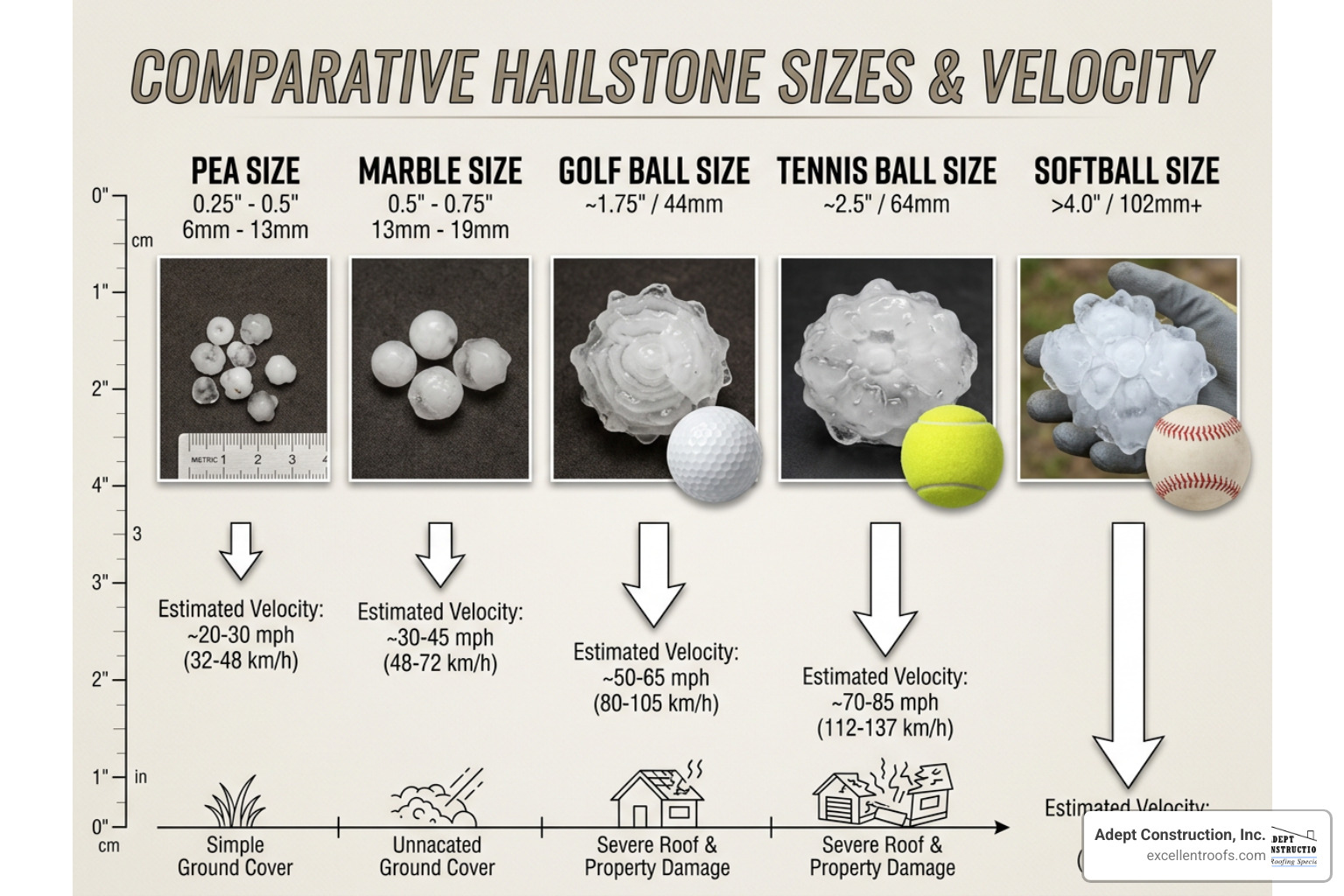
To understand how hail destroys a roof, we have to look at the physics of the storm. A hailstone is not just a soft ice cube falling from the sky; it is a dense, layered projectile propelled by gravity and fierce updrafts.
When a hailstorm sweeps through Downers Grove or Naperville, the level of destruction depends on three physical factors:
- Terminal Velocity: The speed at which hail hits your roof. A 1-inch hailstone falls at roughly 25 to 40 miles per hour, while a 2-inch stone can exceed 70 miles per hour.
- Impact Angle: Strong winds push hail sideways, causing it to strike your roof slopes at an angle. This shear force is highly effective at tearing shingle mats and stripping protective granules.
- Roof Pitch: Steeper roofs absorb less direct kinetic energy from falling hail, whereas flatter roofs take the full brunt of the impact head-on.
When your home takes a direct hit, scheduling a timely inspection with professional roofing services is crucial to evaluate how these forces have affected your structural integrity.
What Size Hail Causes Functional Hail Damage Roof Issues?
Hailstones smaller than 1 inch (such as pea- or marble-sized hail) rarely cause functional damage to modern, well-maintained roofs. However, once the ice reaches 1 inch in diameter (dime-to-quarter size), the risk of functional damage increases significantly.
- 1 Inch (Quarter Sized): This is the baseline threshold where standard asphalt shingles begin to bruise. It can easily damage older or weathered roofs.
- 1.25 Inches (Half-Dollar Sized): At this size, hail consistently produces functional damage across almost all standard 3-tab and architectural shingles.
- 1.75 Inches (Golf Ball Sized) and Larger: Hail of this size causes immediate, severe damage to almost all roof types, including metal, slate, and wood shakes.
For a deeper dive into how different storm forces affect your home’s exterior, you can review the Scientific research on roof repair after a hailstorm.
How Wind and Roof Age Accelerate Hail Damage Roof Vulnerability
A roof’s age and environmental exposure dictate how well it handles a severe storm. As asphalt shingles age, they undergo thermal cycling—expanding in the hot summer sun and contracting in the freezing Chicago winters. This process causes shingles to lose their natural flexibility and become brittle.
Furthermore, a 2025 materials study demonstrated that repeated sub-severe hail exposure weakens asphalt shingles over time. In laboratory testing, a series of 50.8 mm (2-inch) hailstone impacts resulted in an average of 7,687.2 mm² of granule loss per shingle. When wind-driven rain is added to the equation, these weakened areas quickly fail.
If your roof is over 12 years old, even minor hail can crack the underlying fiberglass mat. To learn more about how age makes your roof vulnerable, read more info about hail damage repair.
The Multi-Point Inspection Checklist: Spotting the Signs
When inspecting your home after a storm, you must look for both ground-level and roof-level indicators. You do not need to climb onto your roof to find evidence of a storm strike. In fact, ground-level clues are often the most reliable proof of hail size and impact direction.
Start your inspection by walking around your home’s perimeter and checking these key areas:
- Air Conditioner Condenser Units: Check the metal cooling fins on your outdoor AC unit. Hail easily dents these soft aluminum fins, leaving clear, round impact marks.
- Gutters and Downspouts: Look for deep dings on your aluminum gutters. Also, check the bottom of your downspouts for piles of loose shingle granules washed down from the roof.
- Decks and Siding: Look for splatter marks (clean spots where algae or dirt was blasted away by ice) on wood fences, siding, and decks.
If you spot these ground-level signs, it is highly likely your roof has sustained similar impacts. For local assistance in evaluating these signs, check out more info about Downers Grove hail damage.
Visual Indicators Across Different Roofing Materials
Different roofing materials react uniquely to hail impacts. Understanding these variations is essential for an accurate damage assessment:
- Asphalt and Composition Shingles: Look for circular, dark bruises where granules have been knocked away, exposing the black asphalt mat underneath. These bruised areas will feel soft and spongy to the touch, similar to a bruised apple.
- Wood Shingles and Cedar Shakes: Hail splits wood shakes along the grain. If the split is fresh, the exposed wood inside the crack will look bright orange or light brown with sharp, clean edges.
- Metal Roofs: Look for visible dents, dimples, or chipped protective coatings. While some metal roof damage is cosmetic, major impacts can compromise structural seams. For a detailed breakdown, read more info about metal roof hail damage.
- Tile and Slate Roofs: Look for star-shaped fractures, clean cracks, or completely broken tiles.
- Flat and Low-Slope Roofs: On TPO or EPDM membranes, look for concentric circular cracks or punctures that compromise the watertight seal.
Distinguishing Real Hail Damage from Normal Wear and Tear
Insurance adjusters are trained to separate storm damage from normal wear and tear. Homeowners often mistake manufacturing defects or natural weathering for hail damage.
For example, blistering occurs when moisture trapped inside the shingle during manufacturing expands under summer heat, popping the surface. Unlike a hail strike, a blister has a hollow, raised edge and does not bruise the underlying fiberglass mat.
| Feature | Real Hail Damage | Roof Blistering | Normal Wear & Tear |
|---|---|---|---|
| Shape | Random, round, or circular bruises | Uniform, hollow, popped bubbles | Linear cracks, uniform granule thinning |
| Texture | Soft, spongy, and deeply indented | Hard edges with a hollow center | Brittle, stiff, or flaky |
| Granule Loss | Granules pushed into the asphalt mat | Granules missing only on the popped top | Slow, even shedding over time |
| Pattern | Directional (worse on windward slopes) | Scattered evenly across all slopes | Heavy near valleys and heat vents |
Navigating the Hail Damage Insurance Claims Process
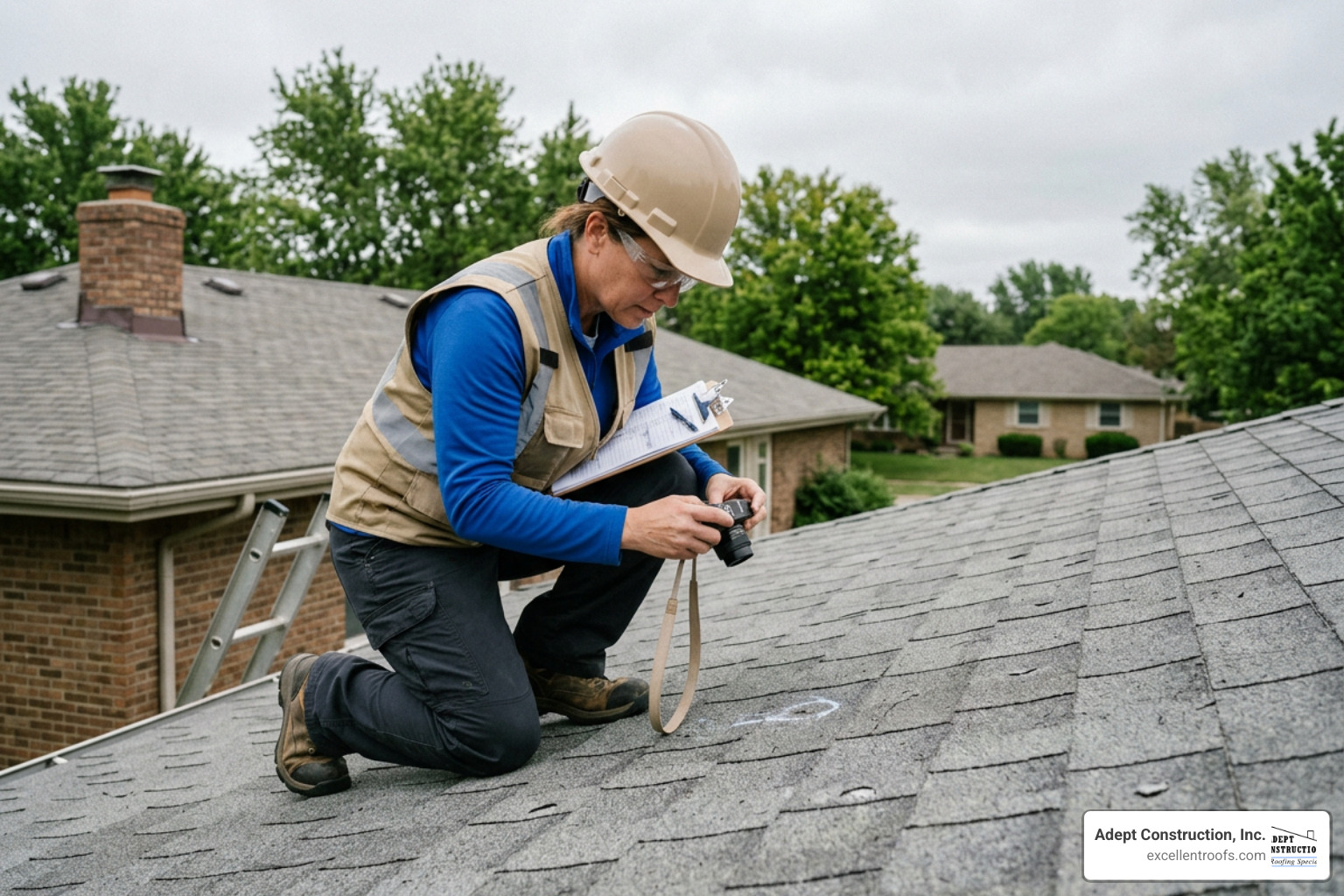
Filing a hail damage roof claim can feel overwhelming. To get your claim approved, you must understand your policy’s structure and language.
The most critical distinction in any homeowner’s insurance policy is Replacement Cost Value (RCV) versus Actual Cash Value (ACV):
- Replacement Cost Value (RCV): Your insurer pays the full cost to replace your roof with new materials of like kind and quality, minus your deductible.
- Actual Cash Value (ACV): Your insurer pays only the depreciated value of your roof based on its age. If you have a 15-year-old roof under an ACV policy, your payout may be reduced by 50% or more, leaving you to pay the difference out of pocket.
Additionally, be aware of percentage deductibles. In storm-prone areas, wind and hail deductibles are often set at 1% to 2% of your home’s total insured value rather than a flat dollar amount. For a complete guide on navigating these variables, refer to this guide to hail damage roof insurance claims.
Step-by-Step Insurance Documentation Checklist
When you prepare to file your claim, thorough documentation is your best defense against underpayment or denial. Follow this step-by-step checklist:
- Record the Storm Date: Note the exact date and approximate time the hailstorm hit your neighborhood.
- Pull NOAA Weather Reports: Secure local weather data or National Oceanic and Atmospheric Administration (NOAA) reports confirming hail fell in your ZIP code.
- Capture Date-Stamped Photos: Take wide shots of your property and close-ups of collateral damage (such as dented AC units and gutters) using a smartphone with location services enabled.
- Get a Professional Estimate: Secure a detailed, line-item repair estimate from a licensed local roofing contractor.
If your home has been hit by multiple storms over the years, you might wonder how that affects your coverage. Read more info about filing frequency to understand your rights.
Common Reasons for Claim Denials and How to Avoid Them
The most common reason insurance companies deny hail claims is late filing. Many policies require homeowners to report storm damage within 365 days of the event. If you discover a leak 18 months later, your carrier is legally allowed to deny the claim.
Another common pitfall is the cosmetic exclusion clause. Some insurers have modified their policies to exclude coverage for metal roofs or siding if the damage is “purely cosmetic” (i.e., dents that do not cause leaks).
To ensure your rights are protected and you receive a fair assessment, you can consult the UsedByLocals hail damage roof guide for expert tips on managing the adjuster meeting.
Repair vs. Full Replacement: Costs and Decision Factors
Determining whether to perform a spot repair or execute a full roof replacement comes down to the extent of the functional damage.
Insurance adjusters use a standard formula to make this decision: the 10×10 test square. The adjuster will outline a 10-foot by 10-foot square (one “square” in roofing terms) on each slope of your roof. If they find 8 or more qualifying hail impact marks within that test square, the insurer will typically approve a full roof replacement rather than a spot repair.
Spot repairs are only appropriate for newer roofs (under 10 years old) with localized damage on a single slope. If your roof is older, spot repairs often fail because the surrounding brittle shingles crack when roofers try to seal the new patches. If your home has sustained widespread storm damage, explore more info about storm damage services to evaluate your replacement options.
Cost-Benefit Analysis of Upgrading to Class 4 Impact-Resistant Shingles
If your roof requires a full replacement, upgrading to Class 4 impact-resistant (IR) shingles is a smart long-term investment.
Class 4 shingles are tested under the UL 2218 standard, where a 2-inch steel ball is dropped twice from a height of 20 feet onto the same spot. To achieve a Class 4 rating, the shingle must show no signs of cracking or tearing on its underside.
- The Technology: These shingles are manufactured using polymer-modified asphalt (SBS), which behaves like rubber to absorb and dissipate the kinetic energy of hail.
- The Financial Benefit: Most major insurance carriers in Illinois offer annual premium discounts of 20% to 35% for homes with Class 4 roofs.
- The Payback Period: While upgrading to Class 4 shingles adds roughly $2,000 to $4,500 to the cost of a standard replacement, the insurance premium savings and extended roof lifespan typically pay back that initial cost within 3 to 6 years.
To explore these high-performance materials further, check out more info about shingle roofing systems.
Long-Term Consequences of Neglecting Hail Damage
Neglecting hail damage is a gamble that rarely pays off. Even if your roof isn’t leaking today, compromised shingles lose their protective granules rapidly. Once the underlying asphalt mat is exposed to ultraviolet radiation, it degrades within months.
This degradation leads to slow, hidden structural leaks, attic mold growth, and rotted roof decking. Furthermore, if you attempt to sell your home or renew your insurance policy in the future, a home inspector or insurance drone survey will flag the unaddressed damage. This can lead to policy non-renewal or a forced roof replacement at your own expense.
If you suspect your roof was damaged in a recent storm, protect your investment by reading more info about Downers Grove roof repair.
How to Avoid Storm Chasers and Find Reputable Local Roofers
Following any major hailstorm in Naperville or Downers Grove, out-of-state roofing companies—commonly known as “storm chasers”—will flood the area. These companies travel from state to state, knocking on doors and offering “free roofs” if you sign over your insurance rights on the spot.
Working with storm chasers carries massive risks. They often use cheap, temporary labor, perform substandard work that voids manufacturer warranties, and disappear before you realize your roof has a problem.
To protect yourself, always verify these local contractor requirements:
- Illinois Roofing License: Every legitimate roofer in Illinois must hold a valid license issued by the Illinois Department of Financial and Professional Regulation (IDFPR). Ask to see their license number.
- Physical Address: Ensure the company has a permanent, physical office in your local area, not just a P.O. Box or a temporary hotel room.
- Manufacturer Certifications: Look for contractors certified by top manufacturers like GAF or Owens Corning, which allows them to offer extended warranties.
For a step-by-step guide on vetting contractors, read more info about finding hail damage repair.
Frequently Asked Questions About Hail Damage Roof Repair
How long do I have to file a hail damage roof claim in Illinois?
In Illinois, the time frame to file a claim depends entirely on your specific insurance policy language. While the state’s legal statute of limitations for breach of contract is longer, most insurance policies contain a “prompt notice” clause requiring you to file within 12 to 24 months of the storm event. Waiting too long can result in an automatic denial.
If you live in the western suburbs and need to document your roof’s condition quickly, look into more info about Naperville roof repair.
Will my insurance premiums increase if I file a hail damage claim?
No, insurance companies cannot single out an individual homeowner for a rate increase based solely on a hail damage claim. Because hail is considered an “Act of God” and an unavoidable natural event, it is illegal for carriers to raise your personal rate.
However, your rates may rise if your entire ZIP code or region experiences a major storm event, as insurance companies adjust their overall risk pools. If your roof is compromised, it is always financially wiser to file a legitimate claim than to pay for a replacement out of pocket. To learn more about full replacements under insurance, read more info about Downers Grove roof replacement.
Can I repair a hail-damaged metal roof without replacing it?
Yes, in many cases, minor cosmetic denting on a metal roof does not require a full replacement. If the protective coating is intact and the seams are secure, the roof remains functionally sound.
However, if the hail was large enough to split structural seams, loosen fasteners, or chip the protective paint coating, you must address these issues immediately to prevent rust and leaks. For repair strategies, read more info about repairing hail damage on metal roofs.
Conclusion
A hail-damaged roof is a ticking clock. The longer you wait to inspect and repair the damage, the more vulnerable your home becomes to structural leaks, mold, and denied insurance claims.
At Adept Construction, Inc., we have spent nearly three decades helping our neighbors in Downers Grove and Naperville navigate the storm recovery process. As a local, family-owned business, we pride ourselves on providing honest assessments, expert workmanship, and clear communication. We do not use high-pressure sales tactics, and we will never advise you to file a claim unless your roof has sustained legitimate, functional damage.
If your home was recently hit by a storm, do not guess about the condition of your roof. Contact us today to schedule your professional inspection and get a free estimate. Let us help you protect your home with a roof you can trust for decades to come. Explore our storm damage services to get started today.