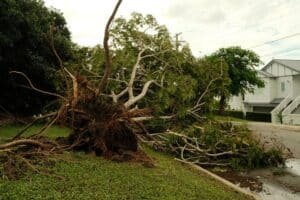

Yes, You Can Claim Hail Damage Twice on the Same Roof — Here’s What You Need to Know
Can you claim hail damage twice on a roof? Yes — and the answer is straightforward for Illinois homeowners who’ve been hit by more than one storm.
Here’s the quick version:
- Yes, you can file multiple hail damage claims on the same roof
- Each claim must be tied to a separate storm event with its own date of loss
- Your insurer treats each storm as a distinct occurrence — meaning a separate deductible applies each time
- If your first claim was never repaired, your second claim may be partially or fully denied
- Filing more than two claims in five years can increase your premiums or trigger non-renewal
The rules aren’t complicated, but the details matter — especially when storms hit close together or repairs from the first claim were never completed.
Illinois sits in one of the most active hail corridors in the country. It’s entirely possible — and increasingly common — to face two or even three legitimate hail events in a single season. Knowing your rights before the next storm hits can save you thousands.
I’m Gerald Michaels, founder of Adept Construction, Inc., a family-owned roofing company based in Naperville, Illinois, with nearly three decades of experience helping homeowners navigate exactly this question of whether you can claim hail damage twice on a roof — and what documentation and timing make or break those claims. In the sections below, I’ll walk you through everything you need to know, step by step.
Can You Claim Hail Damage Twice on Roof?
Yes. In most cases, you can claim hail damage on the same roof more than once if each claim comes from a different storm and the damage is new.
That answer sounds simple because it is simple. The hard part is proving that the second claim is for a second loss, not leftover damage from the first one.
Insurance companies focus on a few key questions:
- Was there a separate hail event with a clear date of loss?
- Is the new damage different from the old damage?
- Was the roof repaired after the first claim?
- Does the policy still provide coverage for that roof type and age?
- Does the damage exceed the deductible?
Every hail claim also becomes part of the property’s claim history. Insurers usually track losses through industry databases such as CLUE, so even a filed claim with little or no payout can stay on the record. That is one reason we tell homeowners not to rush into filing before they understand the numbers.
National claim data shows hail is not a rare issue. From 2017 through 2019, there were 2.77 million hail loss claims nationwide, with homeowners claims making up the majority. The average homeowners hail payout is about $12,000. For homeowners in our area, that means a legitimate second claim can absolutely matter financially. For broader help after severe weather, see our storm damage roofing service.
Can you claim hail damage twice on roof after two different storms?
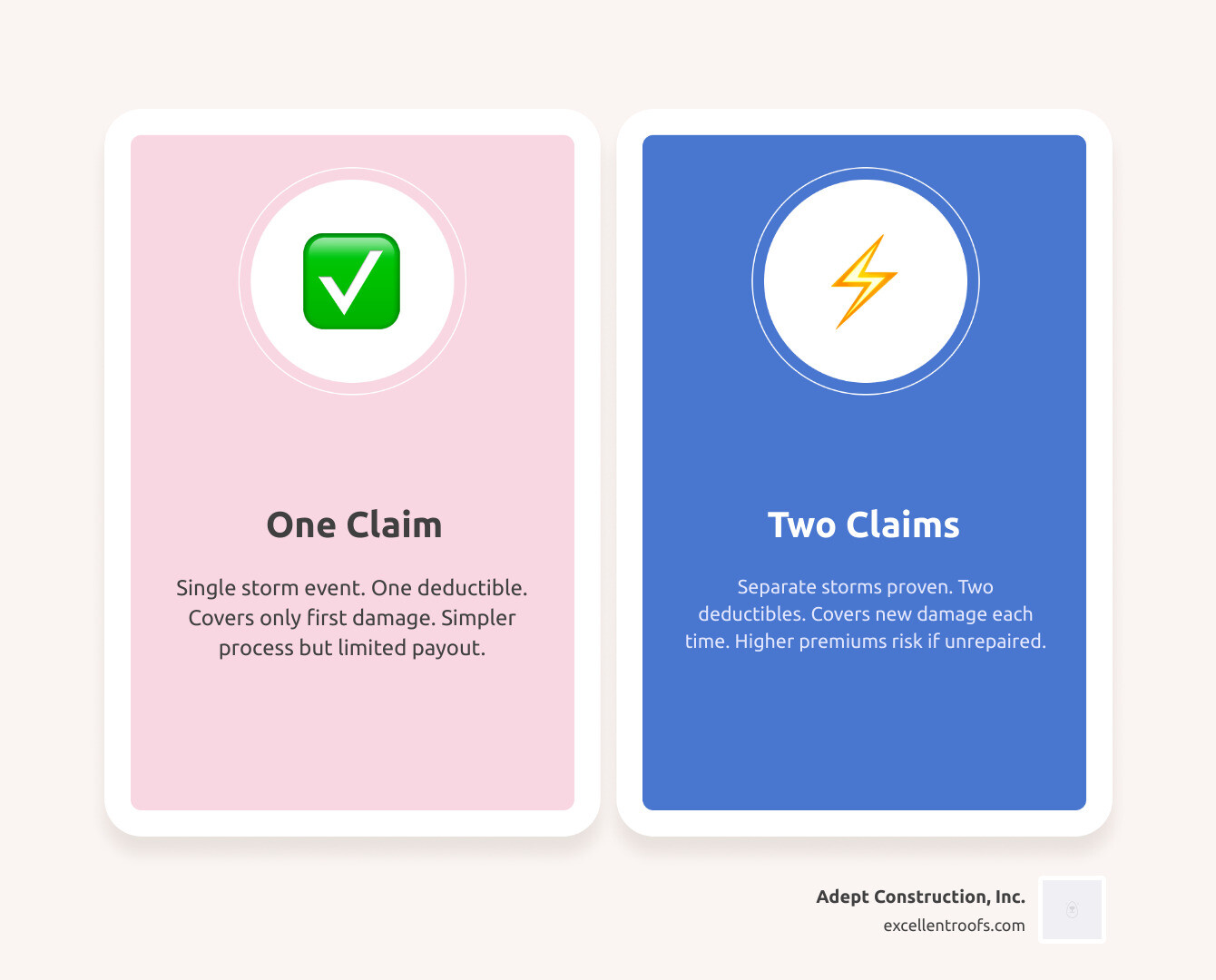
Yes, if the roof suffered damage in two distinct storms, insurers generally treat those as two separate occurrences.
The phrase to remember is “date of loss.” If your roof was hit in April and then again in July, those are normally handled as separate events. That usually means:
- Two claims
- Two claim numbers
- Two inspections or a reopened inspection process
- Two deductibles, unless the insurer combines them because the first loss was still unresolved and impossible to separate
Timing matters a lot. If the adjuster has not yet inspected the first loss and a second storm rolls through, the carrier may combine both losses into one claim because separating the damage can be difficult. If the first claim was already inspected or paid before the second storm, the second storm is more likely to be treated as a new claim with a new deductible.
Can you claim hail damage twice on roof if the first damage was never repaired?
Sometimes, but this is where homeowners get into trouble.
If you were paid for the first storm and never repaired the roof, the insurer may deny part or all of the second claim to the extent the “new” damage overlaps with old, unrepaired damage. In plain English: insurance covers sudden new loss, not damage that was already known and left in place.
This can affect you in several ways:
- The insurer may exclude previously damaged slopes
- The second adjuster may reduce payment for pre-existing damage
- Recoverable depreciation may never be released if the first repairs were not completed
- Future renewals may become harder
Many policies also require you to protect the property from further damage. That duty to mitigate means you cannot ignore a damaged roof and expect later leaks to be fully covered.
When a second hail storm hits before the first claim is resolved
This happens more often than people think, especially in spring and summer.
If a second storm hits before the first claim is inspected or finalized, call your carrier immediately and report the second date of loss. Do not assume they will “just know.”
Possible outcomes include:
- The insurer combines both storms into one claim with one deductible
- The insurer creates a second claim if the damage can be separated
- The insurer reinspects the property and revises the scope
The practical rule is simple: notify the insurer fast, document both storm dates, and keep copies of every email, letter, and estimate.
When Insurance Allows or Denies Multiple Hail Claims on the Same Roof
Insurance usually allows repeat hail claims when the roof suffers new functional damage from a covered storm and the homeowner can prove it.
Insurance usually denies repeat hail claims when the carrier believes the damage is old, cosmetic only, excluded by policy language, or reported too late.

How insurers distinguish damage from separate hail storms
Insurers do not guess. They compare evidence.
Adjusters and engineers may use:
- Weather reports for the exact address and storm date
- Photo timestamps
- Prior claim photos and scopes
- Test squares on each roof slope
- Collateral evidence on roofing components and nearby surfaces
- Damage pattern analysis
A test square is a marked area where the adjuster counts qualifying hail hits. On asphalt shingles, they often look for functional damage such as bruising, mat fracture, sharp-edged splits, or displaced granules exposing asphalt. Random strike patterns matter too. Real hail damage is usually scattered naturally, not clustered in suspicious patterns.
They also look at ridge caps, vents, flashing, and soft metal components near the roof. If the second storm was severe, new dents or fresh impact marks on related roof components can support the second date of loss.
For homeowners who want a primer on visible signs, our guide on how to spot hail damage on your roof is a good starting point.
Common reasons repeat hail damage claims get denied
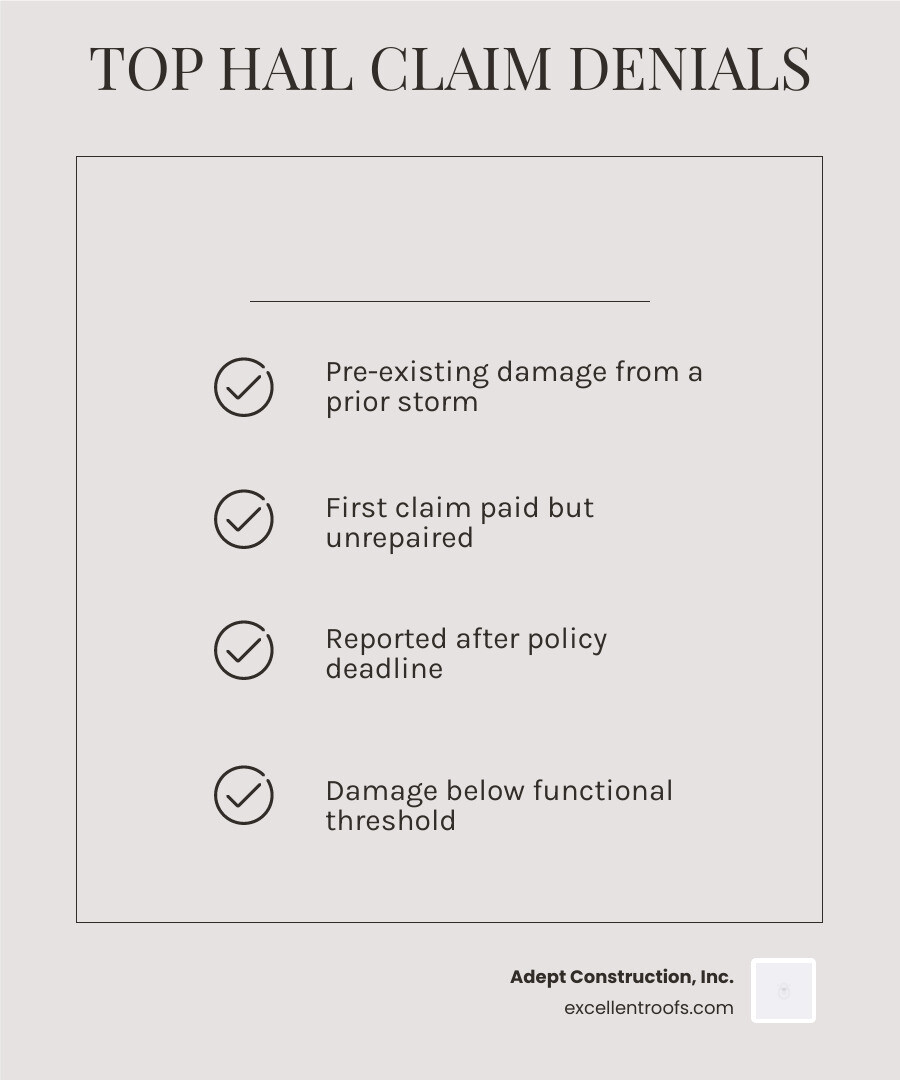
Most denied repeat claims fall into a handful of categories:
- Pre-existing damage from a prior storm
- The first claim was paid but repairs were never completed
- The claim was reported after the policy deadline
- The damage does not meet the carrier’s functional threshold
- The roof has an exclusion for cosmetic damage
- The roof is old and insured on limited terms
- Documentation is weak or inconsistent
Late notice is a big one. Many policies require prompt notice, and while some Illinois homeowners policies allow 1 to 2 years to file, waiting is rarely a smart move. The longer you wait, the harder it is to prove what happened and when.
Is it insurance fraud to claim old hail damage as new?
Yes. Claiming old hail damage as if it came from a new storm can be insurance fraud.
That includes:
- Using the wrong date of loss on purpose
- Hiding a prior paid claim
- Presenting unrepaired old damage as new damage
- Altering photos or invoices
Insurers keep records. Prior claim files, prior inspection photos, and claim databases make it easier than homeowners think to spot inconsistencies. The safest approach is also the simplest: be precise, be honest, and disclose prior losses.
Money Questions: Premiums, Deductibles, ACV vs RCV
Most homeowners asking can you claim hail damage twice on roof are really asking a money question: what will it cost me, what will insurance pay, and will my premium go up?
Those are the right questions.
Will filing multiple hail claims increase your insurance premiums?
Usually, yes. Filing multiple claims can increase premiums at renewal, even when hail is considered an act of nature.
A few important points:
- One major weather claim may have less long-term impact than multiple small claims
- Filing more than two claims in five years often raises underwriting concern
- Even zero-payout or denied claims can still appear in claim history
- Claim frequency often matters as much as claim size
That does not mean you should never file. It means you should think strategically. If your deductible is $3,500 and the repair is $4,000, filing a claim for a net benefit of $500 may not be worth years of higher premiums.
For more on that topic, see this outside resource on multiple hail claims and premiums.
How hail deductibles work on first and second claims
A hail deductible is the amount you pay out of pocket before insurance pays the covered balance.
In Illinois, roof hail deductibles are often:
- A flat amount, such as $1,000 or $2,500
- A percentage of dwelling coverage, often 1% or 2%
Example:
- Home insured for $400,000
- 1% hail deductible
- Out-of-pocket deductible = $4,000
If two separate storms create two separate claims, two deductibles usually apply. If the insurer combines the storms into one claim because the first claim was still pending and the damage cannot be separated, one deductible may apply instead.
Always check whether your policy has a special wind or hail deductible. Many homeowners think they have a standard deductible, then discover after a storm that the hail deductible is much higher. Surprise is fun for birthdays, not insurance.
ACV vs RCV on roof hail claims
This distinction changes your payout.
ACV means Actual Cash Value.
RCV means Replacement Cost Value.
Here is the difference:
| Coverage type | What it pays | Best way to think about it |
|---|---|---|
| ACV | Current value after depreciation | “Used roof value” |
| RCV | Cost to replace with similar new materials, subject to policy terms | “New roof cost,” minus deductible, often paid in stages |
With an RCV policy, insurers often pay:
- An initial payment based on ACV
- A second payment for recoverable depreciation after repairs are completed
That second payment usually requires proof of completed work, such as final invoices and photos. Many policies also impose repair deadlines, commonly around 180 days, though the exact language controls. Miss that deadline and you may lose part of the replacement-cost benefit.
What to Do After a Second Hail Storm
If a second storm hits, act quickly. Fast documentation makes strong claims.
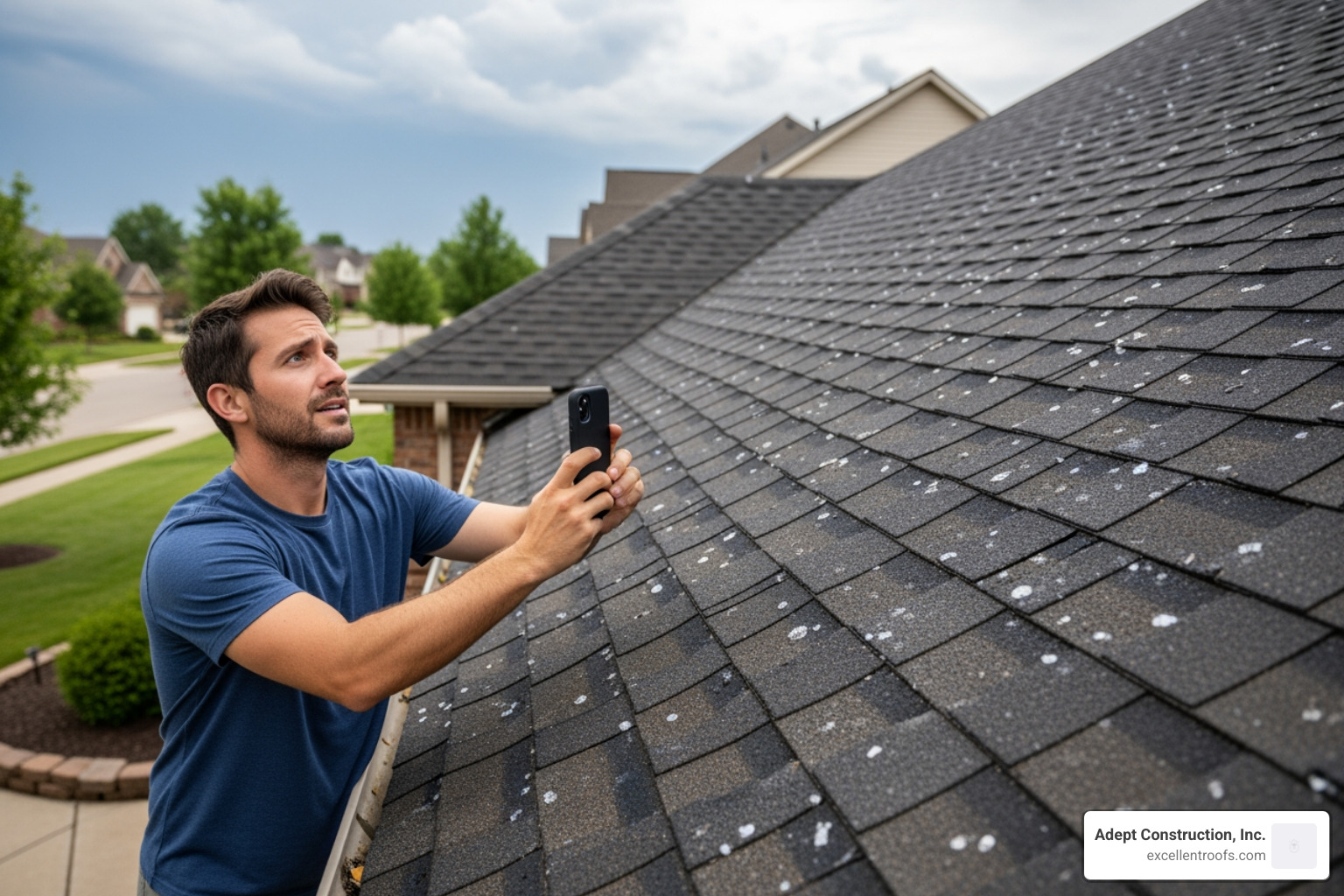
Start with this checklist:
- Note the exact date and approximate time of the storm.
- Take wide and close-up photos of visible roof-related damage from safe locations.
- Photograph collateral roof evidence such as damaged vents, flashing, ridge caps, or roof accessories.
- Prevent further roof damage if there is an active leak.
- Gather documents from the first claim.
- Schedule a professional inspection.
- Notify your insurer promptly if the damage appears claim-worthy.
You can also review our guides to roof damage insurance claims and how to file roof damage insurance claims in 5 simple steps.
What documentation you need for a second roof hail claim
For a second claim, documentation is everything.
Try to collect:
- Photos and video from right after the second storm
- Date-stamped storm notes
- The first claim number
- The prior adjuster report
- The original estimate and payment summary
- Invoices proving repairs were completed, if they were
- Temporary repair receipts
- Weather reports tied to your address
- Contractor inspection notes
If you repaired the roof after the first claim, keep those invoices forever. They are the cleanest proof that the second claim involves a newly restored roof that was damaged again.
Should you get a professional roof inspection before filing a repeat claim?
Yes, in most cases.
A professional roof inspection helps answer the key question before you file: is there enough functional damage to justify a claim after the deductible and potential premium impact?
A qualified roofing contractor can help:
- Identify functional vs cosmetic damage
- Compare new impacts to old repair areas
- Document roof slopes carefully
- Estimate repair or replacement cost
- Meet with the adjuster if needed
That independent documentation can be valuable, especially on repeat claims where scrutiny is higher. Before you file, read our guide on spotting hail damage on your roof.
How soon after a hail storm must you file a claim?
File as soon as reasonably possible.
There is no single universal deadline. Policies vary. Research shows some policies require notice within 30 days, some allow up to one year, and many Illinois homeowners policies allow roughly 1 to 2 years from the storm date. But “allowed” and “wise” are not the same thing.
The best practice is:
- Report significant damage promptly
- Read the notice and suit limitation provisions in your policy
- Do not wait for a small leak to become a ceiling problem
The faster you report, the easier it is to connect the damage to the storm date.
Roof Repair, Replacement, and Local Next Steps in Downers Grove and Naperville
After a second hail claim, the next question is not just whether insurance pays. It is whether the roof should be repaired or replaced.
For homeowners needing help with storm-related roof work, we recommend starting with our residential roofing services.
What happens if you do not repair the roof after the first claim?
This is one of the most expensive mistakes homeowners make.
If you do not repair the roof after the first claim:
- Future storm damage may be excluded
- A second claim may be reduced or denied
- Leaks can worsen and create secondary interior damage
- Recoverable depreciation may never be paid
- Mortgage companies may create complications if claim funds were issued jointly
In short, unrepaired damage becomes a coverage problem. Insurance is meant to restore the property after a covered loss, not to fund a permanent “maybe later” project.
For more on repair decisions after a storm, see our guide to hail damage roof repair.
Repair or replace after repeat hail damage
The answer depends on the amount and location of functional damage, the age of the roof, and whether matching or code-related issues affect repairability.
Repair may make sense when:
- Damage is limited to a small area
- The roof is relatively new
- Matching materials are available
- The damaged section is isolated
Replacement may make more sense when:
- Multiple slopes are hit
- The roof already had prior storm repairs
- Shingle matching is poor
- The roof is older and brittle
- Additional damage is found during tear-off and requires a supplement
If you are in the western suburbs and need local help, we offer roof repair in Downers Grove, roof replacement in Downers Grove, roof repair in Naperville, and roof replacement in Naperville.
Local help for storm-damaged roofs
We work with homeowners throughout Downers Grove and Naperville to inspect storm-damaged roofs, document findings clearly, and explain whether filing a claim makes financial sense.
At Adept Construction, Inc., we focus on three things:
- Clear explanations
- Careful roof documentation
- High-quality roof repair or replacement work when needed
If your roof has been through one hail storm, two hail storms, or what feels like an argument with the sky, we can help you sort out the next step. We provide free estimates, and we are happy to inspect the roof before you decide whether to file.
Frequently Asked Questions about Can You Claim Hail Damage Twice on Roof?
Can you file a second claim if your first hail claim is still open?
Yes. If a new storm causes new damage while the first claim is still open, you can report the second storm. The insurer may combine the losses into one claim or open a second claim, depending on whether the damages can be separated.
Do you have to pay two deductibles for two hail storms?
Usually, yes. Two separate storms usually mean two separate occurrences and two deductibles. The main exception is when the carrier combines both events because the first claim was still pending and the damage cannot realistically be separated.
Is it worth filing a second hail claim for minor roof damage?
Not always. Compare the estimated repair cost to your deductible and the possible long-term premium impact. If the net payout is small, paying out of pocket may be the smarter financial move.
How do insurance companies tell old hail damage from new hail damage?
They compare prior claim files, inspection photos, weather data, damage patterns, and current field findings. They also look for evidence of completed repairs after the first loss.
Can a second hail claim be denied if the first roof claim was paid?
Yes. If the first claim was paid and the roof was not repaired, the carrier may deny the second claim for overlapping or pre-existing damage.
Conclusion
Here is the bottom line: you can claim hail damage twice on the same roof if two separate storms caused two separate losses. But successful repeat claims depend on timing, documentation, honest reporting, and whether the first damage was actually repaired.
The smartest path is simple:
- Document each storm separately
- Report significant damage promptly
- Keep all claim and repair records
- Repair covered damage instead of letting it sit
- Get a professional inspection before filing if the situation is unclear
If you want another perspective on the topic, this overview on claiming hail damage twice on a roof is useful. And if you need local support after a storm, learn more about our storm damage help.
If you are in Downers Grove or Naperville and want clear answers before you file, contact Adept Construction, Inc. for a free estimate. We will inspect the roof, explain what we see, and help you make the most practical next move.