
Understanding Composite Roof Cost per Square Foot by Style
Composite roof cost per square foot is typically $7.00 to $14.00 installed, with premium profiles and difficult roof layouts costing more. Homeowners comparing professional roofing services should budget by installed roof area, not just home floor area, because roof pitch, overhangs, valleys, and waste allowances increase the total number of roofing squares required.
The baseline installed cost for a synthetic polymer roof ranges from $7.00 to $14.00 per square foot, which translates to $700 to $1,400 per roofing square (a standard 100-square-foot area). When hiring professional installers, total project investment for a standard 1,700-square-foot home generally falls between $10,200 and $30,600 depending on tile thickness, design profile, and architectural layout.
Composite roofing materials are engineered from advanced polymer compounds, recycled plastics, ground rubber, and specialized UV-stabilizing resins. These durable formulations replicate natural materials like slate stone, cedar shake, and Spanish clay tile without the extreme structural weight or heavy maintenance demands. For reliable benchmark pricing, review this Composite Roof Cost Guide.
A practical estimating model separates composite roofing into three pricing tiers: entry-level synthetic shingles, mid-range synthetic shake or tile, and premium synthetic slate. This matters because two homes with the same roof size can have different final prices when one uses a simple shingle profile and the other uses a thick, deeply textured shake profile that requires more layout time.
| Composite Roof Style | Material Cost (per sq ft) | Installed Cost (per sq ft) | Average Installed Cost (1,700 sq ft Roof) |
|---|---|---|---|
| Synthetic Shingles | $2.50 – $5.00 | $6.00 – $12.00 | $10,200 – $20,400 |
| Composite Cedar Shake | $3.00 – $7.00 | $6.00 – $18.00 | $10,200 – $30,600 |
| Synthetic Clay Tile | $3.00 – $6.00 | $6.00 – $14.00 | $10,200 – $23,800 |
| Synthetic Slate | $4.00 – $7.00 | $9.00 – $12.00 | $15,300 – $20,400 |
Average Composite Roof Cost per Square Foot Breakdown
Different synthetic tile styles carry distinct production formulation expenses and installation demands:
- Synthetic Shingles: Costing $6.00 to $12.00 per square foot installed, synthetic shingles emulate multi-layer architectural shingles while offering superior impact performance. Learn more in our composite shingle roof complete guide.
- Composite Cedar Shake: Costing $6.00 to $18.00 per square foot installed, composite shake tiles recreate deep hand-split grain textures without vulnerability to rot, fungal growth, or fire.
- Synthetic Slate Tiles: Priced between $9.00 and $12.00 per square foot installed, synthetic slate provides authentic heavy-stone aesthetics at roughly one-quarter the physical weight of natural slate.
- Synthetic Spanish Tile: Ranging from $6.00 to $14.00 per square foot installed, composite barrel tiles deliver classic Mediterranean aesthetics without requiring custom roof deck structural reinforcement.
Material vs. Labor Ratios for Synthetic Roofing
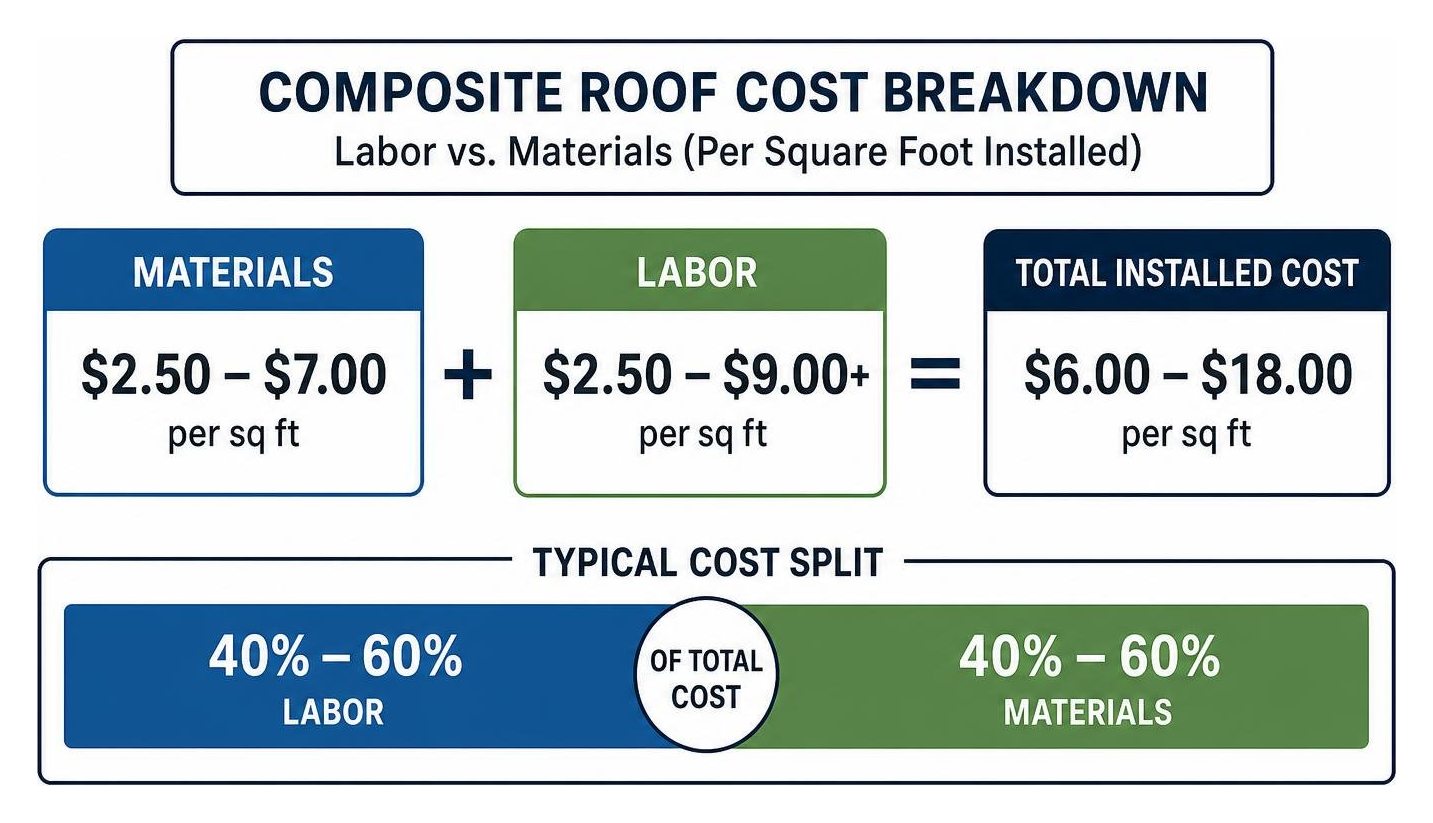
Labor typically accounts for 40% to 60% of the total cost to install a composite roof. Materials represent $2.50 to $7.00 per square foot, while installation labor adds $2.50 to $9.00+ per square foot depending on structural design.
Installation rates depend heavily on roof slope and crew size requirements. Steeper roof pitches demand specialized safety harnesses, scaffolding, and slower staging, which increases labor time. Unlike natural cedar shakes that require time-consuming hand-nailing, composite shakes can be fastened using standard pneumatic nailers, saving on field installation time.
For an accurate local estimate, the most important number is the installed cost per roofing square after tear-off, ventilation, flashing, underlayment, and disposal are included. A quote that lists only tile material pricing does not represent the full cost of a weather-ready composite roofing system.
Key Factors Influencing Composite Roof Replacement Costs
Calculating total composite roof replacement expenses involves evaluating structural dynamics beyond raw square footage. Total surface calculations account for waste factors, roof geometry, decking condition, and component upgrades. Check our detailed guide on the cost to replace architectural shingles for additional cost insights.
Key Factors Influencing Composite Roof Cost per Square Foot
- Architectural Design Complexity: Roofs with multiple dormers, complex valleys, hips, skylights, and custom gables require precise cutting and added flashing, driving up installation labor.
- Steep Pitch Multipliers: Slopes exceeding a standard 6/12 pitch require extra personal fall arrest equipment and staging, adding premiums to crew hourly rates.
- Site Accessibility: Multi-story structures or tight suburban lots near Naperville or Downers Grove increase handling time for positioning tear-off dumpsters and lifting materials.
- Seasonal Labor Rates: High-demand summer construction seasons generally carry higher labor fees than early spring or late autumn installations.
- Waste Factor Allowance: Complex roof designs require 10% to 15% extra material allowances to accommodate angular cuts along hips and valleys.
Additional Installation and Component Expenses
To ensure proper long-term performance, several key accessories and auxiliary services must be factored into your replacement budget:
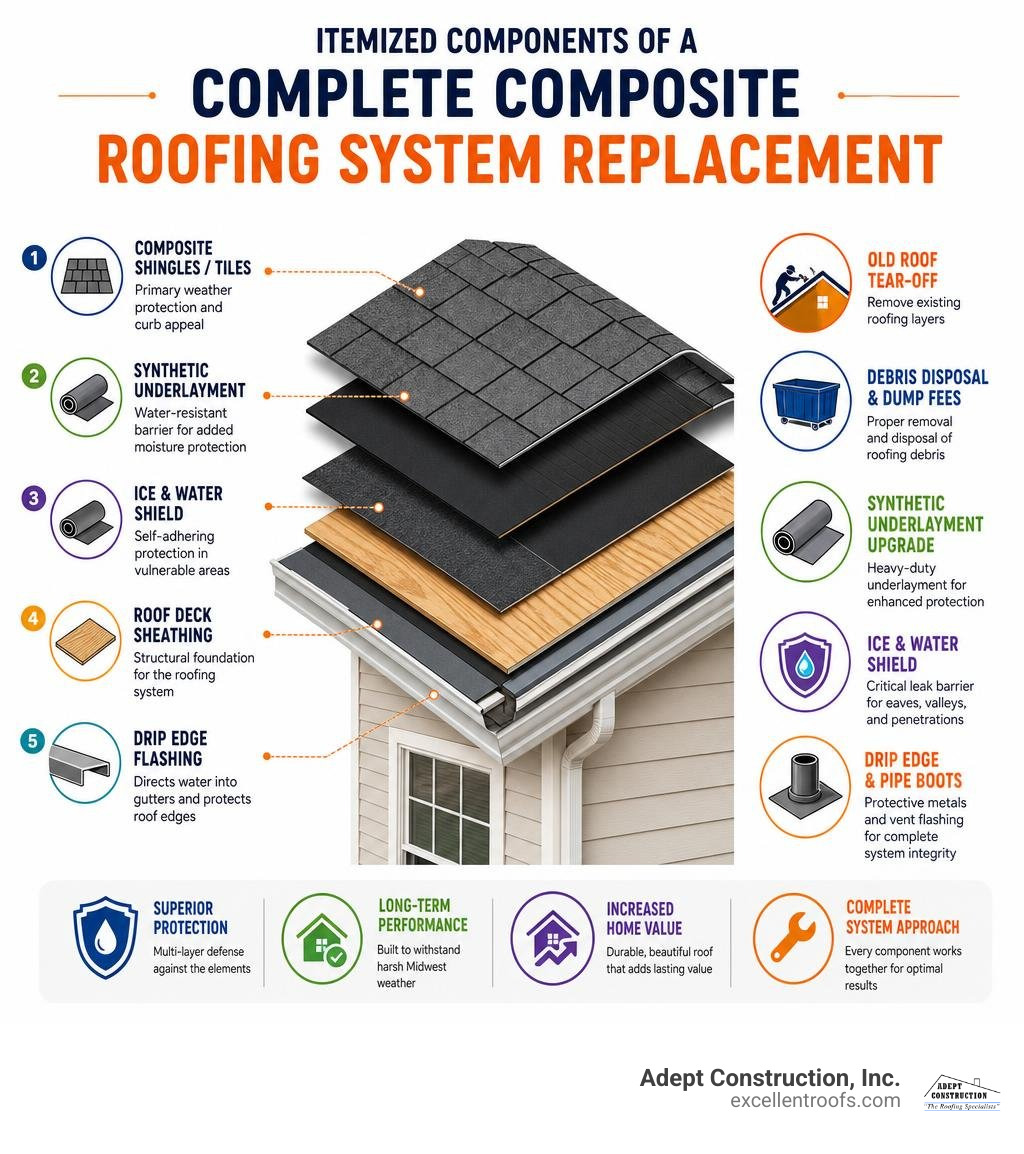
- Old Roof Tear-Off: Removing existing shingle layers costs $1.00 to $3.00 per square foot, depending on the number of layers and material weight.
- Debris Disposal & Dump Fees: Specialized job site dumpsters and local landfill tipping fees run $300 to $2,000 per project.
- Synthetic Underlayment: Upgrading from standard organic felt to heavy-duty synthetic underlayment costs $0.30 to $1.00 per square foot, providing critical secondary moisture protection.
- Ice and Water Shield: Essential for Midwest winters, self-adhering leak barriers applied along eaves and valleys cost $1.50 to $2.10 per square foot.
- Drip Edge Flashing & Pipe Boots: Protective perimeter metals and vent flashing add $300 to $900 to overall material budgets.
- Ridge Ventilation Systems: Proper attic exhaust systems add $300 to $800, protecting your roof structure from premature heat damage and ice damming.
- Permit Fees: Local building permits in Northern Illinois municipalities usually range from $100 to $500.
Review this full breakdown on How Much Does a Composite Roof Cost? for additional regional perspectives.
Composite Roofing vs. Traditional Roofing Materials
Comparing synthetic materials against traditional options highlights their superior value proposition over time. Read our comprehensive residential roof replacement cost guide to evaluate standard material costs side by side.
| Roofing Material | Installed Cost (per sq ft) | Average Expected Lifespan | Maintenance Level |
|---|---|---|---|
| Standard Asphalt Shingles | $3.00 – $5.00 | 15 – 30 Years | Moderate |
| Composite / Synthetic Roofing | $7.00 – $14.00 | 40 – 50 Years | Very Low |
| Natural Cedar Shake | $15.00 – $25.00+ | 20 – 40 Years | High |
| Standing Seam Metal | $7.00 – $15.00 | 40 – 70 Years | Low |
| Natural Slate Tile | $15.00 – $30.00+ | 75 – 150 Years | High / Complex |
Lifespan, Maintenance, and Long-Term Value
Composite roofs deliver a verified 40 to 50 year service life with virtually no ongoing routine maintenance. Key technical advantages include:
- Class 4 Impact Resistance: Highest available hail resistance rating (UL 2218), which can secure homeowner insurance premium discounts of up to 28%.
- Class A Fire Rating: Offers maximum fire spread protection when paired with rated underlayments.
- High Wind Ratings: Engineered interlocking designs withstand wind uplift speeds up to 110 mph.
- Superior Return on Investment: Low ongoing upkeep and an extended service lifespan lower your lifecycle cost per year significantly below standard asphalt shingles.
Local Roof Replacement Services and Installation
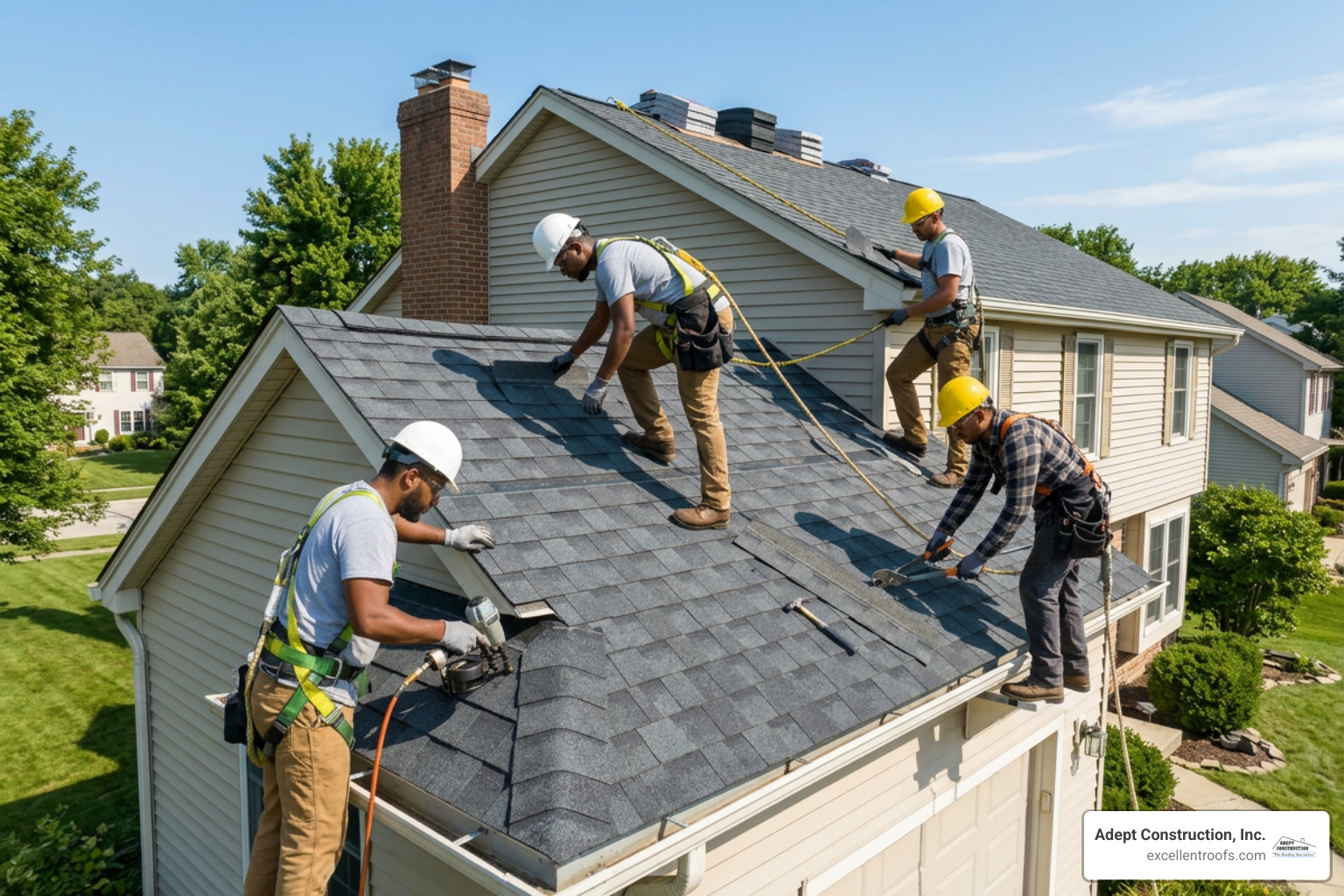
Installing synthetic polymer roofs in Northern Illinois requires proven regional experience. Polymer materials expand and contract slightly with extreme temperature shifts, making precise thermal spacing and correct fastener depth critical during harsh seasonal climate shifts.
When planning a composite roof replacement, work with qualified local contractors who understand local building codes and extreme weather challenges:
Whether you live near the Downers Grove service area or the Naperville service area, our team ensures every composite project meets local municipal building codes and manufacturer warranty requirements.
Frequently Asked Questions About Composite Roofing Costs
How long does a composite roof last compared to asphalt?
A high-quality composite roof lasts 40 to 50 years, compared to 15 to 30 years for standard asphalt shingles. Synthetic polymer blends resist UV degradation, freeze-thaw cracking, and moisture absorption far better than petroleum-based asphalt materials.
How much does it cost to remove and dispose of an old roof?
Tear-off and disposal costs typically range from $1.00 to $3.00 per square foot. Total costs depend on the number of existing shingle layers, roof slope steepness, job site accessibility, and local dump fees.
Does a composite roof increase home value?
Yes. Composite roofs boost curb appeal by duplicating premium natural slate or cedar shake textures. Their 50-year lifespan, UL Class 4 impact resistance, and low maintenance requirements serve as strong selling points that increase overall property appraisal value.
Conclusion
Upgrading to a synthetic polymer system requires an upfront investment of $7 to $14 per square foot installed, but it delivers exceptional long-term durability, Class 4 hail resistance, and premium architectural beauty. By eliminating the heavy maintenance of natural wood or stone, composite roofing provides outstanding overall value.
The best way to budget a composite roof is to calculate the installed system cost, not just the material cost. A complete replacement includes tear-off, deck inspection, synthetic underlayment, ice and water protection, starter materials, ridge ventilation, flashing, disposal, permits, and manufacturer-approved installation practices. These components protect the roof assembly and help preserve warranty coverage.
At Adept Construction, Inc., we deliver top-tier workmanship and dependable customer service across Downers Grove, Naperville, and the Western Suburbs. If you are planning a project, contact our team today to request a free estimate on our custom composite roofing installation services.