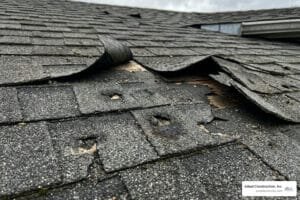

Cheat Sheet to Filing an Insurance Claim for Roof Damage
When Your Roof Gets Hit, Here’s What You Need to Know
Insurance claim roof damage is one of the most stressful situations a homeowner can face — but the process doesn’t have to be overwhelming. Whether a hailstorm, high winds, or a falling tree just hit your home, knowing exactly what to do next can mean the difference between a full payout and a denied claim.
Here’s the quick version of how a roof insurance claim works:
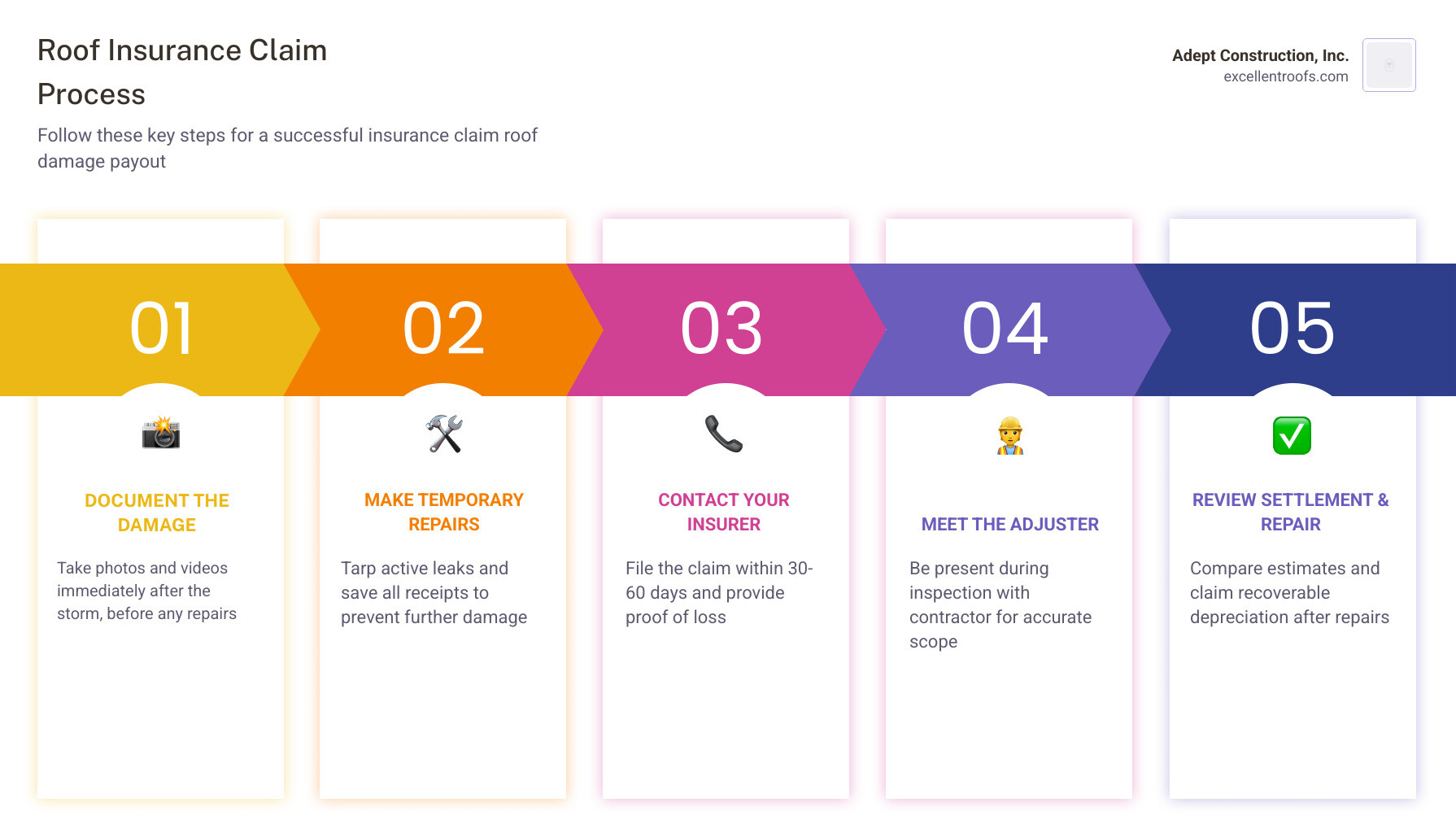
- Document the damage — Take photos and videos immediately, before making any repairs.
- Make temporary repairs — Tarp active leaks to prevent further damage; save all receipts.
- Contact your insurer — File the claim as soon as possible; most carriers expect contact within 30–60 days of the damage event.
- Meet the adjuster — Be present during the inspection; have a contractor there too if possible.
- Review the settlement — Compare the insurer’s estimate against an independent contractor quote before accepting.
- Complete repairs and claim recoverable depreciation — On Replacement Cost Value (RCV) policies, final payment is released after repairs are done.
Key fact: Home insurance companies pay an average of $13,000 for wind and hail claims. Most claims take 30 to 60 days from filing to final payment — but only if you follow the right steps.
The stakes are real. According to industry data, 15% to 20% of roof insurance claims are initially denied — often due to missing documentation, late filing, or misunderstood policy terms. This guide walks you through every step so you don’t leave money on the table.
As a homeowner in Illinois, you also have specific legal protections worth knowing about — and specific weather risks that make getting storm damage right especially important.
I’m Gerald Michaels, founder and president of Adept Construction, Inc., a family-owned roofing company serving the Chicago suburbs since 1997 — and navigating insurance claim roof damage on behalf of homeowners has been a core part of our work for nearly three decades. If you have damage right now and want expert eyes on your roof, we offer free estimates — contact us here to get started.
Understanding Your Coverage: What Insurance Claim Roof Damage Policies Include

Before you pick up the phone to call your agent, you need to understand what your policy actually covers. Most standard homeowners insurance policies (typically HO-3 policies) are “open peril” for your dwelling. This means your roof is covered for any cause of loss unless that cause is specifically excluded in the policy text.
In the Chicagoland area, we see a wide variety of “covered perils.” These are sudden, accidental events that insurance companies recognize as valid reasons for a claim. Common covered perils include:
- Wind Damage: High winds can lift, crease, or completely blow off shingles.
- Hail Damage: Hailstones can bruise shingles, cause significant granule loss, and dent metal components like vents and gutters.
- Fire and Lightning: Sudden strikes or house fires are almost always covered under dwelling protection.
- Falling Objects: If a heavy tree limb snaps during a storm and crashes onto your roof, this is a classic covered loss.
- Snow and Ice: The weight of heavy snow or damage from ice dams during a brutal Illinois winter is typically included.
According to Angi, roofs fall under the “dwelling coverage” portion of your policy. If the damage is severe enough that repair materials are unavailable or the roof’s lifespan is significantly shortened, the insurer may even cover a full storm damage restoration.
Exclusions and Limitations
Insurance is designed for “sudden and accidental” events, not the inevitable passage of time. This is where many homeowners run into trouble. Standard policies almost always exclude:
- Wear and Tear: If your roof is 25 years old and simply leaking because the shingles have reached the end of their life, insurance will not pay for a replacement.
- Neglected Maintenance: If you haven’t cleaned your gutters or ignored minor leaks for years, the insurer may deny a claim for subsequent rot or mold.
- Cosmetic Hail Damage: Some modern policies now exclude “cosmetic” damage to metal roofs or shingles that doesn’t impact the roof’s ability to shed water.
- Earthquakes and Floods: These require separate, specific policies or endorsements.
- Improper Installation: If a previous “fly-by-night” contractor installed the roof incorrectly, the insurance company may argue the failure was due to poor workmanship rather than a storm.
Step-by-Step Guide to Filing Your Claim
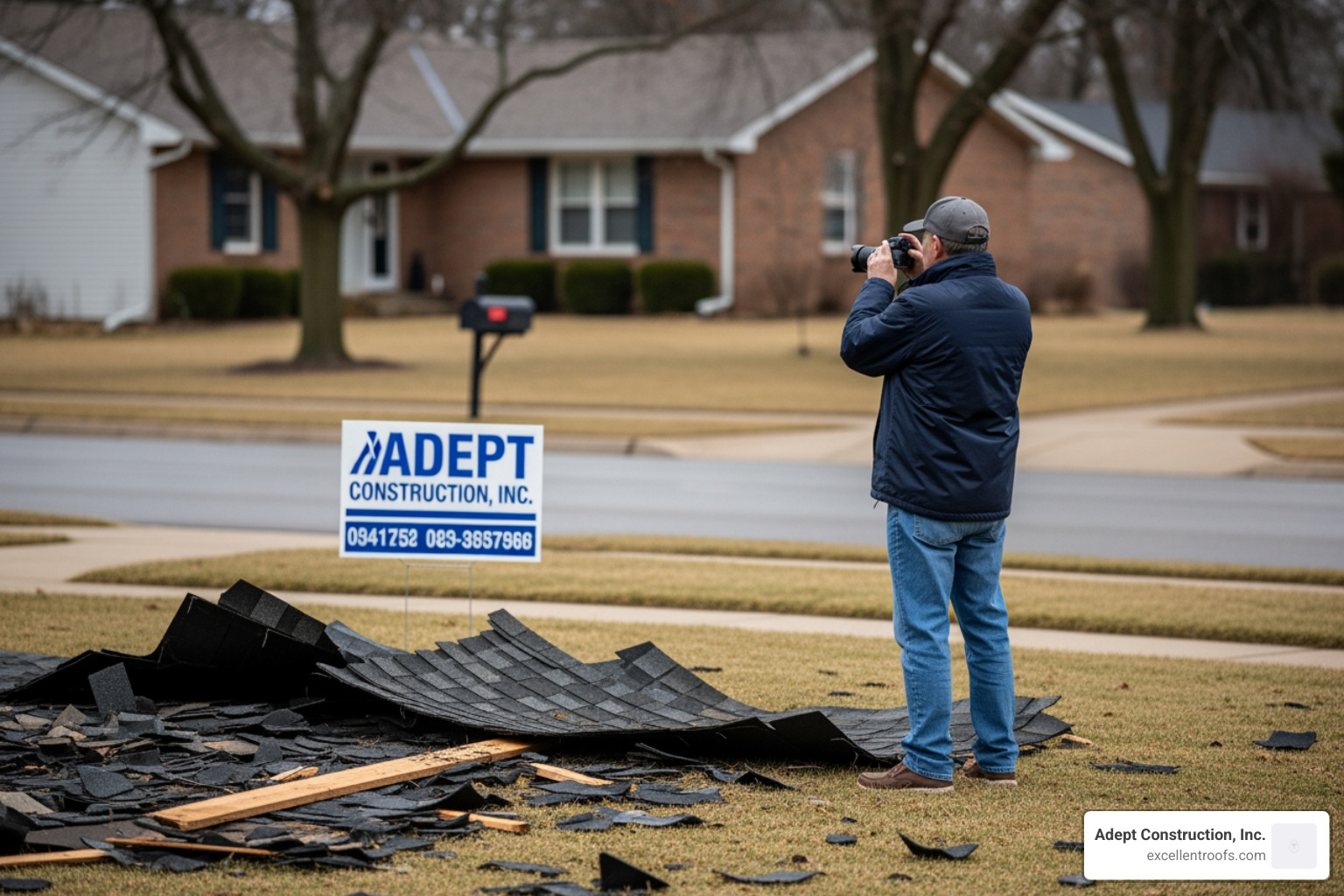
Filing an insurance claim roof damage report requires a methodical approach. You aren’t just telling a story; you are building a legal and financial case.
- Safety First: Before you look at the roof, ensure the structure is safe. If a tree has fallen through the rafters, evacuate immediately.
- Immediate Assessment: Do a preliminary check from the ground. Look for missing shingles, dented gutters, or fallen debris. Check your attic for new water stains or damp insulation.
- Contact Your Insurer: Once you suspect damage, call your agent or the 24/7 claims line. You will be assigned a claim number—keep this handy for all future correspondence.
- Review Filing Deadlines: Most policies require you to file within one year of the date of loss, but some have windows as short as 30 to 60 days. Don’t wait.
For a deeper dive into these initial actions, check out our guide on how to file roof damage insurance claims in 5 simple steps.
Documenting the Insurance Claim Roof Damage
Evidence is the currency of the insurance world. You need to prove that the damage happened on a specific date due to a specific event.
- Photo and Video Evidence: Take wide shots of the house and close-ups of the damage. If you have “before” photos of your roof from a previous inspection, those are worth their weight in gold to prove the damage is new.
- Weather Reports: Use resources like the NOAA Storm Events Database to find official records of hail or wind speeds in your specific zip code on the day of the storm.
- Interior Documentation: If the roof leak caused water to drip behind cupboards or stain a ceiling, document those areas immediately.
We explain more about identifying these subtle signs in our article on how to spot damage and what to do next.
Temporary Repairs and Mitigation
Your insurance policy includes a “duty to mitigate.” This means you are legally obligated to prevent further damage to your home. If there is a hole in your roof, you must have it tarped.
- Emergency Tarping: Professional emergency roof repair usually costs between $200 and $500.
- Save Every Receipt: Whether you buy a tarp at the hardware store or hire a pro, keep the receipts. These expenses are almost always reimbursable and are added to your total claim settlement.
- Avoid Major Repairs: Do not pay for a full roof replacement before the insurance adjuster has seen the damage, or you risk having the claim denied.
Navigating the Adjuster Inspection and Settlement Process
The adjuster inspection is the most critical hour of the entire process. The adjuster works for the insurance company, and their job is to determine the “scope of work”—exactly what needs to be fixed and how much it should cost.
We strongly recommend having your own trusted roofing contractor present during this meeting. When we meet an adjuster on-site, we can point out subtle hail bruises or wind-lifted shingles that an adjuster might miss. This ensures the “damage report” is accurate from day one.
According to Yahoo Local, scheduling the adjuster and the roofer together helps align estimates and prevents the back-and-forth “pricing war” that can delay repairs for weeks.
Handling Denials and Underpayments
If your claim comes back lower than expected—or is denied entirely—don’t panic. Approximately 15% to 20% of claims face initial issues. Common reasons include:
- Pre-existing Damage: The adjuster claims the roof was already in bad shape.
- Below Deductible: The adjuster estimates the repair cost at $900, but your deductible is $1,000.
- Inadequate Documentation: There isn’t enough proof that a storm caused the specific leaks.
What to do if you’re denied:
- Get the denial in writing. Ask for the specific policy language they are using to justify the decision.
- Request a second inspection. Sometimes a different adjuster will see what the first one missed.
- Hire a Public Adjuster: For large or complex claims, a public adjuster can negotiate on your behalf (usually for a 10-15% fee).
- File a DOI Complaint: If you feel you are being treated unfairly, you can file a complaint with the Illinois Department of Insurance.
Maximizing Your Payout: RCV vs. ACV and Common Pitfalls
How much money you actually receive depends heavily on two acronyms: RCV and ACV.
| Feature | Replacement Cost Value (RCV) | Actual Cash Value (ACV) |
|---|---|---|
| Payout Basis | Today’s cost to replace the roof | Depreciated value based on age |
| Initial Check | Usually the ACV amount | The only check you get |
| Final Payout | Full cost (minus deductible) | Lower payout; you pay the rest |
| Best For | Newer roofs and full protection | Lowering monthly premiums |
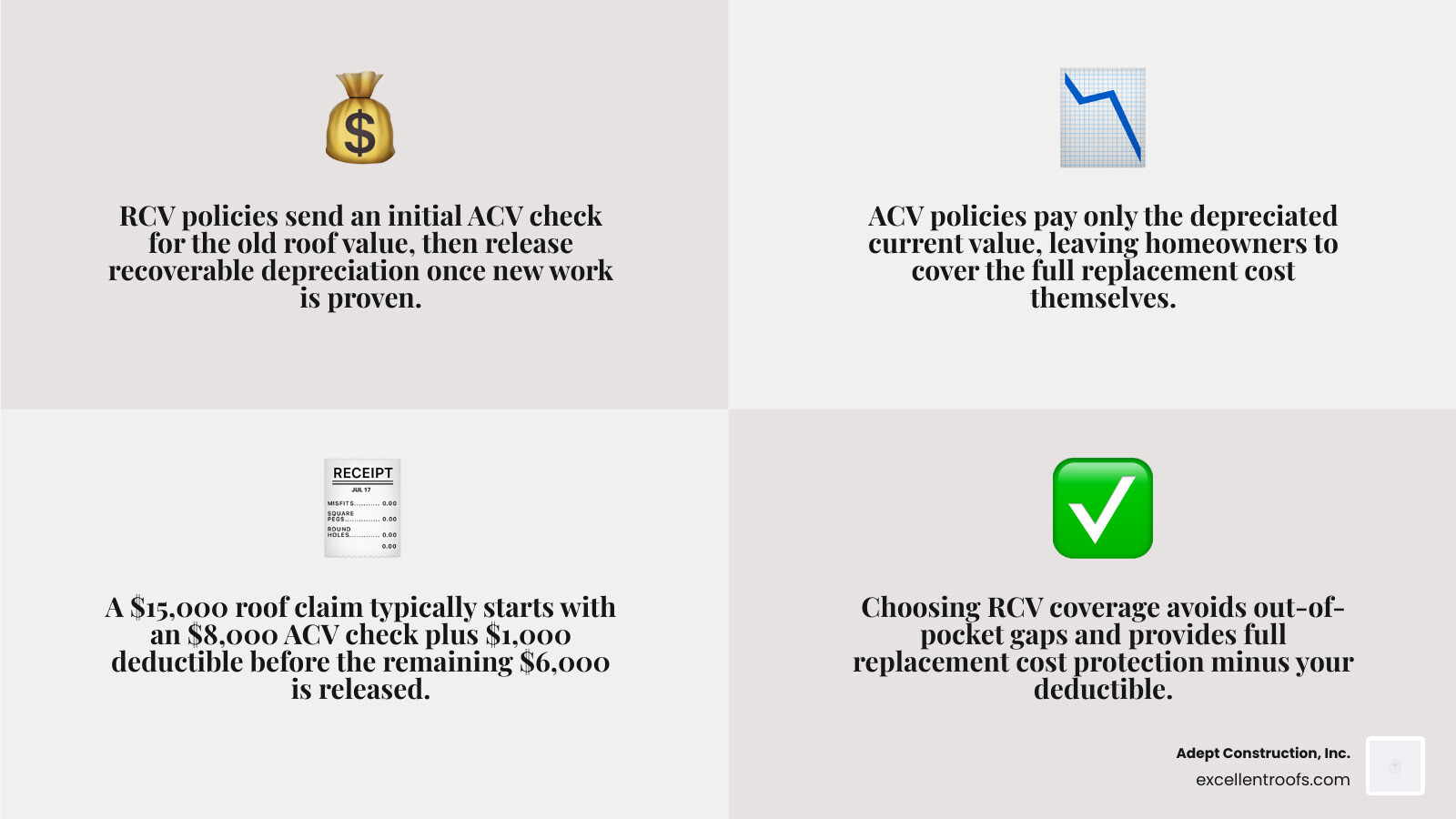
On an RCV policy, the insurer uses a “depreciation holdback.” They send you a check for the current value of the old roof first. Once you submit proof that the new roof is installed, they release the “recoverable depreciation”—the remaining funds needed to cover the full bill.
Avoiding Scams During an Insurance Claim Roof Damage Process
After a major storm in Downers Grove or Naperville, “storm chasers” often flood the neighborhood. These are out-of-state contractors who follow weather maps to find work.
Red Flags to Watch For:
- Deductible Waiving: It is illegal in Illinois for a contractor to offer to “cover” or “waive” your insurance deductible. This is considered insurance fraud.
- High-Pressure Sales: If they want you to sign a contract before you’ve even talked to your insurance company, walk away.
- Assignment of Benefits (AOB): Never sign a document that gives the contractor the right to collect your insurance checks directly. You should always maintain control of the funds.
Under the Illinois Home Repair and Remodeling Act, any residential work over $1,000 must have a written contract, and you generally have a three-day right to cancel if the contract was signed at your home.
Choosing a Local Contractor for Insurance-Related Repairs
When dealing with an insurance claim roof damage situation, the contractor you choose is your partner. You need someone who understands the technical language of insurance (Xactimate pricing, supplements, and line items) but also provides top-tier craftsmanship.
We recommend verifying every contractor through the IDFPR (Illinois Department of Financial and Professional Regulation) to ensure they have a valid state roofing license. Always ask for a current Certificate of Insurance for both General Liability and Workers’ Compensation to protect yourself from liability.
If you are looking for a roof repair in Downers Grove or a full Naperville roof replacement, choosing a local firm with a physical office nearby is essential for long-term warranty support.
Why Local Expertise Matters in Illinois
Chicagoland weather is unique. We deal with extreme temperature swings that cause shingles to expand and contract rapidly. A local roofer knows which roofing systems—like heavy-duty shingle roofing or impact-resistant composite roofing—are best suited for our climate.
Furthermore, local experts understand the specific building codes in DuPage County. If your insurance estimate doesn’t include required “code upgrades” (like ice and water shield or drip edge), a local contractor can file a “supplement” to ensure the insurance company pays for these necessary items. For more local advice, see our Naperville storm damage tips.
Frequently Asked Questions about Insurance Claim Roof Damage
Will filing a roof damage claim increase my insurance premiums?
This is the number one question we hear. In Illinois, insurance companies generally cannot raise your rates solely because you filed a single claim for a “catastrophic event” like a hailstorm or tornado. However, if a massive storm hits your entire zip code, the insurance company may raise rates for the entire area to account for the increased risk. In that scenario, your rates might go up even if you don’t file a claim—so if you have damage, you might as well get the repair you’re paying for.
How long does the roof insurance claim process usually take?
Most claims are resolved within 30 to 60 days.
- Days 1-2: File claim and get a claim number.
- Days 3-10: Adjuster inspection and initial estimate.
- Days 10-20: Contractor review and potential “supplementing” for missing items.
- Days 20-45: Approval and roof installation.
- Days 45-60: Final inspection and release of depreciation checks.
What should I do if my claim is denied?
Start by asking for a written explanation. If the denial is based on “wear and tear” but you have photos of 2-inch hail hitting your siding, you have a strong case for an appeal. You can invoke the “Appraisal Clause” in your policy, which brings in a neutral third party to settle the dispute.
Conclusion
Navigating an insurance claim roof damage process doesn’t have to be a battle. By documenting the damage early, understanding your policy’s RCV/ACV status, and working with a reputable local contractor, you can ensure your home is restored to its original condition—or better.
At Adept Construction, Inc., we’ve built our reputation on superior customer service and high-quality workmanship in Downers Grove and Naperville. We aren’t just here to hammer nails; we’re here to help you navigate the entire restoration process from start to finish.
Whether you need a specialized cedar shake roof or a durable flat roofing solution, our knowledgeable staff is ready to help.
Don’t leave your home’s protection to chance. If you suspect storm damage, contact us today for a free estimate. We’ll provide an honest assessment and the documentation you need to move forward with confidence.
Contact Adept Construction, Inc. today for your free roof inspection!