
Why Commercial Roof Replacement Illinois Matters for Your Business
Commercial roof replacement in Illinois preserves business continuity and asset value. When more than 25–30% of your roof system is moisture-compromised or the assembly has aged past 20–30 years, full replacement provides the lowest total cost of ownership. For immediate guidance or scheduling, consult an Illinois commercial roofing contractor that can inspect, scope, and deliver on code-compliant solutions.
Commercial roof replacement Illinois is a critical investment that protects your building, inventory, and operations from the state’s harsh weather conditions. When your commercial roof fails, the consequences extend far beyond leaks—they include property damage, operational disruptions, and costly emergency repairs.
Key reasons businesses in Illinois need commercial roof replacement:
- Age-related deterioration – Most commercial roofs last 20-30 years before requiring replacement
- Severe weather damage – Illinois’ extreme temperatures, heavy snow, and high winds accelerate roof failure
- Widespread leaks – When more than 25-30% of the roof surface is compromised, replacement becomes necessary
- Energy efficiency – Old roofs increase heating and cooling costs significantly
- Safety concerns – Structural issues like sagging or ponding water create liability risks
Your commercial roof is your building’s first line of defense against Illinois’ challenging climate. From heavy snow loads in winter to intense heat and UV exposure in summer, your roof endure constant stress. Proactive roof management protects your assets and prevents expensive emergency situations.
This guide helps business owners in areas like Naperville and Downers Grove make informed decisions about commercial roof replacement. Partnering with a trusted Illinois roofing company ensures the longevity of your investment and minimizes disruption to your operations.
As Gerald Michaels, founder and president of Adept Construction, Inc., I’ve spent nearly three decades helping businesses throughout Illinois steer commercial roof replacement Illinois projects with transparency and superior workmanship. My experience since 1997 has shown that the right contractor and proper planning make all the difference in protecting your commercial property investment.
Signs Your Commercial Roof Needs Replacement, Not Just Repair
Understanding when your commercial roof has moved beyond repair is one of the most important decisions you’ll make as a property owner. While it’s tempting to patch and repair to save money in the short term, a failing roof system will cost you far more in the long run through repeated commercial flat roof repairs, business interruptions, and potential property damage.
A complete commercial roof replacement Illinois is a significant investment, but it’s often the most cost-effective solution when your roof shows widespread deterioration. The key is knowing which warning signs indicate you’ve crossed the line from repairable damage to full replacement territory.
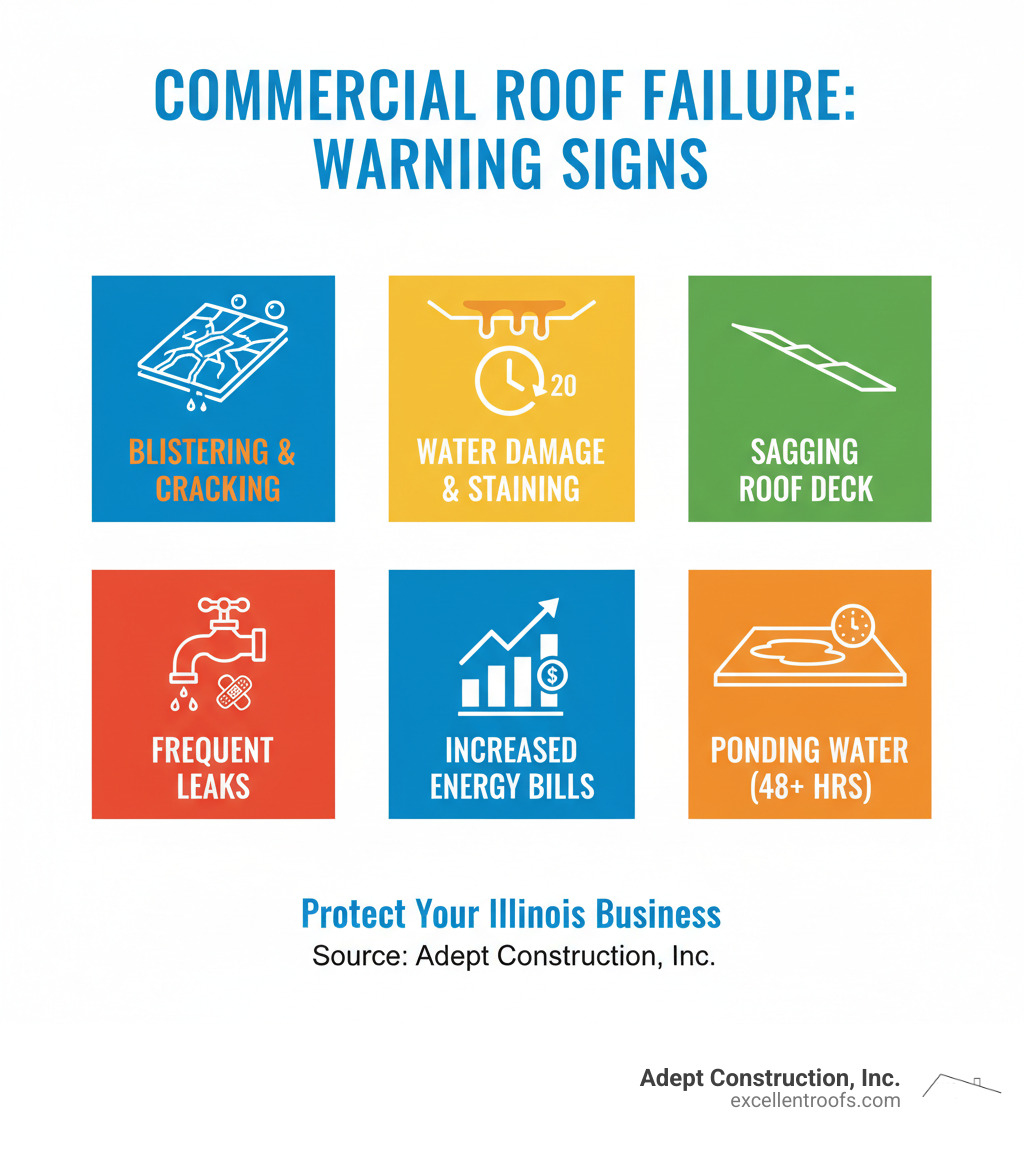
Widespread blistering or cracking across your roof’s surface is one of the clearest indicators. When you see these issues covering large areas rather than isolated spots, it means the roofing material itself has degraded beyond simple patching. The waterproofing capabilities are compromised across the entire system.
If you’re dealing with extensive water damage and staining throughout your building—not just one leak but multiple areas showing signs of water infiltration—your roof is telling you it’s failing systemically. Water stains on ceilings, walls, or worse, on your inventory, mean the protective layers have broken down in multiple locations.
Roof age exceeding 20-25 years is a straightforward indicator. Most commercial roofing systems have a predictable lifespan, and once you reach that threshold, the materials have simply weathered too many Illinois winters and summers. Even if the roof looks acceptable from the ground, its structural integrity and material resilience have diminished. Continuing to repair an aging roof becomes an expensive cycle that delays the inevitable. For a detailed look at timing considerations, check out Is it time to replace your commercial roof?
Visible sagging or an uneven roof deck is a serious red flag that goes beyond the roofing membrane. This indicates structural problems with the deck or underlying insulation, which can lead to ponding water and accelerated deterioration. These issues can’t be fixed with surface repairs.
When you’re experiencing frequent, recurring leaks in different areas, you’re essentially playing whack-a-mole with a failing system. If you find yourself calling for repairs every few months in new spots, the entire roof assembly is no longer performing its protective function.
Dramatically increased energy bills often surprise building owners, but your roof plays a crucial role in insulation. When that protective barrier degrades, heat escapes in winter and penetrates in summer, forcing your HVAC system to work overtime. If your energy costs have spiked without other explanations, your roof could be the culprit.
Finally, ponding water that remains 48 hours after rainfall is a problem that accelerates roof failure. While some water immediately after rain is normal, sustained moisture sitting on your roof breaks down materials and can compromise the structural integrity of the entire building.
These warning signs collectively indicate a roofing system that has reached the end of its useful life. Attempting repairs at this stage is like putting a band-aid on a broken bone—it simply won’t solve the underlying problem.
Repair vs. Replacement: Making the Right Financial Decision
The decision between repair and full commercial roof replacement Illinois comes down to smart financial planning. In our nearly three decades of experience, we’ve found that a roof with more than 25-30% of its surface damaged typically requires complete replacement. Minor issues can certainly be addressed with a commercial roof leak repair, but widespread problems demand a different approach.
A thorough cost-benefit analysis is the starting point. We compare the cost of ongoing repairs over the next few years against the investment in a new roof. Often, property owners are surprised to learn that repeated repairs will actually exceed replacement costs within just a few years—without providing any of the long-term benefits or warranty protection.
If you need targeted service, schedule expert commercial roof repair in Downers Grove or plan a full commercial roof replacement in Naperville to eliminate recurring issues and protect operations.
Infrared moisture scans are one of our most valuable diagnostic tools, especially for flat roofs. These scans detect trapped moisture within the roof assembly that you can’t see from the surface. When moisture is present in 30% or more of the roof area, a full tear-off becomes necessary to prevent mold growth, structural damage, and continued energy loss. You can’t repair moisture that’s already soaked into your insulation and deck.
We conduct a structural integrity assessment to examine the roof deck and supporting structures for decay, rot, or weakness. If the structural deck is compromised, replacement isn’t optional—it’s essential for building safety and stability.
The number of existing roof layers often determines your options. Building codes typically restrict how many layers you can have, and if you already have two or more existing systems, a full tear-off is mandatory. Adding another layer, even if permitted, creates excessive weight and stress on your structure.
Long-term savings make replacement financially attractive. A new, energy-efficient roofing system can cut your heating and cooling costs substantially. We’ve seen businesses reduce their energy bills by 20-30% with a modern reflective roofing system. These savings accumulate year after year, offsetting your initial investment. Plus, comprehensive warranties on new roofs protect you against unexpected expenses.
The goal of avoiding business downtime might seem counterintuitive when considering a replacement project, but think about it this way: a planned replacement happens once on your schedule, while repeated repairs create unpredictable interruptions whenever the next leak appears. Strategic planning minimizes operational impact and gives you control over the timeline.
We believe in providing transparent, data-driven recommendations. Our approach focuses on protecting your assets and delivering the best return on investment for your project. If you’re weighing repair versus replacement for your commercial property, we’d be happy to provide a thorough assessment and free estimate to help you make the right decision for your business.
The Complete Guide to Commercial Roof Replacement in Illinois
Replacing a commercial roof isn’t something you do on a whim. It’s a significant project that requires careful planning, coordination, and execution. But here’s the good news: when you work with the right contractor, a commercial roof replacement Illinois project doesn’t have to feel overwhelming or disruptive to your daily operations.
Think of it as a carefully choreographed dance. Each step builds on the previous one, and when done properly, your business keeps humming along while your building gets the protection it deserves.
The journey typically begins with an initial inspection where we climb onto your roof and really get to know it. We’re looking at everything—the condition of your existing materials, any underlying structural issues, signs of trapped moisture, and how your roof has held up against Illinois weather. This isn’t a quick glance; it’s a thorough examination that tells us exactly what your building needs.
Once we understand your roof’s condition, we prepare a detailed proposal that lays everything out in plain English. No confusing jargon or hidden costs. You’ll see exactly what work we recommend, which materials we suggest, how long the project will take, and what it will cost. Transparency matters, especially when you’re making a significant investment in your property.
Material selection comes next, and this is where your specific needs come into focus. Illinois weather is tough on roofs—we get everything from heavy snow loads to scorching summer heat. We’ll walk you through options that make sense for your building, your budget, and your long-term goals. Whether that’s energy-efficient TPO, durable EPDM, or another solution, we help you make an informed choice.
The scheduling and logistics phase is where we prove our commitment to minimizing disruption. We understand that you can’t just shut down your business for weeks. We coordinate material deliveries, schedule crews efficiently, and work with you to find the timing that works best. Many of our clients prefer evening or weekend work for the noisier phases, and we’re happy to accommodate.
Before any hammers start swinging, site preparation sets the stage for success. We protect your property, set up safety equipment, and make sure everything is ready for a smooth installation. This attention to detail prevents problems down the road.
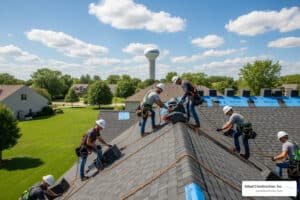
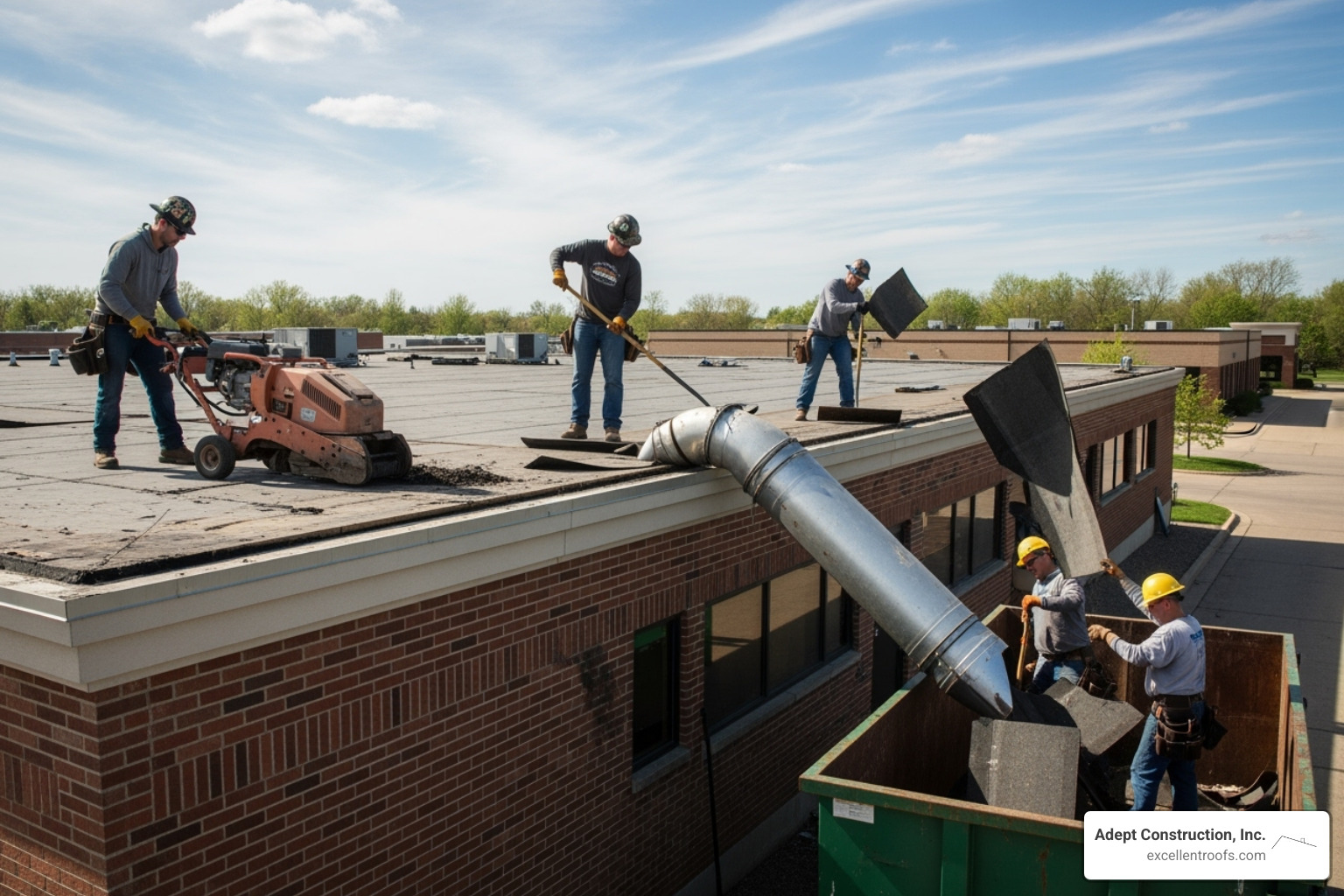
The tear-off and installation is where the change happens. Our skilled crews remove your old roof (if necessary), address any deck repairs, and install your new roofing system according to manufacturer specifications and local building codes. Every step follows strict safety protocols because protecting our team, your employees, and your customers is non-negotiable.
Finally, we conduct a final inspection together. We walk the roof with you, answer any questions, and make sure every detail meets both our standards and yours. You’ll receive all warranty documentation, and we won’t consider the job done until you’re completely satisfied. This comprehensive approach to roof installation ensures your investment is protected for decades to come.
Navigating the Commercial Roof Replacement Illinois Process
A successful commercial roof replacement Illinois project follows a clear path from start to finish. We’ve refined this process over nearly three decades, and it shows in how smoothly everything flows.
Step 1: Thorough Inspection. Our team performs a detailed assessment of your existing roof, examining its condition, identifying damage, and evaluating the underlying structure. We look for telltale signs like extensive blistering, ponding water, compromised insulation, and structural concerns. This inspection determines whether you need a repair or a full replacement, and it gives us the information we need to plan properly.
Step 2: Detailed Quote. You’ll receive a comprehensive, transparent quote that outlines the recommended scope of work, material options, estimated costs, and project timeline. We believe you deserve to understand exactly what you’re paying for and why. No surprises, no fine print, just honest information.
Step 3: Project Planning. Once you approve the quote, we handle all the details that make a project run smoothly. This includes obtaining necessary permits—yes, we take care of that for you, including ensuring compliance with the 2021 International Energy Conservation Code (IECC) R-30 insulation requirement for new commercial roofs in Illinois. We order materials, schedule crews, and create a timeline that works around your business operations. Often, this means working during off-hours or breaking the project into phases.
Step 4: Installation. Our experienced and certified crews begin the installation process with precision and care. If it’s a tear-off project, we remove the old roof and make any necessary repairs to the deck. Then we expertly install your new roofing system according to manufacturer specifications and industry best practices. Throughout this phase, safety remains our top priority, with proper fall protection, secure work areas, and vigilant supervision.
Step 5: Final Walkthrough. After installation, we conduct a thorough inspection and walkthrough with you. This ensures the work meets our rigorous quality standards and your complete satisfaction. We address any questions, provide all warranty documentation, and make sure you feel confident about your new roof.
Minimizing business disruption is where our experience really shines. We understand that your operations can’t simply stop for weeks. That’s why we use strategies like phased work—dividing large projects into smaller sections so parts of your facility stay operational. We’re happy to schedule noisy or disruptive work during evenings, weekends, or your non-peak hours. And we keep you informed daily about progress and any potential impacts through clear, consistent communication.
Our safety protocols protect everyone—our crew, your employees, and your customers. This includes proper fall protection, safe equipment operation, and thoroughly securing work areas. We also take debris management seriously, ensuring efficient cleanup throughout the project and leaving your property tidy and safe when we’re done. Whether you’re in Downers Grove or Naperville, you can count on a professional, well-managed project.
Key Factors Influencing the Cost of a Commercial Roof Replacement in Illinois
Understanding what drives the cost of a commercial roof replacement Illinois helps you budget appropriately and make smart decisions. The investment varies significantly based on several key factors, and knowing these upfront prevents surprises.
Roof size and complexity form the foundation of any estimate. Larger roofs require more materials and labor, naturally increasing costs. But complexity matters just as much—a roof with multiple angles, numerous penetrations like HVAC units and skylights, and varying elevations demands more labor and specialized materials than a simple flat surface.
Your material choice represents one of the biggest cost variables. Single-ply membranes like TPO offer cost-effective protection, while premium systems like metal roofing come with higher upfront costs but exceptional longevity. Each material has different installation requirements, expected lifespans, and maintenance needs. We’ll explore these options in detail in the next section.
The existing roof condition significantly impacts your project cost. If your current roof has severe damage, multiple layers, or extensive trapped moisture, the tear-off process becomes more involved and expensive. Extensive deck repairs or structural reinforcements add to the investment, but they’re essential for a roof that will last.
Insulation requirements in Illinois follow specific energy efficiency standards. The 2021 International Energy Conservation Code (IECC) mandates a minimum R-Value of thirty (R-30) for new commercial roof insulation when the existing roof is removed and the deck is exposed. Meeting these standards often requires new or additional insulation, which impacts costs but delivers substantial long-term energy savings that offset the initial investment.
Labor costs reflect the skill and expertise required for quality commercial roofing work. This includes certified professionals, project management, specialized equipment, and adherence to safety protocols. Labor rates vary based on regional demand, project complexity, and the contractor’s experience and certifications. At Adept Construction, our nearly three decades of experience means we work efficiently without cutting corners.
The warranty level you choose affects your upfront cost but provides crucial long-term protection. Comprehensive warranties, especially manufacturer-backed options like No-Dollar-Limit (NDL) warranties, add to the initial investment but offer significant peace of mind and protection against future unexpected expenses.
Finally, permit fees and local regulations contribute to your overall project cost. Obtaining necessary permits and ensuring compliance with local building codes and specific wind uplift requirements—like FM I-90 for Chicago and surrounding areas—are essential steps that protect your investment.
For a general idea of costs in our service area, you can review information on the average cost of replacing a roof in DuPage County, Illinois. We provide detailed, transparent quotes after a thorough inspection, ensuring you understand exactly what you’re paying for and why. Contact us for a free estimate—we’re happy to assess your specific situation and provide honest guidance about your options.
Choosing the Right Materials for Illinois’ Climate
Illinois’ four distinct seasons, from heavy snow loads and ice dams in winter to high heat and UV exposure in summer, demand specific material properties for longevity and performance. Most commercial buildings use flat roofing systems, which require specialized materials designed to withstand these diverse conditions. The National Roofing Contractors Association (NRCA) provides extensive resources on these materials, helping property owners make informed decisions. See NRCA guidance at https://www.nrca.net/
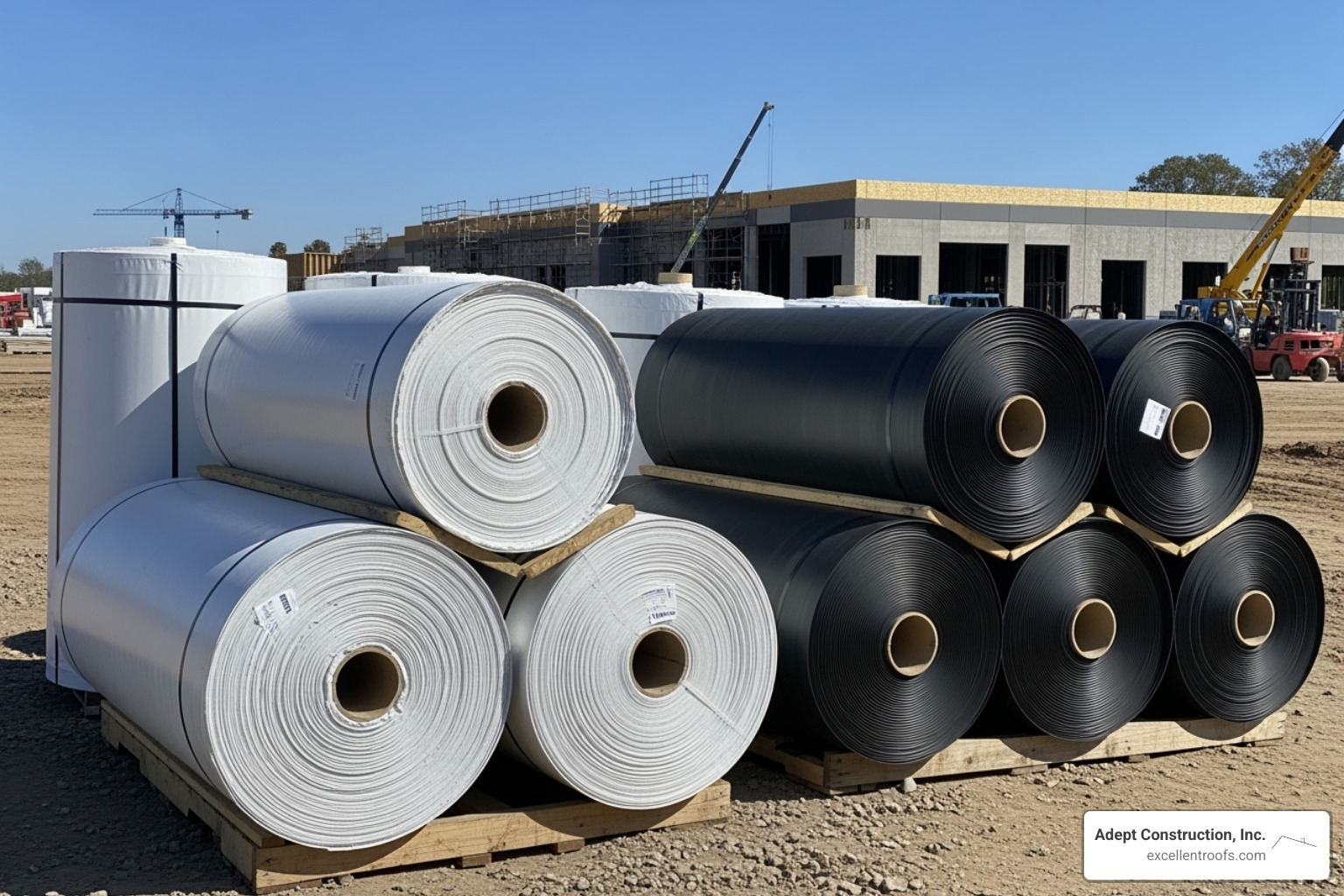
When selecting materials for commercial roof replacement Illinois, we must consider:
- Illinois Weather Extremes: The drastic temperature swings from sub-zero winters to scorching summers can cause materials to expand and contract, leading to cracking and deterioration if not properly formulated.
- Snow Load Capacity: Heavy snowfall requires roofing materials and systems capable of bearing significant weight without structural compromise.
- Wind Uplift Resistance: Illinois is prone to high winds and severe storms, necessitating roofing systems with strong adhesion or mechanical fastening to prevent detachment. The FM I-90 wind uplift requirement is standard for many areas.
- UV Radiation: Summer sun exposes roofs to intense ultraviolet (UV) radiation, which can break down membranes and coatings over time. UV-resistant materials are crucial.
- Thermal Shock: The rapid changes between hot and cold temperatures can stress roofing materials, a phenomenon known as thermal shock. Materials with good flexibility and thermal stability perform best.
Here’s a comparison of common commercial roofing materials and their suitability for Illinois:
| Material Type | Durability & Lifespan | Cost (Relative) | Energy Efficiency | Pros | Cons –
| TPO (Thermoplastic Olefin) | 20-30 years | $$ | High | Reflective surface reduces cooling costs, heat-welded seams for superior leak protection, puncture-resistant. | Can be more expensive than EPDM, requires specialized installation expertise. –
| EPDM (Ethylene Propylene Diene Monomer) | 25-35 years | $$ | Moderate | Extremely durable, resistant to weathering and UV rays, flexible in cold temperatures. | Black surface can absorb heat, seams are glued which can be a point of failure if not installed correctly. |
| Modified Bitumen | 15-25 years | $$$ | Moderate | Excellent waterproofing, high tensile strength, multiple layers for redundancy. | Heavier than single-ply systems, installation can be labor-intensive. |
| Metal Roofing | 40-70+ years | $$$$ | High | Extremely durable, long-lasting, fire-resistant, and can be made from recycled materials. | Higher initial cost, can be noisy during rain without proper insulation. |