
Why Your Metal Roof is a Long-Term Investment Worth Protecting
Residential metal roof repair is essential for protecting your roofing investment and preventing small issues from becoming major headaches. Here’s what you need to know:
Quick Answer: Common Residential Metal Roof Repairs
- Loose or Missing Fasteners: Tighten or replace screws and seal with roofing sealant.
- Small Leaks: Clean the area, apply urethane sealant, and secure with a matching patch.
- Rust Spots: Wire brush the area, apply a rust inhibitor, prime, and paint with a matching coating.
- Minor Dents or Punctures: Cut a metal patch, secure with sealant and screws, and seal the edges.
- Failed Seams: Clean thoroughly and apply a continuous bead of high-quality sealant.
When to Call a Professional: Widespread damage, steep roof pitch, multiple leaks, panel replacement needs, or if you’re unsure of the damage extent.
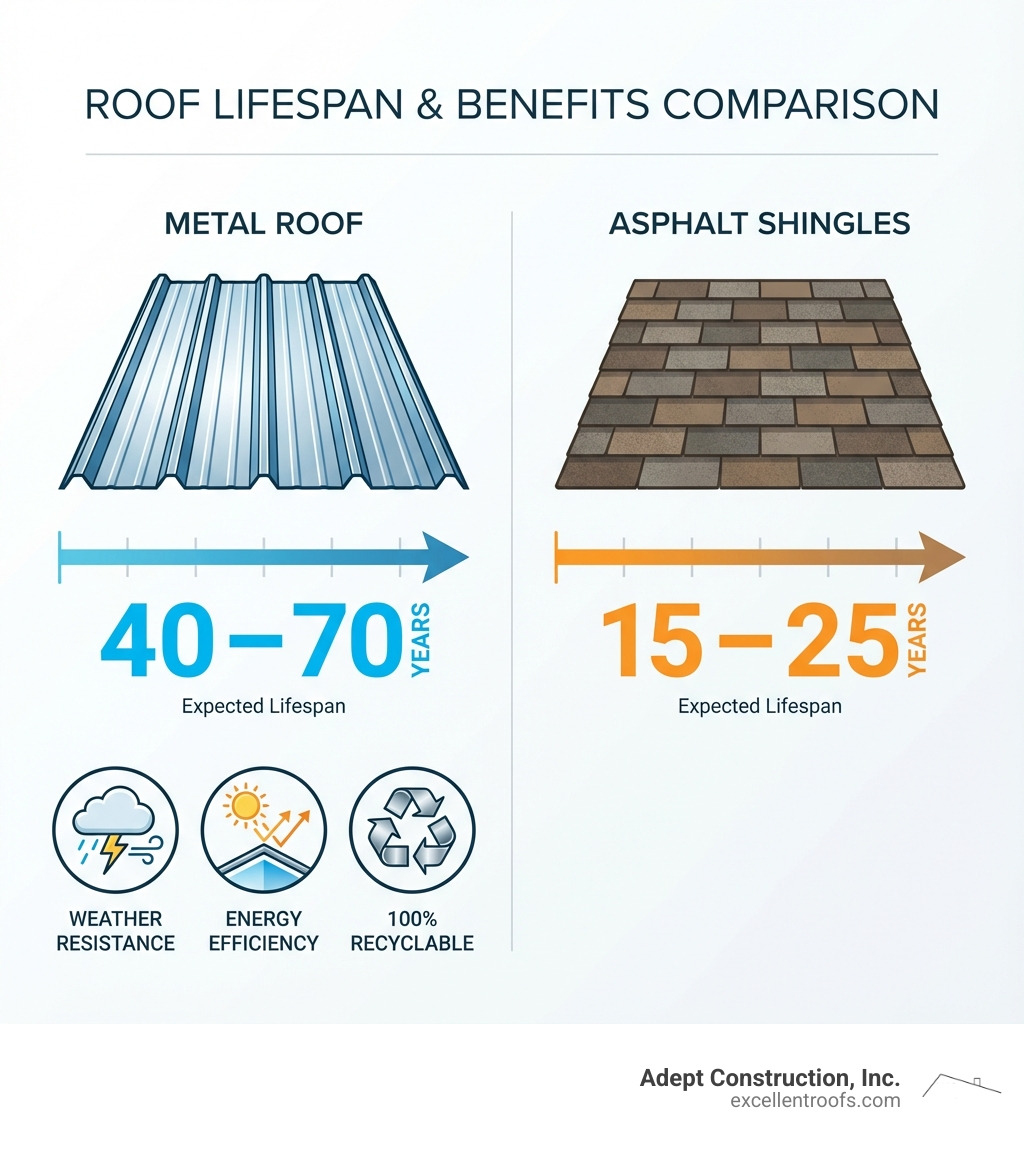
Your roof is your home’s first line of defense, and a quality metal roofing system is a significant upgrade, offering durability that asphalt shingles can’t match. Metal roofs can last 40 to 70 years with proper maintenance, far outliving traditional asphalt shingles, which last only 15 to 25 years.
Metal roofs offer exceptional benefits:
- Longevity: Can last 50+ years, with some systems reaching 100 years.
- Weather Resistance: Withstand wind speeds up to 140 mph and have a Class-A fire rating.
- Energy Efficiency: Reflect solar heat, reducing cooling costs.
- Sustainability: 100% recyclable at the end of life.
- Low Maintenance: Require minimal upkeep compared to other materials.
Despite their durability, metal roofs aren’t indestructible. Weather, thermal expansion, and age can cause issues like loose fasteners, rust, or leaks. The good news is that many of these problems are repairable when caught early. Understanding when to DIY and when to call a professional can save you thousands and extend your roof’s lifespan.
I’m Gerald Michaels, founder of Adept Construction, Inc. Since 1997, I’ve helped homeowners in the Chicago suburbs with their roofing needs. With decades of experience in residential metal roof repair, I know that timely maintenance is key to maximizing your investment. This guide shares the proven techniques our team uses daily.
Whether you need roof repair in Downers Grove, IL or roof repair in Naperville, IL, understanding your roof’s needs is the first step. Contact us today for a free estimate.
Must-know residential metal roof repair terms:
Identifying Metal Roof Damage: Signs, Causes, and Types
Even robust metal roofs show wear over time. Promptly identifying issues is crucial for preventing costly damage. Early detection is key to effective residential metal roof repair.
What are the common signs of damage?
When inspecting your metal roof, look for these tell-tale signs:
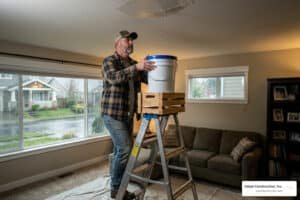
- Visible leaks or water stains on ceilings: The most obvious sign of water penetration. Look for discoloration or drips inside, especially after rain.
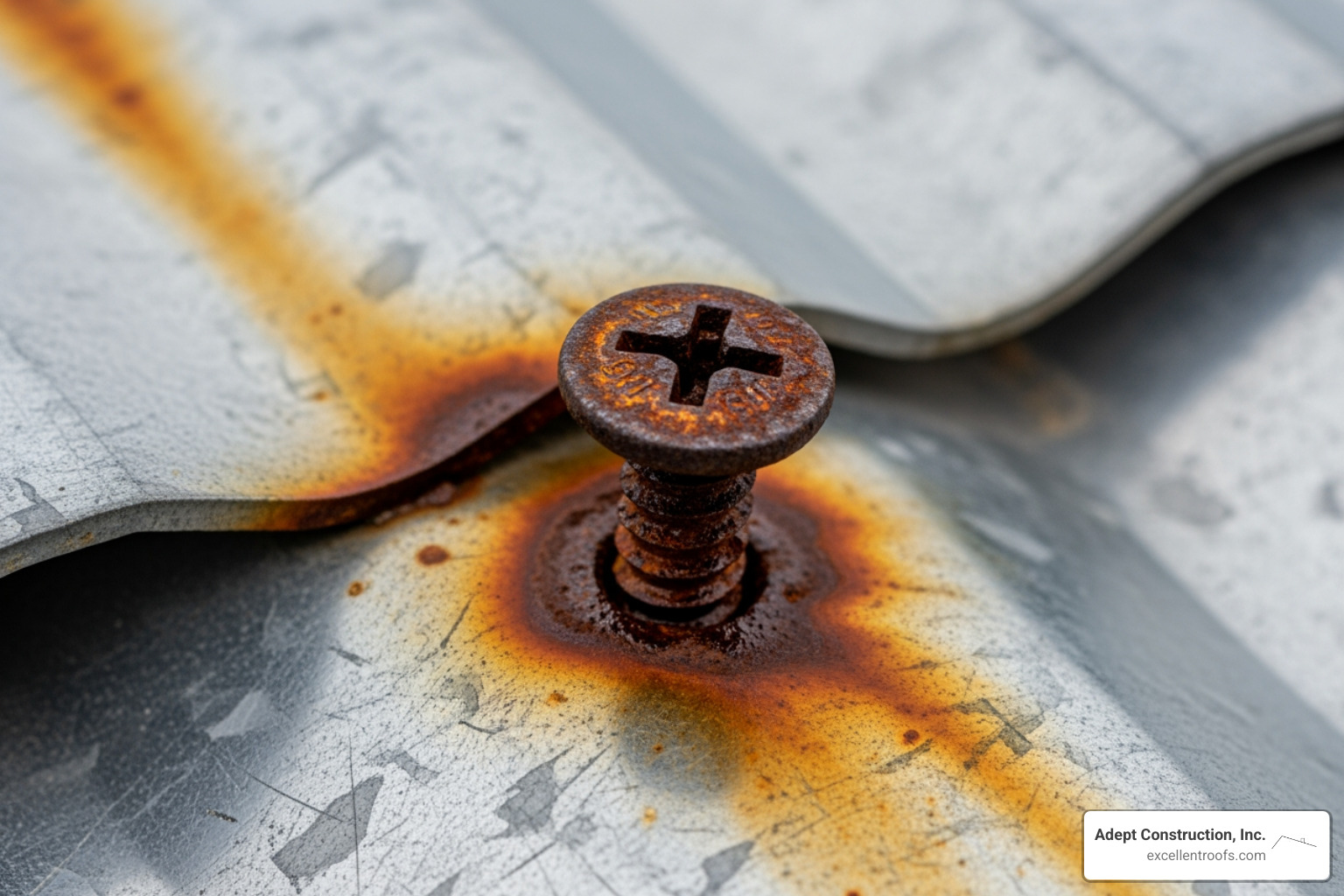
- Rust spots or corrosion on panels: Damaged coatings can lead to corrosion, particularly around fasteners, seams, and edges.
- Loose, missing, or backed-out screws: Thermal expansion or improper installation can loosen fasteners, creating entry points for water.
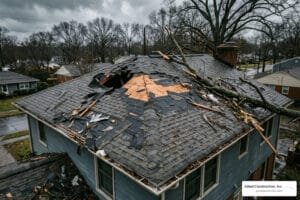
- Dents, scratches, or punctures: Hail, falling branches, or foot traffic can compromise the metal’s protective coating and integrity.
- Excessive rattling or noise in wind: This often indicates loose panels or fasteners, signaling a potential structural issue.
- Fading, peeling, or chalking paint: A compromised finish can mean the protective layer is breaking down, exposing the metal to corrosion.
For a deeper look at what to watch for after severe weather, see our guide on Top Signs Your Roof Needs Immediate Repair After a Storm.
What are the main causes of metal roof damage?
Understanding the root cause is vital for effective residential metal roof repair:
- Severe weather: High winds can lift panels, hail can cause dents, and heavy snow can stress the structure.
- Improper installation: Over-tightened fasteners, incorrect flashing, or misaligned panels can lead to leaks and premature wear.
- Expansion and contraction: Natural temperature changes can cause fasteners to loosen and seams to separate over time.
- Impact damage: Falling tree limbs or other debris can dent, scratch, or puncture metal panels.
- Lack of maintenance: Clogged gutters and debris can cause water to pool, accelerating corrosion.
To prepare for the unexpected, Learn more about storm damage roof repair.
How do different metal roofing systems affect repairs?
The type of metal roofing on your home impacts the repair process:
- Standing Seam Roofs: Feature interlocking seams that hide fasteners, offering superior weather protection. Repairs require specialized tools to work the seams without damaging adjacent panels.
- Exposed Fastener Roofs: Fasteners are driven through the face of the metal. This simplifies panel or screw replacement, but the fasteners are common leak points as their washers deteriorate.
- Metal Shingles/Tiles: Mimic traditional materials and are installed as individual pieces. Repair is similar to replacing shingles but requires care with the interlocking system.
Understanding these differences is why a thorough inspection is necessary to determine the best repair approach for your specific roof.
The Complete Guide to Residential Metal Roof Repair
While some residential metal roof repair tasks are best left to professionals, many minor issues can be addressed by a homeowner with the right tools and knowledge. This section is a general guide for minor repairs. For extensive damage or if you’re unsure, always consult a professional. Safety is paramount when working on any roof.
Essential Tools and Materials for DIY Repairs
Before starting, gather these essential tools and materials, prioritizing safety:
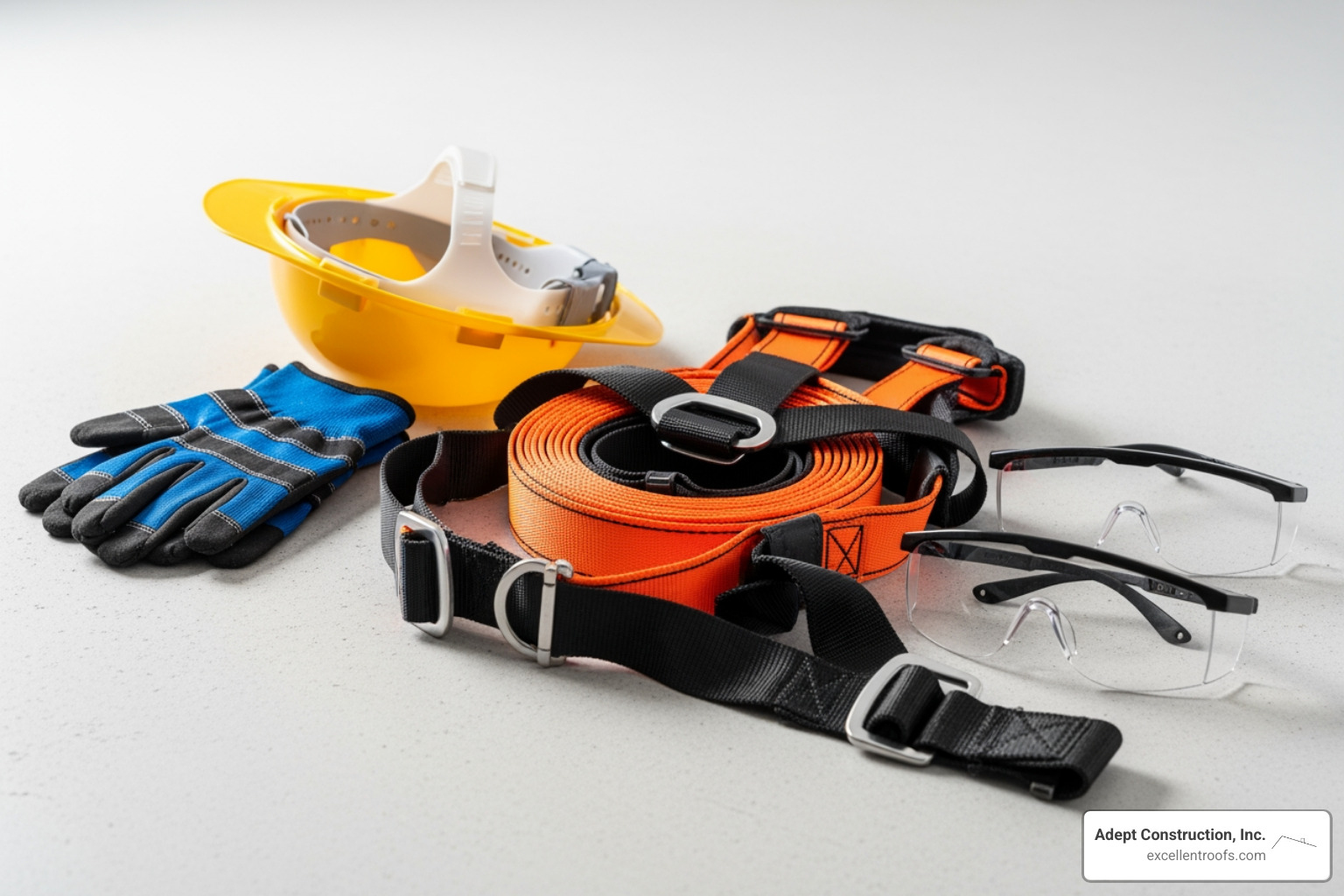
- Safety Gear: Safety harness, non-slip boots, gloves, and goggles.
- Tools: Sturdy ladder, power drill with variable speed, metal snips, wire brush, caulking gun, putty knife, and tape measure.
- Materials: Urethane roofing sealant, butyl tape, replacement fasteners with washers, metal roof primer, and matching roof paint or coating.
Step-by-Step Repair Process: From Inspection to Completion
A thorough inspection is necessary before any repair. Learn what to expect in our guide, What to Expect During a Roof Inspection. Once you’ve identified the problem, follow these steps for common residential metal roof repair tasks:
Step 1: Cleaning the Area
The affected area must be clean and dry. Use a mild detergent and water with a soft brush to scrub away dirt and debris. Rinse thoroughly to remove all soap residue.
Step 2: Fixing Loose Fasteners
- Tighten loose screws: Use a power drill, but do not over-tighten, as this can damage the panel. Just snug is sufficient.
- Replace rusted or missing screws: Remove the old screw. Apply a bead of urethane sealant around the base of the new screw before driving it in to create a watertight seal.
Step 3: Treating Rust
Act quickly to prevent rust from spreading.
- Remove rust: Use a wire brush to scrub the rusted area down to clean, bare metal.
- Apply primer: Once clean and dry, apply a specialized rust-inhibiting metal roof primer.
- Paint: After the primer dries, apply a matching metal roof paint. For superior performance, consider coatings using Kynar 500 paints.
Step 4: Patching Small Holes
For holes up to a quarter-inch, a patch is an effective solution.
- Cut a metal patch: The patch should overlap the hole by at least 2-3 inches on all sides.
- Apply sealant: Apply urethane sealant to the underside of the patch and around the hole.
- Secure the patch: Press the patch firmly over the hole and secure it with sheet metal screws around the perimeter.
- Seal edges: Apply another bead of sealant along the patch edges and over the screw heads for a watertight finish.
Step 5: Sealing Leaky Seams
- Clean the seam: Remove any old sealant, dirt, or debris from the seam and ensure it is completely dry.
- Apply sealant: Using a caulking gun, apply a continuous, generous bead of urethane sealant along the entire leaky seam, smoothing it for good adhesion.
Special Considerations for Older Metal Roofs
Repairing an older metal roof presents unique challenges:
- Paint Matching: Decades of sun exposure can fade the original color, making a perfect match for patches difficult.
- Widespread Fastener Failure: On older roofs, many fasteners may be failing simultaneously, indicating a systemic issue beyond a simple spot repair.
- Underlying Structure: Long-term water intrusion may have damaged the roof deck, which must be assessed and repaired before fixing the metal panels.
- Fragility: Older metal can be more brittle. Walking on it or applying force during repairs can cause new damage.
Given these complexities, it’s often best to get a free roof inspection from a professional for older systems.
Repair, Restore, or Replace? Making the Right Decision
Deciding whether to repair, restore, or replace your metal roof depends on its age, the extent of the damage, your budget, and your long-term goals. We can help you weigh the options and make an informed decision.
The Difference Between Repairing, Restoring, and Replacing
Understanding each option is key:
- Repair: This involves fixing isolated issues, such as a single leak, a few loose fasteners, or a small patch of rust. Repairs are targeted, less invasive, and affordable, aimed at prolonging the life of an otherwise sound roof.
- Restore: Restoration involves applying a seamless, fluid-applied coating over the entire existing roof surface. This creates a new waterproof membrane, sealing all seams and fasteners. It’s a great mid-range option for structurally sound roofs with widespread wear, extending life for less than a replacement.
- Replace: This is the most extensive option, involving a full tear-off and installation of a new metal roof. Replacement is necessary for roofs with severe structural damage, widespread corrosion, or those at the end of their service life. It’s the highest upfront cost but offers a long-term solution with new warranties.
For a comprehensive overview, see our Roof Repair Home Complete Guide.
Comparing the Costs: Metal Roof Repair vs. Replacement
Financials are a major factor in the decision:
- Repair Costs: Minor to moderate residential metal roof repair generally costs between $500 and $3,000. This covers targeted fixes like replacing panels or patching holes.
- Restoration Costs: A full roof coating system costs less than a replacement and can add decades to your roof’s life, often without the expense of a tear-off.
- Replacement Costs: While the highest upfront investment, a full replacement provides the best long-term value with new materials and warranties. A roof replacement in Downers Grove, IL, is a sound investment that boosts home value.
Understanding Warranties for Materials and Workmanship
Warranties provide peace of mind. It’s crucial to know what’s covered:
- Material Warranties: Provided by the manufacturer, these cover product defects for 20 to 50 years, though many are prorated.
- Workmanship Warranties: Provided by the roofing contractor, this warranty covers installation errors and typically ranges from 5 to 25 years.
- DIY Repairs and Warranties: Be aware that performing DIY repairs can void existing material or workmanship warranties if not done to manufacturer specifications.
DIY vs. Hiring a Professional for Residential Metal Roof Repair
The choice between DIY residential metal roof repair and hiring a professional depends on safety, job complexity, required tools, and warranty implications. For homeowners in the Chicago suburbs, a trusted contractor is key to a job well done.
Assessing the Scope: What You Can Safely DIY
For minor issues, you can often handle repairs yourself if you prioritize safety:
- Tightening accessible screws on an exposed fastener roof.
- Cleaning gutters and the roof surface to prevent debris buildup.
- Applying sealant to a small, easily reachable seam on a low-slope area.
However, any task requiring walking on a steep roof, extensive panel work, or dealing with widespread damage should be left to experts. Your safety is paramount.
Why and When to Hire a Professional Roofer
Calling a professional is essential in many situations:
- Widespread or multiple leaks, which indicate a larger systemic problem.
- Damage requiring panel replacement, a complex task needing special tools.
- Repairs on steep-pitched roofs, which are inherently dangerous.
- Uncertainty about the leak’s source, as professionals can find where the leak is coming from accurately.
- To maintain your warranty, as DIY repairs can void it.
- For a comprehensive assessment of your roof’s overall health.
If you need roof repair in Naperville, IL, a professional ensures the job is done safely and effectively.
Key Considerations for Choosing a Roofing Contractor
When hiring a professional, choosing the right one is vital:
- Verify license and insurance: Ensure the contractor has liability insurance and workers’ compensation to protect you.
- Ask for local references: A reputable company will provide references from satisfied customers.
- Confirm metal roofing experience: Not all roofers specialize in metal. Look for a company with specific expertise.
- Get a detailed, written estimate: The estimate should clearly outline the scope of work, materials, timeline, and total cost.
Adept Construction, Inc. has a strong reputation in Downers Grove and Naperville for quality workmanship and customer service. For more guidance, see The Ultimate Guide to Choosing the Right Roof Replacement Contractor.
Proactive Maintenance: Extending Your Roof’s Lifespan
A metal roof’s impressive 50-60 year life expectancy depends heavily on proper maintenance. Proactive care is the key to maximizing your investment and minimizing the need for costly residential metal roof repair.
A Simple Maintenance Checklist for Homeowners
We recommend a twice-yearly maintenance routine to keep your metal roof in top condition:
Twice a Year (Spring & Fall):
- Visually inspect the roof: From the ground, look for loose panels, rust, or sealant failure, especially after severe weather.
- Clean gutters and downspouts: Clogged gutters cause water backup, which can accelerate corrosion and lead to leaks.
- Remove debris from the roof surface: Piles of leaves and branches trap moisture and can cause staining or corrosion.
- Check flashing: Ensure flashing around chimneys, vents, and skylights is secure and the sealant is intact.
How to Prevent Common Issues and Reduce the Need for Residential Metal Roof Repair
Prevention is always better than a cure. Take these steps to reduce the likelihood of major repairs:
- Ensure proper attic ventilation: This prevents condensation from forming on the underside of your roof, which can cause damage.
- Trim overhanging tree branches: This reduces the risk of impact damage during storms and lessens debris accumulation.
- Avoid walking on the roof: Unnecessary foot traffic can cause dents and scratches that compromise the protective coating.
- Schedule professional inspections: An expert can spot subtle issues before they escalate. We recommend a professional inspection every two years to save you significant repair costs.
Frequently Asked Questions about Metal Roof Repair
Homeowners often ask us about residential metal roof repair. Here are answers to the most common questions:
Can you patch a metal roof?
Yes, small holes and damaged areas on a metal roof can be patched effectively. The process involves cleaning the area, cutting a matching metal patch that overlaps the damage, and using high-grade urethane sealant and screws to create a durable, watertight seal. For larger damage, a full panel replacement may be necessary.
How much does it cost to fix a leak in a metal roof?
The cost to fix a metal roof leak typically ranges from $500 to $1,500. The final price depends on the leak’s location, accessibility, and the extent of the damage. A simple fastener replacement is on the lower end, while repairing a failed seam or damaged flashing will cost more. A professional inspection is required for an accurate quote.
Can you put a new metal roof over an old one?
In some cases, a new metal roof can be installed over a single layer of old asphalt shingles (a roof-over). However, installing a new metal roof over an old one is generally not recommended. Old metal can hide underlying deck rot or structural damage that must be addressed. Building codes and best practices often require a full tear-off to inspect the roof deck and maintain warranty validity.
Conclusion: Protecting Your Home with Expert Care
This guide has covered the essentials of residential metal roof repair, from identifying damage to understanding your repair options. While metal roofs are remarkably durable, they require proper care. Prompt repairs prevent costly damage and extend your roof’s impressive lifespan. While some minor fixes are DIY-friendly, complex repairs benefit from professional expertise. Regular maintenance, including twice-yearly inspections, is the key to ensuring your roof protects your home for decades.
By understanding the signs of damage and proper repair steps, you can confidently protect your investment. For expert help with all your residential roofing needs in Downers Grove, Naperville, and the surrounding Chicago suburbs, Adept Construction, Inc. is here for you. We pride ourselves on superior customer service and high-quality workmanship. Contact us today for a free, no-obligation estimate and let us help keep your metal roof in peak condition.