
Why Understanding Metal Roof Hail Damage Matters
Metal roof hail damage is a primary concern for homeowners in Illinois, where severe weather is common. For those seeking reliable protection, Adept Construction’s expert roofing services offer peace of mind against the elements. While metal roofs are highly resistant to hail, they are not invincible. Understanding the difference between cosmetic and functional damage is critical, as hailstorms cause over $1 billion in property damage annually in the U.S.
Here are the key facts about metal roof hail damage:
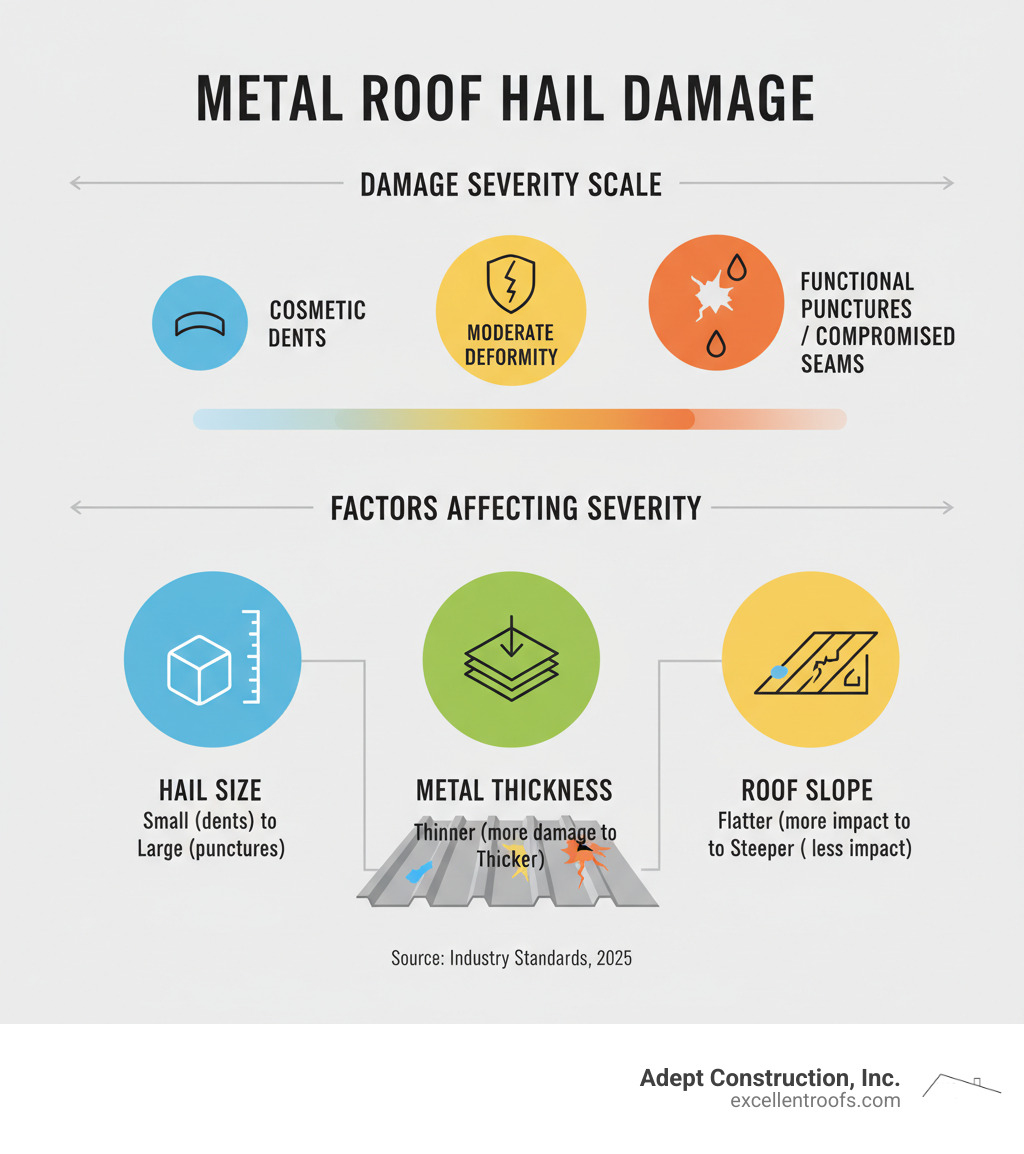
- Cosmetic Damage: Dents and dings that do not affect the roof’s performance or lifespan.
- Functional Damage: Punctures, compromised seams, or coating removal that requires immediate repair to prevent leaks.
- Severity Factors: Damage depends on hailstone size, metal thickness, roof slope, and panel design.
- Impact Rating: A Class 4 rating (UL 2218 standard) signifies the highest resistance to hail impact.
- Insurance: Coverage varies, and understanding cosmetic damage waivers is essential.
Making the wrong decision after a hailstorm can be costly. Delaying necessary repairs may lead to leaks and structural issues, while replacing a roof with only minor cosmetic flaws is a waste of resources. This guide provides the facts to help you identify real damage, steer insurance, and protect your investment.
I’m Gerald Michaels, founder of Adept Construction, Inc. With nearly 30 years of experience helping homeowners in the Chicago suburbs, I’ve inspected countless roofs affected by hail. My goal is to provide you with the information needed to make informed decisions about your roof’s maintenance and protection.
Let’s explore what happens when hail meets metal and what you should do about it.
Understanding How Hail Affects Metal Roofs
Metal roofs are exceptionally tough and outlast traditional materials, but they are not immune to the effects of a severe hailstorm. The key is understanding what kind of impact hail has and whether it constitutes actual damage.
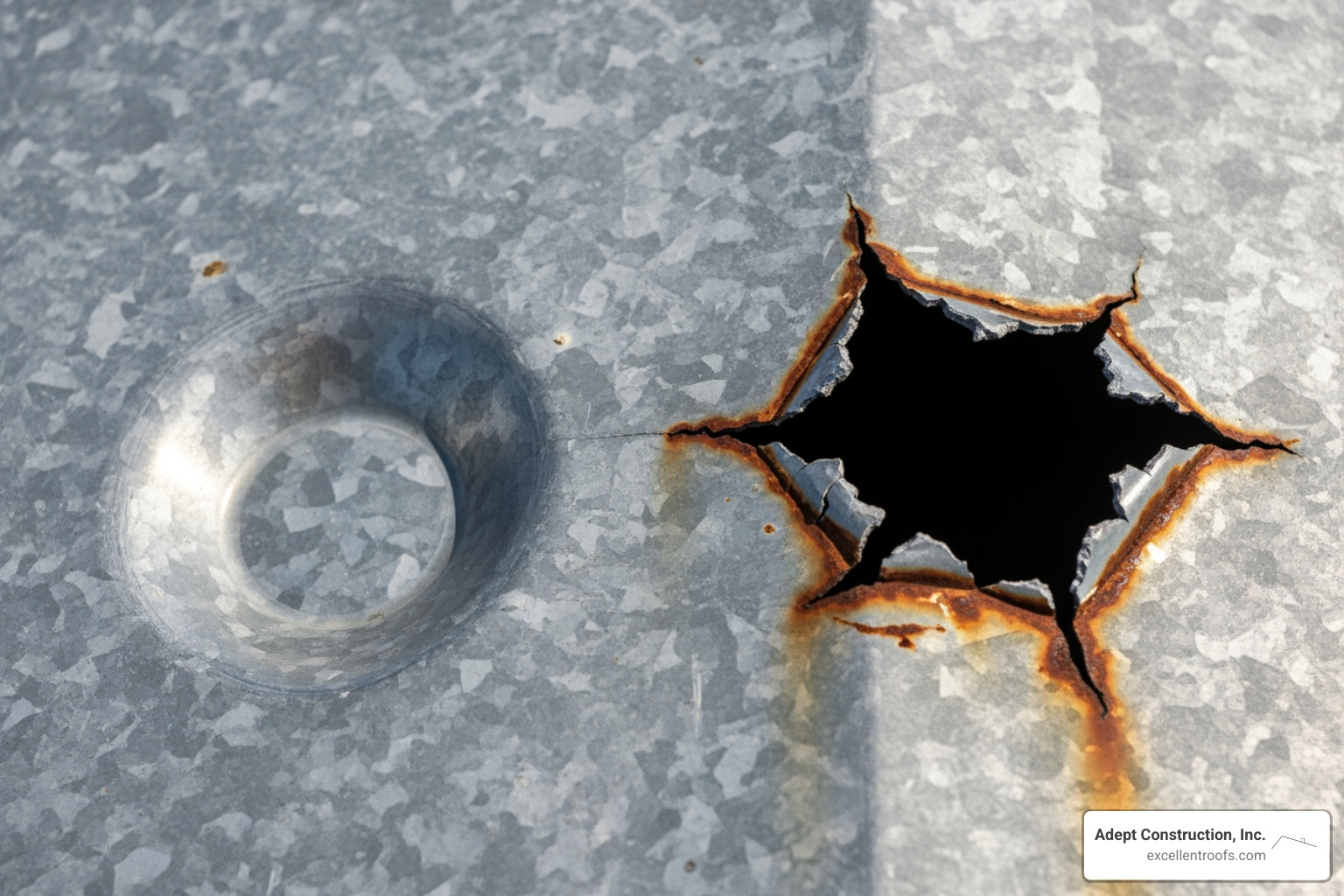
When hail strikes metal, it typically creates dents rather than the punctures or tears seen on other materials. This resilience is why many insurance companies offer lower premiums for metal roofs. However, knowing what is harmless versus what is true metal roof hail damage can save you thousands. If you need help, our guide on how to spot hail damage on your roof offers a step-by-step walkthrough.
Cosmetic vs. Functional Damage: More Than Just a Dent
This distinction is the most critical factor in evaluating your roof post-storm.
Cosmetic Damage: Includes dents, dings, and dimples that alter the roof’s appearance but do not compromise its function. These surface imperfections do not affect the roof’s ability to shed water or shorten its lifespan. Most quality metal roofs can handle hail smaller than two inches without functional issues.
Functional Damage: Occurs when hail compromises the roof’s protective barrier. This includes punctures or fractures that allow water intrusion, compromised seams where hail distorts the metal and damages sealant, or coating removal. When protective coatings are chipped or cracked, the exposed metal can rust, shortening the roof’s service life. Functional damage requires immediate attention to prevent leaks and structural problems.
Key Factors Influencing Metal Roof Hail Damage
Several factors determine the extent of hail damage:
Hailstone Characteristics: Size is the most significant factor; hail must typically be over 2.5 inches in diameter to rupture a sound metal panel. The density (solid ice vs. slush) and velocity (up to 100 mph for large hail) also increase impact force.
Metal Panel Properties: Thickness (gauge) is crucial; 24 to 26-gauge steel is recommended for residential roofs. Steel is harder and more dent-resistant than aluminum. Panel structure, such as ribs or embossed patterns, can hide dents and distribute impact force.
Roof Design: A steeper roof slope allows hail to glance off, causing less damage than a direct hit on a flatter roof. The underlying structure also matters; metal installed over solid decking absorbs impact better than metal over open framing.
How Damage Varies by Metal Roof Type
The type of metal roof affects its susceptibility to hail damage.
Standing Seam Roofs: The flat panels can show cosmetic dents, but the robust, interlocking seams rarely sustain functional damage. Striations or ribs can help disguise minor imperfections.
Corrugated Panels: The wavy profile naturally distributes impact force, making dents less likely and less noticeable.
Stone-Coated Steel Shingles: These offer exceptional protection, with a layer of stone granules over steel panels. They often carry the highest hail impact ratings (UL Class 4) and warranties covering hail up to 2.5 inches in diameter.
Aluminum vs. Steel: Steel is harder and resists denting better than aluminum of a similar thickness, making it a preferred choice for hail resistance in regions like northern Illinois.
Choosing the right material and specifications is vital. Whether you need roof repair in Downers Grove or roof replacement in Naperville, we can help you select the best option for your home. Contact us for a free estimate.
The Science of Strength: Impact Resistance Ratings and Testing
When choosing a metal roof, you will encounter terms like “impact resistant” and “Class 4 rated.” These are not marketing buzzwords; they are certifications based on rigorous, standardized scientific testing that simulates hail impacts. Understanding these ratings helps you make an informed decision.
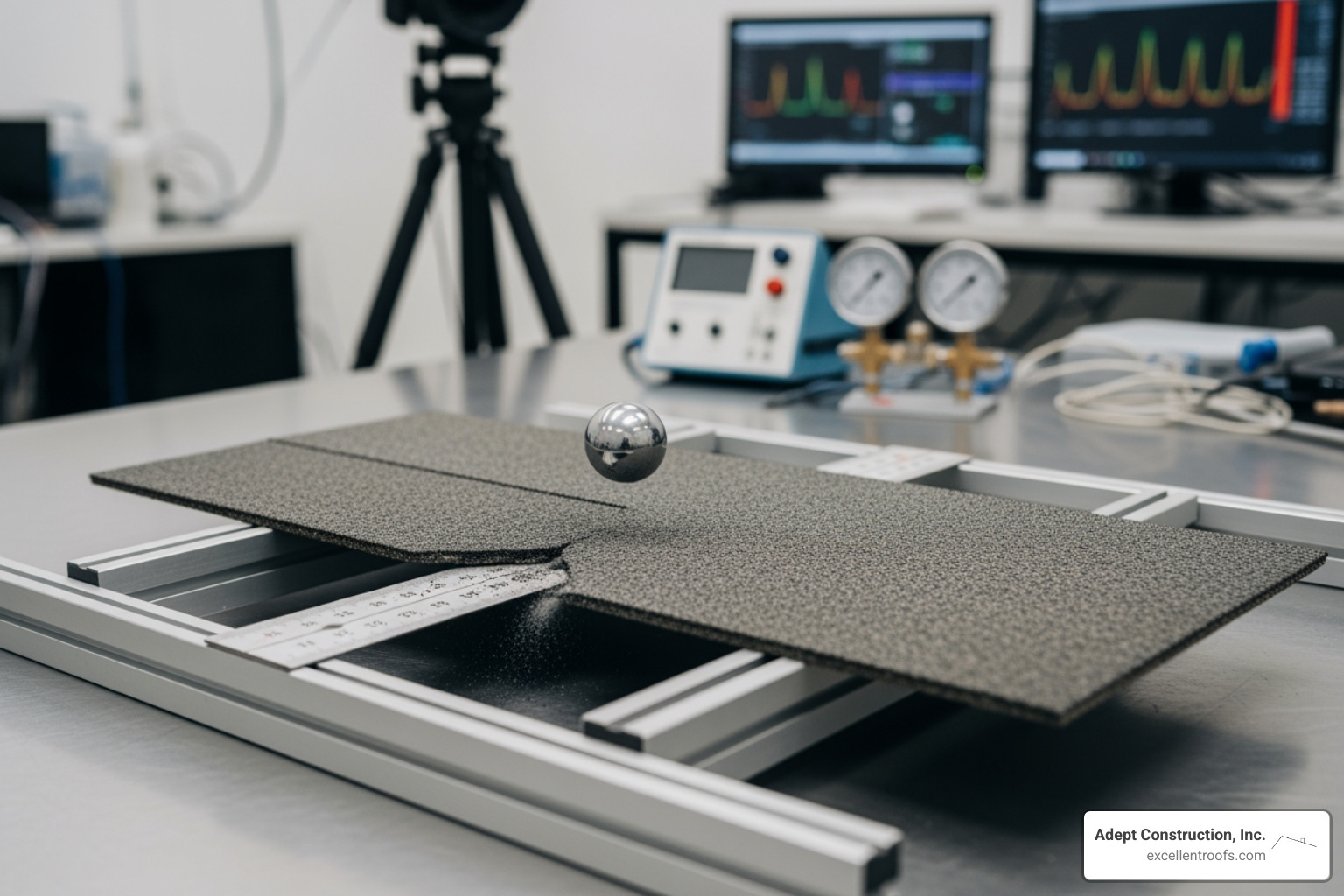
Impact resistance testing provides peace of mind by proving a roof’s durability under extreme conditions, backed by science.
Decoding UL 2218: The Industry Standard for Impact Resistance
The UL 2218 standard is the benchmark for measuring a roof’s ability to withstand impact. Developed by Underwriters Laboratories, the test determines if a roofing material will fail when struck at high velocity. You can find more details in the UL 2218 standard explained.
The test involves dropping steel balls of various sizes from specific heights onto roofing panels. Inspectors then check the material for any signs of failure, such as punctures, cracks, or tears that would compromise its water-shedding ability. The test focuses on functional integrity, not cosmetic dents. A panel passes if it remains watertight and structurally sound after impact, even with a dent.
For homeowners concerned about metal roof hail damage, this objective standard provides a reliable way to compare product durability.
What Do the Class Ratings (1-4) Mean for Your Roof?
The UL 2218 test assigns a rating from Class 1 to Class 4, with Class 4 being the highest level of impact resistance. Each class simulates a different severity of hail impact.
- Class 1: Withstands a 1.25-inch steel ball dropped from 12 feet.
- Class 2: Withstands a 1.50-inch steel ball dropped from 15 feet.
- Class 3: Withstands a 1.75-inch steel ball dropped from 17 feet.
- Class 4: Withstands a 2-inch steel ball dropped from 20 feet.
A Class 4 rating signifies that a roof can endure impacts equivalent to baseball-sized hail without cracking, splitting, or failing. For homeowners in areas like Downers Grove and Naperville, a Class 4 rated metal roof offers the best available protection against severe weather.
Many insurance companies recognize this superior performance by offering premium discounts of up to 30% for homes with Class 4 rated roofs. This rating is proof that your roof is tested to withstand severe storms, making it a wise investment in your home’s safety.
Navigating Insurance Claims for Metal Roof Hail Damage
Dealing with metal roof hail damage and insurance can be overwhelming, especially since hailstorms account for 70% of insured losses from severe storms. Understanding your policy is the key to a smooth claims process.
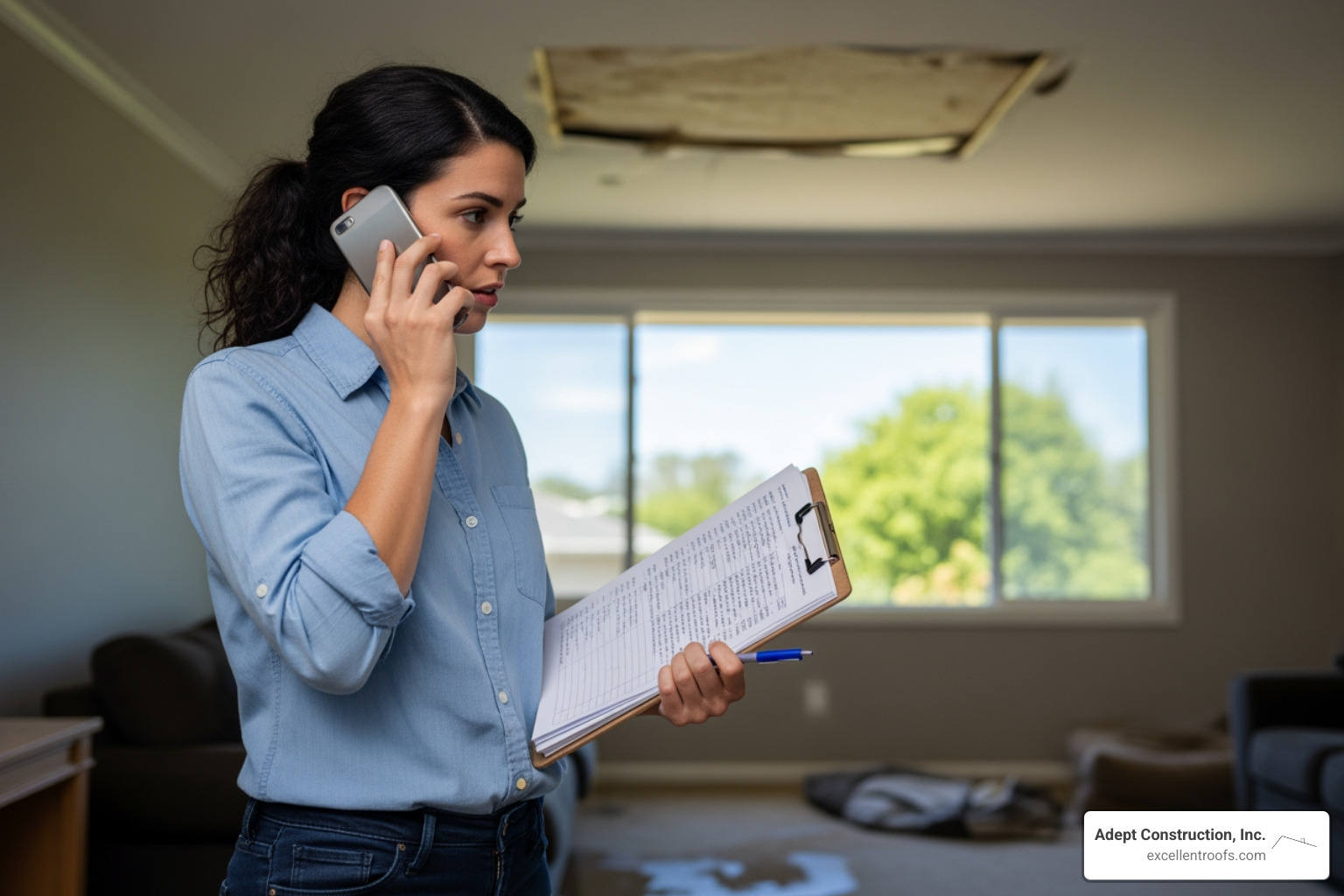
Not all policies are the same. Knowing your coverage before a storm hits can save you thousands. For a general overview, see what you need to know about hail damage repair.
Understanding Your Policy: ACV vs. Replacement Cost
This is the most important distinction in your roofing coverage.
Actual Cash Value (ACV): This policy pays for the depreciated value of your roof. If a 20-year roof is 10 years old, an ACV policy will pay roughly half its replacement cost, minus your deductible. You are responsible for the remaining cost.
Replacement Cost Value (RCV): This policy covers the full cost of replacing your damaged roof with new materials of similar quality, without deducting for depreciation. You only pay your deductible. Insurers often pay the ACV first, then release the remaining funds after you complete the repairs.
Also, check for a separate wind and hail deductible, which is often a percentage (e.g., 1-2%) of your home’s insured value and can be significantly higher than your standard deductible.
The Cosmetic Damage Waiver Explained
Because metal roofs rarely sustain functional damage from hail, some insurers offer a cosmetic damage waiver. By signing this, you agree that your policy will not cover aesthetic damage like dents and dings that don’t cause leaks. In exchange, you receive lower insurance premiums.
This is a trade-off: you save money on premiums but assume the financial risk for cosmetic repairs, which can range from a few hundred to several thousand dollars. If your roof’s appearance is important, or you plan to sell your home, a dented roof can negatively impact curb appeal and value.
Weighing Your Options: The Cosmetic Waiver Decision
Deciding whether to sign a cosmetic waiver depends on your priorities.
The Upside: You save money on insurance premiums annually. Your policy still covers all functional damage that affects your roof’s ability to protect your home.
The Downside: You are fully responsible for the cost of cosmetic repairs. A severely dented roof can lower your home’s resale value. Disputes can also arise over whether damage (like chipped paint) is cosmetic or functional, as it can lead to corrosion.
My advice for homeowners in northern Illinois: Think carefully before signing a cosmetic waiver. Given our frequent severe weather, comprehensive coverage for both cosmetic and functional damage is often worth the extra premium. Your roof is a major investment; protecting it fully makes financial sense.
At Adept Construction, we provide honest assessments of both cosmetic and functional damage to help you steer your storm damage claim. We offer free estimates to give you the facts you need to make an informed decision.
After the Storm: Your Action Plan for Suspected Hail Damage
After a hailstorm, a clear action plan can reduce stress. If you suspect urgent issues, consult our guide on Top Signs Your Roof Needs Immediate Repair After a Storm.
Step 1: Safely Inspect Your Property
Your safety is the top priority. Do not climb on your roof. A wet or damaged roof is extremely dangerous.
- Inspect from the ground: Walk around your property and look for signs of hail. Check gutters, downspouts, siding, and window screens for dents or tears.
- Scan the roof: Use binoculars to look for visible dimples or irregularities on the metal panels from a safe distance.
- Check the surroundings: Damage to cars, decks, fences, or outdoor fixtures indicates the storm’s severity. Look for “hail splatter” marks on driveways where ice impacts cleaned away dirt.
- Document everything: Take numerous photos and videos of all damage from various angles in good light. This documentation is crucial for your insurance claim.
Step 2: Document Everything and Contact Your Insurer
With your initial evidence gathered, contact your insurance company promptly.
- Record storm details: Note the exact date and time of the hailstorm.
- Report the claim: Call your insurer’s claims hotline as soon as possible. Provide your initial observations and be prepared to send your photos.
- Understand the process: Ask your insurer about their claims timeline, when to expect an adjuster, and what specific documentation they require.
Step 3: Call a Professional for a Roof Inspection
Accurately assessing metal roof hail damage requires a trained professional. An expert can identify subtle functional damage that is often missed from the ground.
At Adept Construction, our team is trained to safely inspect every component of your roof, including panels, seams, and fasteners, to identify any issues that could lead to future leaks. We recommend having your roofing contractor present during the insurance adjuster’s visit. We can point out all damage and ensure the assessment is comprehensive, leading to a fair claim that covers quality repairs.
After our inspection, we provide a detailed, transparent estimate. This document is essential for your insurance claim and outlines the exact work your roof needs.
If you suspect damage, reach out for expert roof repair in Downers Grove, IL. Our Naperville neighbors can rely on our roof repair in Naperville, IL services. We are here to guide you through the process with confidence.
The Long-Term Value of an Impact-Resistant Metal Roof
Choosing a metal roof is an investment that pays dividends long after the storm passes. While its resistance to metal roof hail damage is a key feature, the true value is revealed over decades of reliable performance.

A quality metal roof quietly saves money, protects your family, and increases your home’s value year after year.
Beyond Hail: Added Benefits of a Durable Roof
A metal roof works for you in all seasons. Key benefits include:
- High Wind Resistance: Many metal roofing systems are warrantied for winds up to 120 mph, preventing uplift during severe storms.
- Superior Fire Protection: Metal roofs carry a Class A fire rating, the highest available, offering non-combustible protection from embers or flames.
- Winter Performance: The smooth surface helps shed snow, reducing structural stress and preventing ice dams that can cause water damage.
- Longevity: A metal roof can last 40 to 70 years, potentially making it the last roof you will ever need to install. This means fewer replacements and less landfill waste.
The Financial Advantages of Investing in Quality
The financial benefits of a metal roof are compelling:
- Energy Efficiency: “Cool roof” technology reflects sunlight, lowering cooling costs by up to 25% during hot Illinois summers.
- Return on Investment (ROI): Homeowners often recoup a significant portion of the installation cost at resale. A metal roof can increase a home’s resale value by up to 6%.
- Lower Insurance Premiums: Many insurers offer discounts for durable, impact-resistant metal roofs, recognizing the reduced risk.
If you are considering this long-term investment, we can help. Whether you need a roof replacement in Downers Grove, IL or are exploring options for a roof replacement in Naperville, IL, our team provides free estimates and honest advice. A metal roof is an investment in protection, savings, and peace of mind.
Conclusion
Understanding metal roof hail damage empowers you to protect your home effectively. While metal roofs are incredibly durable, they are not indestructible. Knowing how to respond after a storm is key.
Here are the main takeaways:
- Cosmetic vs. Functional Damage: This distinction is critical. Dents are often cosmetic, but punctures, compromised seams, or coating damage are functional issues requiring immediate repair.
- Impact Ratings Matter: A UL 2218 Class 4 rating signifies the highest level of tested hail resistance and provides true peace of mind.
- Know Your Insurance: Understand your policy, especially the difference between ACV and RCV coverage and the implications of a cosmetic damage waiver.
- Act After a Storm: Your action plan should include a safe ground inspection, thorough documentation, and a prompt call to your insurer and a professional roofer.
A professional inspection is non-negotiable. A trained eye can spot critical damage easily missed from the ground and ensure your insurance claim is handled fairly. Beyond hail, a metal roof adds long-term value through energy savings, fire resistance, and longevity.
At Adept Construction, Inc., we have served homeowners in Downers Grove and Naperville for nearly three decades. We understand our local climate and are here to help you with any storm damage or future roofing needs, such as a roof replacement in Downers Grove, IL. For those in Naperville, we offer expert roof replacement in Naperville, IL services.
Your home deserves the best protection. Contact our team today for your free estimate, and let us ensure your roof is ready for any weather.