
When a Storm Hits Your Roof, Every Hour Counts
Storm damage roof repair is the process of assessing, documenting, and restoring a roof after wind, hail, debris, or water has compromised its structure or waterproofing — and acting fast is the difference between a manageable repair and a costly disaster.
Here’s what to do right now if your roof has storm damage:
- Stay safe — avoid downed power lines and do not climb a wet or damaged roof
- Document everything — take timestamped photos and videos from ground level before touching anything
- Stop the bleeding — place buckets under active leaks and cover exposed areas with a heavy-duty tarp
- File your insurance claim — contact your insurer within 24–48 hours with your documentation
- Call a licensed local roofer — get a professional inspection before your insurance adjuster arrives
Storms don’t wait for a convenient time to strike. Wind, hail, and falling debris can strip shingles, crack flashing, and open your home to water intrusion within minutes. And the damage isn’t always obvious from the ground — studies show that up to 70% of hail damage is invisible without a professional inspection.
The financial stakes are real. The average cost of storm or hail roof repair in the U.S. is around $12,315, with serious cases exceeding $20,000. Nationwide, roof repair and replacement costs reached nearly $31 billion in 2024 — a 30% increase since 2022, driven almost entirely by severe weather. Wind and hail alone accounted for more than half of all residential roofing claims that year.
Whether you’re dealing with a few missing shingles or a major structural breach, knowing the right steps protects both your home and your wallet. This guide walks you through everything — from spotting hidden damage to filing an insurance claim to choosing a contractor you can actually trust. If you need expert roofing services in Illinois, Adept Construction is here to help at every step.
I’m Gerald Michaels, founder of Adept Construction, Inc. — a family-owned roofing company based in Naperville, Illinois, with nearly 30 years of hands-on experience in storm damage roof repair across Chicago’s suburbs. In that time, I’ve helped hundreds of homeowners navigate the full process, from emergency tarping to final inspection, and I’ll share exactly what works in this guide.

Identifying Common Signs of Storm Damage on Your Roof
After the clouds clear in Naperville or Downers Grove, your first instinct might be to look up and see if the roof is still there. While a missing section of shingles is obvious, most storm damage is subtle. If left unaddressed, these small issues evolve into rot, mold, and structural failure.

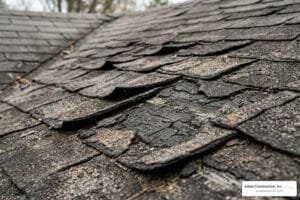
On a standard shingle roofing system, look for “bruises.” These are dark, circular indentations where hail has knocked the protective granules loose, exposing the fragile asphalt mat underneath. Over time, UV rays will bake this exposed mat, causing it to crack and leak. You should also check your gutters; an excessive amount of granules—looking like coarse sand—is a primary indicator that your shingles have suffered significant impact.
Wind damage often manifests as uplift. High-speed gusts can break the adhesive seal of a shingle, causing the edges to curl or the entire piece to flap. Even if the shingle settles back down, the waterproof seal is broken, allowing wind-driven rain to slide underneath. For those with flat roofing systems, keep an eye out for “blisters” or bubbles. These occur when moisture or air gets trapped between layers and expands in the sun, signaling a compromised membrane. You can find more detailed visual cues in this Storm Damage Roofing Guide (2026) | American Roofing Guide.
Detecting Hail Damage on Different Materials
Not all materials react to hail the same way. While asphalt shingles bruise, cedar shake roofing tends to split. Look for fresh, light-colored cracks in the wood that run vertically. If you see jagged impact marks or indentations that look like they were made by a hammer, your cedar roof has likely reached its limit. Metal roofs, while highly durable, will show clear dents. While often cosmetic, deep dents can pool water and eventually lead to corrosion.
Recognizing Wind and Debris Impact
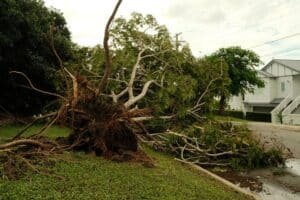
Wind doesn’t just pull shingles off; it creates “puncture wounds” when it hurls tree limbs or debris onto your home. Composite roofing is remarkably impact-resistant, but even the toughest materials can crack under the weight of a fallen oak branch. If you see broken seals or “zippering” patterns where a whole row of shingles has been lifted, the structural integrity of the roof deck may be at risk.
Immediate Steps for Safe Assessment and Storm Damage Roof Repair
Safety is our absolute priority. Never climb onto a roof that is wet, covered in debris, or potentially structurally compromised. We recommend a “ground-level” assessment first.
If you suspect issues, the best course of action is to contact a professional for roof repair in Downers Grove. At Adept Construction, we use the “IOU” method:
- Inside: Check the attic for light peeking through the boards, damp insulation, or water stains on the rafters.
- Outside: Walk the perimeter of the house using binoculars to spot missing shingles or dented flashing.
- Up the ladder: Only if you have proper safety gear and a stable surface.
For a comprehensive look at the tools and safety equipment needed, check out this guide on How To Repair a Roof With Storm Damage.
How to Safely Document Damage for Insurance
Insurance companies move faster when they have clear, undeniable evidence. Use your smartphone to take high-resolution, timestamped photos and videos.
- Capture the Context: Take wide shots of the entire house and the yard (especially if there are fallen branches).
- Get Close: Take detailed photos of bruised shingles, dented gutters, and torn flashing.
- Use a Scale: Place a coin or a ruler next to a hail dent to show its size.
- Drone Footage: If you have access to a drone, overhead shots are incredibly persuasive for insurance adjusters.
Making Temporary Repairs to Prevent Further Loss
Most insurance policies require homeowners to take reasonable steps to prevent further damage. This is known as “mitigation.” If you have an active leak, use roofing cement for small cracks or secure a heavy-duty tarp over the affected area.
When tarping, ensure the plastic extends at least four feet past the damaged area and is secured with 2×4 wooden strips rather than just nails through the fabric, which can tear in the next wind gust. Our Naperville roof repair services include emergency dry-ins to keep your interior safe while the claim is processed.
Navigating the Storm Damage Roof Repair Insurance Claim Process
Filing an insurance claim can feel like learning a second language. Between deductibles, depreciation, and adjusters, it’s easy to feel overwhelmed.
When you begin comprehensive storm restoration, the first thing to understand is your policy type. Most homeowners have one of two types of coverage:
| Feature | Actual Cash Value (ACV) | Replacement Cost Value (RCV) |
|---|---|---|
| Payout Basis | Depreciated value based on age | Current cost to replace with new |
| Out-of-Pocket | High (you pay for the “used” years) | Low (usually just your deductible) |
| Best For | Lower premiums | Full property protection |
Filing a Storm Damage Roof Insurance Claim
We always suggest having your contractor present when the insurance adjuster arrives. Why? Because adjusters represent the insurance company, and they might miss subtle damage or local building code requirements. We act as your advocate, pointing out the specific “bruising” or wind uplift that warrants a full repair.
Once the claim is filed, you’ll receive an estimate. If the insurance payout doesn’t cover the actual cost of materials and labor in the Chicago suburbs, we can help file “supplements”—additional requests for funds based on discovered damage during the repair process.
What to Do if Your Claim is Denied or Underpaid
It happens more often than you’d think—about 10-15% of storm claims are initially denied. If this happens to you, don’t panic. You have the right to:
- Request a second inspection: Sometimes a different adjuster sees things differently.
- Hire a Public Adjuster: These are independent professionals who work for you (for a fee) to negotiate with the insurer.
- Provide more evidence: This is where your timestamped photos and our professional damage report become vital.
Repair vs. Replacement: Making the Right Choice for Your Home
Is it better to patch a few shingles or replace the whole thing? In Illinois, we follow the “25% Rule.” If more than 25% of a roof slope is damaged, building codes often require a full replacement to ensure the entire system meets current safety standards.
If you are considering roof replacement in Naperville, age is the biggest factor. An asphalt roof that is 15-20 years old is already brittle. Attempting to repair a small section often causes “zippering,” where the act of removing old shingles damages the surrounding ones, leading to a never-ending cycle of leaks. In these cases, a new installation is the only way to protect your home’s roofing systems.
Estimating Costs for Storm Damage Roof Repair
The cost of storm damage roof repair varies wildly based on the severity. Minor shingle replacements might cost as little as $300 to $1,500. However, the average U.S. claim for major storm damage is $12,315. Factors that influence this price include:
- Roof Pitch: Steeper roofs require more safety equipment and labor time.
- Materials: Replacing high-end cedar or metal is significantly more expensive than standard asphalt.
- Code Upgrades: If your old roof wasn’t up to current Naperville or Downers Grove codes (like lacking ice and water shields), the repair cost will increase to bring it to compliance.
For those needing a roof replacement in Downers Grove, we provide itemized estimates that help you understand exactly where every dollar is going.
How to Hire a Reliable Contractor and Avoid Storm Scams
After a major storm, “storm chasers” often flood the neighborhood. These are out-of-state contractors who follow hail maps, knock on doors, and promise “free roofs.”
To protect your home, always look for these red flags:
- High-Pressure Tactics: If they want you to sign a contract on the spot before you’ve talked to your insurance.
- No Local Address: If their truck has out-of-state plates and they don’t have a physical office in the Chicago area.
- Deductible Waivers: It is actually illegal in many states (including Illinois) for a contractor to “cover” or “waive” your insurance deductible. This is considered insurance fraud.
Instead, choose a company with residential roofing solutions and a long-standing local reputation. A reliable contractor will be licensed, insured, and offer a written workmanship warranty that lasts at least 5 to 10 years.
Preventing Future Storm Damage to Your Roofing System
While you can’t stop the weather, you can make your roof a harder target. When it’s time for a new roof installation services, consider upgrading to Class 4 Impact-Resistant Shingles. These are tested by dropping a 2-inch steel ball from 20 feet; if the shingle doesn’t crack, it earns the rating. Many insurance companies offer premium discounts for homes with these shingles.
Other prevention tips include:
- Tree Trimming: Keep branches at least 10 feet away from your roof line.
- Gutter Maintenance: Clogged gutters cause water to back up under your shingles, leading to rot.
- Annual Inspections: Catching a loose flashing or a cracked seal in the spring can prevent a total failure during a summer thunderstorm.
Frequently Asked Questions about Storm Damage
How much damage does a roof need to be replaced?
There is no “magic number,” but if damage covers more than 25-30% of the roof, or if the roof is older than 15 years and has widespread hail bruising, a full replacement is usually the most cost-effective long-term solution.
Does insurance cover roof damage from old age or just storms?
Standard policies only cover “sudden and accidental” damage from perils like wind or hail. They do not cover “wear and tear” or maintenance issues. However, if a storm damages an old roof, insurance may still pay out a depreciated amount (ACV).
How long do I have to file a storm damage claim?
Most policies require you to file “promptly,” which usually means within 30 days to one year of the storm event. Waiting too long can give the insurer grounds to deny the claim, arguing that the damage was caused by neglect rather than the storm.
Conclusion
At Adept Construction, Inc., we understand that a leaking roof isn’t just a construction problem—it’s a threat to your family’s comfort and safety. As a family-owned business deeply rooted in Downers Grove and Naperville, we pride ourselves on superior craftsmanship and honest communication.
We offer free storm damage estimates and will walk you through every step of the restoration process, from the first tarp to the final shingle. Don’t let a storm compromise your home’s integrity. Contact us today for a free estimate and let our team provide the professional restoration and long-term protection your property deserves.