
Why Roofing Installation is Your Home’s Most Critical Defense
A professional roofing installation is your home’s primary defense, protecting your property from weather damage. Understanding the process is key to making informed decisions, whether you’re building new or replacing an old roof.
Quick Answer: What is Roofing Installation?
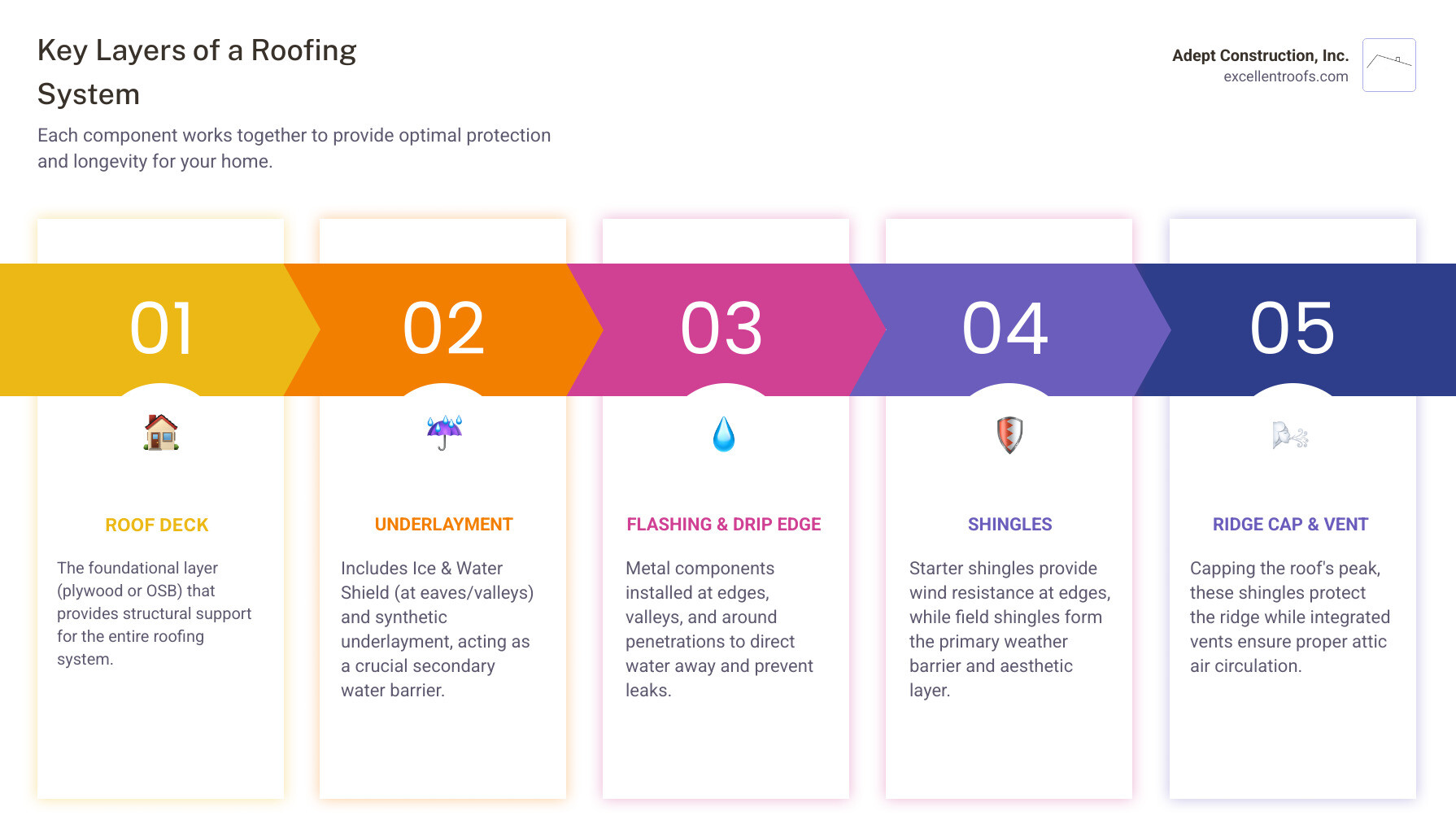
Roofing installation is a multi-step process that includes:
- Tear-off – Removing old roofing materials down to the deck
- Deck inspection and repair – Ensuring a solid, smooth base
- Underlayment application – Installing ice/water shield and secondary barriers
- Flashing installation – Waterproofing valleys, edges, and penetrations
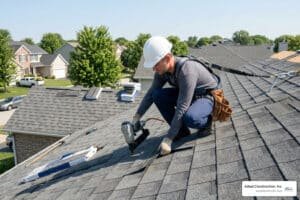
- Shingle placement – Laying field shingles with proper exposure and nailing
- Finishing touches – Installing ridge caps, sealing nails, and final cleanup
A professional roofing installation typically takes 1 to 3 days for most residential homes. The global roofing market was valued at $141.1 billion in 2023, reflecting the critical importance of this investment.
A roof is a complete system of layers designed to shed water and resist wind. If one part is installed incorrectly, the whole system fails. For Illinois homeowners facing harsh winters and summer storms, proper installation is non-negotiable.
Poor workmanship from unreliable contractors leads to leaks, voided warranties, and frustration. Knowing what a quality roofing installation entails protects both your home and your wallet.
I’m Gerald Michaels, founder and president of Adept Construction, Inc., and I’ve been leading roofing installation projects across Chicago’s suburbs since 1997. Our family-owned company has built a reputation on transparent communication and superior workmanship. For more about our commitment to quality, visit Adept Construction.
Simple guide to roofing installation:
Is It Time for a New Roof? Key Signs and Considerations
Knowing when to repair or replace your roof is crucial to prevent costly damage. For homeowners in Downers Grove and Naperville, a roof over 20 years old often needs an upgrade. Here are key warning signs:
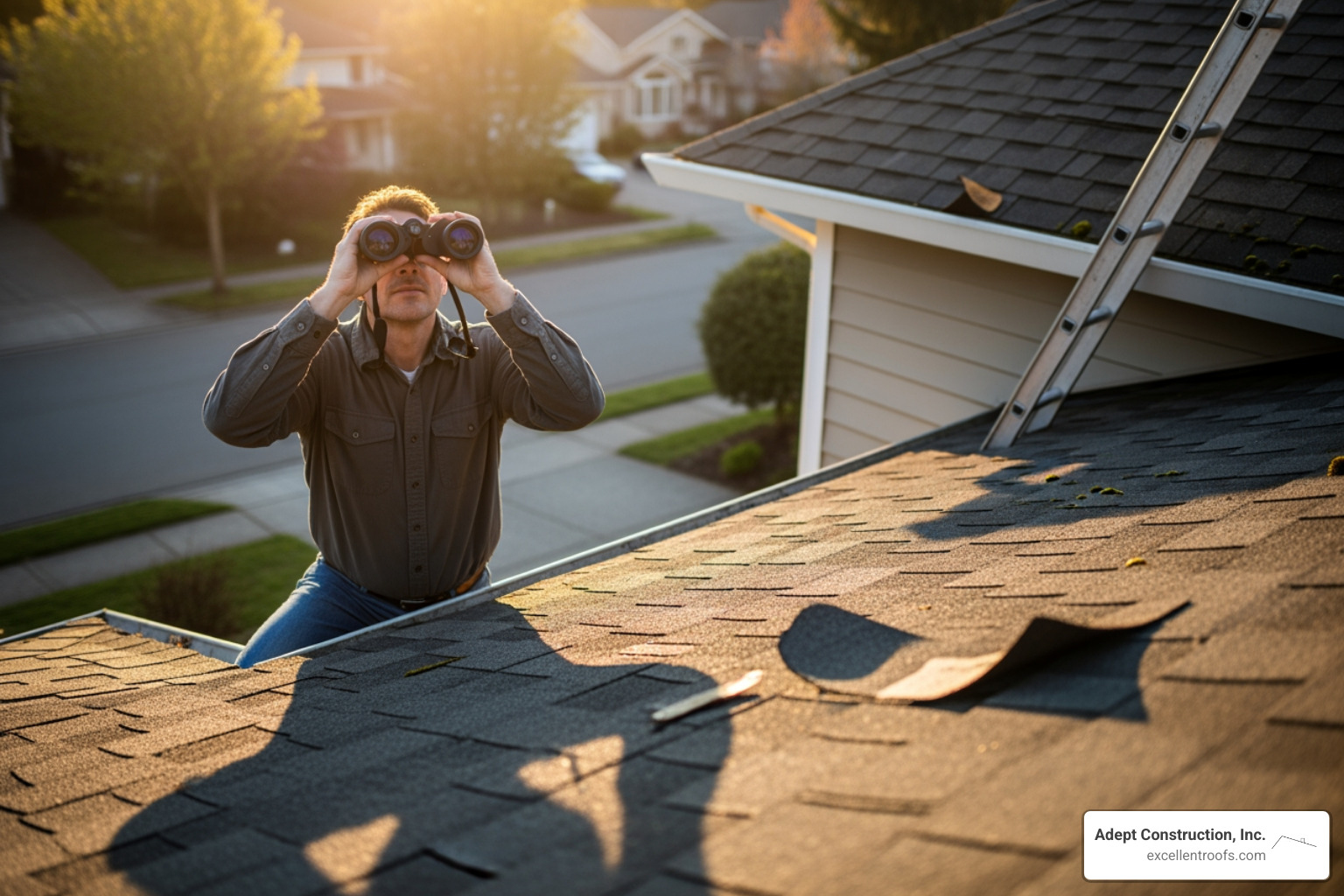
- Roof Age: Most asphalt shingle roofs last 20-30 years. If yours is near or past this age, replacement is wise, even without obvious damage.
- Leaks & Water Stains: Water stains on ceilings or walls, especially after rain, are undeniable signs of a roof leak.
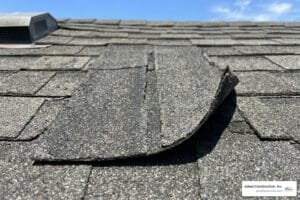
- Damaged or Missing Shingles: Cracked, curled, or missing shingles expose the roof deck to the elements, leading to leaks and deterioration.
- Sagging Roof: A sagging roof indicates a serious structural issue with the decking or framing and requires immediate professional attention.
- Granules in Gutters: Finding excessive shingle granules in gutters means your shingles are aging and losing their protective UV layer.
- Moss or Algae Growth: Extensive moss or algae traps moisture, which accelerates shingle deterioration and can indicate poor ventilation.
- Rising Energy Bills: An aging roof loses its insulating properties, causing higher energy bills from heat loss in winter and heat gain in summer.
Roof Repair vs. Roof Replacement
Understanding the difference between repair and replacement is vital for making an informed decision.
Roof Repair:
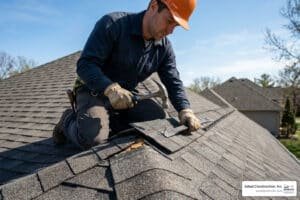
We recommend roof repair for minor, localized damage, such as a small patch of missing shingles or a single leak. Minor repairs (under 20 sq. ft.) typically take 1-8 hours and cost $350-$1000. Larger repairs to fascia or trusses can cost $1000-$5000. For expert minor roof repairs in Downers Grove, we offer efficient and effective solutions.
Roof Replacement:
A full roof replacement is necessary for widespread damage, an expired lifespan, or significant structural problems. It allows for a full inspection of the underlying roof deck and ensures a completely new, watertight system. When it’s time for a comprehensive solution, we ensure a high-quality roof replacement in Naperville is necessary.
Choosing Your Armor: A Guide to Roofing Materials
Choosing the right material for your roofing installation is critical. It affects your home’s look, durability, energy efficiency, and maintenance costs. For the Illinois climate, we weigh durability, cost, maintenance, and aesthetics against local weather patterns.
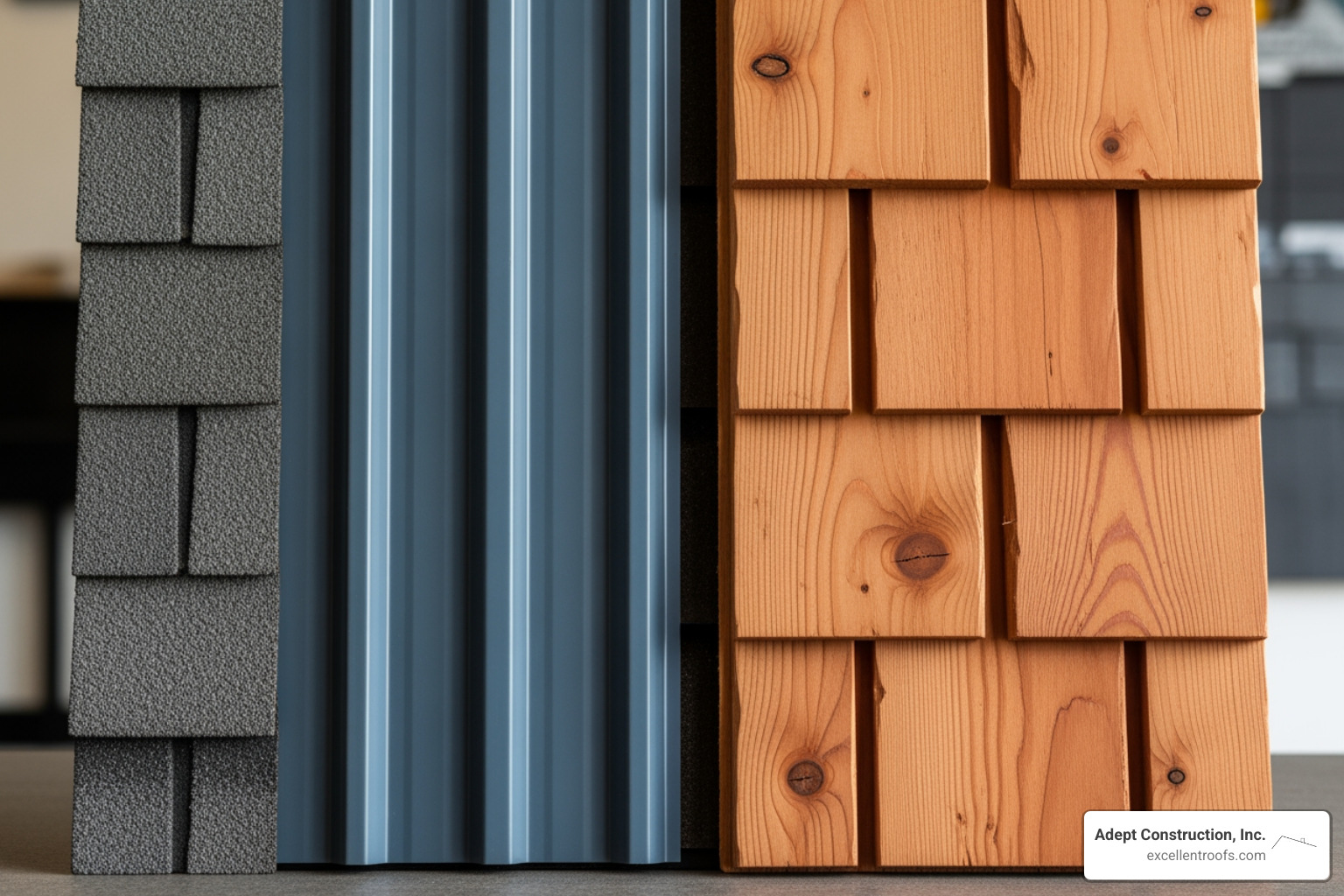
Asphalt Shingles
Asphalt shingles are North America’s most popular choice due to their affordability, versatility, and ease of installation.
- Pros: Affordable, versatile, and easy to install.
- Cons: Shorter lifespan (20-30 years) and less durable than other options.
There are two main types:
- 3-Tab Shingles: The most economical option, lasting about 20 years.
- Architectural Shingles: Thicker and more durable, they offer a dimensional look, last 30+ years, and have better wind resistance.
We offer comprehensive Shingle Roofing Systems that combine aesthetics with performance.
Metal Roofing
Metal roofing is popular for its longevity and performance.
- Pros: Lasts 50-70 years, energy-efficient, high wind resistance, and low maintenance.
- Cons: Higher initial cost, potential for noise during rain, and can dent from hail.
For a detailed understanding, explore A Full Guide to Metal Roof Installation.
Cedar Shake & Shingles
Cedar offers a distinctive, natural aesthetic and rustic charm.
- Pros: Unique natural look, excellent insulator, and durable with proper maintenance.
- Cons: Higher cost, requires regular maintenance, and can be a fire risk unless treated.
Find more about our Cedar Shake Roofing Options and dig into Cedar Roofing Installation: The Ultimate Guide.
Composite and Flat Roofing Materials
Modern materials offer solutions for specific needs.
- Composite Roofing: Made from recycled materials, they mimic slate or wood shake with less maintenance and cost. They are highly durable and resistant to impact, fire, and rot. Explore our Composite Roofing Choices.
- Flat Roofing (TPO, EPDM): Essential for low-slope or flat roofs, these materials ensure proper drainage. TPO is a durable, energy-efficient membrane, while EPDM is a synthetic rubber resistant to UV radiation. We are experts in Flat Roofing Solutions.
How Climate Influences Your Choice
Illinois’s climate of freezing winters and hot summers heavily influences material choice for a roofing installation.
- Snow and Ice Loads: Robust materials and proper ice and water shield application are vital to handle heavy snow and prevent ice dams.
- Wind Resistance: High wind ratings (found in architectural shingles or metal) and proper installation are crucial for Illinois storms.
- Ice Dam Prevention: Ice dams force water under shingles. Strategically placed ice and water protector membranes are essential to prevent this.
- Cool Roof Shingles: “Cool roof” shingles reflect sunlight, reducing attic temperatures and cooling costs in summer. They can cost 10-50% more but provide long-term energy savings. You can Learn about cool roofs from ENERGY STAR to understand their benefits.
The Anatomy of a Professional Roofing Installation
A professional roofing installation is a precise process that builds a resilient system to protect your home. We follow the highest industry standards at every step.
Step 1: Preparation and Tear-Off
This phase sets the stage for a safe and efficient project.
- Protecting Landscaping: We protect your property by covering landscaping and sensitive areas with tarps.
- Dumpster Placement: A dumpster is placed for efficient, safe disposal of old materials.
- Removing Old Roofing Layers: We remove all old roofing materials down to the deck using specialized tools, ensuring all old nails are removed or flattened.
- Inspecting the Roof Deck: We then inspect the bare roof deck for rot, water damage, or structural issues that must be repaired before proceeding.
Step 2: Deck Repair and Underlayment
This step ensures a solid, waterproof foundation for the new roof.
- Replacing Damaged Sheathing: Damaged or weak sections of the roof deck are replaced with new CDX plywood or OSB to create a solid, smooth surface. For detailed guidance, refer to Proper Installation of APA Rated Sheathing for Roof Applications.
- Installing Ice and Water Shield: In Illinois, an ice and water shield is essential. This self-adhering membrane is installed at eaves, valleys, and penetrations to prevent water backup.
- Laying Synthetic Underlayment: Next, synthetic underlayment is laid over the entire deck, providing a durable, water-resistant secondary barrier.
Step 3: Installing Key Roofing Installation Components
This step involves installing flashing and other components to waterproof vulnerable areas.
- Drip Edge Installation: Metal drip edge is installed along roof edges to direct water into gutters and protect the fascia.
- Valley Flashing: Specialized flashing is installed in valleys where roof planes meet to create a watertight seal.
- Step Flashing for Walls: Step flashing is interwoven with shingles where the roof meets a vertical wall to direct water away.
- Flashing for Vents and Pipes: Vents, pipes, and skylights require specific flashing to prevent leaks, which is sealed and integrated with the shingles. To see how this is done, you can Watch how to flash around plumbing stacks and attic vents.
- Starter Shingle Application: Starter shingles are installed at the roof edges to seal the first course of shingles and significantly improve wind resistance.
Step 4: Laying the Field Shingles
This step involves laying the main shingle layer, course by course.
- Proper Shingle Exposure: Each shingle course is laid with the correct exposure as specified by the manufacturer to ensure performance and warranty coverage.
- Correct Nailing Pattern: Improper nailing is a leading cause of roof failure. We use the correct number of nails, placed in the nailing strip, and driven flush with the shingle.
- Staggering Shingle Seams: Shingle seams are staggered between courses to prevent water from penetrating through vertical gaps.
- Working from the Bottom Up: We install shingles from the bottom up, allowing each course to overlap the one below it to effectively shed water.
Step 5: Finishing Touches and Cleanup
The final step completes the roof and ensures a thorough cleanup.
- Installing Hip and Ridge Cap Shingles: Specialized cap shingles are installed along the roof’s peaks and hips for a watertight, finished look. All exposed nail heads are sealed.
- Final Ventilation Installation: We install ridge vents or other systems to ensure proper attic airflow, which prevents heat and moisture buildup.
- Thorough Site Cleanup: We collect all debris and use a magnetic sweeper to pick up stray nails, leaving your yard safe and spotless.
Hiring a Pro: Finding a Qualified Roofing Contractor
A roofing installation is a major investment where contractor quality is paramount. While DIY seems cost-effective, the risks and complexity are significant.
What to Look For in a Roofing Company
Choosing a reputable contractor is the most important step. Here’s what to look for:
- Licensed and Insured: Verify the contractor is licensed in Illinois and carries full liability insurance and workers’ compensation. This protects you from liability for accidents or damage.
- Local Experience: A local contractor in Downers Grove and Naperville knows local codes and climate challenges and has a reputation to uphold.
- Certifications (e.g., GAF): Manufacturer certifications (e.g., GAF) show a contractor is trained, follows strict guidelines, and can offer improved warranties. Our installers are GAF-certified.
- Positive Customer Reviews: Check online reviews and ask for local references for insight into a contractor’s professionalism and workmanship. You can find excellent roofing contractors in Naperville and Downers Grove by checking their reputation.
- Detailed Written Estimates: A reputable contractor provides a detailed, itemized estimate. Beware of vague or suspiciously cheap quotes.
The Professional vs. DIY Roofing Installation Debate
DIY roofing is not recommended for most homeowners due to significant risks.
- DIY Risks:
- Safety Hazards: Working at heights carries significant fall risks without professional training and equipment.
- Improper Installation: Minor mistakes in nailing or flashing can cause leaks and premature roof failure.
- Voided Warranties: Most manufacturer warranties require installation by a certified professional.
- Potential for Leaks: Mistakes can lead to persistent leaks until a professional is hired for repairs.
- Professional Benefits:
- Expertise and Efficiency: Professionals have the knowledge and tools to do the job correctly and quickly.
- Safety Compliance: We follow strict safety protocols to ensure a safe work environment.
- Workmanship Warranty: Reputable contractors back their work with a warranty, giving you peace of mind.
- Quality and Peace of Mind: A professional installation ensures your roof is built to last.
For a deeper dive, explore the Benefits of a professional residential roofing installation.
Understanding Costs and Warranties
Navigating costs and warranties is crucial for managing your investment.
- Factors Influencing Cost: Total cost depends on roof size and complexity, material choice, labor (25-35% of total), tear-off/disposal (5% of total), and any upgrades. Materials typically account for 55-65% of the cost.
- Types of Warranties:
- Manufacturer’s Warranty: Covers material defects for 20-30 years for standard shingles up to 50-70 years for metal.
- Workmanship Warranty: Provided by your contractor, this covers installation errors, often for 5-10 years or more.
- Total Coverage Warranties: Some manufacturers and certified contractors offer comprehensive warranties covering both materials and labor.
For a comprehensive breakdown, consult our Residential Roofing Estimate: Complete Guide.
Frequently Asked Questions about Roofing Installation
Here are answers to common questions about roofing installation to help you feel more prepared.
What is the typical timeline for a roofing installation project?
A complete roofing installation on a typical home takes 1 to 3 days. This timeline can vary based on:
- Roof Size and Complexity: Larger or more complex roofs with steep pitches or dormers take longer.
- Material Type: Materials like metal or tile require more installation time than asphalt shingles.
- Weather Conditions: Rain, wind, or extreme temperatures can cause delays for safety and quality reasons.
- Unexpected Repairs: Finding extensive deck damage during tear-off adds time for necessary repairs.
We always provide an estimated timeline upfront and communicate any potential changes.
What kind of warranties are typically offered?
Understanding your warranty is essential. There are two main types:
- Manufacturer’s Warranty (Material Warranty): This covers material defects from the manufacturer (e.g., GAF) for 20 to 50+ years, with some premium products offering “lifetime” limited warranties.
- Contractor’s Workmanship Warranty (Labor Warranty): This covers installation errors from your contractor. A good warranty is crucial, as poor installation is a leading cause of roof failure. We stand behind our work with comprehensive coverage, which typically ranges from 1 to 10 years or more.
Some manufacturers offer “system warranties” in partnership with their certified contractors, covering both materials and labor for an extended period. Always get warranty details in writing.
What are the latest innovations in roofing?
The roofing industry is always innovating for better durability, efficiency, and aesthetics. Key trends include:
- Energy-Efficient “Cool Roof” Shingles: These shingles reflect more sunlight, which can reduce attic temperatures and lower cooling costs.
- Impact-Resistant Shingles: Engineered to withstand hail, these shingles often carry a Class 4 impact resistance rating and may qualify you for insurance discounts.
- Advanced Synthetic Underlayments: Superior to traditional felt paper, modern synthetics offer better tear strength and water resistance, providing a more robust secondary barrier.
- Integrated Solar Roofing Solutions: Instead of bulky panels, this technology integrates photovoltaic cells directly into shingles or tiles for a seamless, aesthetic look.
- Sustainable and Recycled Materials: Environmentally friendly options include composite shingles made from recycled plastics and rubber, and metal roofing with high recycled content.
Conclusion: Protecting Your Home with a Quality Roof
A successful roofing installation is a critical investment in your home’s safety and value. It hinges on using quality materials and, most importantly, entrusting the job to skilled professionals. By understanding the complete process, from material selection to the final cleanup, you can ensure your roof is built to last, protecting your family and property for decades to come.
For homeowners in the Chicagoland area, family-owned companies like Adept Construction, Inc. provide the expertise and high-quality workmanship necessary for total peace of mind. We are dedicated to delivering superior customer service, knowledgeable staff, and strong local referrals in Naperville and Downers Grove. To ensure your project is handled with the utmost care, get a free, no-obligation estimate for your professional roof installation today.