
Why Understanding Residential Roof Construction Matters
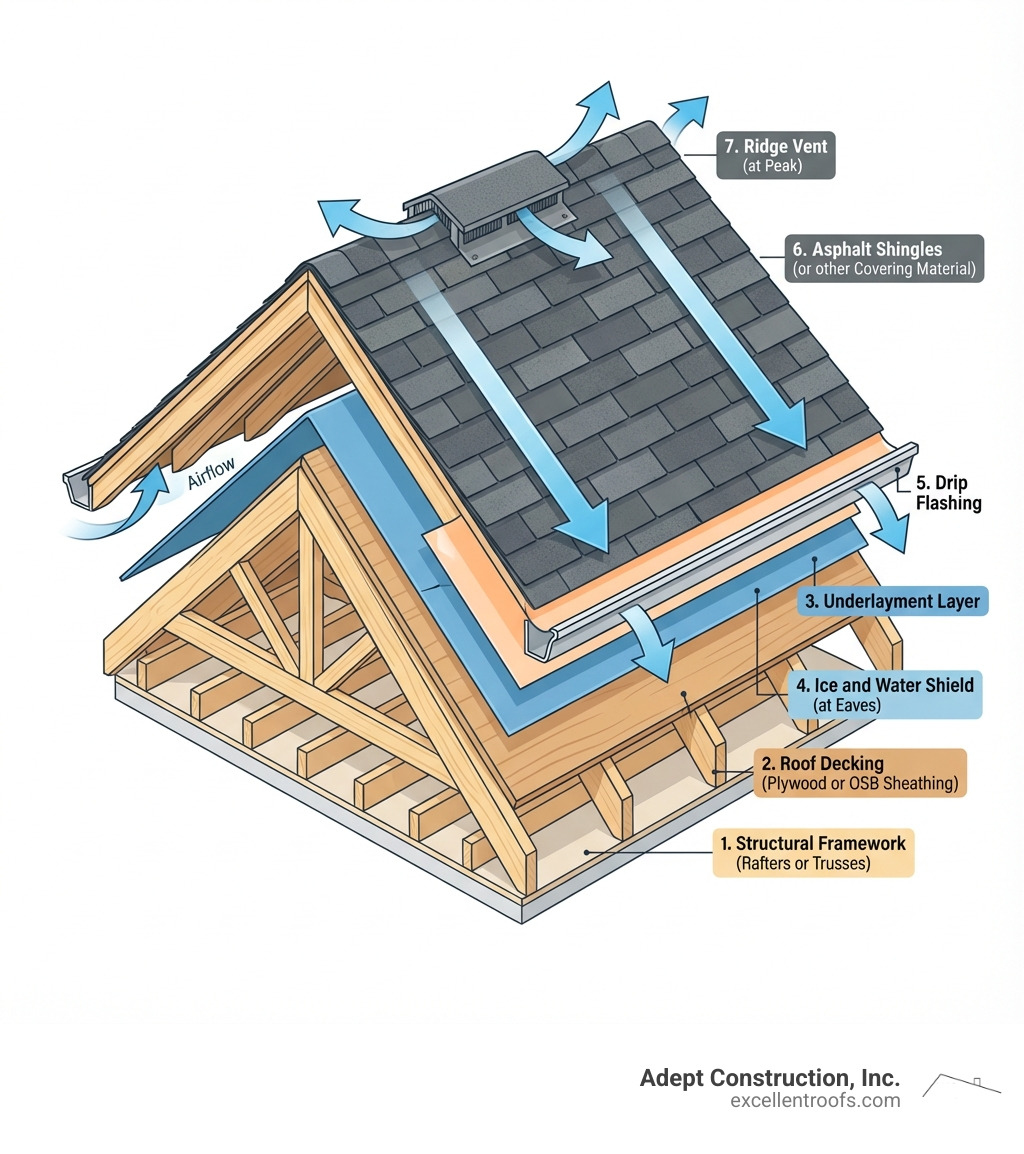
Residential roof construction is the process of building the structural system that shields your home from weather, improves energy efficiency, and contributes to property value. At Adept Construction, Inc., we believe an informed homeowner makes the best decisions. A properly constructed roof consists of several integrated layers: the structural framework, decking, underlayment, flashing, ventilation, and the final covering material.
If you are planning a new roof or preparing for a replacement, choosing an experienced contractor is crucial. Homeowners who compare options for expert residential roofing services quickly see how workmanship and material choices affect long-term performance, especially in climates with freeze-thaw cycles like Illinois.
Key Components of Residential Roof Construction:
- Structural Framework – Rafters or trusses forming the skeleton.
- Roof Decking – Plywood or OSB sheathing creating a solid surface.
- Underlayment – A water-resistant barrier protecting the deck.
- Ice and Water Shield – Extra protection at eaves and valleys.
- Flashing – Metal directing water away from vulnerable areas.
- Ventilation – Vents that regulate attic temperature and moisture.
- Roof Covering – Shingles, metal, tile, or other exterior materials.
Since 1997, we’ve specialized in residential roof construction, helping homeowners in Chicago’s western suburbs build roof systems that protect their investments for decades. This guide breaks down every component so you can make informed decisions about residential roofing services for your home.
Understanding how your roof is constructed helps you recognize quality workmanship, identify potential problems early, and communicate effectively with contractors. Whether you’re planning a new build, a replacement, or simply want to know what’s protecting your home, this knowledge empowers you to ensure your roof performs reliably for its entire lifespan.
Residential roof construction further reading:
The Skeleton of the Roof: Structural Framework and Components
The foundation of any sturdy roof is its structural framework. This skeleton bears the weight of materials, snow, and wind, transferring these loads to the home’s walls. The two primary methods for framing a roof are traditional stick-building with rafters and modern prefabrication with trusses.
Stick-Built Roofs: The Traditional Rafter Method
In a stick-built roof, the frame is constructed piece-by-piece on-site, offering design flexibility for custom homes and complex rooflines.
- Rafters: These diagonal wood beams form the roof’s slope, extending from the peak to the exterior walls. They support the roof sheathing and covering, providing the necessary angle for water to shed.
- Ceiling Joists (or Rafter Ties): These horizontal ties connect the bottom ends of opposing rafters. They are crucial for preventing the outward thrust that rafters exert on the walls, which could otherwise lead to structural failure. Placing these ties lower creates a standard ceiling, while raising them can create a taller or tray ceiling, though this requires careful structural engineering.
- Ridge Board vs. Ridge Beam: At the roof’s peak, rafters meet at either a ridge board or a ridge beam. A ridge board is a non-structural nailing surface, whereas a ridge beam is a structural support that carries the rafter load, often used to create open vaulted ceilings without the need for ceiling joists.
- Purlins: These horizontal boards span across rafters, providing extra support for the roof covering, especially on roofs with wide rafter spacing.
For a strong, weather-tight roof, rafters require precise cuts for a flush fit at the ridge, a stable seat on the wall (the “bird’s mouth” cut), and a clean edge at the overhang. Expert Residential Roof Installation prioritizes this structural integrity.
Manufactured Trusses: The Modern Engineered Approach
Manufactured trusses are prefabricated, engineered wood structures that arrive on-site ready for installation. A truss is a rigid triangular framework composed of top chords (forming the slope), a bottom chord (acting as the ceiling joist), and internal webbing that provides strength.
Common residential truss layouts include simple king post styles for short spans and more complex web patterns for broader rooms and open floor plans. Each configuration is engineered to handle specific snow, wind, and dead loads.
- Advantages of Trusses: Trusses are efficient, fast to install, and cost-effective due to optimized lumber use. They are engineered to distribute loads to the exterior walls, allowing for more open floor plans.
- Disadvantages of Trusses: The internal webbing consumes most of the attic space, making it unsuitable for storage or conversion. Modifying a truss-built roof for renovations like creating vaulted ceilings is difficult and expensive because every member of the truss works together to carry the load.
Rafters vs. Trusses: Which is Right for Your Home?
The choice between rafters and trusses is a key decision in residential roof construction, impacting cost, time, and future flexibility.
| Feature | Rafters | Trusses |
|---|---|---|
| Cost | Higher labor costs, more material waste. | Lower labor costs, optimized material use. |
| Installation Speed | Slower (built on-site). | Faster (prefabricated, craned into place). |
| Design Flexibility | High flexibility for custom designs, vaulted ceilings. | Less flexible; custom designs increase cost. |
| Attic Space | Open attic space for storage or conversion. | Limited usable attic space due to webbing. |
| Modification | Easier to modify for future renovations. | Difficult and costly to modify. |
For homeowners in Downers Grove and Naperville, IL, who value open attic space or plan future renovations, stick-built rafters are often preferred. For projects where speed and cost-efficiency are priorities, trusses provide an excellent, structurally sound solution.
Blueprint for a Strong Roof: Design, Shapes, and Pitch
Beyond the internal skeleton, a roof’s visible design—its shape and slope (pitch)—is critical for both aesthetics and function. These elements of residential roof construction influence drainage, material choice, and architectural style.
Common Residential Roof Shapes and Their Characteristics
Different roof shapes offer unique benefits for weather resistance and visual appeal.
- Gable Roof: The classic triangular roof. It sheds water well and is simple to build but can be vulnerable to high winds if not properly braced.
- Hip Roof: Has four sloping sides. It is more complex to build than a gable but offers superior wind resistance, making it very common in suburban areas.
- Gambrel Roof: The barn-style roof with two different slopes on each side. It maximizes attic space, making it ideal for homes with upper-level living areas.
- Mansard Roof: A four-sided roof with two slopes on each side, with the lower slope being very steep. It provides ample attic space but is complex and expensive to build.
- Flat Roof: Nearly flat, with a slight pitch for drainage. It allows for rooftop living spaces but requires specialized membrane roofing systems to prevent leaks. In residential settings, these systems are often treated as specialized flat roofing installations.
- Shed Roof: A single sloping plane, often used for additions or modern designs. It is simple to construct but can create varied ceiling heights below.
Architects select a roof design based on climate, aesthetics, and energy efficiency. For a deeper look at various styles, you can consult guides from major manufacturers or professional organizations that catalog the performance and typical use cases of gable, hip, gambrel, mansard, and other shapes.
Understanding Roof Pitch and Its Impact
Roof pitch is the steepness of a roof, expressed as a ratio of vertical “rise” over a 12-inch horizontal “run” (e.g., a 6:12 pitch).
- Drainage: A steeper pitch sheds water and snow faster, reducing the risk of leaks. Low-slope roofs require more robust waterproofing.
- Material Selection: Pitch dictates which roofing materials are suitable. Asphalt shingles are generally not recommended for pitches below 2:12, which require specialized low-slope systems. Most materials work well on standard pitches of 4:12 and above.
- Snow and Ice: In snowy climates like Downers Grove and Naperville, IL, a steeper pitch helps shed snow, reducing structural load and the risk of ice dams. Tools like the NRCA’s EnergyWise Roof Calculator can help evaluate a roof’s thermal performance in relation to its design.
The Complete Residential Roof Construction Process
Building a roof is a multi-step process where each stage of residential roof construction is vital for the system’s integrity and longevity.
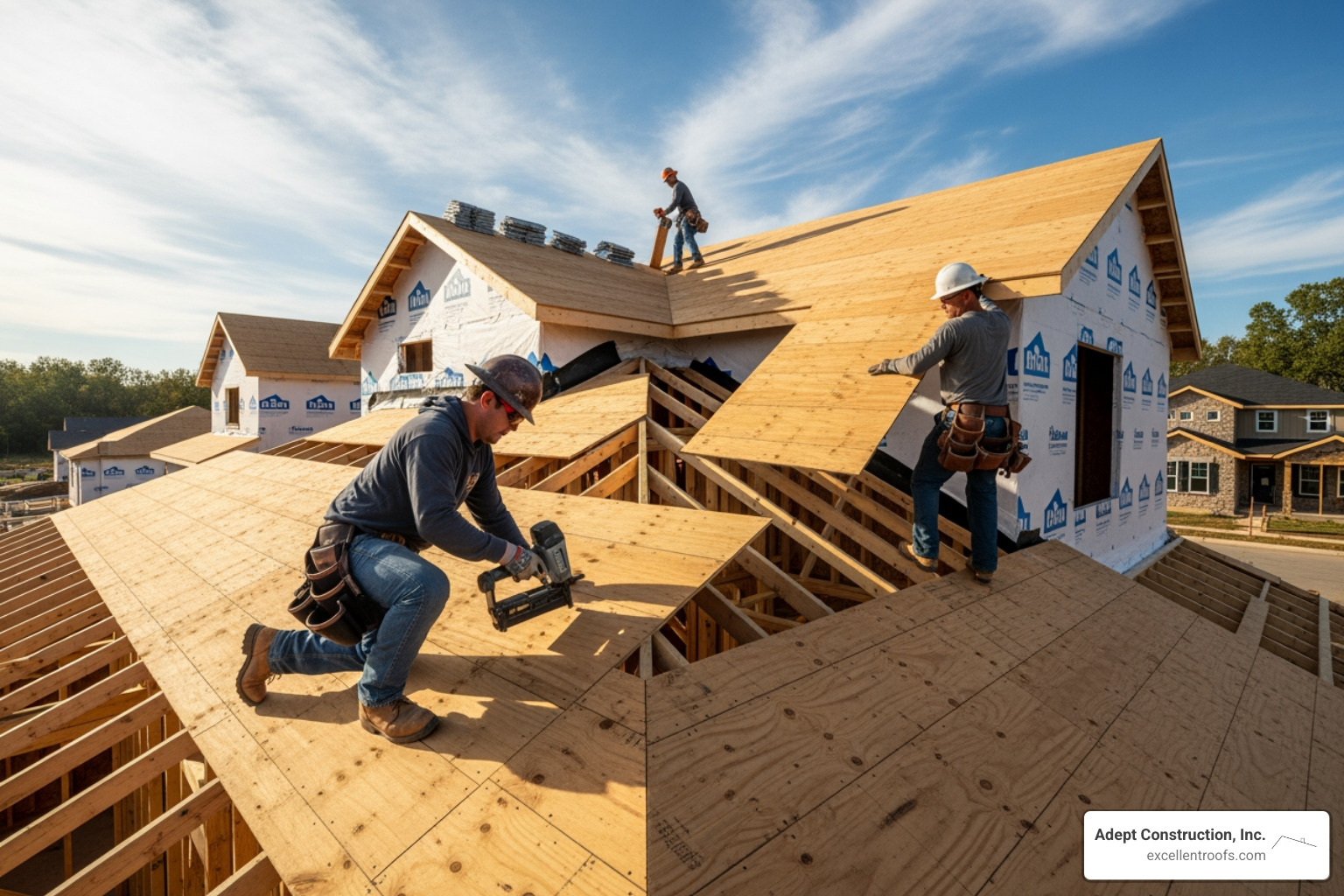
Step 1: Framing and Sheathing the Structure
After the walls are up, the roof framing is installed, followed by sheathing.
- Installing Rafters or Trusses: The structural skeleton is erected, establishing the roof’s shape and slope.
- Roof Sheathing (Decking): Plywood or Oriented Strand Board (OSB) panels are fastened over the frame to create a solid, flat surface for the roofing materials. OSB is generally less expensive, but plywood tends to resist water absorption better if exposed to moisture during construction. Panels are installed with staggered joints and specific nailing patterns to resist wind uplift.
For all our residential roofing in Downers Grove projects, we ensure the framing and sheathing create a robust foundation.
Step 2: Creating a Watertight Barrier
With the sheathing in place, the next layers focus on waterproofing.
- Roof Underlayment: This protective layer is installed over the sheathing to act as a secondary moisture barrier. Modern synthetic underlayments offer superior durability and water resistance compared to traditional felt paper. As defined by Wiktionary, underlayment is a key part of the water-shedding system.
- Ice and Water Shield: In cold climates like ours, this self-adhering membrane is essential. It is installed along eaves, in valleys, and around penetrations to protect against ice dams and wind-driven rain.
- Drip Edge Installation: This metal flashing is installed at the roof’s edges to direct water into the gutters and away from the fascia. Proper installation is critical and often required to maintain roof warranties.
These layers work together to defend against water intrusion. For concerns about your roof’s waterproofing, our Residential Roof Repair Guide for Downers Grove offers valuable insights.
Step 3: Installing Flashing, Vents, and Seals
This final protective stage prevents leaks and maintains a healthy attic environment.
- Flashing: Thin pieces of metal are installed where the roof meets a wall, chimney, or vent pipe, or at direction changes like valleys. Faulty flashing is a leading cause of roof leaks.
- Roof Ventilation: A balanced system of intake vents (at the soffits/eaves) and exhaust vents (at the ridge) is crucial. Ventilation prevents summer heat buildup that can damage shingles and removes winter moisture that can cause rot and mold. A well-ventilated attic extends the life of your roof and improves energy efficiency.
- Seals: Sealants and caulking are used to make every joint and penetration completely watertight.
The Whole Building Design Guide on Roofing Systems provides extensive information on these critical components.
Choosing Your Armor: Materials, Lifespan, and Maintenance
The final step in residential roof construction is installing the exterior material. This choice involves balancing durability, cost, aesthetics, and maintenance.
A Comparison of Popular Residential Roofing Materials
- Asphalt Shingles: The most common choice due to their affordability and versatility. They have a Class A fire rating but a shorter lifespan than other materials. Lifespan: 20-30 years. You can explore design and performance options in more depth through our overview of shingle roofing systems.
- Metal Roofing: Gaining popularity for its long lifespan, durability, and energy efficiency. It has a higher upfront cost and requires specialized installation. Lifespan: 40-80 years.
- Slate Roofing: A premium natural stone known for exceptional longevity. It is extremely durable and fireproof but also very heavy, expensive, and requires a reinforced roof structure. Lifespan: Up to 150 years.
- Tile Roofing (Clay/Concrete): Offers a distinct aesthetic and excellent resistance to wind and fire. Like slate, it is heavy, expensive, and requires specialized installation. Lifespan: 50-100 years.
- Cedar Shake Roofing: Provides a natural, rustic look with good insulation. It requires regular maintenance and is more susceptible to fire and moisture damage than other options. Lifespan: 20-40 years. Learn more about how these systems perform over time in our guide to classic cedar shake roofing.
Typical Lifespans at a Glance:
- Asphalt Shingles: 20-30 years
- Metal Roofing: 40-80 years
- Clay/Concrete Tile: 50-100 years
- Natural Slate: Up to 150 years
- Cedar Shakes: 20-40 years
Signs Your Roof Needs Repair or Replacement
Even a well-built roof will eventually show signs of wear. Regular visual inspections, especially after severe weather, can help you spot issues early.
- Missing or Curling Shingles: Exposed underlayment or shingles that are cupping are clear signs of damage or age.
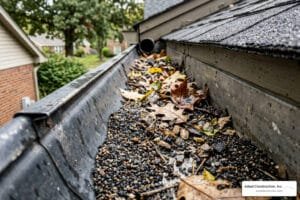
- Asphalt Granules in Gutters: A large amount of these sand-like granules indicates your shingles are deteriorating.
- Ceiling Water Stains: Any discoloration on interior ceilings is a definitive sign of a leak that needs immediate attention.
- Sagging Roof Deck: A dip in the roofline points to a serious structural problem, likely from moisture damage, and requires immediate professional inspection.
- Roof Age: If your asphalt shingle roof is over 20 years old, it’s wise to start planning for a replacement, even without obvious leaks.
- Moss or Algae Growth: Extensive growth can trap moisture against shingles, accelerating deterioration.
If you notice these signs, act promptly. Our team provides professional roof repair in Naperville, IL and complete roof replacement in Downers Grove, IL. Homeowners in the broader area can also review our dedicated service pages for Naperville roofing and Downers Grove roofing to understand what to expect from a local, family-owned contractor. Adept Construction, Inc. offers free estimates, so you can evaluate repair or replacement options with clear pricing before work begins.
Frequently Asked Questions about Residential Roof Construction
Homeowners often have questions about the process, safety, and regulations of residential roof construction. Here are answers to some common inquiries.
What safety precautions are essential during roof construction?
Safety is paramount. Key precautions include:
- Fall Protection: The NRCA (National Roofing Contractors Association) recommends guardrails, safety nets, or personal fall arrest systems (harnesses) for any work 6 feet or more above a lower level.
- Ladder Safety: Ladders must be stable, secure, and extend at least three feet above the roofline.
- Personal Protective Equipment (PPE): Workers must wear hard hats, safety glasses, gloves, and footwear with good grip.
- Weather Awareness: Work should halt during high winds, rain, or icy conditions.
For comprehensive guidance, professionals refer to the NRCA Roofing Guidelines.
How long does it take to build a new residential roof?
A typical roof replacement takes one to twelve days. The exact timeline depends on several factors:
- Roof Size and Complexity: Larger or more intricate roofs take longer.
- Material Type: Asphalt shingles are faster to install than slate or tile.
- Weather: Bad weather can cause delays.
- Scope of Work: A complete tear-off of the old roof takes more time than an overlay.
Our complete guide to residential roofing estimates can help you understand what to expect. Adept Construction, Inc. provides free, written estimates so homeowners in Naperville and Downers Grove can compare options before committing to a project.
Do I need a permit for residential roof construction?
Yes, most residential roof construction projects require a permit. Permits are typically needed for:
- New roof installations.
- Full roof replacements (tear-offs).
- Any structural repairs or alterations to the roof frame.
Permit requirements vary by municipality. Homeowners in areas like Downers Grove, IL and Naperville, IL should always check with their local building department before starting work to ensure compliance and avoid fines or delays. Your roofing contractor should help you steer this process and include permit handling in your estimate.
If you are unsure where to start, contact Adept Construction, Inc. for a free estimate and consultation. Our team can review your roof, explain local code requirements, and recommend the most durable solution for your home.
Conclusion: Ensuring a Durable and Reliable Roof
Your roof is a complex system where every component—from the structural frame to the final shingle—plays a vital role in protecting your home. Understanding the essentials of residential roof construction empowers you to make informed decisions about maintaining this critical asset.
A durable, reliable roof shields your home from the weather we see in Downers Grove and Naperville, IL, improves energy efficiency, and preserves your property’s value. Achieving this requires quality materials, expert craftsmanship, and a commitment to best practices.
At Adept Construction, Inc., we are dedicated to delivering superior customer service and high-quality workmanship on every project. We build roofs designed to stand the test of time, protecting your family and your investment for decades.
For a professional evaluation of your roofing needs, contact us today. We provide free, no-obligation estimates for all our residential roofing services. Homeowners in Naperville and Downers Grove can rely on our local expertise for roof repairs, new roof installation, and full roof replacement.